

♥ Wishlist
Compare 29 verified Bosch Cordless Routers Trimmers products in United Kingdom. Reviews, ratings, pros, cons and buying advice updated for October 2026.


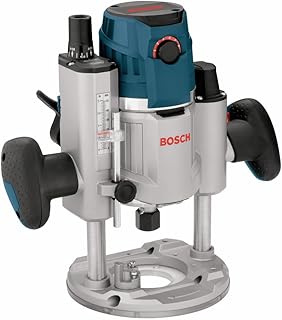


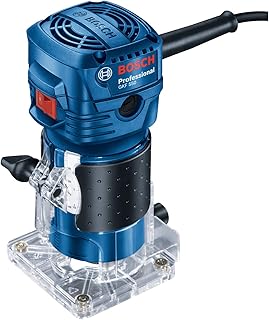


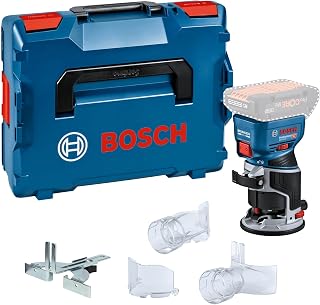


Choosing a cordless router or trimmer is not simply a matter of selecting the most powerful-looking tool. The right choice depends on the type of routing work you expect to do, the cutter sizes you use, the materials you work with, how often you need the tool away from a mains socket and whether you already own compatible batteries. For UK buyers, the most useful comparison is therefore between practical specifications, handling, compatibility and the jobs each design is intended to perform.
Bosch cordless routing tools are particularly relevant to buyers who want the freedom of battery power without giving up the control expected from a professional power tool. However, a compact cordless trimmer and a larger cordless router serve different purposes. A trim router is usually easier to manoeuvre around edges and smaller workpieces, while a more substantial router is better suited to heavier routing operations and applications requiring greater cutting capacity.
Before choosing from the top-rated options in this guide, compare the specifications rather than relying solely on a star rating or headline description. Customer ratings can help identify products that deserve closer attention, but the suitability of a router ultimately depends on the work you intend to carry out.
The terms router and trimmer are sometimes used interchangeably, but there is an important practical distinction. A compact trim router is designed primarily for controlled edge work, small profiles, laminate trimming and other relatively light routing tasks. A larger router offers a more substantial base and greater capacity for deeper or wider cuts, making it more suitable for demanding woodworking operations.
For many DIY users, furniture makers and joiners, a compact cordless trimmer can be the more convenient option because it is easier to hold and reposition. For users regularly creating joints, rebates, grooves or substantial profiles, the additional capacity of a full-size router may be more important than compactness.
Battery compatibility should be one of the first things UK buyers check. A cordless router may be an excellent tool on paper, but its overall value changes considerably if it requires a battery platform you do not already use.
Bosch has different battery ecosystems, so check the exact voltage, battery family and charger requirements of the particular model. Do not assume that every Bosch cordless power tool accepts every Bosch battery. The same principle applies when comparing Bosch with other cordless systems from brands such as Makita, DeWalt and Milwaukee.
If you already own compatible Bosch batteries and chargers, a body-only tool can potentially be a more economical way of expanding your collection. If you are starting from scratch, compare the complete kit cost, including the battery and charger, rather than comparing bare-tool prices alone.
Motor performance affects how confidently a router can maintain cutting performance under load. For cordless tools, the advertised motor characteristics should be considered alongside battery capacity, cutter diameter, cutting depth and the material being routed.
A higher headline power figure does not automatically make one router better for every application. A compact tool with excellent handling may be preferable for edge work, while a larger design may be more appropriate when removing substantial amounts of material.
When comparing models, look for information covering motor design, electronic control, no-load speed and the manufacturer's intended application range. Avoid treating a single specification as a substitute for the complete specification sheet.
Variable speed can be valuable when working with different cutter sizes and materials. Larger-diameter cutters generally require appropriate speed management, while smaller cutters can often operate at higher rotational speeds.
The ability to adjust speed can therefore make a router more versatile. It also gives the user greater control when working with different woods, boards, plastics or other compatible materials. Always follow the cutter manufacturer's recommended operating speed rather than choosing a setting based purely on convenience.
Collet capacity is an important specification that is sometimes overlooked when comparing cordless routers. The collet must match the shank diameter of the router bits you intend to use.
UK buyers should check whether the tool supports the cutter sizes they already own and whether the supplied collet arrangement matches their preferred bits. A router that cannot accommodate your existing cutter collection may require additional accessories, potentially changing the overall cost of ownership.
Do not confuse cutter diameter with shank diameter. The cutter describes the cutting profile and overall working diameter, whereas the shank is the part secured by the router's collet.
Depth adjustment determines how precisely you can control the amount of material removed. This matters when producing grooves, rebates, edge profiles and other operations where consistency is important.
Look for a mechanism that is easy to operate while maintaining a secure setting. Fine adjustment can be especially useful when making small changes between test cuts. A clear depth scale is helpful, but users should still verify the actual cut on scrap material before routing the finished workpiece.
The base is one of the most important components for controlled routing. A stable base helps keep the cutter at a consistent relationship to the work surface and can make the tool easier to guide.
Consider the shape and size of the base, visibility around the cutter, adjustment mechanism and compatibility with guides or accessories. A compact base can make edge work easier, whereas a broader support surface can improve stability during certain operations.
The main advantage of a cordless router is freedom from the power cable. This can be particularly useful when working on installed furniture, doors, worktops, temporary workstations, construction sites or outdoor projects where a mains supply is inconvenient.
Removing the cable can also make repositioning the tool easier. There is no mains lead to route around the workpiece or potentially catch against nearby objects. This can be valuable during detailed edge work where the user's attention needs to remain on cutter position and movement.
However, cordless operation does introduce battery management into the buying decision. Regular users should consider battery capacity, charging arrangements and whether additional batteries are necessary for longer working sessions.
Battery capacity is normally expressed in ampere-hours, or Ah. A higher-capacity battery can provide greater stored energy, but it may also add weight and bulk to a compact routing tool.
For occasional DIY work, a smaller compatible battery may offer a useful balance between runtime and manoeuvrability. For extended professional use, carrying a second charged battery can be more practical than relying on one large battery alone.
Motor technology is another useful comparison point. Brushless motors eliminate conventional carbon brushes and can offer advantages in efficiency, durability and electronic control. These benefits can be particularly relevant for users who operate their tools frequently.
Brushed motor designs can still be appropriate for occasional users, especially where purchase cost is an important consideration. The better choice depends on workload, expected ownership period, existing battery platform and budget.
For a tool that will see frequent professional use, brushless technology may deserve additional consideration. For infrequent household routing, it may be more sensible to prioritise ergonomics, included accessories and compatibility with your existing equipment.
Routing produces a considerable amount of dust and chips, particularly when working with wood-based sheet materials. Effective dust extraction can improve visibility around the cutter and reduce airborne debris in the working area.
When comparing Bosch cordless routers and trimmers, check whether the design supports dust extraction accessories and whether the extraction connection is compatible with the equipment already used in your workshop.
Dust extraction is not a substitute for appropriate respiratory protection or safe working practices. Follow the tool, cutter and dust-extraction manufacturer's instructions, particularly when working with MDF, composite boards or materials that generate fine dust.
A router is a hand-guided cutting tool, so balance and control are crucial. A technically impressive machine may be less suitable if it is uncomfortable to hold or difficult to position accurately.
Assess the grip arrangement, trigger or switch position, visibility of the cutting area, battery position and overall balance. For repetitive edge trimming, a compact and well-balanced tool can reduce fatigue compared with a heavier design.
Users should also consider how easily the tool can be adjusted while wearing suitable workshop gloves, although gloves must never compromise safe control of rotating machinery.
Different materials place different demands on a router. Solid timber, plywood, MDF, chipboard, laminate and other materials can behave differently during cutting. The cutter must be appropriate for the material, and the tool should be operated within the manufacturer's stated capabilities.
Solid timber can produce excellent results when the correct cutter, feed direction and cutting depth are used. Grain direction is particularly important because changes in grain can affect the quality of the finished edge and increase the risk of tear-out.
Plywood can be routed successfully with suitable cutters, but the layered construction can affect edge quality. Sharp, appropriate cutters and controlled feed rates are important for producing clean results.
MDF routes readily but can generate significant fine dust. Effective extraction and appropriate respiratory protection are especially important. Cutter condition also matters because a dull bit can produce poorer results and increase the effort required from the tool.
Compact cordless trimmers are particularly useful for certain laminate and edge-trimming applications. These jobs benefit from good visibility, controlled handling and a cutter specifically intended for the material.
The router itself is only part of the cutting system. The router bit determines the profile, depth, edge treatment and much of the final surface quality.
Always ensure the bit is correctly sized for the router's collet, securely installed and rated for the intended rotational speed. Never use a damaged, excessively worn or inappropriate cutter simply because it fits physically.
Good routing results depend on technique as much as tool selection. Begin by securing the workpiece firmly. A moving workpiece can compromise accuracy and create a significant safety risk.
Make shallow passes when substantial material needs to be removed rather than attempting to take the entire depth in one operation. Smaller passes generally give the cutter and tool more manageable work and can improve control.
Before routing the finished component, make a test cut on a piece of matching or similar scrap material. This allows you to confirm cutter depth, profile, direction and finish without risking the final workpiece.
Move the router at a controlled and consistent feed rate. Feeding too aggressively can produce a poor finish and overload the cutter, while moving too slowly can create excessive rubbing or burning depending on the material and cutter.
A high customer rating can be useful, but it does not tell you whether a particular router is appropriate for your application. Read the specification and consider the type of routing work described by the manufacturer.
Comparing the price of a bare tool with the price of a complete kit can produce a misleading impression. Always establish whether a battery and charger are included.
Compactness is valuable, but a small trim router is not automatically a substitute for a larger router. If your work involves substantial material removal, deep cuts or larger routing operations, check the tool's intended application and capacity carefully.
The opposite mistake is buying a larger, heavier router when most of your work involves simple edge trimming. Extra capacity is useful only when the jobs you perform actually require it.
A router that does not accept the cutter shanks in your existing collection can create unexpected accessory costs. Check this before ordering.
Routing generates dust, and ignoring extraction can make a workshop messier while reducing visibility around the cutting area. Check extraction compatibility before purchase.
For a typical UK DIY user, useful priorities often include manageable size, straightforward depth adjustment, good visibility around the cutter, suitable speed control and compatibility with readily available batteries and accessories.
If your projects involve occasional furniture repairs, shelving, decorative edges or small woodworking projects, a compact cordless trimmer may offer the most practical balance. There is little benefit in carrying a large professional router for jobs that do not require its additional capacity.
Professional users should evaluate routing tools according to workload rather than headline specifications. Durability, battery availability, ergonomics, adjustment repeatability, cutter compatibility, dust extraction and integration with existing cordless tools can all influence productivity.
A professional who already uses a Bosch cordless platform may place greater value on battery compatibility and system integration than someone choosing their first cordless power-tool ecosystem. The ability to share batteries and chargers across suitable tools can simplify equipment management.
Bosch is not the only manufacturer worth considering. Buyers should compare the complete cordless ecosystem rather than evaluating the router in isolation.
The best brand is therefore not necessarily the one with the most impressive individual specification. Battery ownership, accessory availability, intended workload and the rest of your tool collection can make one platform considerably more practical than another.
When two Bosch models appear similar, use a consistent comparison process rather than concentrating on one specification.
A simple way to narrow the choice is to begin with your most common job.
A cordless router is a high-speed cutting machine and should be treated accordingly. Read the manufacturer's instructions before use and use the appropriate personal protective equipment for the task.
Regular maintenance can help keep a cordless router operating consistently. After use, remove accumulated dust from accessible areas using an appropriate cleaning method recommended by the manufacturer. Pay particular attention to the base, ventilation openings, collet area and adjustment mechanisms.
Inspect the collet and nut periodically and keep them free from debris. Router bits should also be inspected regularly. A blunt or damaged cutter can produce poor results and place unnecessary load on the tool.
Do not modify the router or use accessories outside the manufacturer's recommendations. For batteries, follow the charging, storage and temperature guidance supplied with the particular battery system.
A bare-tool package can make sense if you already own compatible Bosch batteries and a charger. It can also help prevent duplicate chargers and batteries accumulating in a workshop.
A complete kit is generally more convenient for someone entering the battery platform for the first time. Compare the total package rather than assuming that the lower advertised tool price is the cheaper option.
When comparing listings from UK retailers, check exactly what is included in the box. Kit contents can differ between variants even where the model name appears similar.
Verified customer reviews are most useful when you read beyond the average score. Look for recurring comments about handling, battery life, depth adjustment, cutter compatibility, build quality, dust extraction and ease of use.
Give greater weight to reviews from buyers performing work similar to yours. A customer using a compact trimmer for occasional DIY may judge the same tool very differently from a professional joiner using it throughout a working day.
Also distinguish between comments about the tool itself and comments about packaging, delivery or retailer service. Those observations may be useful when choosing where to buy, but they do not necessarily indicate the routing performance of the machine.
There is no single price point that represents the best value for every UK buyer. The appropriate budget depends on whether you already own compatible batteries, how frequently you will use the router and the level of routing work required.
Rather than setting a budget first and then selecting the cheapest suitable-looking model, establish your required specifications first. Compare the cost of the tool, battery, charger, router bits and necessary accessories as a complete ownership package.
For occasional use, paying substantially more for professional features may not provide meaningful benefits. For frequent woodworking, better ergonomics, motor technology, adjustment capability and battery-platform compatibility may justify a higher initial investment.
A Bosch cordless router or trimmer can be a sensible choice for DIY enthusiasts, furniture makers, joiners, tradespeople and workshop users who value cordless mobility. It is particularly attractive when the buyer already uses the appropriate Bosch battery platform.
It may be less suitable if your work is dominated by long, continuous heavy-duty routing where a mains-powered machine is more appropriate for your setup. Likewise, buyers who rarely route may find that a compact model provides everything they need without paying for capacity that will remain unused.
The best Bosch cordless router depends on the type of work you perform. A compact trimmer can be preferable for edge work and smaller projects, while a larger cordless router may be more appropriate for deeper cuts, joinery and heavier woodworking. Compare the specifications, cutter compatibility, battery system and intended applications before choosing.
Some Bosch cordless routing tools are designed with professional users in mind, but suitability depends on the exact model and workload. Professional buyers should examine motor performance, durability-related design features, battery compatibility, ergonomics, adjustment capability and accessory support rather than relying solely on the Bosch name.
For many portable and light-to-medium routing applications, a cordless router can provide excellent convenience. It is not automatically a replacement for every mains-powered router, particularly where continuous heavy-duty work, specific cutter capacity or a fixed workshop setup is involved.
A compact trim router can be approachable for beginners because its smaller format can make edge work and small projects easier to manage. However, beginners should learn correct routing technique, cutter selection, workpiece securing and safety procedures before using any high-speed router.
There is no universally best battery size. A higher-capacity battery can provide more stored energy but may add weight. A smaller battery can make a compact router easier to handle. The best choice depends on expected runtime, tool balance and whether you already own batteries from the same compatible platform.
No. Router bits must match the tool's supported collet and be suitable for the intended application and operating speed. Check the exact Bosch model specifications and the router-bit manufacturer's requirements before use.
Compatibility depends on the specific Bosch cordless platform and the exact router model. Bosch has different battery systems, so buyers should verify the battery family and voltage rather than assuming that all Bosch batteries are interchangeable.
Choose a bare tool if you already have the correct compatible battery and charger. A complete kit can be more convenient when you are new to the relevant battery platform. Compare the complete cost of ownership in both cases.
A suitable cordless router can be used for compatible hardwood applications, provided the tool, cutter and operating conditions are appropriate. Take controlled passes and avoid forcing the machine. Always follow the manufacturer's application guidance and use a sharp cutter suited to the material.
Brushless motor technology can offer useful advantages for frequent users, including efficient operation and reduced reliance on conventional motor brushes. Whether the additional cost is worthwhile depends on how often you use the tool and which other features are important to you.
Use compatible dust extraction where supported, keep the routing area clean and follow appropriate respiratory-protection guidance for the material being machined. Dust management is especially important when working with fine-particle sheet materials.
There is no universal depth because it depends on the router, cutter, material and operation. For substantial material removal, multiple controlled passes are generally preferable to forcing a deep cut in one operation. Follow the manufacturer's instructions and the cutter manufacturer's recommendations.
The strongest Bosch cordless router choice is the one that matches your actual routing work rather than the one with the longest specification list. Start with the distinction between a compact trimmer and a larger router, then narrow the options by battery compatibility, cutter capacity, cutting depth, speed control, handling, extraction and accessories.
If you already own compatible Bosch batteries, staying within that ecosystem can make a cordless router particularly convenient. If you are choosing a battery platform for the first time, compare Bosch with alternatives such as Makita, DeWalt, Milwaukee and Festool according to the complete ecosystem rather than one tool alone.
Before purchasing, verify the current UK specification, included accessories, battery arrangement and retailer listing. Product configurations can change, so the exact model information should always take priority over older descriptions or assumptions. For the most informed decision, compare specifications alongside verified customer reviews and choose the router that best fits your workload, materials, cutter collection and working environment.