

♥ Wishlist


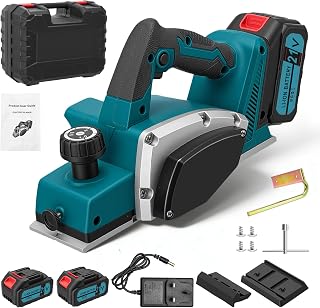


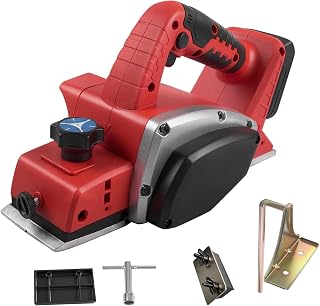


A Milwaukee cordless planer is designed for controlled material removal from timber while giving users the freedom of battery power. For UK tradespeople, carpenters, joiners, maintenance professionals and DIY users, cordless operation can be particularly useful when working away from a convenient mains socket or when a cable would restrict movement around a workpiece.
The Milwaukee range includes compact cordless planer solutions alongside larger models designed for more demanding woodworking applications. The right choice depends on the type of timber you work with, the amount of material you need to remove and the level of portability you value. Before ordering, compare the specifications of each available model rather than selecting a planer based on voltage alone.
Battery platform is one of the most important considerations when selecting a cordless planer. Milwaukee M12 models can appeal to users who prioritise compact dimensions and manageable weight, while M18 planers are suited to applications where a larger cordless platform and higher capacity are more appropriate.
For example, the Milwaukee M12 BLP range includes a compact brushless planer with a 51 mm planing width, while the Milwaukee M18 BP range provides a wider 82 mm planing capacity. This difference can have a significant effect on how efficiently you can work across different board widths.
Always check the exact product specification before purchase because battery, charger, case and accessory contents can vary between versions. Some listings are supplied as bare tools, while others may include batteries and a charger.
Planing width determines how much timber can be covered in a single pass. A wider planer can be useful when preparing broader boards, while a compact model may be easier to control when working on smaller components or in restricted spaces.
Cutting depth is equally important. A greater maximum depth can help remove more material when necessary, but many woodworking tasks require only shallow passes. Adjustable depth settings allow the user to control the amount removed from the surface, helping achieve a smoother and more predictable result.
Cordless operation removes the need to position a power cable around the work area. This can make the tool convenient for on-site carpentry, renovation work, door fitting, workshop projects and outdoor timber preparation. Battery power can also simplify setup because there is no extension lead to arrange before starting.
Another advantage is compatibility with an existing battery system. If you already use compatible Milwaukee batteries, a bare-tool planer can potentially reduce the need to purchase another battery and charger. However, always confirm battery compatibility with the exact model before ordering.
A Milwaukee cordless planer can be useful for a wide range of timber-related jobs. Common applications include trimming wooden doors, reducing board thickness, levelling uneven timber, preparing edges, correcting oversized components and shaping wood for furniture or construction projects.
For repeated professional work, pay close attention to planing capacity, ergonomics, runtime and blade availability. For occasional DIY jobs, compact size, ease of handling and compatibility with batteries you already own may be more important.
Brushless motor technology is found in Milwaukee cordless planer models and can provide an efficient drive system for battery-powered applications. A brushless planer can be attractive to users who want a modern cordless tool for regular woodworking tasks.
Performance, however, should be judged using the complete specification rather than motor technology alone. Compare cutting width, maximum depth, speed, battery platform, weight and included equipment to determine whether a particular planer matches your workload.
Start by identifying the timber sizes and applications you handle most often. Next, check the planing width and maximum cutting depth. Then confirm whether the product is supplied with batteries and a charger or sold as a bare tool.
It is also worth checking the battery capacity you intend to use. Higher-capacity batteries may provide longer working periods, although they can add weight. If portability is important, a compact battery and planer combination may be preferable.
Finally, compare current UK pricing, customer feedback, included accessories and seller information before completing your purchase. ToolsPoint provides a comparison-focused route for shoppers researching cordless tools and related equipment.
Use this category to compare Milwaukee cordless planer options available to UK shoppers. Whether you need a compact M12 solution or a wider M18 planer for demanding woodworking, reviewing the specifications first can help you select a tool that fits your materials, working environment and battery system.
Take time to compare the available models, check what is included in each package and consider your typical workload. A suitable Milwaukee cordless planer can provide convenient battery-powered planing for carpentry, joinery, renovation and DIY woodworking projects.
Find a Milwaukee cordless planer for accurate timber preparation, carpentry, furniture work and DIY projects. This category brings together Milwaukee planer options across compact cordless platforms, including M12 and M18 models, so UK shoppers can compare specifications, battery requirements, cutting capacity and overall suitability before buying. A cordless planer can make it easier to trim doors, level timber edges, adjust boards and remove material without relying on a mains power cable. When choosing a Milwaukee cordless planer, consider the planing width, cutting depth, battery platform, included accessories and whether the tool is supplied as a bare unit or complete kit.