

♥ Wishlist
Compare 31 verified Bosch Cordless Jig Saws products in United Kingdom. Reviews, ratings, pros, cons and buying advice updated for October 2026.


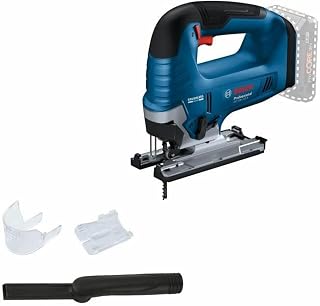

Choosing a Bosch cordless jig saw is less about finding the most powerful model and more about matching the saw's battery platform, cutting capacity, control features and intended workload to the jobs you actually undertake. A compact 12V machine can be an excellent choice for lighter DIY work, while an 18V model is generally more appropriate when thicker timber, repeated cutting or tougher materials are involved.
For UK buyers, it is also worth considering the practical ecosystem surrounding the tool. Bosch cordless equipment is sold across different battery platforms, so the battery and charger included with a particular kit can be just as important to the overall buying decision as the bare tool specification. If you already own compatible Bosch batteries, a bare-tool purchase may make more sense; if you are starting from scratch, compare the complete kit rather than looking only at the headline tool price.
The first decision is whether you need a compact Bosch 12V cordless jig saw or an 18V machine. Voltage alone does not tell you everything about a tool's performance, but it provides a useful starting point when comparing models within the Bosch Professional range.
Do not assume that every Bosch cordless battery is interchangeable. Bosch has multiple cordless systems, and compatibility should be confirmed from the manufacturer's specification for the exact model and battery generation before purchasing.
Once the battery platform has been established, look beyond the basic cutting specification. Two cordless jig saws can both be described as 18V machines while offering noticeably different levels of control, ergonomics, visibility and convenience.
Brushless motors are an important consideration when comparing modern cordless power tools. A brushless design eliminates conventional motor brushes and can provide benefits in efficiency, durability and electronic control. These advantages can be particularly relevant in a cordless jig saw because motor efficiency affects how effectively stored battery energy is converted into useful cutting work.
A brushless motor should not, however, be treated as a guarantee that one saw will outperform every other model. Cutting performance depends on the complete system, including the blade, orbital action, electronics, battery, material and technique.
Variable speed is one of the most useful features on a jig saw because different materials and blades require different cutting behaviour. A higher speed can be useful for suitable wood-cutting applications, whereas a slower and more controlled setting may be preferable for metal, delicate work or situations where heat and blade movement need to be controlled.
The most useful saw is therefore not necessarily the one with the highest maximum speed. Look for a model that gives you practical control across the range and allows the speed to be adjusted according to the material and blade being used.
Pendulum action, also called orbital action, changes the blade's movement so that it travels not only vertically but also with a controlled forward movement during part of the cutting cycle. This can increase cutting efficiency in suitable applications.
Higher orbital settings can be useful when fast cutting in wood is the priority. Lower settings generally favour smoother, more controlled cutting and can be preferable for curves, finer work or materials where excessive aggressiveness would reduce finish quality.
When comparing Bosch cordless jig saws, check how many orbital settings are available and whether the adjustment is easy to operate. The usefulness of pendulum action comes from being able to select the appropriate setting rather than simply having the feature.
Cutting capacity should be considered separately for each material. A specification for maximum wood-cutting depth does not mean that the same depth applies to steel, aluminium or other materials.
Before buying, consider the thickest material you are realistically likely to cut. If most of your work involves sheet material, flooring, thinner boards and occasional DIY projects, an extremely high cutting capacity may provide little practical benefit. Conversely, professional users working with thicker timber should avoid choosing a compact model solely because it is lighter or less expensive.
Stroke length describes the distance travelled by the blade during each reciprocating movement. It is one of the specifications that can influence cutting performance, although it should always be considered together with stroke rate, motor characteristics, blade selection and orbital action.
A longer stroke can contribute to efficient material removal, but it does not automatically make a jig saw better for intricate work. When precision and finish are priorities, controllability and blade choice can matter more than headline specifications.
A high-quality cordless jig saw can produce disappointing results when fitted with an inappropriate or worn blade. Bosch jig saw blades are available in different tooth configurations and materials, and other reputable blade manufacturers can also provide compatible options.
Before comparing a saw solely by its advertised cutting speed, consider the blades you intend to use. The blade is the component directly interacting with the workpiece, so its tooth geometry, length, material and intended application have a major influence on the result.
Wood blades are available in configurations intended for fast cuts, cleaner finishes, straight cuts and curved cutting. Coarser teeth can remove material quickly, while finer teeth generally provide greater control and can produce a cleaner edge when used appropriately.
For visible furniture panels, worktops or decorative components, a blade selected specifically for clean cutting can be more valuable than simply selecting the fastest available setting on the tool.
Metal requires an appropriate fine-toothed blade and a controlled cutting approach. Using a coarse wood blade on metal is not an appropriate substitute for a dedicated metal-cutting blade.
Material thickness, metal type, lubrication requirements and blade specification should all be considered. Always follow the instructions supplied with the saw and blade for the material being cut.
Curved cuts place different demands on a jig saw from long straight cuts. A narrow blade can generally be easier to steer around tighter curves, but excessive sideways pressure can cause deflection, overheating or premature blade wear.
If intricate cutting is a major part of your work, pay particular attention to blade compatibility, visibility of the cutting line, shoe design, variable speed and overall balance rather than choosing solely according to maximum cutting depth.
Accuracy with a cordless jig saw is influenced by both tool design and technique. Features such as low vibration, a stable base plate, good sight lines and effective blade guidance can make it easier to maintain the intended cutting path.
Even the best jig saw should not be expected to behave like a track saw or table saw. A jig saw is particularly useful for curved cuts, internal cut-outs, notches and shapes that are difficult to produce with a conventional circular saw.
The shoe or base plate supports the saw against the workpiece. It should remain stable during the cut and be appropriate for the type of work being performed. A stable shoe makes it easier to maintain a consistent angle and reduces the chance of accidentally tipping the tool during a cut.
The blade guide helps control the blade during reciprocation. A well-designed guidance system can contribute to cleaner, more predictable cuts, particularly when the material places greater lateral demands on the blade.
Good visibility is easy to overlook when comparing specifications, yet it can have a direct effect on practical accuracy. Features such as an unobstructed view around the blade and suitable work-area illumination can make it easier to follow a marked line.
Where a Bosch model includes integrated lighting or another visibility aid, consider whether the feature is genuinely useful for the environments in which you work rather than treating it as a simple checklist item.
Jig sawing can generate a considerable amount of dust and debris, particularly when cutting timber and sheet materials. If you frequently work indoors, compatibility with a suitable dust-extraction setup can be an important buying consideration.
Dust extraction does not eliminate all airborne particles, and it should not be regarded as a substitute for appropriate respiratory protection and workplace controls. Nevertheless, effective extraction can help reduce the amount of debris around the cutting area and make it easier to see the marked line.
Check the exact dust-extraction arrangement for the Bosch model you are considering. Accessories and adapters can vary between machines, so do not assume that a vacuum connection or accessory from another tool will fit without checking compatibility.
Weight matters more with a jig saw than many buyers initially expect. Because the tool is normally guided manually rather than resting on a fixed support, its balance can influence comfort and control throughout a cutting session.
A compact saw can be particularly appealing for overhead, awkward or repetitive work. A larger 18V machine may provide additional capability, but the extra size and battery weight should be considered if the work involves prolonged handheld operation.
The grip should allow you to maintain firm control without excessive hand pressure. Switch placement should also allow normal operation without forcing the hand into an awkward position.
When comparing Bosch cordless jig saws, consider whether you prefer a conventional top-handle arrangement or another ergonomic configuration. Neither is universally best; the right choice depends on hand position, cutting direction and the type of work you perform.
Do not judge the ergonomics of a cordless saw from its bare-tool weight alone. The battery adds weight and changes the centre of gravity. A larger-capacity battery can provide more stored energy but may also increase the overall mass of the tool.
If you already own Bosch Professional batteries, check how your existing packs affect the balance of the candidate jig saw. This is especially relevant when comparing compact and full-size cordless machines.
Battery capacity is normally expressed in ampere-hours, but a larger Ah rating should not be interpreted as a direct guarantee of proportionally longer cutting time. Actual runtime varies with material, blade type, cutting depth, speed, orbital setting, battery condition and how heavily the motor is loaded.
For a buyer starting a cordless system, it is often better to consider the complete ecosystem rather than choosing a jig saw in isolation. Battery compatibility can influence the long-term cost and convenience of owning several cordless tools.
A compact 12V Bosch Professional jig saw can make sense when portability and ease of handling are high priorities. This type of machine can be particularly suitable for lighter woodworking, installation work, trimming and DIY applications where the highest possible cutting capacity is not required.
The main attraction is not simply lower voltage. The compact format can make the tool easier to position and control in restricted spaces. Users who already own other compatible Bosch Professional 12V tools may also benefit from sharing their battery system.
Before choosing a compact model, however, check the required cutting depth and workload. If your projects routinely involve thick timber or prolonged heavy cutting, moving to an 18V platform may be the more appropriate decision.
An 18V Bosch Professional jig saw is generally the more logical starting point for demanding DIY, renovation, installation and professional applications where cutting capacity and sustained performance are more important than achieving the smallest possible tool size.
Within the 18V category, there can still be substantial differences between models. Features such as brushless motor technology, improved blade control, variable speed, orbital adjustment, work-area illumination, electronic protection and dust-extraction compatibility can affect which model is best for a particular user.
Rather than assuming that the most expensive 18V machine is automatically the best choice, compare the features that directly correspond to your workload.
Use the following checklist when comparing the Bosch models included in a UK buying guide.
A bare Bosch cordless jig saw can appear attractive when compared with a complete kit, but the calculation changes if you do not already own a compatible battery and charger. Check the complete package contents before comparing prices.
Maximum cutting depth is important, but most buyers do not need the maximum available capacity for every project. Ergonomics, control, blade compatibility and battery ecosystem can be more significant for everyday use.
The initial tool purchase is only part of the ownership equation. Jig saw blades are consumable accessories, and different materials require different blade types. A buyer should budget for appropriate blades rather than relying on the blade supplied with the tool indefinitely.
More aggressive cutting can be useful, but it is not always desirable. Fine curves, delicate sheet material and visible finished edges can require a more controlled approach. The best saw for a particular task is the one that provides appropriate control for that task.
A high-capacity battery can be useful for extended work, but the added weight may reduce comfort when the saw is being held for long periods. Consider whether runtime or low weight is more important for your typical projects.
Listings with similar model descriptions can differ in whether they include batteries, chargers, carrying cases or other accessories. Always compare the exact package contents and model number rather than relying only on the product title.
A Bosch cordless jig saw can be particularly useful for cutting shapes that are difficult to produce with a straight-cutting saw. Typical woodworking applications include curved components, internal openings, notches, cut-outs and sections of sheet material.
For plywood, MDF, chipboard, softwood and hardwood, choose a blade appropriate to the material and required finish. Support the workpiece properly and allow the blade to do the cutting rather than forcing the tool through the material.
When cutting laminated or veneered boards, blade selection and cutting direction can have a substantial effect on edge quality. If both sides of the workpiece matter visually, plan the cut and test the chosen blade on scrap material first.
A cordless jig saw can be useful for certain worktop and sheet-material cut-outs, especially when a curved or irregular shape is required. However, these applications demand careful marking, secure workpiece support and a blade selected for the specific material.
For visible surfaces, the objective should not simply be to complete the cut quickly. Chipping, splintering and blade deflection can damage the finished edge, so a controlled speed and appropriate blade can be more valuable than maximum motor performance.
Where a worktop manufacturer specifies a particular cutting method, follow those instructions rather than relying on generic jig saw advice.
For general home improvement, cordless operation can be especially convenient because there is no mains cable trailing across the workspace. This can make short cutting tasks easier to set up, particularly when working away from a convenient socket.
Nevertheless, cordless convenience should not replace normal electrical safety practices. Before cutting into installed materials, establish what is behind the cutting area and avoid cutting where hidden electrical cables, plumbing or other services may be present.
Trade users should evaluate a Bosch cordless jig saw as part of a wider workflow. Battery commonality, charging arrangements, blade availability, durability, ergonomics and service requirements can all influence productivity over time.
If a jig saw is used frequently, small ergonomic differences become more significant. A tool that is comfortable and predictable during repeated cutting may be more valuable than one that offers a specification advantage that is rarely used.
For professional buyers, also check the manufacturer's current technical documentation for the exact model, especially where compatibility with batteries, accessories or dust-extraction equipment is important.
A jig saw is versatile, but it is not the ideal solution for every straight cut. If your primary requirement is making long, perfectly straight cuts through sheet material, a suitable circular saw and guide system may be more appropriate.
For repeated identical cuts, a table saw, mitre saw or another specialised cutting solution may provide better consistency depending on the application. A jig saw becomes particularly valuable when manoeuvrability, curves, openings and irregular shapes are the priority.
Understanding this distinction can prevent buyers from paying for features they do not need while expecting a jig saw to perform a task better suited to another tool category.
Bosch is one of several established power-tool brands available to UK buyers. Depending on the user's existing battery collection and intended workload, it can also be useful to compare compatible cordless jig saws from brands such as Makita, DeWalt, Milwaukee and Metabo HPT.
The comparison should focus on the complete cordless ecosystem rather than the jig saw alone. A buyer who already owns several compatible batteries may place considerably more value on staying within that platform than someone building a cordless collection from the beginning.
Brand reputation alone should not determine the purchase. The exact model, package contents, battery platform, blade system and intended application are more useful comparison points.
Product specifications can look impressive while still providing limited information about how a saw will behave in a real workshop. The most useful approach is to interpret each specification in relation to the others.
Voltage identifies the cordless platform but should not be treated as a direct measurement of cutting performance.
Stroke rate indicates how rapidly the blade reciprocates. Higher is not automatically better because suitable speed depends on material and blade.
Stroke length describes how far the blade travels during each cycle and can influence cutting behaviour and material removal.
Always check the material-specific capacity rather than assuming that one maximum figure applies universally.
Confirm whether the published weight refers to the bare tool or a configuration that includes a battery. The practical carrying weight can differ considerably.
Ah provides an indication of stored electrical capacity, but actual runtime depends on the workload and operating conditions.
Routine care can help keep a cordless jig saw operating reliably. Always follow the maintenance instructions supplied with the exact model because service procedures can differ.
The battery is an important part of a cordless jig saw system. Follow Bosch's instructions for charging, storage, temperature limits and battery care rather than using generic battery-maintenance assumptions.
Keep batteries away from excessive heat, moisture and physical damage. If a battery becomes visibly damaged or behaves abnormally, stop using it and follow the manufacturer's guidance.
For users with several cordless tools, labelling or organising batteries by capacity can also make everyday tool selection easier. A lighter pack can be reserved for short precision tasks while a higher-capacity pack can be selected when longer operation is more important.
Disconnecting a cordless tool from the mains does not remove the hazards associated with cutting. A reciprocating blade can cause serious injury, and the workpiece can move unexpectedly if it is not secured.
Cleaner results generally come from controlling several variables at once rather than relying on the saw alone. Start with an appropriate blade and a securely supported workpiece. Mark the cutting line accurately and ensure the base plate remains flat against the material.
Avoid pushing the tool harder than necessary. Excessive feed pressure can increase blade deflection and make it harder to follow a curve accurately. Allow the blade to remove material at a controlled rate.
For an unfamiliar material, make a test cut on an off-cut first. This provides an opportunity to establish a suitable blade, speed and orbital setting before cutting the finished component.
Customer ratings can be useful during commercial research, but they should be interpreted carefully. A high average rating does not necessarily mean a tool is appropriate for every user, and individual reviews may describe a different configuration or package from the one currently being considered.
When reading verified customer reviews, look for repeated comments about practical characteristics such as battery life, balance, blade changes, cutting control, visibility, vibration and compatibility. Give more weight to reviews that explain the application and working conditions rather than relying solely on a numerical star rating.
Also check the date of reviews where possible. Cordless tools can receive updated kits, revised batteries, accessories or replacement models over time, so older comments may not perfectly describe the current package.
Price comparisons are only meaningful when the products are configured similarly. A bare tool and a complete kit should not be treated as equivalent purchases.
UK buyers should also check the current retailer listing and specification before purchase because prices, bundle contents and availability can change.
Before placing an order, verify the exact model number and current specification from a reputable UK retailer or the manufacturer's documentation. Product names can be similar, while battery bundles and accessory packages can differ.
Check whether the listing is for a UK-market product and confirm what is physically included in the box. If a listing uses a generic title such as “Bosch cordless jig saw,” do not assume that it contains a battery or charger.
It is also sensible to compare the current product specification against the model number rather than relying entirely on retailer-generated titles. This reduces the risk of comparing two different packages as though they were identical.
For buyers who use multiple cordless power tools, the battery platform can become one of the strongest reasons to choose a particular jig saw. Once several tools share a compatible battery system, the cost and convenience of adding another bare tool can become more attractive.
Bosch Professional users should therefore consider the jig saw alongside drills, impact drivers, grinders, saws and other tools they may already own or plan to purchase. The best individual jig saw is not necessarily the best addition to every workshop if it introduces a battery platform that is incompatible with the rest of the collection.
There is no single best model for every UK buyer. The appropriate choice depends on the required cutting capacity, battery platform, material, frequency of use, preferred ergonomics and budget. Compare the exact Bosch models and package configurations against your intended applications rather than selecting purely from a ranking.
A 12V Bosch Professional jig saw can be suitable for many lighter DIY and woodworking tasks, provided its stated cutting capacity matches the material being used. For thicker timber, demanding workloads or frequent cutting, an 18V model may be more appropriate.
Battery compatibility depends on the Bosch cordless platform and exact tool and battery specifications. Do not assume that every Bosch battery fits every Bosch cordless tool. Check the manufacturer's compatibility information for the specific model.
Choose a bare tool when you already own compatible batteries and a charger. A complete kit can make more sense when building a cordless system from scratch. Compare the exact battery, charger and accessory contents before deciding which package offers the better overall value.
Yes, particularly for users who expect frequent cordless-tool use and value motor efficiency, electronic control and long-term tool design. However, brushless technology should be considered alongside cutting capacity, ergonomics, blade control, battery compatibility and other features.
Suitable Bosch cordless jig saws can be used for appropriate metal-cutting applications when fitted with a blade designed for the material. Check the exact model's specifications and follow the blade and tool manufacturer's instructions for the permitted materials and cutting conditions.
Curved cutting is one of the applications for which a jig saw is particularly useful. Blade selection is important: a suitable narrow blade can provide better manoeuvrability for tighter curves, while controlled feed pressure helps reduce deflection.
Choose the blade according to the material, thickness, desired finish and type of cut. Wood, metal and other materials can require different tooth configurations. Also check the blade fitting and dimensions specified for your particular jig saw.
Battery capacity and tool power are not the same thing. A higher-capacity battery stores more energy, which can help with runtime under suitable conditions, but actual cutting performance depends on the tool, battery system, electronics, material, blade and workload.
Some Bosch Professional cordless jig saws are designed for demanding applications, but suitability depends on the exact model and workload. Professional buyers should compare cutting capacity, ergonomics, battery availability, accessory compatibility and the manufacturer's specifications against their expected use.
There is no universal replacement interval. Replace a blade when it becomes blunt, damaged, bent or unsuitable for producing the required cut. Forcing a worn blade through material can reduce cut quality and place unnecessary demands on the tool.
Angled or wandering cuts can result from blade deflection, excessive feed pressure, an unsuitable or worn blade, incorrect technique, inadequate workpiece support or tool settings that are inappropriate for the material. Check the blade, support and settings before assuming that the tool itself is defective.
No. Pendulum action is useful for increasing cutting aggressiveness in appropriate applications, but lower settings can be preferable when seeking greater control or a cleaner finish. Select the setting according to the material and blade rather than leaving it permanently at the highest level.
The strongest buying decision comes from matching the exact Bosch cordless jig saw to the work rather than choosing based on a single specification or customer-rating score. Start with the 12V versus 18V decision, then examine cutting capacity, blade system, motor technology, variable speed, orbital settings, ergonomics, visibility, dust extraction and battery compatibility.
For occasional DIY, compactness and ease of handling can be more valuable than maximum capability. For demanding woodworking and trade applications, the additional capacity and features available in an 18V professional machine may justify the larger platform. Existing Bosch Professional users should give particular attention to battery compatibility, because choosing a model that integrates with the batteries already in the workshop can simplify future tool purchases.
Before buying, compare the exact model number, current UK specification, package contents, battery configuration and available blades. Read verified customer feedback for practical observations, but use the manufacturer's technical information as the authority for compatibility and operating specifications.
Finally, remember that the saw is only one part of the cutting system. A suitable blade, correctly selected speed, appropriate orbital setting, secure workpiece support and controlled technique can have as much influence on the finished cut as the cordless tool itself.