

♥ Wishlist
Compare 33 verified Festool Cordless Jig Saws products in United Kingdom. Reviews, ratings, pros, cons and buying advice updated for October 2026.
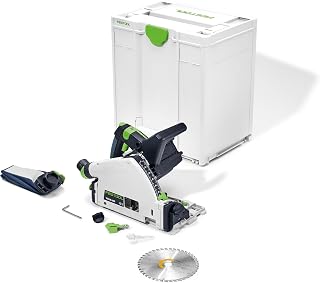


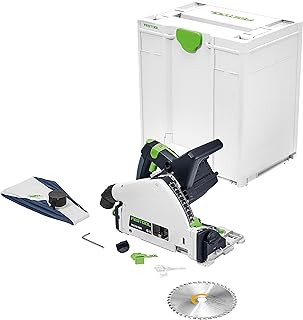


Choosing a Festool cordless jig saw is less about finding the machine with the biggest headline specification and more about matching the saw to the type of cutting you actually perform. For UK tradespeople, installers, joiners, cabinetmakers and serious DIY users, factors such as cut quality, blade guidance, ergonomics, battery compatibility, dust extraction, visibility of the cutting line and the availability of suitable blades can have a greater effect on day-to-day productivity than headline power figures.
Festool's cordless jig saw range is particularly relevant to users already invested in the Festool 18V system. Before comparing individual listings, check the exact model designation, whether a battery and charger are included, the supplied accessories and the condition of the machine. A tool sold as a bare machine can look considerably cheaper than a complete kit, but the overall cost may be different once a compatible battery and charger are included.
Buyers should be careful with lists that imply there are ten completely different current Festool cordless jig saw models to choose from. Festool's cordless jig saw offering is comparatively focused rather than a huge catalogue of unrelated machines. Different configurations, body styles, equipment packages, battery bundles and regional listings can sometimes appear as separate products even though the underlying saw is closely related.
For that reason, a useful buying guide should compare the characteristics that actually distinguish the available configurations rather than artificially creating ten supposedly different Festool machines. When evaluating a “top 10” list, check the model number and technical specification rather than relying solely on the product title used by a retailer or marketplace.
The Festool CARVEX cordless jig saw family is one of the key names to investigate when looking for a premium cordless Festool jigsaw. Models such as the PSC 420 and PSBC 420 are designed around the CARVEX platform, with different ergonomic configurations intended to suit different cutting positions and user preferences.
The PSC 420 uses a compact jigsaw form that can appeal to users who prefer a conventional handle arrangement, while the PSBC 420 uses a barrel-grip configuration. Neither format is universally better. The better choice depends on how you hold the tool, how much control you need around curves and whether you regularly make cuts in awkward positions.
When comparing CARVEX listings, pay close attention to the complete model code and package contents. A “Basic” version can refer to a tool supplied without batteries and charger, whereas another listing may include batteries, a charger and storage. Comparing only the advertised tool price can therefore produce a misleading result.
Specifications are useful only when interpreted in relation to the work you intend to perform. A longer maximum cutting capacity is not automatically more useful if most of your work involves thin sheet material, laminate, furniture components or accurately fitted timber parts.
Maximum cutting depth should be treated as a reference point rather than a target for everyday work. Always check the manufacturer's specification for the material concerned and remember that cutting capacity can vary according to material type, blade selection, cutting angle and the particular operating conditions.
For woodworking, consider the thicknesses you routinely encounter rather than choosing solely on the largest advertised figure. If you regularly cut thick hardwood, worktops or substantial timber, also consider whether a jig saw is genuinely the most efficient tool for the task. A track saw, circular saw, reciprocating saw or another cutting method may be more appropriate for particular jobs.
A variable stroke rate is valuable because different materials and blades respond differently to cutting speed. Faster settings can be useful for efficient cutting in suitable timber, while slower operation may provide greater control in delicate materials or when the finish of the cut is more important than speed.
Do not assume that operating at the highest speed produces the best result. Excessive speed can contribute to heat, premature blade wear, rougher cuts or material damage depending on the blade and workpiece. Experienced users normally select a setting that balances progress with control.
Pendulum action changes the movement of the blade and can increase cutting efficiency in suitable applications. More aggressive settings can help remove material quickly, particularly in timber, while reduced orbital action can be preferable when prioritising a cleaner finish or greater control.
The correct setting depends on the material, blade geometry and desired finish. For precision joinery, blindly selecting the most aggressive setting is rarely the best approach.
If you frequently make angled cuts, inspect how the baseplate is adjusted and locked. A secure bevel mechanism is important because even a small change in the intended angle can affect a fitted joint or visible finished edge.
Check the manufacturer's specified bevel range for the exact model and understand how the adjustment is made. If you use bevel cuts regularly, ease of adjustment can be just as important as the maximum angle.
The performance of a premium jig saw is heavily influenced by the blade. A high-end saw fitted with an unsuitable blade can produce disappointing results, while the correct blade can substantially improve cutting speed, edge quality and control.
Wood-cutting blades are available in different tooth configurations for fast cuts, clean cuts, curved cuts and specific material types. Fine-tooth blades are generally more appropriate when edge quality is important, while coarser blades can remove material faster in suitable timber.
Laminate-faced sheet materials can be prone to chipping and breakout. Use a blade specifically intended for the material and pay attention to the direction in which the teeth cut. Test cuts on an offcut are often worthwhile when the finished edge will be highly visible.
Metal requires blades designed for metal cutting rather than general-purpose timber blades. Blade selection should reflect the type and thickness of metal being cut. Cutting speed, lubrication requirements and heat management can also become more important.
Plastic can melt, grab or produce an untidy edge if the wrong blade or operating speed is used. Choose a blade suitable for the specific plastic and make controlled test cuts before committing to a visible component.
Cut quality is the result of several variables working together. The saw itself is only one part of the equation.
If a cut begins accurately and gradually moves away from the marked line, excessive feed pressure is one possible cause. Allowing the blade to cut at a controlled rate can provide better results than forcing the machine through the material.
Cordless convenience is particularly useful when cutting sheet material on site, working inside fitted furniture or moving between work areas. Removing the mains cable reduces one source of obstruction and makes quick cutting tasks more convenient.
However, cordless performance should not be judged simply by battery voltage. Battery capacity, battery condition, cutting load, blade selection, material and operating technique all influence practical runtime. A higher-capacity battery may increase runtime but also adds weight, so the best choice depends on whether portability or sustained cutting is the priority.
If you already own compatible Festool 18V batteries, a bare-tool configuration can make practical sense because you may not need another charger or battery. New users should compare the complete kit cost instead.
A compact battery can make a handheld jigsaw easier to manoeuvre, especially during detailed cuts or when the tool is being held away from the body. A larger-capacity battery can be more useful for prolonged cutting where minimising battery changes is important.
There is no single battery size that is best for every user. Consider how long your typical cutting sessions last and whether you already have other Festool cordless tools that can share the same battery platform.
A bare tool can be an economical choice for an established Festool user. Before buying, confirm that the listing really is compatible with the batteries you own and check exactly what accessories are included.
A complete kit may be more convenient for someone entering the Festool cordless ecosystem. Compare the included battery capacity, charger, storage system and accessories rather than judging the package solely by the number of items in the box.
Dust extraction can be especially valuable when using a jig saw indoors, in a workshop or during installation work where controlling debris matters. A suitable extraction setup can reduce airborne dust and help keep the cutting area clearer.
Compatibility should be checked at the exact model level. Do not assume that every hose, adapter or extraction accessory will fit every Festool tool configuration without checking the relevant manufacturer's information.
For professional woodworking, dust management should be considered part of the overall cutting setup rather than an optional cosmetic feature. Good extraction can also make the marked cutting line easier to see by reducing loose debris around the workpiece.
A jig saw can make straight cuts, but technique is important. For long, highly visible cuts, a circular saw and guide system may produce a more consistently straight result. A jig saw is particularly useful when the cut needs to start from an existing hole, follow a curved profile or accommodate an irregular shape.
When using a jig saw for a straight cut, clamp the workpiece securely, mark the line clearly and avoid pushing the tool sideways. Let the blade follow its intended path instead of attempting to steer it aggressively.
Curved cutting is one of the areas where a jig saw can be particularly useful. Accuracy depends on selecting an appropriate narrow or curved-cutting blade and avoiding excessive feed pressure.
For tight curves, make gradual movements rather than attempting to rotate the entire saw sharply. If the workpiece permits, relief cuts can help remove waste material and reduce the tendency for the blade to bind.
Splintering is a common concern when cutting plywood, veneered boards, laminates and other finished materials. Blade choice is often the first factor to investigate.
The shape of the handle can influence accuracy more than many buyers expect. A conventional handle can feel familiar to users accustomed to traditional jigsaws, while a barrel-grip configuration places the hand differently and can provide a different sensation of control.
Neither design should be selected solely because one looks more professional. If possible, compare the grip position, trigger arrangement, visibility of the cutting line and overall balance. Users who make long sequences of curved cuts should give ergonomics particular attention because small differences in hand position can become noticeable over time.
Good line visibility is essential for accurate jig-saw work. A tool can have excellent mechanical performance but still be frustrating if the operator cannot clearly see where the blade is travelling.
Before buying, consider the position of the blade relative to the housing, the shape of the baseplate, lighting around the workpiece and how dust is removed from the cutting area. In real workshop conditions, these details can have a greater effect on practical accuracy than a small difference in a headline specification.
Storage is worth considering when comparing similarly priced configurations. Festool users may value system-compatible storage because blades, batteries, chargers and accessories can otherwise become scattered around the workshop or van.
Check whether the particular package includes storage and which accessories are supplied. A package containing useful accessories can be better value than a nominally cheaper bare machine, but only if those accessories match the work you actually perform.
A bare machine and a complete kit should not be compared as though they contain the same equipment. Calculate the cost of the complete setup you actually require.
Retailer titles can contain phrases such as “professional”, “premium”, “top rated” or “new”. These descriptions do not replace the manufacturer's model number. Always verify the exact designation.
Many cordless power tools are sold in bare-tool configurations. Check the package contents before ordering so that the battery and charger requirements are understood in advance.
A jig saw is highly versatile, but it is not automatically the best machine for long, perfectly straight cuts, repetitive production work or very thick materials. Match the tool to the task.
Blade compatibility is only the starting point. The blade also needs to be appropriate for the material and the required finish.
High speed can be useful in the right application, but controlled cutting is often more important than maximum speed when accuracy and surface quality matter.
Large-capacity batteries can be useful for extended work, but additional weight may matter during prolonged overhead or detailed cutting.
Festool should be compared with other established professional power-tool manufacturers rather than evaluated in isolation. Bosch Professional, Makita, DeWalt and Milwaukee all have strong positions in cordless woodworking and construction tools, although their product ecosystems, ergonomics, batteries and accessory ranges differ.
The most sensible comparison is not simply “which brand is best?” Instead, compare the complete system around the saw.
Cross-brand comparisons should use the exact model specifications rather than brand reputation alone. Battery platforms are generally ecosystem decisions, so the best jig saw can be the one that fits the batteries, chargers and other equipment you already own.
A corded Festool jig saw can still be preferable where continuous mains-powered operation is more important than mobility. Cordless models are particularly convenient for installation work, site work and locations where trailing cables are inconvenient.
When comparing cordless and corded machines, consider how frequently you cut, how long individual sessions last, whether power outlets are readily available and whether battery charging fits your workflow. For occasional short cuts, cordless convenience can be valuable even when total cutting time is modest.
Retail listings can make essentially similar products appear more different than they really are. Use a structured comparison method to avoid selecting a product because of packaging or marketing language.
Write down the complete model designation. Do not rely on shortened retailer names.
Determine which specifications belong to the saw itself and which items are simply included in a particular bundle.
Establish whether you already own compatible batteries and whether the advertised package includes any.
Consider the timber, plywood, laminate, plastic or metal you actually cut. Then choose suitable blades and operating settings.
Consider whether the grip, balance and visibility suit your cutting style. This becomes particularly important for repeated work.
Include batteries, charger, blades, storage and other essential accessories when comparing packages.
Routine care can help maintain reliable operation and cutting accuracy. Disconnect the battery before carrying out cleaning, inspection or accessory changes and follow the manufacturer's safety and maintenance instructions.
Start by securing the workpiece firmly. Mark the cutting line accurately and select a blade designed for the material. Set the saw appropriately before beginning the cut rather than trying to compensate for an unsuitable setting while cutting.
Allow the blade to do the cutting. Excessive downward or sideways pressure can make the saw harder to control and can negatively affect the cut. For a visible finished edge, perform a test cut using the same material and blade whenever possible.
For complex shapes, drill a suitable starter hole where necessary, remove waste progressively and avoid forcing the blade into tight corners. Good preparation is often more important than simply selecting the most expensive saw.
A cordless jig saw is still a high-speed cutting tool and should be operated according to the manufacturer's instructions. Wear suitable eye protection and use appropriate respiratory protection where the material and working environment require it. Keep hands away from the blade path, secure the workpiece and make sure the blade is correctly installed before starting.
Before changing a blade or performing maintenance, remove the battery as specified by the manufacturer. Take particular care when cutting materials that can produce hazardous dust or fumes, and follow the applicable safety requirements for the material being processed.
Customer reviews can be useful, but they should not be treated as a substitute for technical specifications. Focus on reviews that identify the exact model and describe a specific use case.
A compatible CARVEX cordless configuration can be especially attractive if you already own suitable batteries and chargers. In this situation, a bare-tool package may provide exactly what is needed without duplicating equipment.
Prioritise cutting control, blade availability, ergonomics, dust extraction and repeatability. The most useful configuration is the one that complements the way you already work rather than simply having the longest specification list.
Portability, battery availability, weight and quick access to the tool can become more important than maximum theoretical runtime. Consider the complete setup that you can comfortably carry and use throughout the working day.
Workshop users should pay particular attention to extraction, storage, blade organisation and compatibility with existing Festool equipment. If the saw will be used primarily for detailed woodworking, clean cutting and precise control should be high on the selection criteria.
A premium cordless Festool jig saw can make sense when it will be used regularly and when the buyer values long-term compatibility with a wider cordless system. Occasional users should nevertheless compare the total investment against less expensive alternatives.
The best option depends on the work being performed, the preferred grip style, required cutting capacity, battery setup and included accessories. The CARVEX cordless family is the key range to investigate, with the exact configuration chosen according to the user's workflow rather than a generic “best for everyone” ranking.
The CARVEX range is positioned within Festool's professional-oriented woodworking and trade-tool ecosystem. Suitability for a particular professional application still depends on the material, workload, required cut quality and the manufacturer's specifications for the exact model.
Not necessarily. Festool tools can be sold in different package configurations, including versions where batteries and chargers are not included. Always check the complete contents of the exact listing before purchase.
The relevant CARVEX cordless models are part of Festool's 18V cordless platform, but buyers should verify compatibility against the exact tool and battery model before use rather than assuming every historical or regional battery configuration is interchangeable.
Neither grip style is universally better. A barrel grip can appeal to users who prefer a lower or different hand position, while a conventional handle may feel more familiar. Ergonomics should be evaluated according to the type of cutting and personal handling preference.
Jig saws are well suited to curved and shaped cuts when fitted with an appropriate blade. Tight curves require controlled feed pressure and a blade suited to the radius and material.
Yes, a suitable jig saw blade can be used for plywood, but the result depends heavily on the blade, plywood construction, cutting direction, speed and support. A fine-tooth blade intended for cleaner wood cutting can be preferable when edge quality matters.
A suitable blade can be used for laminate and laminate-faced boards. Because finished surfaces can chip, use a blade designed for the application and make a test cut before cutting the final component.
There is no universal replacement interval. Replace a blade when it becomes dull, damaged, bent or otherwise unsuitable for producing the required cut. Increased effort, poorer cut quality, burning or wandering can indicate that the blade needs attention.
That depends on the exact model, blade, timber species, thickness and cutting conditions. Check the manufacturer's cutting-capacity specification and use a blade designed for the material. For particularly thick or repetitive cuts, another type of saw may be more appropriate.
Neither is inherently better. Cordless operation provides mobility and avoids a mains cable, while corded operation can be advantageous for prolonged work where continuous power is preferred. Choose according to your working environment and existing equipment.
If you already own compatible Festool batteries and a charger, a bare-tool package can be sensible. If you do not have the required battery system, compare the complete cost of the tool, batteries and charger before deciding.
The strongest way to evaluate a top-rated Festool cordless jig saw is to move beyond star ratings and marketing descriptions. Identify the exact model, compare its manufacturer's specifications, establish whether the package includes batteries and accessories, choose blades for your actual materials and consider how the tool fits into your existing cordless system.
For UK buyers, availability and package contents can vary between retailers, so check the current listing carefully before purchasing. Prices, bundles and stock status can change, and a package that represents good value at one time may not remain the best option later.
Most importantly, do not select a jig saw solely because it appears near the top of a ranking. The right Festool cordless jig saw is the configuration that provides the cutting control, ergonomics, battery compatibility, accessories and material capability required for your specific work. Compare the exact specifications and current customer feedback, then check today's retailer pricing and package contents before making the final decision.