

♥ Wishlist
Compare 11 verified Dewalt Cordless Screwdrivers products in United Kingdom. Reviews, ratings, pros, cons and buying advice updated for October 2026.




A good cordless screwdriver should match the type of fastening work you actually carry out rather than simply having the highest voltage, largest battery or longest specification sheet. For UK buyers, the most useful comparison is usually between torque control, size, battery platform, chuck or bit-holder design, speed control, handling and the type of materials you intend to work with.
DEWALT has a broad cordless range covering compact screwdrivers, drill drivers and combi drills, so it is important to distinguish between a tool designed primarily for screwdriving and a more versatile drill/driver intended for drilling as well as fastening. A compact driver can be preferable for cabinet assembly, electrical installation and repeated screwdriving, while a drill driver may make more sense for general DIY and maintenance around the home.
The best choice is not necessarily the most powerful model. A well-balanced cordless screwdriver should provide enough torque for the fasteners you use, enough battery capacity for the workload, straightforward speed and torque adjustment, and comfortable handling during repeated use.
Compact screwdrivers are designed around manoeuvrability. Their smaller form can make them particularly convenient for furniture assembly, electrical work, shelving, light maintenance and repetitive fastening where maximum drilling capability is not required.
The main advantage is control. A smaller tool is easier to position directly over the screw and can reduce wrist fatigue in confined spaces. However, buyers should check the torque range and intended application before assuming that a compact screwdriver can replace a full-size drill driver.
A drill driver combines screwdriving with general-purpose drilling. This makes it a strong all-round choice for homeowners, tradespeople and DIY users who need one cordless tool for several jobs.
Compared with a screwdriver-focused tool, a drill driver is normally larger and heavier. That extra size can be worthwhile if you regularly drill timber, plastics and suitable masonry or metal with the appropriate accessories, but it may be unnecessary for predominantly screwdriving work.
A combi drill adds hammer action for suitable masonry drilling. This can be useful for general household maintenance, especially where the same tool may be used for fixing into timber and drilling into brickwork.
For predominantly screwdriving tasks, however, the additional functionality may not be the deciding factor. Buyers should consider whether the extra versatility justifies the additional weight and size.
Brushless motor technology is an important consideration when comparing cordless tools. Brushless motors eliminate conventional carbon brushes and are commonly associated with efficient operation, reduced maintenance requirements and strong performance from modern battery platforms.
For frequent professional use, a brushless model can be especially attractive. For occasional household jobs, however, the most expensive motor technology is not automatically the best-value choice. The right decision depends on workload, expected service life, ergonomics and the complete kit price.
Not necessarily. Voltage should be considered alongside motor design, gearing, torque control, battery capacity, tool size and intended application.
A higher-voltage cordless drill can provide substantial power for demanding drilling and fastening, but a compact lower-voltage tool can be more practical when the primary requirement is lightweight screwdriving. Holding a large tool for repetitive overhead or confined-space work can be less comfortable than using a smaller model with adequate power.
Rather than choosing purely by voltage, consider the largest screw and drilling task you realistically expect to undertake. This approach prevents paying for capability that may rarely be used.
Torque control is one of the most important features for controlled screwdriving. The clutch allows the user to limit the amount of torque delivered once the selected setting is reached.
This is particularly useful for assembling furniture, installing hardware and fastening into softer materials. Without appropriate torque control, a powerful tool can drive a screw too deeply, strip the screw head or damage the material.
For construction work, torque requirements can vary substantially. Long structural screws, large wood screws and other demanding fasteners may require considerably more torque than small cabinet screws. The correct setting should therefore be determined by the fastener, material and manufacturer's guidance rather than by selecting maximum torque for every application.
Two-speed gearboxes are common on cordless drill drivers because different tasks benefit from different operating ranges.
The variable-speed trigger complements the gearbox. Gentle trigger pressure can help start a screw cleanly, reduce bit walking and improve control before increasing speed.
Battery capacity is commonly expressed in ampere-hours, or Ah. In simple terms, a higher Ah rating generally represents greater stored electrical capacity within the same battery platform, although actual runtime depends on the tool, workload, material, accessory, temperature and operating conditions.
A compact battery can make a cordless screwdriver substantially easier to handle. A larger battery can reduce the frequency of battery changes during demanding work but can also increase the overall weight of the tool.
If you already own compatible DEWALT batteries, buying a bare tool can sometimes be a sensible way to expand the system. If you are starting from scratch, compare the complete kit rather than judging a tool's value from the bare-tool price alone.
Battery compatibility deserves careful attention because cordless tools are part of an ecosystem. A battery that physically resembles another pack is not automatically compatible with every DEWALT tool.
Before purchasing a bare tool, confirm the exact battery platform specified for that model. Also check whether the kit includes a battery and charger or contains the tool only.
For households and workshops already using several compatible cordless tools, staying within one battery system can reduce the number of chargers and battery types required. It can also make it easier to keep a charged spare available.
A dedicated bit holder can be convenient for repetitive screwdriving because bits can often be changed quickly. It is particularly useful for users who regularly switch between different screwdriver profiles.
A keyless chuck provides greater accessory flexibility because it can accept a range of drill bits and screwdriver accessories within its stated capacity. This is one reason drill drivers are often more versatile than screwdriver-only tools.
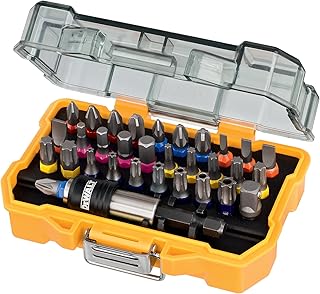
When purchasing bits, check the shank format and size supported by the tool. Common screwdriver bits include Phillips, Pozidriv, Torx and slotted profiles, while specialist applications may require other designs.
The bit should match the screw head precisely. A poor-fitting bit can slip, damage the recess and make it harder to apply consistent pressure.
High-quality bits can make a noticeable practical difference. A premium cordless screwdriver paired with worn or poorly matched bits will not deliver the same fastening control as a suitable tool and correctly selected accessory.
Specifications do not tell the entire story. The physical design of a cordless screwdriver can have a major effect on how useful it feels during extended work.
Look at the position of the battery, handle shape, trigger placement, balance and overall length. A tool that feels comfortable for a few minutes may become tiring during repetitive installation.
For overhead work, weight becomes especially important. A compact tool can also be easier to control when working inside narrow cupboards or between closely spaced components.
An integrated LED can be surprisingly useful when fastening in areas where the user's body or the workpiece blocks ambient light. It can help illuminate the screw head and immediate working area.
Lighting should be treated as a useful convenience rather than a substitute for proper workplace illumination. When accurate drilling or fastening is required, good overall lighting remains important.
Brushless and brushed motors represent different approaches to cordless power-tool design. Brushless motors use electronic control rather than conventional mechanical brushes, while brushed motors use brushes that contact the motor's commutator.
For intensive use, brushless technology can be attractive because it is associated with reduced brush wear and efficient electronic motor control. For occasional DIY use, a brushed model may still provide sufficient capability for the intended tasks.
When comparing two tools, do not let the brushless label become the sole deciding factor. Compare torque, speed range, size, weight, battery system, included accessories and overall suitability for the intended work.
When comparing ten shortlisted models, these are the criteria that provide the most useful separation between them:
DEWALT is not the only established manufacturer worth considering. Buyers should also compare equivalent tools from brands such as Makita, Bosch Professional and Milwaukee.
DEWALT and Makita both offer extensive cordless ecosystems. The better option depends heavily on the battery platform already present in your workshop and the ergonomics and specifications of the particular models being compared.
Bosch Professional offers a broad selection of trade-oriented cordless tools. When comparing a Bosch Professional model with a DEWALT equivalent, focus on the actual torque range, speed, dimensions, battery configuration and included equipment rather than relying on brand reputation alone.
Milwaukee is another major professional power-tool brand with a substantial cordless range. Its products can be particularly relevant to trade users comparing complete battery ecosystems. Again, the most useful comparison is between equivalent tool classes rather than between brands in general.
More power is not automatically better for delicate screwdriving. Excess torque can damage screw heads, fasteners and workpieces if it is not controlled appropriately.
A heavy tool may be perfectly suitable for occasional high-demand drilling but less comfortable for hundreds of repetitive screws. Consider the duration and position of your typical work.
A low bare-tool price can become less attractive if you also need to purchase batteries and a charger. Always calculate the complete setup required.
Torque figures should not be viewed in isolation. Real-world usability also depends on gearing, trigger control, clutch settings, battery condition, accessory selection and the material being worked.
A high-performance drill driver cannot compensate for a worn or incorrect screwdriver bit. Matching the bit to the fastener is essential for reliable results.
Always verify the specified battery platform for the exact model. Product families can have different electrical and physical requirements.
Create a simple comparison based on your actual requirements rather than ranking tools by specification alone.
For occasional DIY, the ideal choice is usually a compact and easy-to-control model rather than the most powerful professional tool available. Furniture assembly, shelving, picture hanging, general repairs and small woodworking projects rarely require maximum torque.
Prioritise comfortable handling, sensible torque adjustment, variable speed and a battery configuration that does not make the tool unnecessarily heavy.
Furniture assembly places a premium on control. Many screws need to be driven into engineered boards or other materials where excessive torque can damage the surface or strip the fixing.
A compact tool with good trigger control and adjustable torque is generally more appropriate than a large high-torque drill. A suitable bit is equally important, particularly when working with Pozidriv or Torx fasteners commonly found in modern furniture.
Woodworking applications can vary considerably. Small cabinet screws require different characteristics from long structural fasteners, so the correct tool depends on the type and size of the project.
For cabinet work and smaller joinery, control and compactness can be more important than maximum power. For larger timber construction, greater torque, battery capacity and robust gearing become more significant.
Trade users should place greater emphasis on durability, battery availability, charging arrangements and ergonomics because the tool may be used repeatedly throughout the working day.
A professional buyer should also consider the wider DEWALT battery ecosystem. If several compatible tools are already in use, keeping batteries interchangeable can simplify charging and reduce downtime.
Tool length can matter as much as power when access is restricted. A compact screwdriver can reach areas that are awkward for a full-size drill driver.
Before buying, consider the total length from the rear of the tool to the bit and the position of the battery. A short overall package can be particularly useful inside kitchen cabinets, cupboards and service areas.
Basic care can help keep a cordless screwdriver working reliably. Maintenance requirements vary by model, so the manufacturer's instructions should always take priority.
Modern lithium-ion batteries should be treated carefully. Avoid exposing battery packs to conditions outside the manufacturer's specified operating and storage limits.
Do not attempt to open, modify or repair a battery pack yourself. If a battery is visibly damaged, unusually hot, swollen or behaving abnormally, discontinue use and follow the manufacturer's safety guidance.
Power tools should be used according to the manufacturer's instructions and with appropriate personal protective equipment for the task. Eye protection is particularly important when drilling or fastening in environments where particles or fragments may be produced.
UK retailers commonly offer the same basic tool in several configurations. A product listing may be available as a bare tool, a kit with one battery and charger, or a larger kit containing additional batteries and accessories.
This makes direct price comparisons misleading unless the contents are identical. A more expensive package may provide substantially more equipment, while a cheaper bare tool can be better value for someone who already owns compatible batteries.
Customer ratings can be useful, but the headline star rating should not be the only factor in a purchasing decision. Read reviews for information about the specific aspects that matter to your intended use.
The cheapest listing is not necessarily the best deal. Compare the exact model number, battery quantity, battery capacity, charger, case and included accessories.
Also check whether two apparently similar listings are actually different generations or configurations. Small differences in kit contents can significantly change the overall value.
For UK buyers, compare reputable retailers and check the latest product specifications before purchasing. Prices, promotional offers and stock conditions can change, so current retailer information should be checked at the time of purchase.
DEWALT cordless tools can make particular sense for users who value a broad cordless ecosystem and need equipment suitable for DIY, maintenance, woodworking or professional trade applications. The brand is especially relevant when battery compatibility across several tools is an important consideration.
However, buyers should not choose a tool solely because of the brand. Compare equivalent models from DEWALT, Makita, Bosch Professional and Milwaukee according to the specific job, ergonomics, battery requirements and total cost of ownership.
If you only assemble furniture occasionally or perform a few small household repairs each year, a premium professional-grade cordless tool may provide more capability than you need.
Infrequent users should consider how often the tool will actually be used and whether the additional cost of a professional battery platform, larger battery packs or advanced motor technology provides meaningful benefits for their work.
There is no single best model for every UK buyer. The right choice depends on whether you prioritise compact size, drilling capability, high torque, battery runtime, low weight or compatibility with batteries you already own. Compare the exact models according to your typical applications rather than choosing solely from a ranking.
Yes, DEWALT offers cordless tools suitable for a wide range of DIY applications. For household use, prioritise manageable weight, useful torque adjustment, variable speed and a battery configuration appropriate to the size of your projects.
It depends on the work. A drill driver is generally the more versatile option because it can handle drilling as well as screwdriving, while a compact screwdriver can be easier to handle for repetitive fastening and confined spaces.
Brushless technology can be worthwhile for frequent or demanding use because of its modern motor design and reduced reliance on replaceable carbon brushes. For occasional DIY work, however, a less expensive tool may provide sufficient performance.
Choose according to the balance between runtime and weight. Smaller batteries can keep a screwdriver compact and comfortable, while higher-capacity batteries can be preferable for prolonged demanding work.
Battery compatibility depends on the exact DEWALT platform and tool. Always verify compatibility using the manufacturer's specifications rather than assuming that all DEWALT battery packs are interchangeable.
If you already have compatible batteries and a charger, a bare tool may be the more economical option. If you are new to the platform, compare complete kits and consider the cost of batteries and charging equipment.
There is no universal torque requirement. Small furniture screws require substantially less torque than large construction fasteners. Adjustable clutch settings are particularly valuable because they allow the user to tailor fastening force to the material and screw.
The bit must match the screw head. Pozidriv is common in many UK applications, while Phillips, Torx and other profiles are also widely used. Check the screw manufacturer's specification or identify the recess accurately before selecting the bit.
No. Higher Ah generally means greater battery capacity, but it can also add weight. A smaller battery can be preferable when portability and comfort matter more than maximum runtime.
Compare their torque, speed range, clutch adjustment, chuck or bit-holder design, weight, dimensions, battery compatibility, motor type and kit contents. Then consider whether the additional features of the more expensive model are useful for your actual workload.
DEWALT has a substantial range aimed at demanding users, but suitability depends on the exact model. Professional buyers should assess the tool's specifications, ergonomics, battery system, workload requirements and manufacturer's stated capabilities.
There is no fixed replacement interval. Replace a bit when it becomes worn, damaged, deformed or no longer fits the fastener securely. Continuing to use a worn bit can increase slipping and damage to screw heads.
Before selecting one of the top-rated DEWALT cordless screwdrivers or drill drivers, check the following:
A useful independent buying guide should assess more than popularity. The most meaningful comparison considers the relationship between specifications and the jobs the tool is intended to perform.
For a 2026 UK buying decision, consider performance, handling, battery compatibility, versatility, accessory compatibility, expected workload and overall kit value. Customer feedback can provide additional insight into everyday usability, but specifications should always be checked against the manufacturer's current information.
Because retailer prices, promotions and kit configurations can change, treat price as a current purchasing factor rather than a permanent product characteristic. Before buying, compare the exact configuration, read verified customer reviews and confirm the latest specifications and included accessories.
The best top-rated DEWALT cordless screwdriver for a UK buyer is the model that provides the right combination of power, control, size, battery runtime and versatility for the work ahead. A compact screwdriver can be the smarter choice for repetitive fastening, furniture and confined spaces, while a drill driver or combi drill may offer better flexibility for mixed drilling and screwdriving tasks.
DEWALT, Makita, Bosch Professional and Milwaukee all offer established cordless-tool ecosystems, so buyers should compare equivalent tools rather than relying on brand reputation alone. Pay particular attention to battery compatibility, torque control, ergonomics and complete kit contents. Once those factors match your requirements, comparing current UK retailer prices and verified customer feedback becomes much more meaningful.