
♥ Wishlist
Compare 43 verified Line Laser Level for Accurate Levelling and Alignment products in United Kingdom. Reviews, ratings, pros, cons and buying advice updated for October 2026.


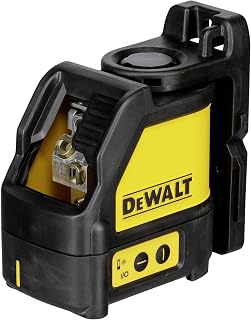


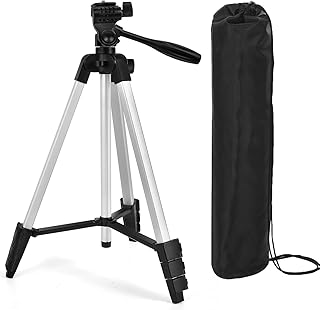


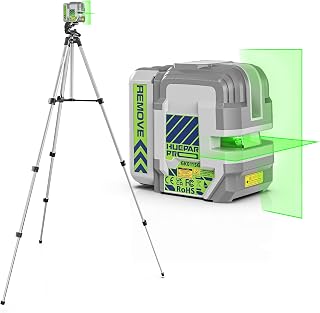


A line laser level can make setting out much faster and more consistent than relying on a traditional spirit level, particularly when a perfectly straight horizontal, vertical or cross-line reference is needed across a room. For UK DIY projects, decorating, kitchen fitting, shelving, tiling, flooring, carpentry and general renovation work, the right laser level can reduce repeated measurements and make alignment easier to check as work progresses.
However, the highest-rated option is not automatically the best choice for every buyer. A compact indoor laser designed for occasional decorating work has very different priorities from a robust model intended for construction environments. Range, visibility, self-levelling capability, accuracy, battery system, mounting options, protection against dust and moisture, operating controls and included accessories can all affect whether a particular model is suitable.
When comparing the best line laser levels available in the UK, consider the actual jobs you expect to perform rather than selecting solely on brand recognition or review scores. A sensible buying decision balances accuracy and usability with the working range, environment and frequency of use.
A line laser level projects a visible laser reference onto a surface. Depending on the design, it may project a horizontal line, vertical line, cross line or several lines simultaneously. The projected reference can then be used to align fixtures, cabinets, shelves, tiles, sockets, lights, framing components and other objects.
Many modern models incorporate an automatic self-levelling mechanism. Instead of manually adjusting the instrument until the bubble is centred, the internal mechanism compensates for small positioning errors and establishes a level reference within the manufacturer's specified operating range.
Some models also allow the pendulum or levelling system to be locked. This is useful when an angled reference is required, such as for stairs, slopes or other non-level layouts. A locked mode should not be confused with automatic levelling: when the levelling mechanism is intentionally locked, the projected line may represent the physical orientation of the tool rather than a true horizontal or vertical reference.
A horizontal line model projects a level reference across a wall or other surface. It is particularly useful for hanging multiple pictures, positioning wall cabinets, installing shelves, aligning dado rails and setting consistent heights during decorating or renovation.
For many indoor DIY jobs, a horizontal line can provide most of the functionality required without the additional complexity or cost of a multi-line construction laser.
A vertical laser creates a plumb reference. It can help with positioning wall coverings, door frames, partitions, cabinets, vertical battens and other components where maintaining a straight vertical alignment is important.
A cross-line laser projects intersecting horizontal and vertical lines. This combination is one of the most useful configurations for general indoor work because the intersection provides both a level and plumb reference from a single setup.
Cross-line models are often a strong choice for users who undertake several different types of home improvement work rather than one specialist task.
More advanced units can project multiple planes or lines simultaneously. These models can be useful for detailed construction layouts, cabinetry, partitioning and other applications where several reference directions need to remain visible at the same time.
The additional projection capability can improve productivity, but it may be unnecessary for straightforward household jobs. More features can also mean a larger instrument, more controls and a higher purchase cost.
Accuracy is one of the most important specifications to examine. Laser-level accuracy is commonly expressed as a tolerance over a specified distance, so the figure needs to be interpreted in context rather than treated as an isolated number.
A model specified at a certain tolerance per metre, for example, will not necessarily produce the same practical result over every distance or in every environment. Temperature, handling, setup, surface conditions and calibration can all affect real-world results.
For occasional DIY work, a reasonable accuracy specification may be sufficient. For precision cabinetry, detailed installation work or professional construction, buyers should pay much closer attention to the manufacturer's stated tolerance and operating conditions.
The self-levelling range describes how much the instrument can be tilted while still automatically establishing its reference. A wider range can make setup more forgiving, particularly when the supporting surface is not perfectly level.
If the tool is outside its self-levelling range, many models indicate the condition through a flashing laser or another warning. Always check the individual manufacturer's instructions because the behaviour and indication method can vary.
Working range determines how far the projected line can be used effectively. For small rooms, a very long range may offer little practical advantage. Larger renovation projects, open-plan interiors and construction environments can benefit from greater range.
Laser visibility is also influenced by ambient lighting. A manufacturer's stated range should therefore be considered alongside the intended environment rather than assuming the same visibility will be achieved outdoors in bright daylight.
Green and red laser lines are the two common choices. Green lines are often easier for the human eye to see under many conditions, while red laser models can be entirely adequate for normal indoor applications and may offer a simpler or more economical solution.
Visibility depends on more than laser colour. Room brightness, projection distance, wall colour, surface texture and the user's viewing position all matter. If the laser will mainly be used indoors, particularly in rooms with controlled lighting, visibility requirements may be less demanding than they would be for bright construction environments.
Battery arrangements vary considerably between laser levels. Some use replaceable alkaline batteries, while others use rechargeable battery packs or share a battery platform with other power tools.
For occasional household use, readily available replaceable batteries can be convenient because there is no need to maintain a charging routine. Frequent users may prefer a rechargeable system, especially when compatible batteries are already part of an existing tool collection.
Check whether the quoted runtime applies to continuous operation, which projection modes are being used, and whether batteries or a charger are included with the specific package.
A good laser is much easier to use when it can be positioned securely. Look for useful mounting provisions such as a standard tripod connection, magnetic mounting, clamp compatibility or a dedicated wall bracket where appropriate.
A stable mounting method is particularly important because even a highly accurate laser becomes difficult to use if it moves during installation. The best mounting arrangement depends on the surface and task: magnetic mounting can be convenient on suitable metal surfaces, while a tripod can provide more flexible positioning across an open room.
Controls should be simple enough to operate without repeatedly consulting the manual. Consider whether the horizontal and vertical lines can be controlled independently, whether there is a pulse or receiver mode, how the levelling lock is activated and whether the status indicators are easy to understand.
For work at height, straightforward controls can be especially valuable because constantly repositioning a ladder or reaching around an installation area adds unnecessary inconvenience.
There is no universal winner between red and green line lasers. The better choice depends on the environment and budget.
Self-levelling models are usually the more convenient choice for general users because the instrument establishes the reference automatically within its specified compensation range. This can save setup time and reduce errors caused by imperfect manual adjustment.
Manual or fixed-line operation still has a purpose. It can be useful when deliberately projecting a slope or another non-level reference. Some self-levelling models provide this flexibility through a pendulum-lock or manual mode.
For buyers who want one versatile laser for household renovation, a model combining automatic levelling with a lockable manual mode can provide a useful balance.
The required accuracy depends on the application. Hanging a few shelves or positioning decorative items does not necessarily demand the same tolerance as installing cabinetry across a large wall or carrying out detailed construction layout work.
When comparing specifications, look for the manufacturer's stated accuracy and the distance at which that tolerance is specified. A figure without its measurement basis can be misleading.
It is also important to distinguish instrument accuracy from installation accuracy. A perfectly specified laser cannot compensate for a loose mounting surface, movement during measurement, an incorrectly positioned tool or an unstable tripod.
Range is often used as a headline specification, but buyers should think about the largest practical distance at which they need a clearly visible and usable reference.
For a typical small room, the laser may only need to span a wall or ceiling area. A renovation project involving larger rooms or multiple work zones may justify a model with a longer usable range. If the laser is intended for outdoor work, receiver compatibility becomes more important because direct visual detection can become difficult in daylight.
Do not assume that a manufacturer's maximum range represents equally strong visibility under every condition. Read the operating specifications carefully and consider whether the quoted distance depends on a receiver.
A laser level used around construction materials needs more protection than one kept in a home workshop. Dust from drilling, plasterboard, masonry and sanding can quickly expose weaknesses in poorly protected equipment.
Look at the manufacturer's stated ingress-protection rating where one is provided. This can indicate resistance to dust and water under defined test conditions, but it should not be interpreted as permission to expose the tool to conditions outside its specifications.
A robust housing, protected optics, secure controls and a sensible carrying case can all contribute to long-term usability. Rubberised external protection may also help with minor knocks, although no laser level should be treated as drop-proof unless the manufacturer explicitly states an appropriate protection specification.
DIY users often need a versatile tool rather than a specialist construction instrument. A compact self-levelling cross-line laser can be particularly useful for common household projects.
Kitchen installation places particular demands on alignment because cabinets, worktops, splashbacks and wall-mounted components need to relate to one another accurately.
A horizontal reference can help establish a consistent installation line, while a vertical line can assist with aligning cabinets and other components. A cross-line configuration can therefore be more useful than a single horizontal laser for buyers who regularly undertake kitchen fitting.
Magnetic or clamp-based mounting can also make positioning easier where the surrounding structure provides a suitable attachment point. However, the mounting system should never be relied upon without checking that it is secure and appropriate for the surface.
Laser levels can be useful during tiling because they provide a consistent reference that remains visible while tiles are positioned. A horizontal line can help establish the starting course, while a vertical line can assist with keeping patterns and grout lines aligned.
For larger tiling jobs, projection coverage and visibility can become more important than maximum distance alone. A model that allows individual lines to be switched on or off can also reduce visual clutter and make the relevant reference easier to follow.
Always account for the actual installation method, substrate and tile layout. A laser is a reference tool; it does not replace proper surface preparation, measurement or checking of tile spacing.
For decorating, simplicity is often more valuable than an extensive set of professional features. A compact self-levelling cross-line model can help align wallpaper, panelling, shelves, picture arrangements, paint boundaries and other decorative features.
Buyers who only occasionally carry out indoor projects may have little reason to pay extra for extreme range, advanced outdoor functionality or a large rechargeable battery platform. In this use case, visibility, ease of mounting and dependable self-levelling operation may matter more.
Carpentry and joinery can benefit from both horizontal and vertical references. When installing cabinets, doors, shelving systems or framing components, being able to establish a consistent plane can save repeated measurements.
For detailed joinery, pay close attention to accuracy, mounting stability and the ability to position the laser precisely. A convenient carrying case is also worthwhile for tradespeople who regularly move equipment between workshops and jobsites.
Professional users should generally evaluate a laser level differently from occasional DIY buyers. Frequent use places greater emphasis on durability, repeatability, battery management, mounting options and compatibility with existing equipment.
A professional-grade instrument can make financial sense when it is used regularly and contributes to faster setup. For someone completing one or two household projects, however, buying a more advanced instrument simply because it has a professional specification may provide little practical benefit.
Several established power-tool and measuring-tool manufacturers produce laser levels for different user groups. Brand choice should be considered alongside the exact model specification rather than treated as a substitute for comparing features.
Availability, package contents, specifications and model ranges can change, so check the exact model number before buying rather than relying on the reputation of a brand alone.
Two laser levels from the same manufacturer can target completely different users. One may be a compact household model with basic cross-line projection, while another may be designed for professional construction and offer multiple planes, receiver compatibility and enhanced protection.
When comparing products, record the exact model number and compare the manufacturer's specifications side by side. Pay particular attention to accuracy, levelling range, projection configuration, range, battery type, operating temperature, protection rating and included accessories.
An IP rating can provide useful information about protection against ingress of solid particles and water. The two digits have different meanings and should be interpreted according to the manufacturer's specification.
For construction work, dust resistance can be especially relevant. Water resistance can also matter when working in less controlled environments, but an IP rating does not mean the tool can be submerged, pressure-washed or exposed indefinitely to rain.
Always use the exact protection rating supplied for the model you are considering and follow the manufacturer's operating limitations.
A tripod provides controlled height and positioning and can be particularly useful when a laser needs to project across an open room. Check the connection specification before purchasing an accessory.
A wall bracket can be useful when the laser needs to remain fixed at a particular height. The suitability depends on the mounting surface and the weight and design of the laser.
A magnetic mount can speed up positioning on suitable ferrous surfaces. It should not be assumed to work on every metal or construction material.
A compatible receiver can extend the usefulness of supported laser levels in bright environments or over longer distances. Receiver compatibility should be confirmed for the exact laser model before purchase.
Some manufacturers offer glasses designed to make certain laser lines easier to see. These should be treated as visibility aids rather than protective eyewear unless they are specifically rated for the intended safety purpose.
A protective case can help prevent scratches and accidental damage during transportation. It can also keep the laser, batteries, mounting accessories and documentation together.
Customer ratings can provide useful purchasing context, but a high overall score does not tell you whether a product is suitable for your particular application. Look for evidence about the specific features you need and compare technical specifications.
Longer range can be useful, but paying for capabilities that will never be used can reduce the value of the purchase. Think about the largest area you realistically expect to work across.
Buyers sometimes concentrate on laser colour and accuracy while overlooking how the tool will actually be positioned. A difficult-to-mount laser can be frustrating even if its core specifications are excellent.
A green laser is not automatically more accurate than a red laser. Colour primarily concerns visibility, whereas accuracy is a separate specification.
The purchase price is not the only ownership consideration. Think about replacement batteries, charging equipment and whether the battery system is compatible with tools you already own.
Visible laser lines can become difficult to see in strong daylight. If outdoor work is important, check whether the specific model supports a receiver and whether its stated operating range is appropriate.
Precision measuring equipment needs appropriate care. A laser that has suffered a significant impact or shows questionable alignment should not automatically be assumed to remain within its original specification.
Before relying on a laser for an important installation, inspect the tool and confirm that it operates normally. Check the housing for damage, ensure the pendulum or levelling mechanism behaves correctly and verify that the projected line appears stable.
For critical work, perform an appropriate accuracy check according to the manufacturer's instructions. If the result is outside the specified tolerance, do not simply compensate for the error during installation. Investigate the cause and follow the manufacturer's calibration or service guidance.
A simple field check can help identify obvious alignment problems, although it should not be treated as a substitute for professional calibration where precise certification is required.
Do not use an improvised test as proof that an instrument meets a formal calibration requirement. For professional applications where measurement accuracy is critical, use the manufacturer's recommended procedure or an appropriate calibration service.
Laser levels are measuring and alignment tools, but they still need to be operated responsibly. Never deliberately look into the laser aperture or point the beam towards a person's eyes. Avoid creating situations where the beam can remain directed at eye level for an extended period.
Read the safety information supplied with the exact product before use. Laser classifications and precautions vary between products, so do not assume that instructions for one model apply to another.
Keep the laser away from children and store it securely when it is not being used. If the tool is being used around other workers, position it so that the projected beam does not create an unnecessary eye-level hazard.
A spirit level remains an excellent tool for short measurements and quick checks. It is compact, requires no batteries and is easy to use in confined spaces.
A line laser becomes particularly useful when a reference needs to extend across a larger area or remain visible while both hands are occupied. Instead of repeatedly moving a spirit level along a wall, the laser can project a continuous reference across the working area.
For many DIY tool collections, the two tools complement each other rather than one completely replacing the other.
Line lasers and rotary lasers are designed for overlapping but different applications. A line laser is generally convenient for visible references across indoor walls and surfaces. Rotary lasers are commonly associated with larger-area levelling and site work where a reference needs to cover substantial distances.
For normal household renovation, a line laser is often the more practical format. Buyers working on large construction sites, extensive external layouts or applications requiring long-distance reference lines may need to investigate rotary laser equipment instead.
These tools solve different measurement problems. A laser distance measurer determines distance between points, while a line laser establishes a visual alignment reference.
For a renovation toolkit, having both can be useful. The distance measurer can establish dimensions, while the line laser can transfer those measurements consistently onto walls, floors or ceilings.
A useful comparison should go beyond the headline rating. Create a shortlist based on your actual requirements and then compare the following specifications.
Good value does not necessarily mean choosing the cheapest product. It means paying for features that genuinely improve the work you intend to perform.
A DIY user may get better value from a compact cross-line laser with reliable self-levelling and straightforward mounting than from a substantially more expensive multi-plane construction model. Conversely, a professional who uses the instrument every day may save time with better durability, battery compatibility, enhanced visibility and additional projection modes.
Consider the cost of accessories as well. A laser that requires a separate tripod, mount, receiver or charger may have a different overall ownership cost from a package that already includes the equipment you need.
When researching top-rated line laser levels, focus on detailed customer feedback rather than the overall star rating alone. Useful reviews often explain how the product performs in a particular environment and whether its controls and mounting system are practical.
Look for recurring comments about:
Be cautious with reviews that provide no information about how the product was used. A product can receive positive feedback for simple decorating tasks while being unsuitable for demanding construction applications.
Product listings can differ by retailer, package configuration and model number. Before placing an order, verify the exact model designation and compare the manufacturer's specifications with the retailer's description.
At the lower end of the market, prioritise reliable basic functionality rather than an unusually long feature list. A straightforward self-levelling horizontal or cross-line model can be sufficient for decorating, shelving and occasional household repairs.
Mid-range models can provide a useful balance between convenience and capability. This is often the category worth investigating for frequent DIY users who want better mounting flexibility, improved visibility or additional projection modes without moving into specialist equipment.
Professionals should assess the complete working system rather than simply the purchase price. Accuracy, ruggedness, battery ecosystem, receiver support, mounting solutions, calibration provisions and expected frequency of use can have a much greater impact on value over time.
Cordless laser levels can be particularly convenient where there is no nearby mains supply. Rechargeable systems can also integrate neatly with existing cordless tool ecosystems.
Before choosing a cordless model, check whether the battery and charger are supplied in the package. Some tool platforms sell bare units that are intended for users who already own compatible batteries and chargers.
Also consider the physical size and weight of the battery. A larger battery may provide longer operation but can affect the balance and portability of a compact laser.
For users already invested in a cordless power-tool ecosystem, battery compatibility can simplify ownership. A compatible battery may allow the same charging equipment to support multiple tools and reduce the need for separate battery systems.
However, compatibility should always be confirmed for the exact laser model and battery generation. Do not assume that two products from the same brand necessarily share the same battery platform.
If the tool is being purchased for a larger renovation rather than a single task, versatility becomes more important. A cross-line model with good indoor visibility and flexible mounting can cover a broad selection of applications.
For extensive renovation work, also consider whether you may later need outdoor layout capability or a receiver. Planning around likely future projects can be more economical than buying a basic laser now and replacing it shortly afterwards.
Ceiling work can be awkward because traditional measuring methods often require repeated checks. A laser can establish a reference across the room while the installer works at multiple points.
Vertical projection is equally useful when the wall layout needs to correspond with ceiling features, partitions or floor positions. For these applications, a cross-line or multi-line configuration can offer greater flexibility than a horizontal-only laser.
For shelving and cabinets, the key benefit is maintaining a consistent reference across the installation area. A horizontal laser can help establish the intended height before drilling or fixing components.
Where cabinets also need to align vertically with adjacent units, a cross-line laser can provide an additional reference. Always verify measurements and fixing positions independently before drilling into walls, particularly where hidden pipes, cables or structural elements may be present.
Vertical alignment is particularly important when installing wallpaper panels, wall panelling or decorative battens. A vertical laser line can provide a continuous reference that is easier to follow than a short spirit-level edge.
A horizontal line can also assist with establishing a consistent starting or finishing height. For detailed decorative work, visibility and ease of positioning may be more important than extreme range.
Laser levels can assist with transferring references around a room, but flooring work still requires careful attention to substrate condition, manufacturer installation requirements and expansion provisions where applicable.
A laser should be regarded as a layout aid rather than a replacement for the manufacturer's installation instructions or the appropriate measuring and preparation techniques for the flooring material.
Not every household project justifies a professional-grade instrument. If you only need to hang a few shelves, align pictures or complete occasional decorating tasks, a basic self-levelling cross-line laser may provide all the functionality required.
A premium model becomes more compelling when you need greater working range, improved visibility, multiple planes, receiver compatibility, enhanced durability or frequent professional use.
Higher expenditure can be justified when the additional features solve a genuine problem. For example, a professional installer working across large areas may benefit from better visibility, more projection options and a compatible receiver.
Likewise, a tradesperson who transports the tool between jobsites may place a much higher value on ruggedness and battery compatibility than an occasional home user.
The best-rated line laser level for one buyer may be a poor match for another. The strongest overall choice is normally the model whose accuracy, projection pattern, visibility, mounting system and durability match the work being performed.
For general UK home improvement, a self-levelling cross-line laser is a versatile starting point. For professional construction, look more closely at accuracy, protection, range, receiver compatibility and battery integration. For occasional decorating, compact size and ease of use can be more valuable than advanced construction features.
There is no single best model for every UK buyer. The right choice depends on the required accuracy, projection type, working distance, visibility, mounting method, battery system and intended environment. A general DIY user may have different requirements from a professional tradesperson.
Green laser lines are generally easier to see in many conditions, but colour does not determine accuracy. A good red laser can be entirely suitable for indoor DIY and trade applications where visibility is sufficient.
Quality laser levels can provide precise references within their specified tolerances, but accuracy depends on the individual instrument, setup and operating conditions. Follow the manufacturer's specifications and check calibration when accuracy is critical.
Many modern line laser levels use automatic self-levelling, but not every model does. Check the exact specification before buying. Self-levelling systems also have a defined compensation range and may indicate when the tool is positioned outside that range.
Some models are suitable for outdoor work, particularly when used with a compatible receiver. Bright daylight can make a visible laser line difficult to see, so check the manufacturer's outdoor range and receiver compatibility rather than assuming an indoor laser will perform equally well outside.
Not completely. A laser level is particularly useful for projecting references across larger areas, while a spirit level remains convenient for short checks, confined spaces and quick verification.
A cross-line laser projects intersecting horizontal and vertical lines. The combination provides level and plumb references and makes this configuration versatile for many decorating, cabinetry, tiling and renovation tasks.
Not always. A suitable built-in or separate mounting system may be enough for some projects. A tripod becomes useful when the laser needs adjustable height, stable positioning or placement away from suitable walls and magnetic surfaces.
They can be worthwhile when the additional accuracy, visibility, durability, projection capability or accessories solve a genuine requirement. Occasional DIY users may not benefit enough from premium features to justify the additional expense.
Runtime varies by model, battery type and which laser lines or modes are active. Use the manufacturer's published runtime as the primary reference and remember that continuous multi-line projection can affect consumption.
Some models support angled or manual projection through a locking mechanism. When the automatic levelling system is locked, the projected line should not be assumed to represent a level or plumb reference.
First check that the instrument is securely mounted and within its self-levelling range. Inspect the optical window and make sure the tool has not been damaged or knocked. If the line remains inaccurate, follow the manufacturer's accuracy-check and calibration guidance.
Store it in a suitable protective case or secure location away from excessive heat, moisture, dust and impacts. Follow the manufacturer's battery-storage recommendations if the instrument will remain unused for an extended period.
Accuracy should generally take priority when the laser is being used for precision alignment. Range matters when the working area is large enough to exceed the useful projection distance. There is little benefit in buying exceptional range if the application only requires a short indoor reference.
When comparing the top-rated line laser levels available in the UK, start with the work rather than the product name. Decide what needs to be aligned, how far the reference must extend, whether you will work indoors or outdoors and how often the instrument will be used.
Then compare the exact models on accuracy, self-levelling performance, projection pattern, visibility, working range, battery system, mounting options, protection rating and accessories. Established names such as Bosch, DeWalt, Makita, Milwaukee, Stanley, Stabila, Leica Geosystems and Huepar can all be worth investigating, but the model specification remains the more important purchasing reference.
Before making a final decision, check the current specification, package contents, retailer information and recent customer feedback for the exact model. Prices, stock, bundles and model availability can change during 2026, so verify those details at the time of purchase.
The goal is not simply to find the most expensive or highest-rated laser. It is to find a dependable reference tool that provides the right lines, accuracy, visibility and mounting flexibility for the jobs you actually expect to complete.