

♥ Wishlist
Compare 51 verified Contour Gauge for Accurate Shape and Profile Copying products in United Kingdom. Reviews, ratings, pros, cons and buying advice updated for October 2026.


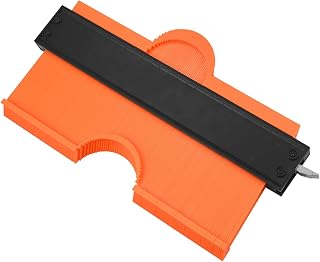


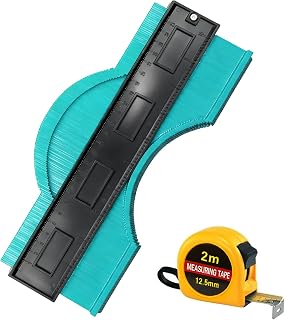

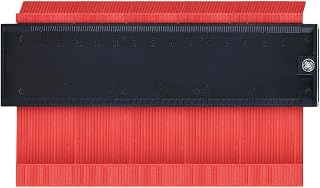


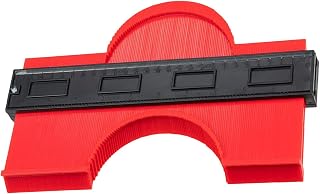


A contour gauge is a deceptively simple hand tool, but the quality of its construction, profile pins, locking mechanism and measurement scale can make a significant difference when transferring irregular shapes. For UK DIY projects, flooring, joinery, carpentry, tiling, plumbing and general renovation work, the right contour gauge should reproduce a shape accurately without being unnecessarily difficult to adjust or reset.
When comparing the best top-rated contour gauges, it is useful to look beyond star ratings or a low purchase price. Consider the gauge's width, pin material, pin density, adjustment resistance, locking facility, construction quality, readability and suitability for the materials you expect to encounter. A tool that works well for skirting boards may not be the best choice for complex pipework or repeated woodworking jobs.
A contour gauge consists of a row of movable pins or blades held inside a frame. When the gauge is pressed against an irregular surface, the pins move independently to reproduce its outline. The resulting profile can then be transferred to another material and traced for cutting or marking.
This makes a contour gauge particularly useful where conventional measurements are awkward. Instead of calculating several angles or repeatedly measuring small gaps, you can capture the physical shape directly and use that profile as a cutting reference.
Width is one of the first specifications to check. A narrow contour gauge is convenient for small jobs and confined spaces, while a wider model can capture larger profiles in a single operation.
Many buyers focus heavily on the individual pins but overlook the overall width of the tool. Think about the largest profile you are likely to copy. If the object is wider than the gauge, you may have to capture it in sections, increasing the possibility of alignment errors.
For general DIY work, a medium-width gauge can provide a useful balance between portability and coverage. Larger gauges can be preferable for flooring, worktops, wide mouldings and other applications where a substantial profile needs to be transferred.
The number and spacing of the profile pins affect how closely the gauge can reproduce fine details. Closely spaced pins can follow smaller changes in a profile more effectively than widely spaced pins.
However, extremely fine pin spacing is not automatically better for every application. A high-density gauge may require more careful handling and can be less forgiving if the pins are bent or damaged. For rougher construction work, a robust mechanism may matter more than maximum profile resolution.
When comparing specifications, look for a clear description of the pin or blade arrangement rather than relying only on marketing language such as "high precision".
Profile pins are repeatedly pushed against surfaces, so material quality matters. Plastic pins can be perfectly suitable for light DIY applications, while stronger construction may be preferable for frequent professional or workshop use.
The most important consideration is not simply whether the pins are plastic or metal. Check how securely the pins are retained, whether they move smoothly, whether they remain aligned and whether the surrounding frame protects the mechanism during normal use.
The pins need enough resistance to stay in position after the contour has been captured. If they move too freely, the profile can change while you are transferring it. If they are excessively stiff, pressing the gauge against a delicate surface can be unnecessarily difficult.
A good contour gauge should allow the pins to move progressively rather than feeling loose, gritty or inconsistent. If adjustment tension is provided, this can be a useful feature because the user can set the resistance according to the job.
A locking mechanism is particularly valuable when accuracy matters. Once the profile has been captured, locking the pins prevents accidental movement while the gauge is removed, positioned against the workpiece or used as a marking guide.
Not every project requires a lock, but it becomes increasingly useful when transferring complicated profiles or working with materials where mistakes are expensive.
Check how deeply the pins can follow a profile. A gauge with limited pin travel may be fine for shallow trim and basic flooring work but less suitable for deeper mouldings, pipework or complex joinery.
Depth should be considered alongside width. A wide gauge with shallow travel may not be as useful for certain applications as a smaller gauge with deeper profile capture.
The frame keeps the pins aligned, so rigidity is important. A flexible frame can make it more difficult to transfer a profile accurately, particularly when the gauge is held vertically or used over a larger area.
Look for a frame that feels structurally stable and protects the pin assembly. Reinforced construction can be worthwhile for tools that will be transported frequently or used on building sites.
Some contour gauges include a ruler or measurement markings along the frame. These markings do not replace a dedicated tape measure or rule, but they can be useful for checking the approximate size of the captured profile.
When choosing between otherwise similar models, a clearly printed or moulded scale can be a practical advantage, particularly for woodworking and installation work.
Plastic contour gauges are common because they can be lightweight, inexpensive and easy to handle. They are often suitable for occasional DIY tasks, flooring projects, decorating and general home maintenance.
Not all plastic construction is equal. The important factors include rigidity, pin retention, resistance to deformation and the quality of the locking or tension mechanism.
Models incorporating metal components can offer additional rigidity or durability. They may be particularly attractive to users who expect to use the gauge frequently in a workshop or trade environment.
Metal construction can increase weight, so it should be considered in relation to how the tool will be used. For a small household project, a lighter gauge may be more convenient.
Higher-quality engineering plastics can provide a useful combination of low weight and structural strength. When product specifications identify the plastic type, this can give buyers more information about the intended construction, although material name alone should not be treated as proof of superior performance.
Compact gauges are useful around narrow pipes, small mouldings, furniture components and restricted areas. They are easy to store and carry, making them a sensible addition to a general DIY toolbox.
Medium-sized gauges are often the most versatile option for household projects. They can cover a useful range of skirting, flooring, trim and woodworking applications without becoming particularly cumbersome.
Larger gauges are useful when working with broad profiles, worktops, large mouldings or flooring cuts. Their greater width can reduce the need to combine multiple profile captures.
Before buying a large gauge, consider whether you actually have enough clearance around the object to position it correctly. A wider tool is not automatically more accurate if the surrounding space prevents it from sitting flat against the profile.
Flooring installation is one of the most common reasons to buy a contour gauge. Floors frequently have to accommodate door frames, pipes, radiator surrounds, irregular walls and other obstacles.
For flooring, prioritise a gauge that is wide enough for the profile, easy to lock and capable of holding its shape while you transfer it to laminate, vinyl, wood or another flooring material.
A useful workflow is to capture the obstacle carefully, lock the pins, place the gauge over the material and mark the profile with a sharp pencil or suitable marking tool. Always account for the cutting direction and the final position of the material before making an irreversible cut.
Woodworkers often use contour gauges to reproduce walls, mouldings, furniture components and irregular joints. Accuracy and repeatability become more important when a profile has to be transferred to expensive timber or a finished component.
For workshop use, consider a model with a rigid frame, dependable pin tension, a secure lock and clear markings. If you expect to use the same profile repeatedly, a locking mechanism can make the tool substantially more convenient.
For detailed joinery, remember that the contour gauge creates a reference profile rather than automatically producing a perfect finished cut. The quality of the final result still depends on marking technique, saw or router control, material stability and careful fitting.
Tile installation can involve awkward cuts around pipes, corners and other fixed objects. A contour gauge can help transfer these shapes to a tile before cutting.
When choosing a gauge for tiling, portability and profile accuracy are useful considerations. The tool should also be easy to clean if it is exposed to dust or construction debris.
Do not press a contour gauge excessively hard against fragile or finished surfaces. Capture the shape with controlled pressure and verify the profile before transferring it to the tile.
Contour gauges can be useful when flooring, panels, cabinetry or other materials need to fit around pipes. The curved surface of a pipe is often difficult to reproduce with a straight ruler alone.
A narrow or medium gauge may be easier to position around individual pipes, while a wider model can be useful where several obstructions form part of one profile.
For pipework, pay attention to pin travel and the ability to hold a curved profile securely. Always verify the captured shape from more than one angle before cutting the final material.
A contour gauge can reproduce a physical shape very effectively, but the final accuracy depends on the gauge, the surface, the user's technique and the material being marked.
Common sources of error include pressing the gauge at an angle, moving it while capturing the profile, allowing the pins to shift during transfer, failing to seat the frame against the reference surface and marking from the wrong side.
For better results:
Remove loose debris from the profile and identify the exact edge you need to reproduce. Dust, adhesive residue and protruding material can change the captured shape.
Before taking the profile, check that the pins move freely and that the gauge is not already distorted from previous use.
Position the gauge squarely against the object and apply controlled pressure. Move the gauge only enough to allow the pins to conform to the shape.
Look along the edge to confirm that the pins have followed the complete profile. Pay particular attention to small recesses, corners and changes in direction.
If the gauge has a locking mechanism, engage it once the profile is correct. Avoid forcing the lock because excessive pressure can damage the mechanism.
Place the gauge against the material in the correct orientation. Ensure that the gauge is seated properly before marking.
Trace the profile and double-check the orientation before cutting. Remember that flipping or rotating a captured profile can reverse the shape.
A low purchase price can be attractive, particularly for occasional DIY use, but the cheapest option may not provide the best combination of rigidity, pin movement and profile retention.
Instead of choosing solely by price, compare the construction, width, pin density, locking arrangement and intended use.
A contour gauge that is too narrow can make larger profiles awkward to capture. Buyers should measure the typical objects they expect to work with before choosing a size.
Loose pins can shift while the profile is being transferred, while excessively tight pins can make detailed work frustrating. A balanced adjustment mechanism is preferable.
Pin spacing and travel determine how effectively a gauge follows small features. Check these specifications if the tool will be used for detailed mouldings or intricate profiles.
Contour gauges can be damaged when stored underneath heavy tools. Pins can become bent or displaced if the tool is treated roughly.
Customer ratings can provide useful information, but reviews should be considered alongside technical specifications. A gauge that receives positive feedback for occasional home use may not meet the requirements of someone using it daily in a workshop.
Several established tool brands and specialist manufacturers produce contour gauges or related profile-measuring tools. When comparing products, brand reputation can be one consideration, but it should not replace examination of the actual specification.
The terms "contour gauge" and "profile gauge" are sometimes used interchangeably. In many DIY and woodworking contexts, both describe a tool designed to reproduce the shape of an object using movable pins.
However, terminology can vary between manufacturers and retailers. When shopping, concentrate on the actual mechanism and specifications rather than relying exclusively on the product name.
A tape measure provides dimensions such as length, width and distance, but it does not directly reproduce an irregular outline. A contour gauge performs the opposite task: it captures shape rather than simply recording linear dimensions.
The two tools work well together. Use a tape measure for overall dimensions and a contour gauge for complex edges or curves.
A flexible ruler can reproduce relatively simple curves, but it generally cannot capture an irregular combination of curves, recesses and corners in the same way as a pin-based contour gauge.
A contour gauge is therefore more appropriate when the shape contains several changes in direction or depth.
A contour gauge is useful, but it is not the correct tool for every measurement. For precise dimensional inspection, a calibrated measuring instrument may be more appropriate.
It may also be unnecessary when the shape is a simple straight line, a standard radius or an easily measured angle. In these cases, a ruler, square, compass, bevel gauge or other dedicated measuring tool may provide a cleaner solution.
Trade users should place greater emphasis on durability and repeatability than someone buying a gauge for one household project. If the tool will be used frequently, consider how easily the pins can be adjusted, how securely they remain in position and whether the frame can withstand regular handling.
It is also worth considering whether replacement parts, manufacturer documentation or a clear product specification are available. These details can become more important over the lifetime of a frequently used tool.
For occasional home projects, the most important requirements are usually ease of use, suitable width, adequate pin movement and reliable profile retention. There is little value in paying for features that will never be used.
A straightforward gauge with a practical size and sensible construction can be a better choice than a specialist model designed for intensive workshop use.
At the lower end of the market, focus on whether the pins move consistently, the frame remains rigid and the profile stays in place during transfer. Avoid choosing solely because the product has an unusually low price.
Mid-range options may provide a better combination of width, construction, pin density and locking functionality. This category can be attractive for frequent DIY users who want more capability without buying a specialist trade tool.
For frequent use, durability, repeatability, construction quality and ease of adjustment become more significant. A higher initial cost can be reasonable when the tool is used regularly, provided the additional features genuinely match the user's requirements.
Before adding a contour gauge to your shortlist, compare the following information where available:
Customer reviews can help identify practical issues that are not obvious from a specification sheet. Look for recurring comments about pin movement, profile retention, frame rigidity, ease of locking and long-term durability.
Do not rely on one unusually positive or negative review. A more useful approach is to look for patterns across multiple reviews and then compare those observations with the manufacturer's stated specifications.
Also consider whether the reviewer used the product for the same type of work you intend to perform. A product can be perfectly satisfactory for occasional DIY use while being unsuitable for intensive professional work.
Accuracy is not determined by the tool alone. Good technique can substantially improve the quality of a profile transfer.
Start with a clean reference surface. Position the gauge carefully and avoid twisting the frame while pressing the pins into place. Once the contour is captured, check the profile before transferring it.
When marking a workpiece, keep the gauge stable and use a fine enough marking tool to reproduce the profile clearly. If the final cut is critical, create a cardboard or scrap-material template first. This extra step can reveal orientation mistakes before the permanent material is cut.
Although a contour gauge has relatively few moving parts, basic maintenance can help preserve its usefulness.
Dust, sawdust, plaster residue and other debris can interfere with smooth pin movement. Clean the tool after use, particularly when working in dusty construction environments.
If individual pins become difficult to move, investigate the cause rather than applying excessive force. A bent pin or debris in the mechanism can worsen if the gauge is forced.
The pins are designed to reproduce profiles, not to be driven into hard surfaces. Excessive pressure can deform the mechanism or damage delicate surfaces.
Keep the gauge where heavy tools cannot press against the pins. A damaged profile mechanism can produce inconsistent results even when the frame appears intact.
A contour gauge is generally a low-risk hand tool, but the cutting stage of a project introduces additional hazards. Always use appropriate precautions when transferring profiles to materials that require saws, cutters, routers or other powered tools.
UK homes often contain a mixture of modern and older construction features, including uneven walls, unusual corners, skirting profiles, pipes, door surrounds and architectural details. A contour gauge can be particularly useful during refurbishment because it allows an irregular physical shape to be transferred without requiring every dimension to be calculated manually.
For general household use, prioritise versatility. A medium-width model with adequate pin density, a reliable frame and a useful locking facility can cover many common applications.
If your main project is flooring, prioritise width and profile depth. For detailed woodworking, pay more attention to pin density, frame rigidity and repeatability. For plumbing-related fitting work, consider how easily the gauge can be positioned around pipes and other obstacles.
When comparing contour gauges in the UK during 2026, check the current product specification and retailer information before purchasing. Product dimensions, included accessories, packaging and availability can change over time.
Prices can also vary between retailers and may change because of promotions, stock levels or seller-specific offers. For that reason, a buying guide should help you identify the right specifications rather than treating a particular price as permanently representative.
UK buyers should also check whether measurements are provided in millimetres, inches or both. Metric dimensions are generally the most convenient for many UK projects, but dual markings can be useful if you regularly work from plans or equipment using imperial measurements.
Rather than selecting the first highly rated product you encounter, create a shortlist of several models and compare them against the same criteria.
A strong product listing should provide enough information for you to understand what you are buying. Useful specifications include the gauge dimensions, profile depth, construction materials, pin arrangement and locking system.
Be cautious when a listing relies heavily on vague claims such as "professional quality", "ultra accurate" or "premium design" without providing measurable specifications. Specific information makes products easier to compare objectively.
If your project involves highly precise engineering dimensions, a contour gauge should not be treated as a substitute for specialist measuring equipment. Its purpose is to reproduce a physical profile for marking and fitting, rather than provide calibrated dimensional inspection.
For straight measurements, use a suitable rule or tape measure. For angles, consider an angle finder or bevel gauge. For internal and external dimensions requiring greater precision, select an appropriate measuring instrument.
The best contour gauge depends on the application rather than one universal specification. For occasional DIY work, ease of use and sensible construction may be the priorities. For woodworking or frequent professional use, frame rigidity, pin density, locking performance and durability may matter more.
They can be extremely useful when a project involves irregular edges, curves, pipes, mouldings or awkward corners. If you regularly work only with straight measurements, a conventional ruler or tape measure may be more useful.
Choose a width that comfortably covers the largest profiles you expect to copy. A medium-sized gauge is a practical general-purpose choice for many DIY tasks, while larger gauges are better suited to broad profiles.
A locking mechanism can be a significant convenience because it helps prevent the captured pins from moving during transfer. It is particularly useful for complex profiles or when the gauge needs to be moved away from the reference surface.
Yes. A well-made plastic contour gauge can be suitable for many DIY applications. The quality of the frame, pin movement and retention mechanism is generally more important than simply whether the product is made from plastic.
Not automatically. Metal components can provide useful rigidity and durability, but a well-designed plastic gauge can also perform effectively. Compare the complete construction rather than judging quality solely by material.
Yes. Contour gauges are commonly useful for transferring irregular shapes around door frames, pipes, walls and other obstacles before cutting flooring materials.
Yes. Woodworkers can use contour gauges to copy irregular edges, mouldings and other profiles. For repeated or detailed work, look for good pin density, stable construction and a dependable locking mechanism.
A contour gauge can reproduce the physical shape of an angle or corner, but it is not primarily an angle-measuring instrument. If you need the numerical angle itself, an angle finder or bevel gauge may be more appropriate.
Use the gauge's locking mechanism if one is provided. If there is no lock, handle the gauge carefully after capturing the profile and avoid pressing against the pins while transferring it.
Remove dust and debris from the pins and frame using an appropriate dry cleaning method. Avoid introducing excessive moisture into moving mechanisms and follow any care instructions supplied with the particular product.
Yes. The movable pins can reproduce the visible portion of a pipe's curved profile, which can then be transferred to another material. Make sure the gauge is positioned consistently and that the entire required profile is captured.
No. Pin arrangement varies between models. Closer spacing can help reproduce finer profile changes, while broader spacing may be sufficient for simpler shapes.
Pay particular attention to recurring comments about pin movement, profile retention, locking performance, frame strength and long-term durability. Consider reviews from people performing similar work to your own.
Choose based on the size of the profiles you need to reproduce. Narrow gauges are easier to handle in restricted spaces, while wider models can capture larger shapes in one operation.
Use controlled pressure and avoid forcing the pins. Before using any gauge on a delicate finished surface, consider whether contact could leave marks or scratches.
No. The tools perform different functions. A tape measure is designed for dimensional measurement, while a contour gauge captures irregular shapes. They are often most useful when used together.
No. Price alone does not guarantee better results. Compare the actual construction, pin density, frame rigidity, locking system and suitability for your application.
Before choosing from a shortlist of top-rated contour gauges, use this checklist:
A useful comparison should consider more than popularity. The most relevant factors include construction quality, profile-capturing capability, pin movement, locking functionality, dimensions, ease of handling and suitability for different applications.
Customer feedback can provide additional insight into real-world usability, but it should be evaluated alongside specifications rather than treated as a substitute for them. Product information and retailer listings should also be checked before purchase because specifications, bundles and availability can change.
The goal is not simply to identify the most expensive or highest-rated contour gauge. It is to identify the model whose characteristics best fit the user's work, whether that means occasional DIY, flooring installation, woodworking, tiling, renovation or more frequent workshop use.
The best contour gauge for your needs is the one that captures the profiles you actually encounter and holds them securely long enough to transfer them accurately. Width, pin density, profile depth, frame rigidity and locking performance are the specifications that deserve the most attention.
For a general-purpose UK DIY toolkit, versatility and ease of use are usually sensible priorities. For specialist woodworking or frequent trade work, durability, repeatability and construction quality become more important. Before buying, compare several current models, examine their specifications, read relevant customer feedback and check today's UK pricing from trusted retailers.
A contour gauge is a relatively simple tool, but choosing the right size and construction can save considerable time when dealing with awkward cuts. Used correctly alongside a tape measure, square and appropriate cutting tools, it can turn complicated profile-transfer jobs into a much more manageable part of a DIY or workshop project.