
♥ Wishlist
Compare 29 verified Metabo Combi Drill products in United Kingdom. Reviews, ratings, pros, cons and buying advice updated for October 2026.




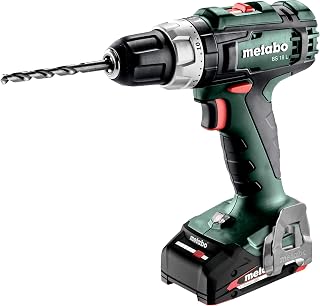
Choosing the right Metabo combi drill involves more than comparing headline voltage or motor speed. A good cordless combi drill needs to balance drilling performance, screwdriving control, hammer action, ergonomics, battery compatibility and overall suitability for the jobs you expect to tackle. For UK buyers, it is also worth considering the type of construction materials commonly encountered in domestic renovation, woodworking, installation and general maintenance.
Metabo offers cordless and corded power tools aimed at users ranging from serious DIY enthusiasts to professional tradespeople. When comparing Metabo combi drills, look beyond the model name and examine the complete specification, including torque settings, chuck design, gearbox speeds, impact rate, battery system, weight and included accessories.
A combi drill combines three principal functions in one machine: rotary drilling, screwdriving and hammer drilling. This makes it one of the most versatile handheld power tools for general-purpose work.
The three-mode design can reduce the need to own separate tools for everyday drilling and fastening tasks. However, a combi drill is not automatically the best choice for every application. Heavy-duty concrete drilling, repetitive large-diameter drilling and specialist metalworking can require dedicated equipment.
The best Metabo combi drill for one buyer may be excessive or unsuitable for another. Before comparing individual models, identify the work you actually need to perform.
Start by identifying whether your typical work involves timber, metal, masonry or a combination of these materials. Timber drilling generally places different demands on a drill from masonry work, while metal drilling benefits from appropriate speed control and suitable drill bits.
If you regularly drill masonry, pay particular attention to the hammer-drilling specification and the manufacturer's stated drilling capacities. For occasional holes in brickwork, a combi drill can be a convenient solution. For extensive work in hard concrete, a dedicated SDS rotary hammer is usually a more appropriate category of tool.
Maximum drilling diameter is an important specification, but it should not be interpreted as a promise that the drill will comfortably handle every hole at that diameter. Maximum capacities vary according to the material, bit type, drill configuration and model.
Torque is one of the most important specifications when comparing cordless combi drills. Higher torque can be useful for demanding screwdriving and drilling applications, but maximum torque alone does not determine whether a drill is the best choice.
Look at how the torque is delivered and whether the drill provides a useful range of adjustment. Multiple clutch positions allow the user to tailor driving force for different fasteners and materials. This can be particularly useful when working with timber, where excessive torque can damage the workpiece or drive a screw too deeply.
Two-speed gearboxes are common on cordless combi drills. A lower gear generally prioritises controlled rotation and torque, while a higher gear provides faster rotation for applications where increased speed is appropriate.
A useful drill should provide enough control to match the selected bit and material. Speed control at the trigger can further improve precision, particularly when starting a hole or driving screws.
Variable-speed control allows the operator to regulate rotation rather than simply selecting an on-or-off operating speed. This can make it easier to start drilling accurately and reduce the risk of a bit wandering across a smooth surface.
For screwdriving, controlled trigger operation can also help prevent sudden acceleration that could damage the fastener, bit or workpiece.
Not necessarily. A higher-voltage cordless drill may provide greater potential for demanding applications, but it can also be larger or heavier depending on the particular design. The most suitable option depends on the balance between power, runtime, portability and the work being performed.
When comparing Metabo cordless drills, consider the complete battery platform rather than looking only at voltage. If you already own compatible Metabo batteries and chargers, staying within the same battery system may provide practical advantages.
Battery capacity is commonly expressed in ampere-hours (Ah). In general terms, a larger-capacity battery can provide more stored energy, although actual runtime depends on the workload, operating conditions, battery condition and tool efficiency.
Battery compatibility deserves careful attention because cordless power-tool ranges can contain different generations, capacities and platform arrangements. Never assume that two batteries carrying similar voltage specifications are interchangeable.
Before purchasing a body-only drill, confirm that you already have a compatible battery and charger. If you are starting from scratch, compare the total cost of the drill, batteries and charger rather than judging a bare-tool price in isolation.
Motor technology is another useful comparison point. Brushless motors eliminate conventional carbon brushes and can offer advantages in efficiency, durability and maintenance requirements.
A brushless model may be particularly attractive to users who operate a drill frequently. For occasional household DIY, however, the overall tool specification, ergonomics and price can matter more than motor type alone.
The chuck is the interface between the drill and many of the accessories used with it. A keyless chuck can make bit changes convenient because it does not require a separate chuck key.
Check the chuck size and the range of bit shanks it accepts before buying. A larger chuck can provide compatibility with a broader range of conventional drill bits, but accessory compatibility should always be confirmed against the specific model.
Even an excellent combi drill cannot compensate for an inappropriate or worn-out bit. Match the accessory to the material and drilling mode.
Specifications do not tell the whole story. A drill can have impressive performance figures yet be uncomfortable during prolonged use. Consider the physical design as carefully as the motor and gearbox.
Compact drills are attractive for kitchen installation, furniture assembly, electrical work, general maintenance and other applications where access is more important than maximum output.
Larger, more powerful models may be better suited to demanding construction work, larger fasteners and frequent masonry drilling. The trade-off is that additional performance can come with increased size and weight.
For home users, a compact model can therefore be the more practical choice even when a larger model has higher headline specifications.
Many cordless tools are sold either as complete kits or as body-only machines. A kit can include one or more batteries, a charger and a case, while a body-only purchase may contain the drill without those accessories.
Body-only tools can make financial sense when you already own compatible batteries. For a first-time cordless-tool buyer, however, the complete kit may provide a more useful comparison point.
Always calculate the complete setup cost. A seemingly inexpensive bare tool can require additional batteries and a charger before it is ready for use.
For general DIY, versatility is often more valuable than extreme power. A suitable combi drill can cover tasks such as assembling furniture, installing shelves, drilling timber, fitting brackets, driving screws and making occasional holes in suitable masonry.
Home users should pay particular attention to weight, control, battery convenience and storage. A drill that is easy to handle is more likely to be useful across a broad range of small projects.
Professional users should place greater emphasis on workload, durability, battery availability, ergonomics and compatibility with other cordless tools. If the drill will be used throughout the working day, battery management becomes particularly important.
Tradespeople should also consider whether a combi drill is genuinely the correct specialist tool for the work. A dedicated drill driver, impact driver, rotary hammer or other power tool may outperform a general-purpose combi drill for a specific repetitive application.
Maximum torque is useful information, but it does not tell you how comfortable, controllable or suitable a drill will be for everyday work. Consider torque alongside speed, clutch adjustment, weight and drilling capacity.
Comparing a complete kit with a body-only drill can produce a misleading price comparison. Check exactly what is included before deciding which offer represents better value.
A larger drill is not automatically better for routine DIY. If most tasks involve small screws, timber and occasional light masonry drilling, excessive size can make the tool less convenient.
Hammer-drill mode is useful for suitable masonry, but a conventional combi drill should not automatically be treated as a replacement for an SDS rotary hammer. For frequent heavy masonry or concrete work, select a tool specifically designed for that application.
Weight becomes increasingly important when drilling overhead, working on ladders, installing fixtures or completing repetitive tasks. Compare the complete working weight, including the battery.
A physically large drill can be difficult to position between joists, inside cabinets or around pipework. Consider the spaces in which you will actually use the tool.
When two models appear similar, compare them specification by specification rather than relying on the model name or headline marketing description.
Metabo is one of several established names worth considering when shopping for cordless drills in the UK. Depending on the application and existing battery collection, buyers may also compare Bosch Professional, DeWalt, Makita, Milwaukee, Hikoki and Ryobi.
The most useful comparison is not simply which brand is considered strongest overall. Instead, compare models within the same intended use category and examine battery systems, ergonomics, specifications, accessory availability and the complete kit contents.
Bosch Professional offers a broad range of trade-oriented cordless tools. When comparing a Bosch Professional drill with a Metabo model, examine the exact specifications and battery platform rather than assuming that either brand is universally superior.
Makita has an extensive cordless ecosystem, making it particularly relevant to buyers who already own compatible batteries. A direct comparison should include battery compatibility, tool size, performance specifications and kit contents.
DeWalt is another major option in the UK professional power-tool market. Compare equivalent drill categories rather than comparing models solely by voltage or maximum torque.
Milwaukee offers a wide selection of cordless tools aimed at demanding users. Buyers should compare the specific drill's handling, battery system, specifications and included accessories with the equivalent Metabo option.
Hikoki is another established power-tool manufacturer with cordless drill options. Battery-platform considerations can be especially important if you intend to build a wider collection of compatible tools.
Ryobi is widely associated with a broad consumer and DIY-oriented cordless ecosystem. For occasional home use, compare the overall kit, ergonomics, required performance and long-term battery plans rather than focusing exclusively on maximum power.
UK retailers and manufacturers may use several terms when describing cordless drills. Understanding these specifications makes product comparisons easier.
Correct technique can make a noticeable difference to drilling accuracy, battery consumption and accessory life.
When beginning a hole, use controlled trigger pressure where the tool allows variable-speed operation. This helps establish the hole before increasing speed as appropriate.
Do not leave the drill in hammer mode for applications where conventional rotary drilling is required. Select the mode appropriate to the material and accessory.
Use the slower gear where controlled torque is needed and the faster gear where higher rotational speed is appropriate. Always follow the tool and accessory manufacturer's guidance.
Excessive pressure can reduce control and may place unnecessary stress on the tool and accessory. Let the correct bit and operating mode do the work.
Routine care can help keep a cordless drill in good working condition. Maintenance should always follow the instructions supplied with the particular model.
Cordless-tool batteries deserve particular attention because they are a significant part of the overall system. Follow the manufacturer's charging, storage and temperature guidance rather than relying on generic battery-care advice.
Do not use a battery or charger if it shows signs of damage. Keep battery contacts clean and avoid storing batteries where they could be exposed to unsuitable temperatures, moisture or physical damage.
Read the manufacturer's instructions before operating a new drill and use appropriate personal protective equipment for the task. Eye protection is particularly important when drilling because fragments and dust can be generated.
A combi drill is versatile, but versatility has limits. Choosing a specialist tool can produce better results when the application is particularly demanding.
Long-term value is about more than the initial specification. A drill can be a better purchase when it fits your existing tools, is comfortable enough for your normal workload and has the capabilities you genuinely need.
For cordless users, the battery ecosystem can be particularly important. If the same batteries can power several tools you intend to purchase, the value of the platform can extend beyond the drill itself.
Also consider whether you need a complete kit or simply a body-only tool. Avoid paying for duplicate batteries and chargers when you already have compatible equipment, but make sure compatibility is explicitly confirmed before buying.
Customer reviews can provide useful information, but they should be interpreted alongside manufacturer specifications. Look for patterns rather than relying on a single enthusiastic or critical review.
There is no single specification that identifies the best model for every UK buyer. Use the following categories as a practical starting point when comparing the models featured in this guide.
When reviewing a top-10 selection, avoid treating the ranking as a universal order. Your requirements should determine which model represents the strongest choice for you.
A useful comparison should consider performance, quality, ergonomics, battery arrangements, drilling capacity, included accessories and suitability for the intended workload. A highly specified professional drill may be unnecessary for occasional DIY, while a compact entry-level option may not be the best choice for demanding trade applications.
Compare torque, speed, gearbox configuration and hammer performance where applicable. Consider the relationship between these specifications rather than focusing on a single maximum figure.
Compare overall dimensions, working weight, grip design, balance and control layout. These characteristics become especially important during repetitive drilling or overhead work.
Determine whether each option is supplied with batteries and a charger. If it is a body-only product, calculate the additional equipment required before it can be used.
Match the model to the work. A drill designed around portability can be an excellent choice for installation work, while a higher-capacity model may make more sense for demanding construction applications.
Higher specifications can be valuable, but they are not automatically useful. Paying for additional torque, capacity or battery size makes little sense if your projects rarely demand those features.
A well-matched mid-range drill can be more practical when it provides sufficient performance while remaining easier to handle. The right buying decision is therefore the model that provides the capabilities you need without unnecessary bulk or cost.
Prices and package contents can change, so compare the exact model number and kit configuration when checking current UK offers. The same drill may be available as a body-only tool, a kit with one battery or a kit with multiple batteries.
Yes, depending on the model. Metabo offers drills with different levels of performance and configuration, so choose according to your materials, frequency of use, required drilling capacity and budget.
A suitable Metabo combi drill with hammer-drilling capability can be used for appropriate masonry applications when paired with the correct masonry bit. Always check the particular model's stated masonry capacity and operating instructions.
Generally, no. A combi drill can handle suitable occasional masonry drilling, but an SDS rotary hammer is a different tool category designed for more demanding masonry and concrete applications.
For frequent users, brushless technology can be an attractive feature because of its efficiency and reduced brush maintenance. Occasional DIY users should still compare the complete specification, handling and price before deciding.
Choose according to workload and handling requirements. Larger-capacity batteries can be useful for longer periods of operation, while smaller batteries may reduce the overall weight of the tool.
A body-only model can make sense if you already have a compatible battery and charger. If you do not, compare the total cost of purchasing the required batteries and charger with the cost of a complete kit.
There is no universal torque figure that suits every user. Light DIY tasks generally require less torque than demanding construction applications. Compare the drill's torque range, clutch adjustment and intended application rather than selecting purely by the largest advertised number.
A two-speed gearbox provides greater flexibility by allowing the user to select a slower, more torque-focused range or a faster rotational range, depending on the application.
Yes. Screwdriving is one of the principal functions of a combi drill. Use the appropriate screwdriver bit and clutch setting, and adjust speed and pressure to suit the fastener and material.
Chuck size determines the range of compatible conventional drill-bit shanks. Check the exact chuck specification against the accessories you intend to use.
Professional users should consider durability, ergonomics, battery compatibility, drilling capacity, torque control, speed range and suitability for the expected daily workload. The best model is the one that matches the actual trade application.
Battery compatibility should never be assumed. Check the specific tool and battery-platform documentation before purchasing or using a battery with a particular drill.
Before choosing from the top-rated Metabo combi drill options, use this checklist to narrow down the models that genuinely fit your requirements.
The best Metabo combi drill for a UK buyer is ultimately the model that fits the work rather than simply the one with the highest specification. For occasional DIY, portability, control and battery convenience can be more important than maximum torque. For professional applications, durability, ergonomics, battery compatibility and sustained capability deserve greater attention.
Use the top 10 products on this page as a shortlist, then compare the exact specifications, battery configuration, included accessories and current retailer information for each model. Check verified customer feedback as a secondary source of practical insight and confirm the manufacturer's documentation before making a purchase.
Because product specifications, package contents and UK prices can change, always verify the current information for the exact Metabo model you intend to buy. This approach helps ensure that your final choice provides the right combination of performance, usability and value for your particular projects.