

♥ Wishlist
Compare 46 verified Metabo Cordless Die Grinders products in United Kingdom. Reviews, ratings, pros, cons and buying advice updated for October 2026.


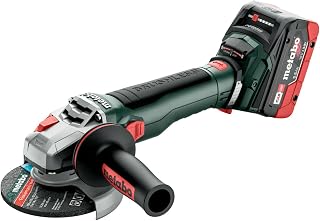


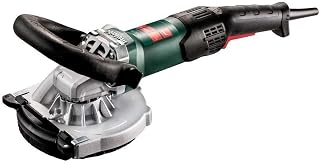


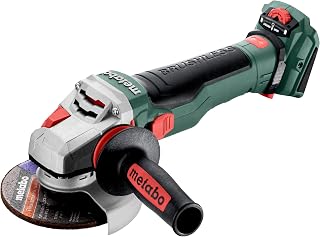

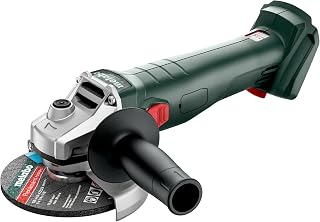


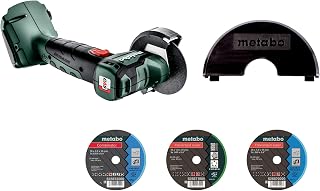


Choosing a cordless die grinder is not simply a matter of selecting the model with the highest quoted speed. For workshop, fabrication, engineering, maintenance and metalworking applications, the useful combination is controllable power, appropriate speed range, battery performance, spindle compatibility, handling and protection features. Metabo has a broad professional power-tool range, so it is important to compare the specification of each cordless die grinder with the work you actually intend to carry out.
For UK buyers, the choice should also take account of the battery platform, charger requirements, replacement accessory availability, intended duty cycle and the type of material being worked. A compact tool may be preferable for precision deburring, while a higher-powered model can be more suitable for heavier grinding and preparation work.
A die grinder is a high-speed rotary power tool designed for jobs that require a small abrasive, cutting, polishing or finishing accessory. Typical applications include deburring metal, cleaning welds, smoothing edges, enlarging or refining openings, removing rust, polishing selected surfaces and performing detailed grinding where a larger angle grinder would be less convenient.
Cordless operation removes the need to manage a mains cable around a workpiece. This can be particularly useful when working on vehicles, machinery, fabricated components or installations where access to a convenient socket is limited. The trade-off is that battery capacity, charging time and battery weight become part of the buying decision.
The most meaningful comparison is between the specifications that affect real working performance. Two cordless die grinders can appear similar while being suited to quite different workloads.
No-load speed describes how quickly the spindle rotates when the tool is running without a cutting or grinding load. Die grinders commonly operate at substantially higher speeds than conventional drills or many general-purpose grinders. High speed can be valuable for small abrasive accessories and detailed finishing, but maximum RPM should never be treated as a universal measure of quality.
The accessory manufacturer's permitted speed is critical. The maximum rated RPM of the accessory must be compatible with the grinder. A tool capable of very high rotational speed should only be operated with accessories rated for that speed and installed according to the manufacturer's instructions.
Variable-speed control can make a cordless die grinder substantially more versatile. Lower settings may be appropriate for certain polishing, finishing or heat-sensitive operations, while higher settings can be useful for suitable grinding accessories.
Speed control is particularly valuable when working with different materials and accessory types. Instead of running every operation at maximum speed, the operator can select a more appropriate setting where the tool design allows it.
The collet determines which accessory shank sizes can be securely held. UK buyers should check the exact collet arrangement supplied with a particular Metabo model and confirm that it matches the accessories they already own or intend to purchase.
Do not assume that every rotary accessory will fit every die grinder. Shank diameter, accessory dimensions, maximum permitted RPM and the manufacturer's compatibility requirements should all be checked before use.
Battery voltage is only one part of cordless-tool performance, but it is an important specification when comparing Metabo models. A higher-voltage platform may support greater power output, while a compact battery can reduce overall weight and improve manoeuvrability.
If you already own compatible Metabo cordless tools, battery-platform compatibility can be a major purchasing advantage. However, compatibility should always be confirmed against the exact model and battery system rather than assumed from the brand name alone.
Battery capacity is normally expressed in ampere-hours (Ah). In broad terms, a higher-capacity battery can provide more stored energy, although actual runtime depends heavily on the workload, accessory, material, operating speed and battery condition.
A larger battery may increase runtime but can also increase the weight and physical size of the complete tool. For detailed work performed at awkward angles, a smaller battery may provide better balance. For repeated heavy-duty work, additional batteries can be more useful than simply choosing the largest possible battery.
Where a selected Metabo model uses a brushless motor, the design can offer benefits associated with reduced mechanical brush wear and efficient electronic motor control. Brushless construction is particularly relevant for buyers expecting frequent professional use, although motor technology should be evaluated alongside the complete specification rather than in isolation.
Electronic protection systems can help manage demanding operating conditions by monitoring the tool and responding when the motor is subjected to excessive load. Such systems are useful in professional cordless tools because repeated overload can place considerable stress on the motor and battery.
Restart protection is a valuable safety feature to look for in a grinder. Its purpose is to help prevent an unexpected start following an interruption in power or battery connection, depending on the specific implementation. Buyers should consult the model's instructions to understand exactly how the protection system operates.
An electronic brake can reduce spindle run-down after the trigger or control is released. This can make the tool quicker to handle between operations, although the actual stopping behaviour varies by model and operating conditions.
Battery-powered tools generate heat during demanding work. Motor, battery and electronic temperature-management systems can therefore be important when a die grinder is expected to perform repeated operations. A tool that is technically powerful but frequently operated beyond its appropriate duty conditions is not necessarily the best choice for long-term use.
Because die grinders are frequently used with one hand while the other hand stabilises the workpiece or work area, grip shape and balance matter. Look for a housing that provides a secure grip without forcing excessive wrist movement.
Weight should be assessed as part of the complete working configuration. A tool body may be relatively compact, but the selected battery can substantially alter the balance and total weight.
A useful way to compare cordless die grinders is to consider the battery separately from the bare tool. A compact battery may be preferable for overhead or precision work because it reduces bulk. A higher-capacity pack may be better when the tool is expected to remain in operation for longer periods between battery changes.
The main advantage of a cordless Metabo die grinder is freedom from a mains cable. This can make it easier to move around a vehicle, fabrication area or installation site. It can also simplify work where the workpiece is distant from an electrical outlet.
A corded grinder, however, can be attractive for a fixed workshop where continuous mains operation is more important than portability. There is no battery runtime limitation, and the tool does not need to be paused for battery replacement or charging.
Metabo is often considered alongside brands such as Bosch Professional, DeWalt, Makita and Milwaukee when buyers compare professional cordless tools. The right choice is not necessarily determined by brand reputation alone. Battery-platform compatibility, model specification, accessory requirements, ergonomics and intended workload can be more important than choosing a particular logo.
Metabo is particularly relevant to buyers looking for professional-oriented metalworking and power-tool equipment. When comparing a Metabo cordless die grinder, examine the exact motor configuration, speed control, collet arrangement, battery platform and electronic protection features.
Bosch Professional offers a wide cordless ecosystem and can be worth comparing when battery compatibility across several workshop tools is important. The relevant comparison should be between equivalent die-grinder specifications rather than between brands generally.
DeWalt is another established professional power-tool brand with a substantial cordless range. Buyers already invested in its battery system may want to compare the complete cost and convenience of staying within that platform against changing to another ecosystem.
Makita has a broad cordless tool portfolio and is another natural comparison for professional and serious DIY users. Compare motor technology, battery platform, ergonomics, speed control and accessory compatibility on a model-by-model basis.
Milwaukee's cordless systems are also widely considered by professional users. As with the other brands, the most useful comparison is the specification of the individual die grinder and the value of its battery ecosystem for your existing tools.
For occasional users, a compact model with straightforward controls may be more sensible than paying for features intended for intensive professional workloads. Consider the accessories you actually need, battery availability and storage requirements before selecting a more advanced configuration.
Fabricators should prioritise controllable power, suitable speed characteristics, robust construction, ergonomic handling and the ability to work efficiently with compatible grinding and finishing accessories. Battery availability is also important where the grinder is used repeatedly throughout the day.
Automotive applications can involve restricted access, awkward angles and work on a mixture of metal components. A compact cordless die grinder can be particularly convenient in these circumstances. Weight, grip and battery size deserve close attention because the tool may be used in positions that would make a bulky grinder uncomfortable.
Professional workshop users should look beyond the purchase price and assess the complete ownership proposition. Battery availability, charger compatibility, replacement accessories, expected duty cycle, service arrangements and tool ergonomics can all affect productivity over time.
The performance and safety of a die grinder depend heavily on the accessory being used. Common accessory categories include mounted grinding points, abrasive products, polishing accessories, wire-based products and other rotary attachments designed for compatible applications.
Every accessory should be checked for compatibility with the tool, material and operating speed. The accessory's maximum permitted rotational speed must not be exceeded. An accessory that is unsuitable for the application can create unnecessary vibration, poor results and significant safety risks.
Mounted grinding points are commonly used for detailed grinding and material removal. Their dimensions, shank diameter and permitted speed should be checked before fitting them to a cordless die grinder.
Carbide rotary accessories can be useful for controlled material removal in suitable materials. They are available in different shapes and cutting configurations, so the geometry should match the intended work rather than simply choosing the most aggressive option.
Polishing requires greater attention to speed and accessory suitability. Running a polishing product at an inappropriate speed can damage the workpiece or accessory. Variable-speed control can therefore be useful where the chosen model provides it.
A die grinder is a high-speed tool, so appropriate safety equipment and working practices are essential. The specific instructions supplied with the Metabo model and accessory should take precedence over generic advice.
It is tempting to assume that a grinder with the highest RPM will remove material fastest. In practice, grinding performance depends on the relationship between rotational speed, accessory design, contact area, material, applied pressure and motor power.
Excessive pressure can slow the tool, increase heat and place unnecessary stress on the motor and battery. A suitable accessory used with controlled pressure can often produce better results than simply forcing a high-speed tool into the workpiece.
Steel, stainless steel, aluminium and other materials can respond differently to grinding and finishing. Accessory selection should therefore be based on the material as well as the desired finish. Stainless steel, for example, may require careful accessory selection to avoid undesirable contamination or surface effects.
Heat can affect both the workpiece and the accessory. Prolonged aggressive grinding in one area can discolour or otherwise affect a metal surface. Controlled passes and an appropriate accessory can help manage the amount of heat introduced into the workpiece.
Maximum speed is an important specification, but it does not tell you everything about the grinder. Consider speed control, power delivery, battery platform, ergonomics and protection systems as well.
A bare cordless tool can look attractive until the cost of the required battery and charger is considered. Check whether the chosen configuration includes the components you need and whether existing compatible batteries can be used.
Check accessory shank sizes before purchasing. If your existing accessories use a different shank diameter from the supplied collet arrangement, additional components may be required or certain accessories may not be suitable.
This is one of the most important mistakes to avoid. The grinder's maximum speed and the accessory's permitted speed must be compatible. Never select an accessory simply because it physically fits the tool.
A technically impressive grinder may still be uncomfortable if its weight and balance do not suit the way you work. If possible, consider the complete tool-and-battery configuration rather than the bare tool alone.
Higher specification can be valuable for demanding work, but occasional users may not benefit from every premium feature. The best model is the one whose specification matches the workload without paying for capabilities that will rarely be used.
When comparing several models, create a simple specification checklist rather than relying on headline marketing descriptions. This makes it easier to identify meaningful differences.
The lowest purchase price is not necessarily the lowest total cost. A cordless die grinder can become considerably more economical when it fits an existing battery platform and when its accessories are readily available.
Before buying, identify whether you need a bare tool or a kit containing batteries and a charger. If you already have suitable batteries, purchasing a bare tool may avoid unnecessary duplication. If you are entering a battery platform for the first time, compare the cost of the complete starter configuration.
It is also worth comparing accessory costs. A grinder that is inexpensive to purchase but requires a collection of proprietary or difficult-to-source accessories may be less convenient over its working life than a tool compatible with a broad selection of readily available products.
Regular care can help preserve the condition and performance of a cordless die grinder. Maintenance should always follow the manufacturer's instructions for the specific model.
Modern lithium-ion batteries should be stored and handled according to the manufacturer's instructions. Avoid exposing battery packs to unsuitable temperatures, moisture or physical damage. If a battery shows signs of damage, swelling or abnormal behaviour, stop using it and follow the manufacturer's safety guidance.
There is no single runtime figure that applies to every user. Actual runtime depends on battery capacity, material being worked, accessory type, pressure applied, motor load, operating speed and the condition of the battery.
For occasional jobs, one battery may be sufficient. For continuous workshop work, owning additional compatible batteries can be more practical because one pack can be used while another is charging. Buyers should therefore consider battery rotation rather than relying solely on a manufacturer's theoretical runtime description.
UK buyers should compare the exact model specification rather than relying on a product title alone. Product names can contain several closely related configurations, and battery, charger, collet and accessory contents may differ between packages.
Before purchasing, verify the model number, included equipment, battery system, voltage, speed range, accessory compatibility and manufacturer documentation. It is also sensible to compare specifications across established UK retailers and check current customer feedback before making a final decision.
Because prices, bundles and stock can change, treat the current retailer listing as the final reference for what is included in a particular purchase configuration. A bare tool and a complete kit can represent very different overall values even when the grinder itself is identical.
Some Metabo cordless die grinders are designed for demanding professional applications, but suitability depends on the exact model and workload. Compare motor performance, battery system, speed control, protection features, ergonomics and intended application before selecting one for regular commercial use.
Yes, suitable cordless die grinders can be used for many metalworking tasks, including deburring, grinding and finishing. Actual performance depends on the model, battery, accessory and material. Heavy material removal may require a different class of grinder depending on the application.
A brushless model can be attractive for frequent users because brushless motor technology eliminates conventional motor brushes and enables sophisticated electronic control. However, compare the complete specification and cost rather than selecting a tool solely because it has a brushless motor.
There is no universally best battery size. Smaller packs can improve manoeuvrability and reduce weight, while higher-capacity packs can extend working time between changes. The right choice depends on how long and how intensively you expect to use the grinder.
No. Accessories must be compatible with the tool's collet, dimensions and operating requirements, and their maximum permitted speed must be suitable for the grinder. Always follow the tool and accessory manufacturer's instructions.
Variable speed is useful if you work with different materials or accessories that require different operating speeds. If your applications are limited to a narrow range of grinding tasks, a fixed-speed configuration may be sufficient.
Compare maximum speed, speed control, motor type, battery platform, collet configuration, weight, electronic protection, battery capacity options and included equipment. Also consider whether either model offers features that directly address your particular workload.
Neither is automatically better. Cordless models provide portability and eliminate mains cables, while corded models can provide uninterrupted operation where a suitable power supply is available. Choose according to the working environment and expected usage pattern.
Usually not completely. A die grinder is particularly useful for detailed work, small areas and precision material removal, whereas an angle grinder is generally better suited to many larger cutting and grinding tasks. The two tools serve overlapping but different purposes.
Look beyond the overall star rating. Pay attention to comments concerning battery life, handling, vibration, speed control, accessory compatibility, durability and the specific application described by the reviewer. Verified customer feedback is most useful when the reviewer's workload resembles your own.
The best Metabo cordless die grinder for a UK buyer is the model that matches the actual job rather than simply the model with the biggest specification. Start with the material and applications, then work through speed, accessory compatibility, battery requirements, ergonomics, motor technology and protection features.
If you already use compatible Metabo cordless equipment, battery-platform compatibility can simplify the decision considerably. If you are starting from scratch, compare the complete cost of the tool, battery and charger and consider which other cordless tools you may eventually add to the same platform.
Before purchasing, verify the precise model number, technical specifications and package contents, then compare current retailer information and verified customer feedback. Taking these steps makes it easier to distinguish a genuinely suitable cordless die grinder from a model that simply looks attractive on paper.