

Best Crowbars Hand Tools for Lifting, Pulling and Demolition Products online UK (United Kingdom)
Explore our real-time updated product directory index curated for performance, verified star metrics, and historical consumer trust rankings.


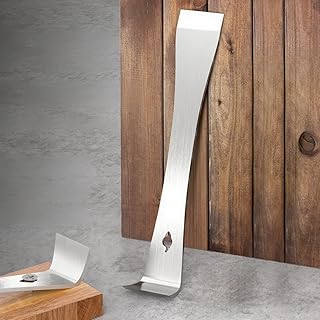


Crowbars hand tools are designed to give you additional leverage when ordinary hand pressure is not enough. Their strong metal construction and shaped working ends make them useful for lifting, prying, pulling and dismantling a wide range of materials. Depending on the design, a crowbar can help with tasks such as separating timber, lifting boards, removing nails, opening gaps and assisting with controlled demolition.
For UK tradespeople and DIY users, selecting the right crowbar starts with understanding the job. Consider the required length, working-end shape, strength, grip and overall weight before choosing a tool. A compact bar can provide useful control in confined areas, while a longer crowbar can create greater leverage for heavier work.
Crowbars have a simple but highly effective purpose: they help convert hand force into leverage. The bar can be positioned against a suitable contact point so that pressure applied at the handle helps move, lift or separate another object. This basic principle makes crowbars valuable across construction, renovation, maintenance and demolition work.
Common applications include lifting floorboards, loosening timber, pulling apart materials, removing nails and assisting with dismantling work. Some designs feature a pointed end for positioning or breaking into materials, while others have flattened or angled ends that are better suited to levering and pulling.
General-purpose crowbars offer a versatile option for everyday construction, maintenance and DIY jobs. Their straightforward design makes them suitable for a variety of levering and prying applications where a robust manual tool is required.
Wrecking bars are particularly useful for renovation and demolition work. Their shaped ends can assist with pulling nails, dismantling timber and separating materials. They are a practical choice when controlled removal is more important than preserving the material being dismantled.
Heavy-duty crowbars are intended for more demanding applications where additional strength and leverage are required. Their increased size or robust construction can make them suitable for professional building, demolition and maintenance environments.
Start by considering the type of work you expect to perform. For occasional household repairs or light renovation, a manageable bar may provide the right balance of control and leverage. For professional demolition or heavy construction tasks, you may need a longer and more robust design.
Length is important because it affects leverage and handling. A longer bar can reduce the effort needed for certain tasks, but it also requires more working space. Shorter bars are easier to control and can be useful where access is restricted.
Also consider the shape of the working ends. A flat end can help with levering, while a nail-pulling or claw-style end can make removal work easier. Match the design to the applications you perform most often rather than choosing based on size alone.
During renovation projects, materials often need to be removed carefully and efficiently. A suitable crowbar can help lift boards, separate timber sections and dismantle unwanted structures. It can also complement other essential hand tools by providing leverage where a hammer or screwdriver is not suitable.
For building professionals, having more than one bar size can be useful. A smaller tool can handle detailed or restricted-access work, while a larger model can tackle heavier levering applications. This approach gives your toolbox greater flexibility without relying on powered equipment for every task.
DIY users can also benefit from keeping a reliable crowbar in their tool collection. Home improvement projects may involve removing old flooring, dismantling timber structures, pulling nails or opening materials that have become tightly fixed over time.
Choose a size that you can handle confidently and always use the tool for its intended purpose. Avoid applying excessive force when the bar is unstable, and make sure the contact point can safely withstand the pressure involved.
Always inspect the crowbar before use and check that it is free from significant damage or deformation. Wear appropriate protective equipment for the task, including suitable gloves and eye protection where materials may splinter or debris may become airborne.
Keep your footing secure and maintain control of the bar throughout the movement. Position the working end correctly and avoid placing hands or body parts where they could be trapped if the material suddenly moves. Never use a crowbar as a substitute for a tool designed for striking unless the product is specifically intended for that application.
A crowbar is a simple tool, but its leverage can make difficult manual jobs considerably easier. It does not require batteries, charging or complicated setup, which makes it convenient for workshops, construction sites, maintenance work and home projects.
When selected according to the task, a quality crowbar can provide useful versatility for lifting, pulling, prying and dismantling. Explore the available category options and compare their designs, sizes and intended applications to find a crowbar hand tool that suits your UK building, renovation or DIY requirements.
Find practical crowbars hand tools for demanding lifting, pulling, prying and demolition tasks. A crowbar provides strong mechanical leverage when you need to move materials, separate components or remove stubborn objects by hand. This makes it a useful addition to tool collections for builders, tradespeople, maintenance teams, renovators and DIY users across the UK.