

♥ Wishlist
Compare 34 verified Bosch Cordless Impact Wrenches products in United Kingdom. Reviews, ratings, pros, cons and buying advice updated for October 2026.


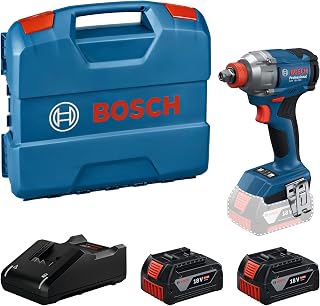
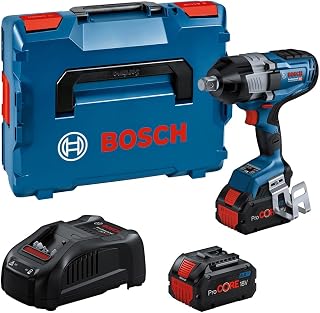


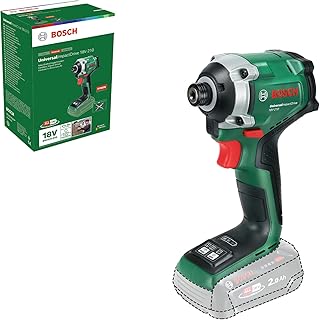


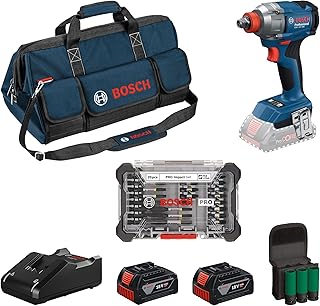


Choosing a Bosch cordless impact wrench is not simply a matter of selecting the tool with the highest quoted torque figure. The right model depends on the type of fasteners you work with, how frequently you use an impact wrench, whether you already own compatible Bosch batteries, how much space you have to work in, and whether portability matters more than maximum power.
For UK buyers, it is also worth considering the distinction between compact impact drivers and dedicated impact wrenches. An impact wrench is designed around wrench-style sockets and is generally the more appropriate choice for automotive fasteners, larger bolts, wheel-related work, machinery maintenance and demanding assembly applications. An impact driver is usually better suited to screws and smaller hex-drive fasteners.
Bosch offers cordless tools across different performance classes, so comparing the tool's intended application, drive size, battery platform and control features can be more useful than comparing one headline specification in isolation. Before buying, check the manufacturer's current specification for the exact model and kit configuration, because batteries, chargers and included accessories can vary between versions.
A cordless impact wrench combines a battery-powered motor with an impact mechanism that delivers short, repeated rotational blows to a fastener. This allows the tool to generate substantial loosening and fastening force while reducing the amount of continuous reaction torque transferred to the operator compared with using a conventional high-torque drill for the same task.
The impact mechanism is particularly useful when a conventional drill or ratchet reaches its practical limit. Rusted, over-tightened or stubborn fasteners can require considerably more breakaway force than their normal tightening operation. An impact wrench is designed for this type of intermittent high-load work.
Modern cordless models also provide advantages that are difficult to overlook on jobs where mobility matters. There is no mains cable to route around a vehicle or workbench, and the tool can be taken directly to a job site, garage, workshop or construction area. The trade-off is that runtime depends on battery capacity, workload, fastener size, material and operating conditions.
Torque is one of the most visible specifications in an impact wrench comparison, but it should not be treated as a single measurement of overall tool quality. Different manufacturers and product ranges may specify torque under different conditions or distinguish between fastening torque, breakaway torque and other performance measurements.
A higher quoted figure can be useful when dealing with large or stubborn fasteners, but excessive power is not automatically beneficial for delicate assembly. For applications involving smaller bolts, controlled fastening is often more important than simply choosing the strongest available machine.
When comparing Bosch models, consider the manufacturer's stated torque information alongside the recommended application, drive size and available control settings. If the tool will be used on vehicle wheels or critical mechanical components, always follow the vehicle or equipment manufacturer's specified tightening procedure rather than relying on the impact wrench alone to establish final torque.
Loosening performance can differ significantly from controlled fastening performance. A fastener that has remained in place for years may be affected by corrosion, contamination, thread damage or previous over-tightening. Consequently, a model that offers strong breakaway capability can be more useful for maintenance than one selected purely for its fastening specification.
Do not assume that a quoted maximum torque guarantees that every seized fastener will come loose. Real-world results depend on the fastener, joint condition, socket quality, battery charge, temperature and the amount of mechanical resistance in the assembly.
The square drive determines which sockets can be used with the wrench. Common impact-wrench drive sizes include compact formats for lighter work and larger drives for demanding mechanical applications.
A smaller drive can make sense when access, weight and manoeuvrability are priorities. Larger drives are generally associated with heavier-duty applications and larger sockets. The most suitable size should therefore be chosen around the fasteners you actually expect to work on rather than around the largest specification available.
Battery compatibility can be one of the most important purchasing considerations. If you already own Bosch cordless tools, check whether the impact wrench belongs to the same battery family and whether your existing batteries are approved for that tool.
Buying a bare tool can be attractive when you already have suitable batteries and a charger. Conversely, a complete kit may make more sense for a first-time buyer who needs the battery and charging equipment as well. Always compare the complete package rather than comparing bare-tool prices with full-kit prices.
Battery capacity affects how long the tool can operate between charges, but runtime is workload-dependent. Repeated high-load fastening and loosening can consume considerably more energy than occasional light-duty use.
A larger-capacity battery may increase operating time but can also add weight to the tool. For overhead work or extended periods of handheld use, the balance between runtime and overall weight can matter more than maximum battery capacity.
Variable speed and impact-rate controls give the operator greater control over different fasteners. Higher operating speeds can help complete repetitive work quickly, while lower settings can be useful when starting fasteners or working with smaller hardware.
Multiple electronic settings can be particularly valuable when one tool is expected to handle several types of work. They can help reduce the temptation to operate at maximum power for every task.
Brushless motors are common in higher-performance cordless power tools. They eliminate the conventional carbon-brush arrangement used by brushed motors and can provide an efficient, electronically controlled drive system.
For a buyer, the important question is not simply whether a tool is brushless. Consider the complete system: power delivery, thermal management, battery compatibility, electronic controls, serviceability, weight and intended workload. A brushless motor is a useful feature, but it should be evaluated as part of the overall tool design.
One of the easiest mistakes is assuming that every Bosch cordless power tool belongs to the same product system. Bosch uses different product ranges for different users and applications, so buyers should identify the specific platform before ordering.
Bosch Professional tools are generally positioned for more demanding professional and trade applications, while Bosch's consumer-oriented ranges target DIY and home users. Battery compatibility should never be assumed solely because two products carry the Bosch name. Check the exact battery system specified for the tool.
This distinction is especially important when you already have batteries at home. A seemingly attractive bare-tool deal is only useful if your existing batteries are actually compatible and suitable for the new wrench.
There is no universal winner between these categories. A high-torque wrench can be unnecessary bulk for someone who primarily performs routine vehicle maintenance, while a compact model can become frustrating if it is repeatedly pushed beyond its intended workload.
The names are similar, but the tools serve different purposes. An impact driver normally uses a hexagonal bit interface and is commonly used for screws, structural fasteners and smaller bolts with appropriate adapters. An impact wrench uses a square drive designed for sockets.
If your primary jobs involve removing wheel nuts, larger nuts and bolts or automotive components, a dedicated impact wrench is generally the more natural choice. If your work involves driving construction screws, wood screws and hex-shank bits, an impact driver may be more appropriate.
Using adapters to turn one tool into another type can be convenient, but an adapter does not change the fundamental design or intended application of the machine. Choose the tool around the majority of your work.
Power-management settings can make an impact wrench more versatile. They allow the user to reduce output for smaller fasteners and increase it when greater force is appropriate. This can improve control and help reduce unnecessary stress on fasteners and components.
Some cordless impact wrenches provide application-specific electronic modes intended to control fastening behaviour. These features can be useful where repeatability matters, but they should not be interpreted as a substitute for a calibrated torque wrench when a manufacturer specifies an exact final tightening torque.
An integrated LED can be surprisingly useful when working inside wheel arches, under vehicles, inside cabinets or in poorly illuminated workshops. It is a convenience feature rather than a substitute for proper task lighting, but it can make positioning the socket easier.
For tradespeople moving around a worksite, carrying options can influence everyday usability. Check whether the particular Bosch model includes a belt clip, carrying case or storage solution, and whether those accessories are part of the selected kit.
Impact wrenches can become tiring because the operator may hold them at unusual angles or use them repeatedly throughout the day. Look at the tool's overall balance rather than judging comfort from the handle shape alone. Battery position, head length, weight distribution and grip diameter can all affect how the wrench feels during prolonged use.
Automotive applications are one of the most common reasons buyers consider an impact wrench. However, different automotive tasks have very different requirements.
Removing wheel nuts often benefits from an impact wrench's ability to deliver short bursts of high rotational force. The appropriate socket should be an impact-rated socket rather than a conventional chrome socket intended for hand tools.
After removing or fitting wheels, the final tightening procedure should follow the vehicle manufacturer's specification. An impact wrench should not automatically be treated as a precision torque-setting device simply because it has electronic power modes.
Suspension and brake assemblies can contain fasteners exposed to dirt, water and road salt. An impact wrench can save considerable manual effort during disassembly, but the condition of the fastener should still be assessed before applying maximum power.
For reassembly, follow the vehicle manufacturer's service instructions and use a suitable calibrated torque wrench where a specified torque is required.
For occasional DIY garage work, a compact Bosch cordless wrench may provide a better balance than a large professional high-torque machine. Buyers should consider how often the tool will be used, which sockets are needed and whether existing Bosch batteries can be shared with other tools.
An impact wrench should be paired with sockets specifically designed for impact use. Impact sockets are engineered for the repeated shock loading produced by the tool and are typically distinguishable from standard hand-tool sockets.
Maximum torque attracts attention, but the strongest model is not automatically the best choice. A compact wrench with sensible control settings may be more practical for many vehicle and workshop tasks.
Do not assume that every Bosch cordless product uses the same battery. Confirm the exact platform and recommended battery before purchasing.
Two listings for the same basic tool may differ because one includes batteries and a charger while another is supplied as a bare tool. Compare what is actually included in the box.
The tool itself is only part of the system. Budget for suitable impact sockets and any other accessories required for your intended work.
Extra power can be useful, but a heavier and longer wrench may be less convenient for routine jobs. Think about storage, transport and working position as well as performance.
An impact wrench is excellent for rapid fastening and loosening, but precision torque requirements should be handled according to the relevant manufacturer's procedure. Where an exact torque is specified, use an appropriate calibrated torque wrench for final verification.
When comparing several Bosch cordless impact wrenches, create a simple checklist rather than focusing on one headline feature. The following criteria provide a useful framework for commercial investigation.
There is no universal runtime figure for an impact wrench because energy consumption changes with the workload. Removing a small number of lightly tightened fasteners is very different from repeatedly loosening large, corroded bolts.
Battery capacity is therefore best viewed as part of a complete system. If you already use several compatible Bosch cordless tools, having multiple batteries can be more useful than relying on one very large battery. For occasional home use, a smaller battery may also keep the tool more manageable.
Store and charge batteries according to the manufacturer's instructions, and avoid using damaged battery packs or accessories that are not approved for the tool.
Regular basic maintenance helps keep a cordless impact wrench ready for work. Always follow the maintenance instructions supplied for the exact Bosch model, as service procedures can vary between products.
Impact wrenches are high-powered tools and should be treated accordingly. Read the manufacturer's operating instructions before first use and use appropriate personal protective equipment for the task.
For most buyers, the best approach is to work backwards from the largest and most demanding job they genuinely expect to perform. If most tasks involve ordinary DIY assembly and occasional automotive maintenance, choosing a professional heavy-duty model solely for its maximum output may add unnecessary weight and expense.
On the other hand, buyers who routinely deal with large fasteners, commercial vehicles, machinery or difficult maintenance work should prioritise adequate torque reserve, battery capacity, durability and access rather than choosing the smallest available wrench.
The goal is not maximum power. The goal is sufficient controlled power for the work you need to complete.
Bosch is not the only established manufacturer in the UK cordless power-tool market. Depending on the battery ecosystem, application and budget, buyers may also encounter tools from brands such as DeWalt, Makita, Milwaukee, Ryobi and Einhell.
Brand comparison is most useful when carried out at the system level. Consider the cordless platform, battery availability, tool range, accessories, service documentation and the specific performance requirements of your work rather than assuming one brand is universally superior.
If you already own cordless tools from another manufacturer, staying within that ecosystem can sometimes reduce the need to purchase additional batteries and chargers. However, compatibility should always be checked model by model.
Value is about more than the lowest purchase price. A slightly more expensive tool can represent better value if it matches an existing battery system, has the right drive size, provides useful control modes and avoids the need for additional equipment.
Before purchasing, compare the complete cost of ownership. A bare tool may initially appear inexpensive, but a new user may also need batteries, a charger, impact sockets and storage. Conversely, a kit containing equipment you already own may not represent the best value.
Independent buyers should also compare current specifications, retailer listings and verified customer feedback before making a final decision. Product configurations can change, so check the exact model number rather than relying only on a product-family name.
There is no single best model for every UK buyer. The appropriate choice depends on the required torque, drive size, working environment, battery platform, tool weight and intended frequency of use. A compact model may be preferable for routine automotive maintenance, while a higher-output Bosch Professional model may be more suitable for demanding mechanical work.
Appropriately specified impact wrenches can be useful for wheel-related work, particularly for loosening and initially fastening wheel nuts. However, the final tightening procedure should follow the vehicle manufacturer's instructions and specified torque. Use suitable impact-rated sockets and do not rely on maximum impact output as a substitute for precision torque control.
No. Bosch cordless tools belong to particular battery systems and compatibility should be confirmed for the exact model. Check the manufacturer's documentation before using an existing battery with a newly purchased impact wrench.
A brushless motor can offer advantages in efficiency, electronic control and tool design, particularly in higher-performance cordless systems. Nevertheless, motor type should be considered alongside torque, speed, battery compatibility, ergonomics, weight and intended application.
Yes, when using an impact wrench, use sockets designed and rated for impact applications. Standard hand-tool sockets are not automatically suitable for repeated impact loading.
An impact wrench can provide substantial breakaway force and may succeed where a conventional ratchet struggles, but no cordless impact wrench can guarantee removal of every seized fastener. Corrosion, thread damage, joint condition and fastener size all affect the result.
No. Higher torque can be useful for demanding fasteners, but unnecessary power can make a tool heavier and can increase the risk of damaging inappropriate fasteners or components when used without suitable control. Choose enough performance for the actual workload.
A bare tool can be economical if you already own compatible batteries and a charger. A complete kit can be more practical for someone entering the Bosch cordless system. Compare the total contents and cost of each option before deciding.
No. An impact wrench is primarily a fastening and loosening tool. Where an exact final torque is specified, use the appropriate calibrated torque equipment and follow the relevant manufacturer's procedure.
Look for recurring comments rather than relying on isolated ratings. Pay particular attention to observations about balance, battery life, access in confined spaces, control settings, socket retention, durability and suitability for the reviewer's actual application. Reviews are most useful when the user's workload resembles your own.
The best Bosch cordless impact wrench is the one that matches your workload rather than the one with the most impressive specification on paper. Start with the fasteners you need to work on, then consider drive size, torque, battery platform, control features, ergonomics and overall kit contents.
For UK shoppers in 2026, it is particularly important to verify the exact model number and current specification before ordering because product variants can differ in battery configuration, accessories and package contents. Compare today's available offers from trusted retailers, read verified customer reviews and check the manufacturer's documentation before making the final purchase decision.
Whether you are equipping a home garage, maintaining vehicles, working on machinery or building a professional cordless tool collection, a carefully selected Bosch impact wrench can provide a practical combination of portability, controlled power and socket-based fastening capability.