

♥ Wishlist
Compare 29 verified Cordless Impact Wrenches products in United Kingdom. Reviews, ratings, pros, cons and buying advice updated for October 2026.


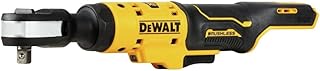


A cordless impact wrench can make demanding fastening and removal work considerably quicker, particularly when dealing with vehicle wheel nuts, structural fixings, machinery fasteners and other high-torque applications. However, the highest torque figure on a specification sheet is not automatically the best buying decision. The right model depends on the type of work, fastening range, battery platform, physical size, control features, working environment and the level of torque control required.
For UK buyers, it is also worth considering whether a wrench is supplied as a complete kit or as a bare tool. A bare impact wrench may be attractive when you already own compatible batteries and a charger, while a kit can be more practical for someone entering a particular cordless platform for the first time. Brands such as DeWalt, Makita, Milwaukee, Bosch Professional, Ryobi and HiKOKI offer established cordless power-tool ecosystems, but specifications and battery compatibility vary considerably between ranges.
Before buying, compare the complete specification rather than focusing on one headline number. Pay particular attention to maximum fastening torque, breakaway torque, speed, impact rate, drive size, battery voltage, control settings, tool weight and the manufacturer's intended applications.
An impact wrench combines a rotating electric motor with an impact mechanism that delivers repeated bursts of torque to the output spindle. This makes it fundamentally different from an ordinary cordless drill or drill driver. A drill is primarily designed for drilling and controlled screwdriving, whereas an impact wrench is engineered around high-torque fastening and loosening.
The impact mechanism allows the tool to apply substantial rotational force while reducing some of the continuous reaction that would otherwise be transferred directly through the operator's hands. Even so, high-torque impact tools can produce significant reaction forces, so correct technique and appropriate protective equipment remain important.
The names are easy to confuse, but the tools serve different purposes. An impact driver normally uses a hexagonal quick-change bit interface and is commonly selected for screws, construction fasteners and smaller hex-head fixings. An impact wrench normally uses a square drive, such as 1/2-inch, 3/8-inch or 3/4-inch, so that sockets can be fitted directly.
Torque is one of the most important specifications for an impact wrench, but it needs to be interpreted carefully. Manufacturers may publish different torque figures for different operating conditions, and terms such as fastening torque, tightening torque, nut-busting torque or breakaway torque are not necessarily interchangeable.
A higher published figure can be useful for difficult applications, but choosing the most powerful wrench available can be counterproductive if the tool is unnecessarily large, heavy or difficult to control. For routine automotive work, workshop maintenance and DIY applications, the useful range of the tool can matter more than the maximum headline figure.
Breakaway torque describes the tool's ability to loosen a fastener that is already tightened. It is particularly relevant when removing wheel nuts, seized bolts or heavily loaded mechanical fasteners.
Do not assume that a manufacturer's maximum breakaway figure represents a guaranteed result on every fastener. Corrosion, thread condition, friction, previous tightening method, fastener size and the surrounding material can all affect whether a particular nut or bolt can be removed.
Fastening torque is relevant when the wrench is used to tighten a fastener. This specification should not be confused with the final torque required for safety-critical applications. An impact wrench can tighten a fastener rapidly, but that does not mean it should be used as the final torque-setting instrument where an exact manufacturer's torque specification applies.
The square drive determines which sockets can be used and provides an important clue about the wrench's intended applications.
For many general-purpose users, 1/2-inch drive provides a useful balance between socket availability, versatility and capability. The correct choice ultimately depends on the fasteners you actually expect to work on.
No-load speed indicates how quickly the output rotates when the tool is running without a load. Higher speed can help remove fasteners more quickly, but speed alone does not determine real-world performance.
A useful impact wrench combines suitable rotational speed with an effective impact mechanism and sufficient torque. Multiple speed or power modes can also make a wrench more adaptable because the user can select a more controlled setting for lighter work rather than operating at maximum output continuously.
The impact rate indicates how frequently the mechanism delivers impacts. A high impact rate can contribute to fast fastening and removal, but it should be evaluated alongside torque, speed and the design of the impact mechanism rather than treated as an isolated performance score.
Battery compatibility is one of the most important purchasing decisions for cordless power tools. If you already use a compatible battery platform, buying a bare impact wrench may make more financial and practical sense because you can use existing batteries and chargers.
Common cordless platforms from brands such as DeWalt, Makita, Milwaukee, Bosch Professional, Ryobi and HiKOKI include different battery families. Batteries are not universally interchangeable simply because two tools have similar voltage ratings, so always verify compatibility with the exact tool and battery series.
When comparing prices, compare like for like. A lower advertised price for a bare tool should not be directly compared with the price of a complete kit without accounting for the cost of a compatible battery and charger.
Battery capacity is normally expressed in ampere-hours, commonly abbreviated as Ah. A higher-capacity battery can provide greater energy storage, although it may also increase the overall weight and size of the tool.
For occasional home use, carrying the largest available battery may offer little practical benefit. For prolonged professional use, a larger-capacity battery or having multiple charged batteries available can reduce interruptions. The best balance depends on how frequently the wrench will be used and how portable the setup needs to be.
Many modern cordless impact wrenches use brushless motors. Compared with traditional brushed motor designs, brushless systems eliminate physical motor brushes and are widely used in modern cordless professional tools.
Potential advantages include efficient operation, reduced brush wear and good integration with electronic control systems. Brushless technology does not automatically make every tool superior, however. Motor design, impact mechanism, electronics, thermal management, battery technology and overall construction all influence performance.
Electronic controls can make a high-torque impact wrench substantially easier to use. Depending on the model, controls may include multiple speed settings, torque modes, automatic stop functions, bolt-removal modes or other application-specific programmes.
A single maximum-power setting is not ideal for every fastener. A lower setting can provide more control when working with smaller hardware or when there is a risk of damaging a component.
Electronic control features should be treated as aids rather than substitutes for the correct torque procedure. Where a precise final tightening torque is specified, a calibrated torque wrench may still be necessary.
Impact wrenches are especially popular for automotive maintenance because they can rapidly remove and install wheel nuts and other mechanical fasteners. However, wheel nuts and other safety-critical fasteners should be tightened according to the vehicle manufacturer's specified torque.
A sensible workflow is to use the impact wrench for rapid removal and initial installation where appropriate, then use a suitable calibrated torque wrench for final torque verification when the application requires an exact torque value.
Do not rely solely on an impact wrench's numbered power mode as an equivalent to a calibrated torque setting. Actual delivered torque can vary according to battery condition, socket type, fastener friction, joint condition, tool mode and duration of operation.
An occasional user normally benefits from a compact, manageable wrench rather than an extremely high-output model. A 1/2-inch drive can cover many general mechanical tasks, while multiple operating modes can make the tool more versatile.
If you already own cordless tools from a major platform, battery compatibility can be a stronger buying factor than small differences in advertised torque.
Automotive users should consider drive size, socket compatibility, physical dimensions and breakaway performance. A compact impact wrench can be especially convenient when working around restricted areas, while a more powerful model may be appropriate for larger mechanical fasteners.
For routine wheel work, consider whether the tool can comfortably handle the required sockets and whether its physical size is suitable for the working environment. A powerful wrench that is too bulky for the job may be less useful than a moderately powered compact model.
Professional users should place greater emphasis on durability, ergonomics, battery availability, serviceability and the wider cordless ecosystem. When a tool is used repeatedly throughout a working day, grip comfort, trigger response, balance and battery management can matter just as much as peak torque.
A professional buyer should also consider whether the manufacturer offers other compatible tools that can share the same batteries. Building around one established battery platform can simplify charging, storage and replacement-battery management.
Construction users may prioritise durability, compact dimensions, lighting, belt or tool retention options and resistance to demanding site conditions. The ideal wrench should match the fastener sizes encountered regularly rather than simply having the highest possible torque rating.
There is a practical trade-off between physical size and maximum output. Compact impact wrenches can be easier to manoeuvre around suspension components, engine bays, machinery and other confined spaces. Larger high-torque models can offer greater capability for large or stubborn fasteners but may be heavier and less convenient for prolonged overhead or awkward-position work.
The best category is determined by the work rather than by the specification that looks most impressive in isolation.
Impact wrenches generate substantial mechanical force, so ergonomics deserve careful consideration. A tool's advertised weight may not tell the complete story because the battery adds additional mass and changes the balance of the tool.
Look at the combined tool-and-battery weight when possible. A lighter setup can reduce fatigue during repeated use, while a well-balanced larger tool can sometimes feel more manageable than a similarly heavy design with poor weight distribution.
An impact wrench should be used with sockets and accessories designed for impact applications. Standard chrome hand-tool sockets are not necessarily suitable for repeated impact loading.
Impact-rated sockets are generally manufactured with the stresses of impact tools in mind. Matching the socket drive size to the wrench is essential, and adapters should be used only when appropriate for the application and compatible with the required load.
When building an impact-wrench setup, consider the socket sizes you actually need rather than purchasing an unnecessarily large assortment. For automotive work, a practical selection should cover the fastener sizes encountered on the vehicles or machinery being serviced.
High-torque power tools should be treated as serious mechanical equipment. Read the manufacturer's instructions before use and select accessories appropriate for impact applications.
The largest torque number is not necessarily the best indication of overall suitability. A very high-output wrench can be excessive for routine DIY work and may be heavier or more expensive than necessary.
A bare tool may look inexpensive until the cost of the compatible battery and charger is included. Compare the complete cost of ownership rather than only the advertised tool price.
Choosing a wrench with an unsuitable drive size can leave you needing adapters or additional sockets. Decide which fasteners you need to work with before choosing the tool.
An impact driver is not a direct replacement for a square-drive impact wrench when your work involves conventional sockets and larger mechanical fasteners.
For applications where an exact final torque is specified, an impact wrench should not automatically be treated as a calibrated torque-setting instrument.
Large high-output tools can be awkward in confined spaces. If most of your work involves wheel arches, engine bays or restricted machinery access, dimensions and head length deserve serious consideration.
When comparing several models, use a consistent checklist rather than comparing isolated marketing claims.
Torque figures from different manufacturers should not always be treated as directly equivalent. Testing conditions, definitions and presentation can differ, which means a simple ranking based on the largest advertised number may give a misleading impression.
For commercial comparison, look at the complete specification and intended use. A model with a slightly lower headline torque figure may be the more appropriate choice if it offers better dimensions, battery compatibility, control, ergonomics or socket access for the work you actually perform.
Good maintenance can help preserve the performance and usability of a cordless impact wrench. Always follow the manufacturer's maintenance instructions because internal mechanisms and service requirements vary between models.
Use only batteries and chargers specified as compatible with the tool. Avoid exposing batteries to excessive heat, moisture or physical damage, and follow the manufacturer's storage and charging guidance.
Impact sockets and the wrench's drive components are exposed to considerable loads. Replace damaged or excessively worn accessories rather than continuing to use them. A damaged socket can compromise both performance and safety.
Brushless models are now common across higher-end cordless power-tool ranges. Their electronic motor control can support efficient operation and advanced features, while the absence of conventional brushes removes one source of mechanical wear.
For someone buying a tool for frequent use, a brushless model may be particularly attractive when it also forms part of a wider professional battery ecosystem. For occasional users, however, the overall specification and total cost should still be considered rather than assuming that motor technology alone determines value.
There is no universally correct size. A useful starting point is to identify the largest fastener you regularly expect to handle and then consider the access available around it.
Brand selection is best approached through the wider ecosystem rather than brand reputation alone. Established manufacturers can offer extensive ranges of compatible tools, batteries and chargers, but individual models within the same brand can differ significantly.
DeWalt is a prominent cordless power-tool brand with multiple battery platforms and impact-wrench options aimed at different applications. Buyers should check the exact battery family and specification of the model under consideration.
Makita has a broad cordless tool ecosystem covering DIY, trade and professional applications. Its impact-wrench ranges include different sizes and output levels, making model-specific comparison important.
Milwaukee is particularly well known for professional cordless tools and high-output impact-wrench ranges. Its different battery systems and tool sizes mean buyers should verify compatibility and intended application carefully.
Bosch Professional offers cordless tools across several categories, including impact wrenches. The Professional range should be distinguished from other Bosch product families when checking battery compatibility.
Ryobi's cordless ecosystem is aimed strongly at consumers and DIY users who want to share batteries across multiple tools. An impact wrench can be particularly useful within this type of multi-tool platform when the existing battery system is compatible.
HiKOKI offers cordless power tools aimed at demanding users and professional applications. As with other manufacturers, compare individual specifications, battery systems and intended uses rather than relying on brand-level assumptions.
Value does not simply mean the lowest purchase price. A better assessment considers what you receive for the total investment and how well the tool fits your existing equipment.
UK buyers should compare the exact model designation rather than relying on a product family's name. Battery configuration, included accessories and regional package contents can vary, so check the specification for the particular UK version being considered.
Before purchasing, compare today's prices from reputable retailers, check whether the listing is for a bare tool or kit, confirm battery compatibility and read verified customer reviews alongside the manufacturer's specifications. Reviews can help identify practical considerations, but they should complement rather than replace objective specification checks.
For Amazon affiliate purchasing research, it is especially important to distinguish between the tool itself and the seller's current listing information. Product prices, availability, package contents and delivery arrangements can change, so these details should be checked at the time of purchase.
The best cordless impact wrench depends on the application rather than one universal specification. Consider drive size, required torque, physical dimensions, battery platform, control features and frequency of use before choosing a model.
A 1/2-inch drive is a versatile choice for many automotive, maintenance and general mechanical applications because compatible sockets are widely available. However, smaller or larger fasteners may make a different drive size more appropriate.
There is no single ideal torque figure. Occasional DIY work may require substantially less capability than heavy mechanical maintenance. Choose a model based on the fasteners you regularly encounter and the manufacturer's intended application.
Many cordless impact wrenches are designed for automotive fastening and can be suitable for removing wheel nuts when the tool has sufficient capability. Use the correct impact-rated socket and follow the vehicle manufacturer's requirements for final wheel-nut tightening.
Not where an exact final torque is required. Impact wrenches are excellent for rapidly removing and installing fasteners, but a calibrated torque wrench may be required to achieve and verify a specified final torque.
Cordless models offer excellent portability and eliminate the need for a mains cable or compressor hose. They can be particularly convenient for vehicles, outdoor work and mobile maintenance. The trade-off is dependence on batteries and chargers.
Brushless models are worth considering for frequent use because the motor design supports modern electronic control and avoids conventional brush wear. The purchase decision should still be based on the complete specification and intended application.
If you already own compatible batteries and a charger, a bare tool may be the more practical choice. If you are starting a new battery platform, a kit can provide the components needed to use the tool immediately.
The appropriate battery depends on the tool and workload. Higher-capacity batteries can provide more stored energy but generally add weight. For occasional work, a smaller battery may improve portability, while frequent users may value longer runtime.
The wrench's square drive determines the compatible socket drive size. Common cordless impact-wrench drives include 3/8-inch and 1/2-inch, while larger heavy-duty models may use 3/4-inch or other sizes.
Use sockets specifically designed and rated for impact applications. Conventional hand-tool sockets may not be intended to withstand repeated impact loading.
Not necessarily. Higher breakaway capability can be useful for stubborn fasteners, but the additional output may come with increased tool size, weight and cost. Select a suitable balance for the work you actually perform.
Service life depends on frequency of use, workload, maintenance, storage, battery care and the construction of the particular tool. Following the manufacturer's operating and maintenance guidance can help preserve the tool.
Before choosing a cordless impact wrench, work through the following checklist:
A useful buying guide should not rank impact wrenches solely according to one specification or an advertised torque number. A meaningful comparison considers the balance between output, usability, battery compatibility, size, control, intended application and overall practicality.
When evaluating models, check the manufacturer's current specifications for the exact version available in the UK, compare like-for-like configurations and distinguish bare-tool pricing from complete kits. Customer feedback can provide additional insight into everyday ownership, while technical specifications remain essential for determining whether a wrench is appropriate for a particular job.
Because product specifications, package contents and retailer pricing can change during 2026, always verify the latest information before making a purchase. The strongest choice is the model that provides enough capability for your work without paying for unnecessary output or carrying more tool than you need.