

♥ Wishlist
Compare 43 verified Bosch Cordless SDS Hammer Drills products in United Kingdom. Reviews, ratings, pros, cons and buying advice updated for October 2026.


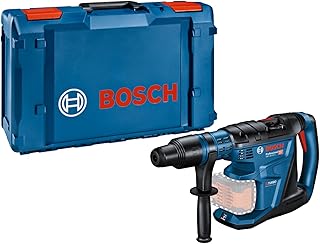


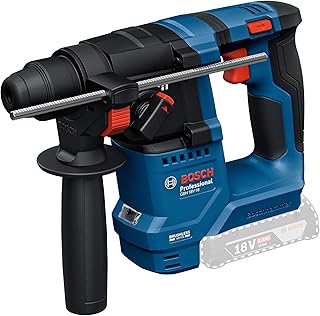


Choosing a Bosch cordless SDS hammer drill is about more than selecting the model with the highest headline specification. The right drill depends on the materials you work with, the diameter and depth of the holes you normally make, how frequently you use the tool, the battery platform you already own, and whether portability or maximum drilling performance matters most.
For UK buyers, it is also worth considering the type of work involved. A homeowner carrying out occasional masonry drilling has different requirements from a tradesperson installing fixings every day. A compact cordless SDS drill can be particularly convenient where access is restricted, while a higher-performance model may be preferable for repeated drilling into concrete and other hard masonry.
When comparing Bosch options, look beyond the basic drill name and examine the complete specification. Pay attention to impact energy, no-load speed, impact rate, drilling capacities, tool weight, battery compatibility, vibration characteristics, operating modes, chuck system and included accessories. These details help establish whether a drill is genuinely suited to your intended workload.
An SDS hammer drill is designed around a specialised bit-retention system that allows compatible SDS bits to be inserted and removed quickly while permitting the bit to move as part of the hammering mechanism. This makes SDS equipment particularly useful for masonry and concrete drilling compared with conventional rotary drills.
Cordless operation removes the need to work close to a mains socket or manage a trailing power cable. That can be useful on building sites, during renovation work, in gardens, garages and locations where access to mains electricity is inconvenient. The trade-off is that performance and runtime depend on the battery and tool configuration.
Bosch offers cordless power tools across different performance categories, so buyers should not assume that every Bosch SDS model is intended for the same type of work. Compact models can prioritise manoeuvrability and reduced weight, whereas larger professional-oriented tools may focus more heavily on sustained masonry drilling and heavier applications.
Impact energy is one of the most important specifications when comparing SDS hammer drills. It describes the energy delivered by the hammer mechanism and provides an indication of how aggressively the tool can work against masonry.
A higher impact-energy figure is not automatically the best choice for every user. If most of your work involves relatively small holes and occasional domestic jobs, excessive power can add unnecessary weight and may make the tool less comfortable to control. For regular drilling into harder materials or larger holes, however, a stronger hammer mechanism can be valuable.
Check the manufacturer's stated drilling capacities for concrete, masonry and other relevant materials rather than relying on the general description of the drill. The maximum capacity gives useful context when deciding whether a particular model fits your typical jobs.
Do not select a drill solely because its maximum drilling diameter matches your largest planned hole. Frequent work close to the maximum capacity can place greater demands on the tool and battery than occasional smaller-diameter drilling. Matching the drill to the majority of your work is generally a more useful buying strategy.
No-load speed indicates how quickly the tool rotates when it is not drilling into material. It can help when comparing models, but it should not be considered in isolation. For masonry drilling, the interaction between rotational speed, hammer mechanism, bit design and control is more meaningful than the speed figure alone.
The impact rate describes how frequently the hammer mechanism delivers impacts. Together with impact energy, it helps describe the character of the hammering action. A high impact rate does not necessarily mean that one drill will outperform another in every application because the actual drilling result also depends on impact energy, bit quality, material hardness, operator technique and hole size.
Weight becomes increasingly important when drilling overhead, working from ladders or platforms, installing multiple fixings, or using the tool for extended periods. A heavier drill may offer greater capability in some applications, but a lighter model can be easier to position accurately and less tiring during repetitive work.
When comparing Bosch cordless SDS hammer drills, consider the complete working setup rather than the bare tool alone. Battery size can alter the overall weight and balance, so the published tool weight should be considered alongside the battery you intend to use.
Battery compatibility deserves particular attention when buying a cordless power tool. If you already own compatible Bosch cordless equipment, staying within the appropriate battery platform may reduce the need to purchase additional batteries and chargers.
New buyers should compare the complete cost of the tool, batteries and charger rather than looking only at the price of a bare tool. A bare-tool listing can appear inexpensive but may not include the battery required for operation.
Before ordering a cordless SDS hammer drill, confirm which SDS bit system it uses. SDS Plus is widely associated with compact and medium-duty rotary hammer applications, while larger SDS systems are intended for substantially heavier applications.
The chuck system determines which bits can be used directly with the tool. This is an important distinction because standard round-shank drill bits are not automatically interchangeable with SDS bits. Buyers should verify compatibility before purchasing accessories.
For common masonry tasks, an SDS masonry bit can provide a practical combination of quick bit changes and hammer-drilling capability. Different bit designs are available for different materials and hole requirements, so choosing an appropriate bit is part of achieving good drilling performance.
Rotary hammer mode combines rotation with hammer action and is the primary setting for drilling many masonry and concrete holes with an SDS hammer drill. It is generally the setting to consider when the objective is to create holes efficiently in hard mineral materials.
Some SDS hammer drills provide a rotary-only setting for applications where hammer action is unnecessary. This can be useful when the appropriate accessory is compatible with the drill and the material or task calls for rotation without impact.
Where supported, hammer-only operation allows the tool to deliver impact without normal drilling rotation. This can be useful for certain light chiselling or material-removal tasks when used with suitable accessories and within the manufacturer's intended application range.
Speed control can make it easier to start a hole accurately and adjust drilling behaviour according to the task. Good trigger control is especially useful when positioning a bit at the beginning of a hole, where excessive speed can make accurate starting more difficult.
For occasional household projects, prioritise manageable weight, straightforward controls, suitable masonry capacity and a battery system that fits your wider tool collection. There is little benefit in selecting an unnecessarily large professional-oriented machine if your normal tasks consist of occasional wall fixings and small masonry holes.
Renovation work can involve a broader range of materials and hole sizes. A versatile SDS hammer drill with multiple operating modes can therefore be more useful than a model selected solely for its maximum impact specification.
Consider how often the tool will be used, whether drilling is likely to occur overhead, and whether the battery capacity provides an appropriate balance between runtime and handling weight.
Installers frequently need to create repeated fixing holes rather than a small number of very large holes. In this situation, ergonomics, control, battery management and reliable accessory compatibility can be just as important as maximum drilling performance.
Frequent professional use places greater emphasis on durability, workload suitability, battery availability, ergonomics and serviceability. A trade user should compare the manufacturer's intended application and duty category with the actual workload instead of choosing based on a single specification.
A cordless SDS hammer drill offers freedom from a mains cable, making it easier to move around a property or work in locations without convenient electrical access. This convenience can be particularly valuable for installation work and mobile maintenance.
A mains-powered SDS hammer drill can be attractive where continuous operation from an electrical supply is available and portability is less important. The decision therefore depends on the environment as much as the drilling specification.
For cordless buyers, remember that runtime is affected by workload, material, hole size, drilling technique, battery capacity and battery condition. Having a second compatible battery can be more useful than choosing a tool solely because of a theoretical runtime expectation.
Battery capacity is commonly expressed in ampere-hours. In broad terms, a larger-capacity battery can provide greater stored energy, but it can also increase the weight of the complete tool.
For extended drilling sessions, additional battery capacity or spare batteries may be valuable. For overhead or repetitive installation work, however, the lighter configuration may be preferable. There is no universally ideal battery size because the best balance depends on the application.
When comparing packages, establish whether the listing includes batteries, a charger, carrying equipment and accessories. Package contents can vary, so the exact configuration should always be checked before purchase.
Where a Bosch cordless SDS hammer drill uses a brushless motor, the design can offer advantages associated with electronic motor control and the absence of conventional carbon brushes. Buyers should nevertheless judge the complete tool rather than assuming that brushless construction alone makes one model better for every application.
Motor technology should be assessed alongside impact performance, battery platform, weight, thermal management, controls, intended workload and available features. For a frequent user, these factors collectively matter more than a single marketing term.
Ergonomics can have a significant impact on real-world usability. A drill may have excellent headline specifications but still be a poor choice if its weight, handle position or balance does not suit the user's working style.
Look for features such as a comfortable primary grip, a suitable auxiliary handle, accessible mode controls and a balanced centre of gravity. These details become especially relevant when drilling a large number of holes.
Consider the positions in which you normally work. A compact drill that is comfortable at shoulder height may be preferable for installation tasks, while a larger machine may be more appropriate when maximum drilling capability is the priority.
Hammer drilling generates vibration, particularly when working in hard masonry. Where a model provides vibration-reduction technology, examine the manufacturer's stated information and consider how it relates to your intended workload.
Use the appropriate bit, maintain a stable stance and follow the manufacturer's instructions for the drill and accessories. Do not force the tool into the material simply because additional pressure appears to increase drilling speed. Allow the hammer mechanism and cutting accessory to perform their intended functions.
Appropriate eye protection, hearing protection and suitable work practices should be considered when drilling masonry. Dust management is also important, particularly during repeated drilling indoors.
Masonry drilling can create significant dust, and indoor work can quickly spread fine particles through a room. Depending on the tool and application, users may consider suitable dust-extraction accessories or other dust-control methods compatible with the drill.
Dust control is not merely a cleaning issue. It can improve visibility around the drilling point and help maintain a more controlled work environment. Always follow applicable workplace requirements and the manufacturer's guidance for dust extraction and protective equipment.
Maximum power is not always the same as maximum suitability. A larger drill can be heavier and less convenient for small jobs. Select performance according to the work you actually expect to perform.
A cordless tool purchase should be evaluated as a complete system. Check whether the selected package contains the required battery and charger, particularly when comparing bare-tool listings with ready-to-use kits.
The lowest initial price may not represent the lowest overall cost. Consider battery requirements, included accessories, expected workload and whether the tool's capabilities genuinely match your needs.
Weight can become a major consideration after repeated use. A tool that looks attractive on a specification sheet may become uncomfortable during long drilling sessions if the complete battery-equipped setup is too heavy for the application.
Check the exact chuck and bit system before buying drill bits, chisels, adapters or other accessories. Compatibility should be confirmed from the manufacturer's information rather than assumed from the general description of an SDS tool.
The maximum stated drilling diameter is useful, but it does not describe every aspect of performance. Consider the hole sizes you make most often and how frequently you expect to drill them.
A useful comparison starts by creating a shortlist based on application rather than brand name alone. Once the Bosch models meet your basic requirements, compare the specifications that directly influence your work.
Bosch uses different product families for different types of users and applications. Buyers should check whether a particular SDS hammer drill belongs to the Bosch Professional range or a consumer-oriented Bosch DIY range before comparing it with another model.
The intended market can provide useful context when assessing tool design, battery systems, accessories and expected applications. However, the correct choice should still be based on the specific model's published specifications and your workload.
Do not assume that a Professional-branded tool is automatically the best purchase for a homeowner, or that a DIY-oriented model is unsuitable for every user. The important question is whether the tool's capabilities match the work you intend to perform.
The drill is only one part of the drilling system. Bit quality and suitability can make a noticeable difference to drilling speed, hole quality and user effort.
When selecting SDS accessories, match the bit to the material and required hole diameter. For repeated work, it can be sensible to maintain a selection of commonly used sizes rather than relying on a single multipurpose accessory.
Inspect bits regularly for wear or damage and replace accessories when they are no longer appropriate for the task. A worn cutting accessory can make the tool work harder and may produce less satisfactory holes.
Good maintenance starts with keeping the tool and accessories clean and storing them appropriately between jobs. Follow Bosch's instructions for cleaning, lubrication, inspection and storage because requirements can vary between models.