

♥ Wishlist
Compare 45 verified Milwaukee Cordless SDS Hammer Drills products in United Kingdom. Reviews, ratings, pros, cons and buying advice updated for October 2026.


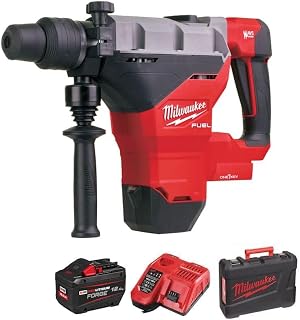


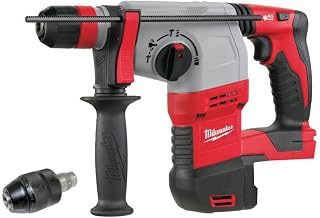


Choosing between Milwaukee cordless SDS hammer drills is not simply a matter of selecting the model with the highest headline power figure. The right drill depends on the type of masonry you work on, the diameter and frequency of drilling, whether you need chiselling, the battery platform you already own, the weight you can comfortably handle, and how important runtime is on a typical working day.
For UK users, the most useful comparison is between the complete tool system rather than the bare drill alone. A drill that looks inexpensive as a bare unit can become substantially more expensive if you also need batteries and a charger. Conversely, a Milwaukee user who already owns compatible batteries may be able to choose a bare tool and avoid duplicating equipment.
When comparing the top-rated Milwaukee cordless SDS hammer drills, consider the specifications together: SDS chuck type, maximum drilling diameter, impact energy, no-load speed, blow rate, operating modes, anti-vibration technology, tool weight, battery compatibility, dust-management options and intended workload.
Milwaukee's cordless SDS range includes compact machines intended for lighter installation work as well as larger rotary hammers designed for demanding drilling and chiselling. Understanding the basic platform terminology makes it easier to separate genuinely different tools from models that appear similar in a retailer's comparison table.
The M12 platform is designed around compact cordless equipment. Where an SDS hammer drill is available within this voltage class, its main advantage is portability and reduced bulk rather than replacing a larger SDS rotary hammer for heavy masonry work.
A compact SDS machine can make sense for installers, maintenance workers and tradespeople who regularly drill smaller holes in brick, block and similar materials and value a tool that is easier to carry around a site. It should not automatically be considered the best choice for extensive concrete drilling simply because it is lighter.
The M18 platform is particularly important when comparing Milwaukee cordless SDS drills in the UK. M18 SDS-Plus machines cover a broad range of applications, from general fixing and installation work to considerably more demanding masonry drilling and chiselling.
SDS-Plus is generally suited to smaller and medium-sized drilling applications. It is a practical format for electrical, plumbing, heating, construction, renovation and general building work where holes for fixings, anchors, conduits and services are common.
SDS-Max is a larger tooling system intended for heavier applications. SDS-Max drills and rotary hammers are typically selected when larger holes, deeper drilling and substantial chiselling are routine requirements.
The larger chuck and tooling system can provide the capacity required for demanding work, but the trade-off is usually greater machine size and weight. Buying an SDS-Max tool when most of your work involves small fixing holes can therefore be unnecessary.
The distinction between SDS-Plus and SDS-Max is one of the most important buying decisions. The two systems use different accessories and are aimed at different levels of work.
If most of your work involves drilling holes for wall plugs, cable routes, pipe clips and fixings, an SDS-Plus Milwaukee machine is often the more logical category to investigate. If you routinely remove large quantities of concrete or masonry, SDS-Max deserves closer consideration.
Battery drills are often compared using torque figures, but rotary hammers require a different approach. For SDS hammer drills, impact energy is one of the more useful indicators of how forcefully the mechanism strikes the material.
A higher impact-energy specification can be valuable when drilling hard concrete or carrying out chiselling, but it does not automatically make a drill better for every user. A powerful machine can be heavier and less comfortable for repetitive light installation work.
Think of impact energy as part of a larger system. The mechanism, bit quality, drilling diameter, material, pressure applied by the operator and dust-removal method all affect real-world productivity.
Impact rate describes how frequently the hammer mechanism delivers impacts, while no-load speed describes the rotational speed without a drilling load. Neither figure should be assessed in isolation.
A drill with a high blow rate is not necessarily faster on every material. Matching the machine to the correct bit and application remains essential. For masonry drilling, a stable hammer mechanism and suitable carbide-tipped SDS bit can matter more than chasing the highest published number.
Maximum drilling diameter is useful, but it can be misleading if treated as a recommended everyday working size. Manufacturers may publish maximum capacities that represent the upper operating range rather than the diameter that provides the best combination of speed, battery efficiency and operator comfort.
Before choosing a Milwaukee cordless SDS hammer drill, write down the hole sizes you actually use. Someone routinely drilling 6 mm, 8 mm and 10 mm fixing holes has very different requirements from someone installing large anchors or core-drilling openings.
One reason SDS rotary hammers are so useful is their ability to perform more than one task. However, the number and configuration of operating modes vary between models.
This is the key setting for drilling into masonry and concrete with an SDS masonry bit. The rotation combines with the hammer mechanism to break material efficiently.
Hammer-only operation is useful for chiselling applications such as removing tiles, chasing masonry, breaking small sections of material and carrying out corrective work. If chiselling is important to you, verify that the model provides a dedicated hammer-only setting rather than assuming every SDS drill does.
Some SDS machines offer rotation without hammer action. This can be useful for particular accessories and materials, although the exact applications depend on the tool and accessory manufacturer's instructions.
Battery selection can have a noticeable effect on the usefulness of a cordless SDS hammer drill. Larger-capacity batteries can provide more energy for demanding work, but they can also add weight and change the balance of the tool.
For short installation jobs, a smaller compatible battery may offer a more comfortable setup. For prolonged drilling or chiselling away from mains power, a higher-capacity battery can be more appropriate.
Do not compare battery runtime claims from different models as if they were universal measurements. Runtime depends heavily on bit diameter, drilling depth, material hardness, operator technique, temperature, battery condition and the amount of hammering performed.
Brushless motor technology is an important consideration in modern cordless power tools. It can provide an efficient motor design without conventional brushes, while electronic control can help manage power delivery and protect the tool under demanding conditions.
For buyers comparing Milwaukee models, brushless technology should nevertheless be treated as one feature rather than a guarantee of superior performance in every application. Compare the complete specification, intended duty level, size, weight and battery system.
Vibration deserves considerably more attention when choosing an SDS hammer drill for regular professional use. A tool can have excellent drilling capability yet become unpleasant to use if vibration control and ergonomics are inadequate for the intended workload.
Milwaukee incorporates anti-vibration features into various tools, but buyers should check the exact specification of the model being considered rather than assuming that every machine provides identical protection.
Weight is particularly important for SDS drills because the machine is often held in front of the body or above shoulder height. The published bare-tool weight may also differ from the working weight once a battery and accessory are fitted.
For frequent overhead installation, a lighter model can be preferable even if a heavier machine offers greater maximum capacity. For floor-level drilling and demolition, additional mass may be less problematic.
When comparing products, check whether the stated weight includes a battery. If it does not, consider the weight of the battery you expect to use. This gives a more realistic picture of the complete tool you will actually hold.
SDS compatibility should be checked before buying accessories. SDS-Plus and SDS-Max are not interchangeable systems, and purchasing the wrong bit format can leave you with accessories that cannot be used in the machine.
Quality SDS bits can make a substantial difference to drilling performance. A high-specification cordless hammer drill fitted with a worn, unsuitable or low-quality bit may perform poorly compared with a less powerful machine using an appropriate sharp accessory.
Dust management is an increasingly important consideration for construction and renovation work. Drilling masonry and concrete can produce substantial airborne dust, so a cordless SDS drill that can be paired with an appropriate dust-extraction accessory may be preferable for users working in occupied buildings or enclosed environments.
Some Milwaukee SDS systems are designed to work with dedicated dust-extraction solutions. Always check compatibility with the exact drill and accessory rather than assuming that every Milwaukee dust-management product fits every SDS model.
Dust extraction should not be regarded as a substitute for following applicable UK workplace controls, using appropriate respiratory protection where required, and applying the correct site-specific risk assessment.
Different masonry materials place different demands on an SDS hammer drill. A machine that performs well for ordinary brickwork may face a substantially harder task when used continuously on reinforced concrete.
Brick is often encountered during domestic installation work. Drilling requirements can be relatively modest, particularly when creating small holes for fixings. A compact SDS-Plus tool can therefore be a sensible option where portability and control matter.
Concrete generally demands more from the hammer mechanism and accessory. Frequent concrete drilling is a stronger reason to compare impact energy, cooling, battery capacity, vibration management and duty rating rather than focusing solely on the tool's compactness.
Block can vary significantly in density and composition. Lightweight blocks and harder dense blocks should not be assumed to behave identically. Select the bit and drilling technique according to the material encountered.
Reinforced concrete can present a substantially different challenge because reinforcement may be encountered during drilling. The appropriate response depends on the application, structural requirements and site procedures. Never drill into structural elements without establishing whether the work is permitted and whether services or reinforcement may be present.
Milwaukee's Fuel branding is associated with higher-performance cordless power-tool configurations and brushless technology. When comparing an M18 Fuel SDS hammer drill with another Milwaukee model, however, the Fuel label should not be treated as a replacement for checking the detailed specification.
Look at the individual machine's impact energy, drilling capacity, weight, vibration control, operating modes, battery requirements and intended application. Two tools within the same broad family can still be designed for noticeably different workloads.
A useful way to narrow down the options is to divide your work into three categories.
The best top-rated Milwaukee cordless SDS hammer drill for one category may be an inefficient purchase for another. Matching capacity to workload is usually more useful than simply selecting the most powerful model.
A strong product comparison should evaluate more than customer star ratings. Reviews can help identify recurring concerns about handling, battery life or usability, but specifications and intended applications provide the technical context needed to interpret those comments.
Retail listings for cordless tools can be difficult to compare because the same or closely related model may be sold as a bare tool or as a complete kit.
A bare Milwaukee SDS drill can be attractive to buyers who already own compatible batteries and chargers. A kit can make more sense for someone entering the platform or who needs additional batteries for uninterrupted work.
Before comparing prices, check exactly what is included. A lower headline price is not necessarily the better overall value if it excludes batteries, a charger or other accessories that you would otherwise need to purchase separately.
Maximum performance can be attractive, but carrying a heavy SDS rotary hammer for hours can be unnecessarily tiring if your actual work consists mostly of small fixing holes.
Do not compare bare-tool prices with complete kits without adjusting for what is included. Battery and charger requirements can significantly change the total cost of ownership.
The accessory ecosystem matters. Choose the chuck format based on the tooling you need and the work you actually perform.
A high average rating can indicate broad customer satisfaction, but it does not tell you whether a particular drill is suitable for heavy concrete drilling, overhead installation or continuous chiselling.
Two drills with similar specifications can feel very different in use. Handle position, battery location and overall balance affect control and fatigue.
Budget for appropriate SDS bits, chisels and dust-management equipment where necessary. The drill is only one part of the working system.
For a meaningful comparison, think in terms of total ownership value rather than purchase price alone.
Milwaukee is one of several established brands competing in the professional cordless power-tool market. Buyers may also encounter SDS rotary hammers from Bosch Professional, DeWalt, Makita, Hilti and other manufacturers.
The most useful comparison is not simply brand against brand. Compare the complete cordless ecosystem, including compatible batteries, chargers, accessories, service arrangements, tool sizes and the types of equipment you may purchase later.
If you already own batteries from one of these platforms, staying within that ecosystem can be more practical than choosing a competing brand solely because an individual drill has a higher specification.
Retail listings can present specifications in different formats. Use the manufacturer's technical information as the reference point when two listings appear to disagree.
Regular care can help maintain reliable performance and reduce avoidable wear. Follow the specific maintenance instructions supplied with the tool, particularly for lubrication, cleaning and accessory installation.
Cordless tool performance depends on the condition of the battery as well as the drill. Store and charge Milwaukee batteries according to the manufacturer's instructions and avoid exposing them to inappropriate temperatures, moisture or physical damage.
If a battery becomes unusually hot, swollen, damaged or otherwise abnormal, stop using it and follow the manufacturer's safety guidance. Do not attempt improvised repairs to lithium-ion battery packs.
SDS hammer drills can remove material quickly and should be treated as professional power tools rather than ordinary handheld drills. Appropriate precautions depend on the task, material and working environment.
One of the most important considerations in domestic and commercial renovation work is what may be behind the surface. Electrical cables, water pipes, heating systems and other services can be concealed inside walls, floors and ceilings.
Before drilling, establish the location of known services and use appropriate detection methods where necessary. Never assume that a wall or slab is clear simply because there are no visible signs of wiring or plumbing.
A conventional hammer drill can be perfectly adequate for occasional small masonry holes. An SDS rotary hammer becomes more attractive when masonry drilling is frequent or when the job requires substantially greater impact capability.
The cordless advantage becomes particularly useful where mains power is unavailable, where trailing cables would be inconvenient, or where mobility around a construction site is important.
Cordless technology is convenient, but a corded SDS rotary hammer can remain practical for stationary or long-duration work where uninterrupted mains power is available and mobility is less important.
For users who regularly perform prolonged drilling or demolition in one location, the absence of battery changes may be a worthwhile advantage. For mobile tradespeople moving between rooms, floors or sites, cordless operation can offer considerably greater convenience.
Electricians commonly need controlled drilling for cable routes, conduit, boxes and fixings. A relatively compact SDS-Plus tool may be preferable when many small holes are involved and portability matters.
Plumbing and heating installation can involve repeated masonry drilling for clips, brackets and pipe routes. Consider battery runtime, handling and the hole sizes most frequently required.
General builders may benefit from a more versatile SDS-Plus machine capable of drilling and chiselling. If heavy demolition is a routine task, a larger SDS-Max platform may be more appropriate.
Installation work often rewards compact dimensions and precise control. A machine that is easy to handle can be more useful than a heavy-duty model with capacity that is rarely needed.
Maintenance teams often need a tool that can cover a wide range of occasional jobs. In this situation, versatility, battery availability and ease of storage can be more important than maximum impact energy.
Customer reviews are useful when treated as supplementary evidence rather than the only basis for a purchase. Look for repeated observations rather than relying on isolated comments.
Before placing an order, verify the exact model number rather than relying only on the product title. Cordless power tools can have similar names while differing in chuck format, battery configuration, accessories or regional packaging.
Model names can be shortened or formatted differently by retailers, which can make two listings look almost identical. The exact model number is therefore one of the most reliable identifiers when comparing Milwaukee tools.
Always cross-check the model designation against authoritative manufacturer information before deciding that two listings are the same product. This is particularly important when comparing bare-tool and kit versions.
Milwaukee cordless SDS hammer drills can be particularly compelling for tradespeople and serious users who value cordless mobility and already use compatible Milwaukee battery equipment. The platform approach can make it easier to share batteries across multiple tools.
For occasional DIY masonry drilling, however, a professional cordless SDS hammer drill may provide considerably more capability than necessary. The most sensible purchase is the one that matches the frequency, material and scale of the work rather than the tool with the longest specification list.
An SDS-Max Milwaukee machine is worth investigating when the workload routinely exceeds the practical range of a compact SDS-Plus tool. Large drilling diameters, extensive chiselling and demanding concrete applications are the main reasons to move into this category.
If your normal work consists primarily of small anchor holes and fixings, an SDS-Max machine may be unnecessarily large. Tool size, accessory cost and handling should all be considered alongside the additional capacity.
A useful top-10 comparison should not treat every model as competing for exactly the same job. Instead, evaluate each drill according to its intended user and workload.
Suitable Milwaukee SDS rotary hammers can be used for concrete drilling, but the appropriate model depends on the concrete hardness, hole diameter, drilling depth and frequency of use. Check the manufacturer's stated application and drilling capacity for the exact model.
Neither platform is universally better. M18 equipment generally provides access to larger and more powerful professional tools, while the compact nature of M12 equipment can be advantageous where portability is the priority. Choose according to the work rather than voltage alone.
SDS-Plus is generally the more versatile choice for everyday installation and medium-duty masonry drilling. SDS-Max is intended for heavier drilling and chiselling applications. Your normal accessory sizes and workload should determine the choice.
Do not assume that different SDS formats are directly interchangeable. Check the manufacturer's approved accessories and chuck specifications for the exact tool. Use accessories designed for the relevant chuck system.
Some listings are sold as bare tools while others are supplied as kits with batteries and a charger. Always check the exact package contents before comparing prices.
Brushless technology can be advantageous in a modern cordless power-tool system, but it should be evaluated alongside impact energy, drilling capacity, weight, ergonomics, battery compatibility and intended workload.
Battery capacity affects how much energy is available between charges. Higher-capacity batteries can be useful for demanding work, while smaller batteries may make a compact SDS drill easier to handle. The ideal choice depends on runtime requirements and ergonomics.
Models with a hammer-only operating mode can be used for suitable chiselling applications. Confirm the operating modes of the exact Milwaukee model before purchasing if chiselling is an important requirement.
They can be, particularly for DIY users who regularly undertake masonry or renovation work. However, professional-grade capability may be unnecessary for someone who only needs to drill a few small holes occasionally.
Check the exact model number, SDS format, drilling capacity, impact energy, operating modes, weight, battery platform, kit contents, accessory compatibility and current retailer terms. Also consider whether the tool is appropriate for the materials and workload you expect.
Before choosing from a list of top-rated Milwaukee cordless SDS hammer drills in the UK, use this checklist to narrow the selection to tools that genuinely fit your requirements.
The strongest Milwaukee cordless SDS hammer drill is not necessarily the largest, fastest or most expensive machine. The better choice is the model whose capacity, battery system, weight, ergonomics and accessory format align with the work you actually perform.
For everyday UK trade and installation work, SDS-Plus is often the logical starting point because of its broad range of compatible drilling and chiselling accessories. Buyers facing heavier concrete drilling or demolition should investigate higher-capacity machines and SDS-Max equipment where appropriate.
Before making a purchase, compare the exact specifications, kit contents and current verified customer feedback for the model under consideration. Pay particular attention to whether the listing includes batteries and a charger, because this can materially change the overall value of a cordless tool.
Milwaukee, Bosch Professional, DeWalt, Makita and Hilti all offer established professional power-tool ecosystems, so buyers should consider the wider battery platform as well as the individual SDS hammer drill. For someone already invested in Milwaukee M18 equipment, battery compatibility may be a major practical advantage; for a new buyer, the broader platform should be part of the purchasing decision.
Ultimately, the right Milwaukee SDS hammer drill is the one that provides sufficient impact capability for the material, enough battery capacity for the workload, suitable accessories for the holes you need to create, and an ergonomic design you can comfortably use for the duration of the job.