
♥ Wishlist
Compare 14 verified Grass Shears for Neat Lawn Edges and Precise Trimming products in United Kingdom. Reviews, ratings, pros, cons and buying advice updated for October 2026.
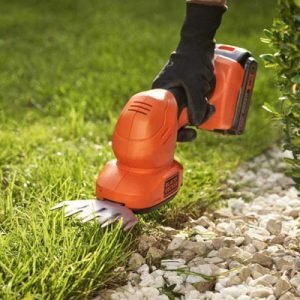
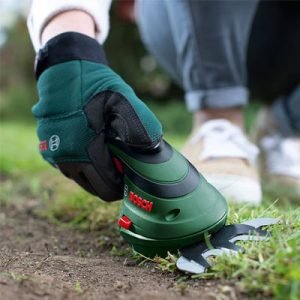
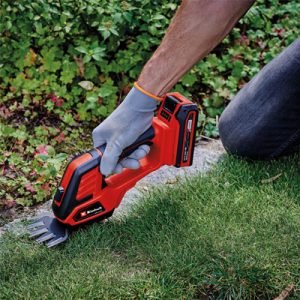
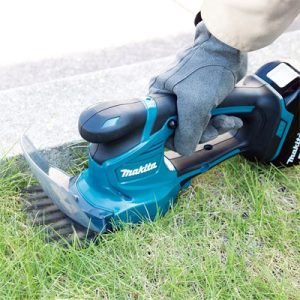
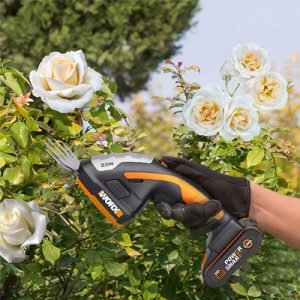


Choosing grass shears is less about finding the tool with the longest specification list and more about matching the cutting system, handle design, power source and blade configuration to the type of lawn work you actually do. A compact pair of hand shears can be ideal for touching up lawn edges, while powered cordless grass shears are considerably more convenient when trimming around borders, paving, trees, raised beds and other areas that a mower cannot reach easily.
For UK gardens, weather resistance, wet-grass performance, comfortable handling and battery practicality deserve particular attention. A product that looks impressive on paper may not be the best choice if it is awkward to manoeuvre around intricate borders or requires frequent charging for the amount of trimming you need to complete.
Grass shears and grass trimmers overlap in purpose, but they are designed for different types of work.
If the main job is maintaining a large overgrown area, a grass trimmer will normally be more appropriate. If the objective is neat finishing around flower beds, paving, walls and garden furniture, grass shears can provide much better control.
The choice between manual and powered shears depends heavily on garden size and how often detailed trimming is required.
Traditional hand shears are simple, lightweight and do not require charging, fuel or a motor. They are particularly suitable for small lawns and occasional finishing work. There are fewer components to maintain, and a good-quality cutting mechanism can remain useful for many seasons when cleaned and sharpened correctly.
The disadvantage is productivity. Repeatedly squeezing handles across a large lawn can become tiring, particularly when the grass is dense or the job involves extensive edge trimming.
Battery-powered models are convenient when you regularly trim several areas that a mower cannot reach. They eliminate the need for a mains cable and generally start immediately at the press of a control.
For many UK gardens, cordless operation is especially useful around borders and obstacles because there is no extension lead trailing through the garden. The trade-off is that battery condition, charging time, runtime and replacement-battery availability become part of the ownership decision.
Blade width affects how much grass can be cut with each pass. A wider grass-shear blade can improve productivity across open patches, whereas a narrower blade can be easier to control in confined areas.
Do not automatically choose the widest blade available. Precision can matter more than cutting width when working beside delicate plants, decorative borders or uneven paving.
Blade durability is an important consideration because grass contains moisture and soil contamination can accelerate wear. Look for blades made from suitably durable steel or other materials specified by the manufacturer for the intended application.
A sharp blade should produce a clean cut without requiring excessive pressure. Dull or damaged blades can increase the effort required and may make the tool feel underpowered even when the motor or mechanism itself is functioning normally.
Some powered models allow the cutting attachment to be changed without tools. This can be useful if the same machine is intended for both grass trimming and light hedge or shrub shaping.
However, a multi-function design is only beneficial if the attachments are genuinely useful for your garden. Buying a combination tool solely because it includes additional accessories can add complexity without improving the result.
Battery voltage is frequently used as a comparison point, but it should not be treated as a direct measure of cutting performance or runtime. Different motor designs, blade systems, battery capacities and workloads affect real-world performance.
When comparing cordless models, consider the complete battery specification rather than voltage alone. Battery capacity, charging arrangements, compatibility with other tools and the availability of replacement batteries can be more important for regular users.
A shared battery platform can be one of the most useful features of a cordless garden tool. If you already own compatible equipment from a platform such as Bosch, Einhell or another established manufacturer, a bare-tool purchase may be worth considering if the battery and charger are already available.
Before choosing this route, check the exact battery family and compatibility information. Batteries that appear similar are not necessarily interchangeable across product generations or ranges.
Manufacturer runtime figures can vary according to the type of vegetation, cutting attachment, operating technique, battery condition and other factors. Treat runtime as an indication rather than a guarantee of exactly how long the machine will operate in your garden.
For occasional edge finishing, modest runtime may be perfectly adequate. For larger gardens with extensive detailed trimming, consider whether purchasing an additional compatible battery would be more practical than repeatedly waiting for the first battery to recharge.
Charging time becomes particularly important if the tool is intended for regular lawn maintenance. A fast-charging system can reduce downtime, while a basic charger may require more planning between jobs.
Check whether the quoted charging period applies to the supplied battery and whether a charger is included. Bare tools may require a compatible battery and charger to be purchased separately.
Weight has a major effect on comfort because grass shears are often held away from the body while trimming around lawn edges. A tool that feels manageable for a few minutes may become tiring during a longer session.
Pay attention to where the weight is concentrated. A slightly heavier tool can still feel comfortable if its mass is well balanced, whereas a lighter model with poor weight distribution can place more strain on the wrist.
Look for a handle that provides secure control without forcing your hand into an awkward position. A comfortable grip is particularly valuable for users who frequently perform detailed trimming.
Controls should be accessible without requiring excessive finger movement. If a safety switch must be held continuously, consider whether its position is comfortable for the expected duration of use.
A telescopic handle can transform the experience for users who prefer not to kneel or bend repeatedly. It can also make it easier to see the cutting area while maintaining a more upright posture.
However, long-reach configurations can change the balance of the tool. Check whether the handle can be adjusted to a suitable height and whether the complete assembly remains stable and controllable.
An adjustable cutting head can make a grass shear substantially more versatile. Angling the head can help when trimming along lawn borders, beneath shrubs or around garden features without forcing the operator to twist the wrist.
Several adjustment positions can be useful, but more positions do not automatically mean better usability. The adjustment mechanism should lock securely and remain stable during cutting.
One of the most common reasons to buy grass shears is to achieve a cleaner transition between turf and hard landscaping. Mowers often leave a narrow strip of grass beside paths, walls and flower beds, making finishing work necessary.
For edge work, manoeuvrability is often more important than maximum cutting speed. A compact cutting head, clear visibility of the blade and comfortable control can help produce a consistent result without damaging adjacent plants or surfaces.
Consider how the shears will be held when cutting the edge. Some designs are better suited to horizontal trimming over the lawn surface, while adjustable heads can make vertical edge work more convenient.
If crisp borders are a priority, an adjustable head or suitable long-reach attachment can reduce awkward wrist angles and make it easier to maintain a consistent cutting line.
Detailed trimming around borders requires control rather than brute force. Plants, decorative stones, edging strips and other garden features can be damaged by an aggressive cutting tool.
For these situations, choose a machine that offers a clear view of the cutting head and precise control. A compact design can be preferable to a larger garden tool even if the larger model has a higher theoretical cutting capacity.
Grass commonly grows around tree trunks, posts, benches, garden ornaments and other obstacles where a mower cannot operate safely or effectively. Grass shears are useful for these finishing areas because the cutting head can be positioned more precisely.
Take particular care around tree bark, irrigation lines, low-voltage garden lighting cables and hidden objects. Do not assume that a small cutting tool cannot cause damage simply because it is designed for grass.
For traditional grass shears, the mechanism and blade geometry deserve close attention.
Cutting performance is more than the headline motor specification. A useful assessment considers how consistently the blades maintain their movement through grass and whether the tool continues cutting cleanly without repeated passes.
For short lawn grass, a compact shear mechanism may perform efficiently. Longer or wetter grass can place greater demands on the cutting system. If your lawn is routinely allowed to grow long between cuts, a conventional grass trimmer may be a more suitable primary tool, with shears reserved for finishing work.
UK lawns can remain damp for significant periods, but that does not mean every grass shear should be used in wet conditions. Always follow the manufacturer's instructions regarding moisture and outdoor operation.
Wet grass can cling to cutting components, increase resistance and make the tool harder to control. If the tool is permitted to be used outdoors in damp conditions, clean and dry it according to the manufacturer's maintenance instructions rather than storing it with grass residue and moisture around the cutting mechanism.
For a small lawn with a few borders, manual shears can be sufficient. A compact cordless model can be worthwhile when convenience and speed are more important than minimising equipment.
Medium gardens often benefit from cordless powered shears, especially when there are multiple borders and obstacles. A replaceable battery can be advantageous if detailed trimming is performed regularly.
For larger properties, grass shears are usually best regarded as a finishing tool rather than the main grass-cutting machine. A mower can handle the majority of the lawn, a grass trimmer can deal with rougher areas, and shears can provide precision around boundaries and obstacles.
| Type | Main Advantage | Best Suited To | Main Consideration |
|---|---|---|---|
| Manual | Simple and independent of batteries or mains power | Small areas and occasional finishing | More physical effort |
| Cordless | Portable and convenient | Regular garden finishing | Battery runtime and charging |
| Corded electric | Continuous electrical operation | Gardens with convenient mains access | Cable management |
When comparing grass shears in the UK, it can be useful to examine established garden-tool manufacturers alongside less familiar alternatives. Brands such as Bosch, Flymo, GARDENA, Einhell, BLACK+DECKER and Spear & Jackson have product ranges covering different types of garden maintenance equipment.
Brand recognition should not replace specification checking. A familiar name does not automatically make one model better for every garden. Compare the exact blade system, battery arrangement, included accessories, dimensions, weight, replacement parts and manufacturer's instructions for the individual product.
The cheapest model may appear attractive, but the purchase decision should account for cutting attachments, battery and charger requirements, replacement blades and long-term usability.
Voltage alone does not tell you everything about cutting performance or runtime. Compare the entire power system and intended application.
Detailed trimming can involve holding the tool in unusual positions. Excess weight or poor balance can become noticeable quickly.
A bare cordless tool can represent good value when you already own compatible batteries, but it can become an expensive choice if a separate battery and charger are required.
Additional attachments can increase versatility, but they can also increase purchase cost and storage requirements. If you only need grass shearing, a dedicated design may be more straightforward.
Grass shears are not intended to replace every garden cutting tool. Trying to clear tall, coarse vegetation with a compact shear can be inefficient and may exceed the tool's intended application.
Check whether replacement blades, batteries and other serviceable components are available for the specific model. Long-term parts availability can be more useful than a small difference in initial specification.
Customer reviews can help identify recurring practical issues, but they should be interpreted carefully. Look for patterns rather than relying on a single very positive or very negative comment.
A simple comparison sheet can make it much easier to identify the strongest candidates.
Frequent users should prioritise durability, comfort and serviceability rather than concentrating on one headline specification. A well-balanced tool with a dependable cutting mechanism can be more satisfying to use repeatedly than a higher-powered model that is uncomfortable to hold.
For regular maintenance, also consider how quickly grass clippings can be removed from the cutting head, whether the blades can be inspected easily and how straightforward the manufacturer's maintenance procedure is.
Remove grass debris after each session according to the manufacturer's instructions. Accumulated clippings can retain moisture and interfere with moving components.
Check for visible damage, excessive wear or contamination. Do not continue using a blade that appears damaged or insecurely mounted.
Follow the manufacturer's guidance for lubrication, sharpening or blade replacement. Do not apply products that are not recommended for the particular tool.
For cordless models, use the manufacturer's charger and observe the recommended storage and charging instructions. Avoid storing batteries in unsuitable temperatures or in locations exposed to excessive moisture.
Store grass shears somewhere dry and protected from accidental impact. If the model has a blade cover or transport guard, use it where supplied and intended.
Start with the mower and leave the finishing work until the main lawn has been cut. This makes it easier to see exactly where grass remains around borders and obstacles.
A consistent finish usually comes from controlled passes rather than forcing the blades rapidly through dense vegetation.
Even compact garden tools contain moving cutting components and should be treated as cutting machinery. Read the manufacturer's operating instructions before use and use any recommended protective equipment.
Seasonal storage is particularly relevant in the UK because grass cutting demand can change substantially throughout the year. Clean the tool before putting it away and follow the manufacturer's instructions for battery storage.
Do not assume that every lithium-ion battery should be stored in exactly the same way. Use the charging level, temperature and storage recommendations specified for your particular battery system.
There is no universal service life that can be promised for every grass shear. Durability depends on build quality, workload, storage conditions, maintenance, blade wear, battery usage and the type of vegetation being cut.
Instead of relying on a fixed lifespan claim, examine the construction, availability of replacement components and manufacturer's maintenance guidance. A model designed with replaceable wear parts may remain useful even after individual components need attention.
A higher purchase price can be justified when it provides features that materially improve your use of the tool. These might include a better-balanced design, a more convenient battery platform, easier blade changes, improved ergonomics, a useful telescopic handle or greater availability of replacement components.
However, paying more simply for a larger specification is not necessarily worthwhile. A homeowner with a small lawn may gain little from features intended for frequent or extensive garden maintenance.
Ease of handling can be more important than maximum cutting capacity. Consider a lightweight design, comfortable grip and adjustable handle that allows more work to be completed without kneeling.
A long-reach configuration may reduce bending, although the complete tool should still be easy to control. If manual shears require significant hand force, a powered option may reduce repetitive effort.
Gardens containing formal borders, intricate planting and decorative hard landscaping benefit from precision. In these settings, prioritise visibility of the blade, manoeuvrability and cutting-head adjustment.
Compact shears can be particularly useful for finishing narrow strips where a conventional trimmer would be unnecessarily aggressive. Take care around ornamental plants and avoid allowing the cutting mechanism to contact hard edging materials unless the manufacturer specifically permits it.
Some cordless grass-shear systems can accept a second attachment for light hedge or shrub trimming. This can make one battery platform more versatile, but the appropriate attachment depends on the size and type of vegetation.
A small attachment intended for light shaping should not automatically be treated as a substitute for a dedicated hedge trimmer. Compare the attachment's dimensions and stated application with the work you need to perform.
Before purchasing, check the exact product configuration rather than relying on the product title alone.
Choose a quality manual shear if you have a small amount of finishing work and want a tool with minimal maintenance and no charging requirements.
Choose a cordless powered model when you regularly need to trim multiple areas and want to avoid the physical effort of repeated manual cutting.
Prioritise a model with a suitable telescopic or long-reach system if bending and kneeling are significant concerns.
If you already own compatible cordless garden tools, a model within the same battery platform can reduce the number of chargers and batteries required.
Look for a compact cutting head, good visibility, smooth control and useful cutting-head adjustment rather than focusing only on motor power.
| Tool | Precision | Area Capacity | Typical Role |
|---|---|---|---|
| Manual grass shears | High | Low | Small finishing jobs |
| Cordless grass shears | High | Low to medium | Detailed lawn maintenance |
| Grass trimmer | Medium | Medium to high | Long grass and larger perimeter areas |
| Lawn edger | High for defined edges | Medium | Creating and maintaining lawn boundaries |
| Hedge trimmer | Low for lawn work | High for hedges | Hedges and shrubs |
Grass shears are primarily used for precise trimming of grass in places that are difficult or unsuitable for a lawn mower. Common applications include lawn edges, borders, around trees, beside paths and around garden obstacles.
They can be worthwhile if you regularly perform detailed lawn finishing and value portability. They are particularly convenient when there is no practical access to a mains cable or when you already own compatible batteries.
Neither type is universally better. Manual shears offer simplicity and independence from batteries, while powered shears can reduce effort and speed up repetitive trimming. The right option depends on garden size, frequency of use and personal preference.
They can cut grass within the limits specified by the manufacturer, but they are generally intended for finishing rather than clearing large amounts of tall or coarse vegetation. A grass trimmer is normally better suited to substantial overgrowth.
Yes. Lawn-edge finishing is one of the most useful applications for grass shears. Models with an adjustable cutting head can be particularly convenient when switching between horizontal lawn trimming and vertical edge work.
They can be used safely when operated according to the manufacturer's instructions. Keep the cutting mechanism away from hands and feet, clear debris from the working area and disconnect the power source before carrying out maintenance or changing attachments.
There is no single interval that applies to every model. Blade condition depends on usage and the material being cut. Follow the manufacturer's maintenance instructions and replace blades when they are damaged or no longer suitable for sharpening.
Only if the manufacturer specifically permits the intended use under those conditions. Moisture can affect cutting performance and creates additional electrical and maintenance considerations for powered equipment.
No. Some are sold as complete kits, while others are supplied as bare tools for users who already own a compatible battery and charger. Always check the exact package contents before purchasing.
No. Voltage is only one part of the power system. Motor design, gearing, blade configuration, battery capacity and workload all influence practical performance.
A rotating or adjustable cutting head can make it easier to change the cutting angle without twisting the wrist. This can be particularly useful for lawn edges and detailed work around borders.
They can be valuable for people who want to reduce bending and kneeling. They are less essential for users who are comfortable working close to the ground and prefer the compact feel of a handheld shear.
Usually not. Shears are better suited to precision finishing, while grass trimmers are designed for larger areas and longer or rougher vegetation. Many gardens benefit from using both tools for their respective jobs.
Focus on cutting width, blade quality, weight, ergonomics, battery compatibility, runtime, charging arrangements, cutting-head adjustment and replacement-part availability. Most importantly, choose according to the amount and type of trimming your garden requires.
The best top-rated grass shear for a UK garden is ultimately the one that fits the job rather than the one with the most impressive specification. Small lawns may need nothing more than a dependable pair of manual shears, while frequent edge maintenance can justify a cordless system with a comfortable grip, useful adjustment and a battery platform that fits the rest of your garden equipment.
When comparing products, give particular weight to the complete ownership picture: cutting performance, ergonomics, battery arrangements, replacement parts, maintenance requirements and the type of work the manufacturer says the tool is designed to perform. Checking current specifications and verified customer feedback before buying can help prevent an otherwise avoidable mismatch between the tool and your garden.