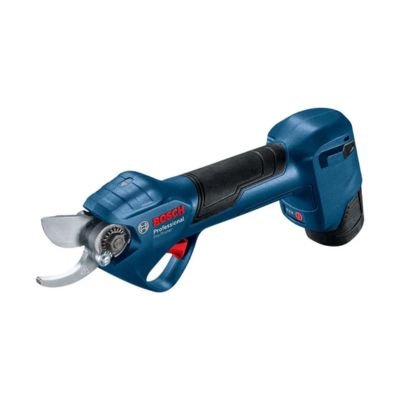
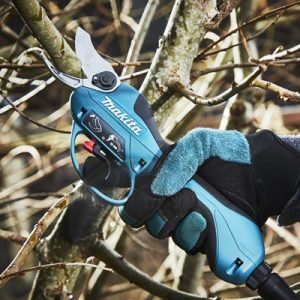


♥ Wishlist
Compare 40 verified Cordless Pruning Shears products in United Kingdom. Reviews, ratings, pros, cons and buying advice updated for October 2026.


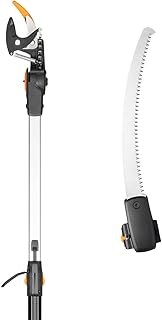


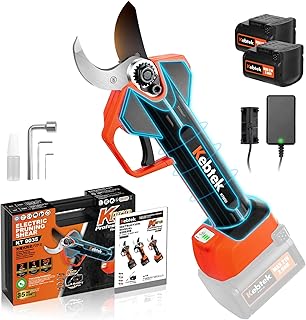


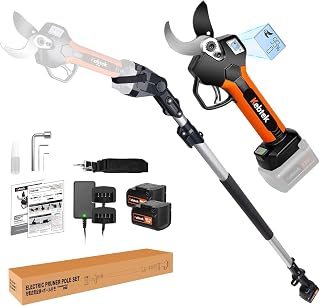


Choosing cordless pruning shears is less about finding the tool with the highest headline cutting capacity and more about matching the machine to the type, diameter and volume of pruning you actually do. A compact battery-powered secateur can be an excellent choice for routine garden maintenance, while a more powerful professional-grade model may be better suited to orchards, vineyards, commercial landscaping or repeated cutting of thicker branches.
For UK buyers, the decision also needs to account for battery compatibility, charger arrangements, weather conditions, blade quality, replacement parts, ergonomics and the availability of compatible batteries. Brands such as Bosch, Makita, DeWalt, Ryobi, STIHL, Husqvarna and Einhell offer cordless garden tools across different levels of performance and price, but specifications vary considerably between individual models.
The most useful comparison is therefore not simply “which cordless pruning shear is best?” but “which combination of cutting performance, battery system, handling and supportable parts is best for my garden or work?”
Cordless pruning shears are battery-powered secateurs designed to make repeated pruning cuts without requiring the squeezing force associated with conventional manual secateurs. An electric motor drives the cutting mechanism after the user activates the trigger or control switch.
They are particularly useful when a large number of cuts are required. Instead of repeatedly applying hand pressure to open and close a manual secateur, the battery-powered mechanism performs the cutting action. This can make a noticeable difference during long pruning sessions.
Most cordless pruning shears are intended for living wood rather than dry timber, metal, plastic or general cutting work. Their maximum branch diameter depends on the specific model, blade position, wood species, moisture content and operating conditions.
Cordless does not automatically mean better. For occasional pruning involving only a handful of thin stems, a quality bypass secateur can be lighter, simpler and quicker to pick up. Manual secateurs also have no battery to charge and can normally be maintained with relatively little equipment.
A battery-powered pruning shear becomes more compelling as the number of cuts increases, the material becomes harder, or hand fatigue starts affecting productivity. Buyers should therefore consider workload rather than choosing an electric model simply because it has a larger specification sheet.
Maximum cutting diameter is one of the most visible specifications, but it should not be treated as a guarantee that every branch at that diameter will be cut effortlessly. Manufacturers may specify maximum capacities under particular conditions, and real-world cutting performance can vary according to wood hardness, branch position, blade condition and battery charge.
For routine pruning, it is sensible to choose a tool whose practical capacity comfortably exceeds the diameter you normally encounter. Constantly operating at the maximum rated capacity can place greater demands on the cutting mechanism and battery.
Most pruning shears use a bypass-style cutting arrangement in which one blade passes against a counter blade. This design is well suited to making clean cuts on live branches and stems.
Blade geometry affects how effectively the shear captures and cuts material. A narrow cutting head can be advantageous when working among closely spaced branches, while a larger mechanism may offer greater capacity but can be less convenient in confined spaces.
Look for information about blade replacement and sharpening rather than concentrating only on the original blade material. A pruning shear is a long-term garden tool, so the ability to maintain or replace the cutting components can be more important than a marginal difference in initial specifications.
High-quality blades commonly use hardened or treated steel designed to retain an effective cutting edge. Some manufacturers also apply coatings intended to reduce friction, sap adhesion or corrosion.
Blade coating should not be viewed as a substitute for maintenance. Sap, dirt and plant residue can still accumulate on the cutting head. Regular cleaning and appropriate lubrication remain important for maintaining smooth operation.
Battery voltage is useful for comparing models within a manufacturer's range, but it is not a standalone measurement of cutting performance. Motor design, gearing, electronics, battery capacity and the cutting mechanism all influence the finished tool.
A higher-voltage system may be attractive for demanding work, whereas a compact lower-voltage platform can be more convenient for light garden pruning. Compare the complete tool specification instead of selecting a model based solely on voltage.
Battery capacity is generally expressed in ampere-hours, or Ah. A higher-capacity battery can provide greater operating time, although runtime depends heavily on the number and thickness of cuts, cutting mode, temperature and tool design.
For occasional domestic pruning, a compact battery may be sufficient and can keep the tool lighter. For long pruning sessions, having a larger battery or a second compatible battery can reduce interruptions.
Battery compatibility can be one of the most important buying considerations. Many cordless tool manufacturers build families of products around a shared battery platform. If you already own compatible tools, purchasing a pruning shear that uses the same battery system can reduce the need to maintain multiple chargers and battery types.
Before buying, check the exact battery family rather than assuming that batteries from the same brand are interchangeable. Different voltage platforms and product generations may use different batteries.
Some cordless garden tools are supplied as complete kits, while others are sold as bare tools without a battery or charger. The distinction can substantially change the total cost of ownership.
If you already have compatible batteries and a charger, a bare tool may be attractive. If you are starting from scratch, compare the complete kit cost, battery capacity and charger specifications rather than comparing bare-tool prices with complete kits.
Some advanced cordless pruning shears offer multiple blade-opening positions or cutting modes. A smaller opening can be useful for quickly cutting thinner stems, while a wider opening can accommodate thicker branches.
This feature can improve efficiency because the blades do not necessarily need to open to their maximum position for every cut. When evaluating models, check whether the adjustment is easy to operate and whether it suits the type of repetitive pruning you perform.
Trigger behaviour affects how natural the tool feels during repeated use. A responsive control system allows the operator to make deliberate cuts without excessive trigger movement or awkward hand positioning.
Electronic controls may also provide different operating modes or safety procedures. Read the manufacturer's instructions carefully because activation sequences can differ between models.
A pruning shear can look excellent on paper and still become uncomfortable during a long session. Weight distribution, handle shape, trigger position and battery placement all influence how the tool feels in the hand.
Pay particular attention to the complete working weight rather than the advertised bare-tool weight. If the manufacturer lists the battery separately, remember that the installed battery contributes to the weight you will actually carry.
A handle should allow a secure grip without requiring excessive squeezing. Users with smaller hands may find large professional models less comfortable, while users performing heavy pruning may prefer a more substantial grip.
If possible, compare the dimensions of the tool and consider whether you will be wearing gardening gloves. A handle that feels acceptable with bare hands may feel different when used with thicker protective gloves.
Weight concentrated toward the rear can produce a different feel from a tool with a heavier cutting head. During repeated pruning, balance can affect wrist and forearm fatigue.
Battery position is therefore worth considering alongside overall weight. A slightly heavier tool can sometimes feel manageable if it is well balanced, while an awkwardly balanced lighter tool can become tiring.
Runtime is difficult to compare using a single number because pruning workload varies dramatically. Cutting dozens of thin stems requires less energy than repeatedly cutting larger hardwood branches.
Instead of relying solely on a manufacturer's claimed runtime, consider the battery capacity, number of cuts expected per session and whether spare batteries are available for the platform.
For extensive pruning, a removable battery system is particularly convenient because a depleted battery can be replaced while the tool remains in service. Integrated batteries can offer a compact design but require the tool itself to be recharged.
Charging time becomes more relevant when the tool is used frequently. A slow charging arrangement may be perfectly adequate for occasional weekend gardening but less convenient for professional work.
Store lithium-ion batteries according to the manufacturer's instructions and avoid leaving them exposed to inappropriate temperatures or moisture. Battery care can affect both convenience and long-term performance.
Cordless pruning shears contain powerful cutting mechanisms and should be treated as cutting machinery rather than ordinary hand secateurs. Safety features vary by model, so buyers should read the manufacturer's instructions before operation.
Never place fingers between the blades, even when the tool appears switched off. Remove the battery or follow the manufacturer's specified isolation procedure before cleaning, clearing jammed material or carrying out maintenance.
Wear appropriate eye protection when pruning material that could spring back or shed fragments. Gloves can improve grip and protect hands from thorns, but they should never be regarded as protection against the cutting blade itself.
Inspect branches before cutting. Watch for tension, awkward growth angles and branches that may move unexpectedly when released. Keep other people, children and pets away from the immediate working area.
Do not use a pruning shear on material outside its intended application. Cutting wire, metal, hard plastic or unsuitable dry material can damage the blade and mechanism and may create a safety hazard.
UK gardens frequently involve damp conditions, but water resistance is not the same as unrestricted waterproofing. Check the manufacturer's specified environmental limitations before using a cordless pruning shear in rain or storing it in a damp location.
After outdoor use, remove dirt and plant residue and allow appropriate components to dry before storage. Battery packs and chargers should be handled according to the manufacturer's instructions and kept away from unsuitable moisture exposure.
A powerful motor is useful, but cutting quality depends on the entire mechanism. A sharp, correctly aligned blade can produce a clean cut without requiring excessive force.
For live branches, clean cuts can help reduce unnecessary crushing of plant tissue. The correct pruning position also matters. Where horticultural practice requires a particular cut angle or location, the operator should position the shear appropriately rather than relying on the tool to compensate for poor technique.
Home gardeners often benefit from a compact tool with manageable weight, straightforward controls and a battery system that fits other garden equipment. Extremely high cutting capacity may not be necessary if most work involves roses, shrubs, young fruit trees and smaller branches.
Users managing mature gardens may benefit from stronger construction, a larger cutting capacity, replaceable blades and higher-capacity batteries. In this situation, durability and serviceability become increasingly important.
Professional users should place greater emphasis on daily ergonomics, battery logistics, replacement parts, maintenance requirements and manufacturer support. When hundreds or thousands of cuts are involved, small differences in handling can become significant over a full working day.
One of the easiest ways to narrow the market is to start with batteries you already own. Bosch, Makita, DeWalt, Ryobi, STIHL, Husqvarna and Einhell each have cordless tool ecosystems, but the exact compatibility of a pruning shear should always be checked for the specific model and battery generation.
Staying within one battery family can be particularly useful if you also use cordless hedge trimmers, chainsaws, blowers, drills or other garden equipment. The advantage is not necessarily that one ecosystem is universally better; it is that compatible equipment can simplify charging and battery management.
A larger maximum cutting diameter can sound impressive, but it can come with additional weight and bulk. If your garden rarely contains branches approaching that size, a smaller tool may be easier to handle.
The advertised price of a bare tool does not necessarily represent the cost of entering the battery platform. Always check what is included and calculate the complete setup required for your situation.
Before purchasing, identify the exact battery system of any cordless tools you already own. Brand names alone are not enough to establish compatibility.
A larger Ah figure can increase potential runtime, but it can also add weight. The ideal battery is the one that provides sufficient operating time without making the pruning shear unnecessarily cumbersome.
Even a high-quality cutting blade eventually requires maintenance or replacement. Check whether replacement blades and associated components are available for the exact model.
Trigger reach, grip diameter and overall tool dimensions can influence comfort. A tool designed around heavy-duty work may not be the most comfortable choice for every gardener.
Some models are aimed at light domestic pruning, while others are designed for intensive horticultural applications. Compare the intended use, rated cutting capacity and maintenance requirements before deciding.
Regular maintenance helps preserve cutting performance and reduces the likelihood of avoidable problems. Always follow the specific maintenance instructions supplied with the model.
Plant sap and debris can accumulate around the blade and counter blade. After use, inspect the cutting head and clean it using the method recommended by the manufacturer.
Where lubrication is specified, use the recommended lubricant and apply it as directed. Excess lubricant can attract dirt, so more is not necessarily better.
A blade that is incorrectly adjusted or damaged can affect cut quality. If the cutting head develops unusual movement, excessive resistance or poor cutting performance, stop using the tool and inspect it according to the manufacturer's service procedure.
Repeated mechanical movement can make component inspection important. Follow the manufacturer's guidance regarding blade tension, fasteners and adjustment mechanisms rather than making uncontrolled adjustments.
Keep battery contacts clean and follow the manufacturer's instructions for charging, storage and temperature conditions. Do not use batteries that show signs of physical damage.
A dull blade can increase cutting resistance and reduce the quality of pruning cuts. Some models are designed to allow blade sharpening, while others may use replaceable cutting components or require authorised servicing.
Do not assume that every cordless pruning shear should be sharpened in the same way. Check the manufacturer's maintenance instructions before using a file, sharpening stone or other equipment on the blade.
There is no universal lifespan for a cordless pruning shear. Longevity depends on workload, cutting material, maintenance, storage conditions, battery care and the construction of the tool.
A domestic gardener making occasional clean cuts places very different demands on a tool from a professional operator using it throughout the working day. For frequent users, serviceable components and replacement parts can therefore be more important than the appearance of the tool when new.
Fruit-tree pruning often involves repeated cuts through different branch sizes and requires good visibility around the cutting head. A compact, well-balanced shear can make it easier to position the blade accurately among branches.
Buyers should consider maximum cutting diameter, blade access, weight and battery endurance. For larger limbs outside the tool's rated capacity, a suitable pruning saw or other purpose-built tool should be used rather than forcing the secateur beyond its specification.
Rose and shrub pruning usually benefits from manoeuvrability and a relatively compact cutting head. Maximum branch capacity may be less important than the ability to position the blade precisely among closely spaced stems.
For thorny plants, operator hand protection and careful positioning are especially important. A lightweight cordless shear can also be more comfortable when performing many small cuts.
Orchard work can involve repetitive cutting over extended periods, making battery management and ergonomics particularly important. A suitable model should provide enough cutting capacity for the intended branches while remaining comfortable for repeated use.
Users should also consider how quickly batteries can be changed, whether spare batteries are practical to carry and how easily the cutting head can be maintained during intensive use.
Cordless models provide freedom of movement and eliminate the need to manage a mains cable around shrubs and trees. This makes them particularly convenient in gardens without a nearby power source.
Corded electric tools can avoid battery charging considerations but introduce cable management and dependence on a suitable power supply. For outdoor pruning across a large area, cordless operation is generally more convenient.
Battery-powered pruning tools are generally more convenient for users who value low operational complexity, reduced local exhaust emissions and relatively quiet operation compared with petrol equipment. Petrol-powered equipment can still be appropriate for particular professional applications, especially where extended operation and rapid refuelling are priorities.
For most domestic pruning tasks, the portability and straightforward starting procedure of a cordless system make it an appealing alternative to petrol equipment.
Customer reviews can provide useful information about everyday handling, battery convenience and perceived build quality, but they should not replace specification checking. A model that works well for light domestic pruning may not be appropriate for commercial use simply because it receives positive customer feedback.
When reading reviews, look for comments from people whose workload resembles your own. Pay attention to recurring observations about weight, battery life, blade adjustment, ease of cleaning and long-term use rather than relying on isolated comments.
A high overall rating is useful as an initial signal, but it does not explain why buyers are satisfied. Look beyond the numerical rating and examine the recurring themes in customer feedback.
Rather than comparing every cordless pruning shear available, start by defining the job. Identify the typical branch diameter, expected number of cuts, approximate working duration and whether you already own compatible batteries.
Then eliminate models that fail a basic requirement. For example, a lightweight model may be unsuitable if your normal branches are close to its maximum capacity, while a heavy professional model may be unnecessary for occasional shrub maintenance.
Once unsuitable options have been removed, compare the remaining models on ergonomics, battery arrangements, blade maintenance, accessories and long-term ownership considerations.
Prioritise low weight, simple controls, manageable battery requirements and comfortable handling. A huge cutting capacity is usually unnecessary for routine shrub and flower-bed maintenance.
Look for a balance between cutting capacity and endurance. A removable battery platform can be particularly convenient when several garden tools already use the same batteries.
Prioritise cutting-head access, blade precision, sufficient branch capacity and comfortable handling. The ability to work among branches without excessive tool bulk is valuable.
Professional users should give greater weight to durability, battery logistics, ergonomics, serviceability and replacement parts. A tool that is comfortable for repetitive work may be preferable to a model with a higher maximum capacity but poorer handling.
For high-volume pruning, battery endurance, rapid battery changes, cutting consistency and long-session ergonomics become central considerations. Check the manufacturer's intended application before selecting a model for commercial workloads.
Established power-tool and garden-tool manufacturers can provide broad product ecosystems, but brand reputation should not replace model-specific research. Bosch, Makita, DeWalt, Ryobi, STIHL, Husqvarna and Einhell all have different cordless systems and product ranges.
When comparing a particular model, check its exact battery platform, specifications, intended use, included accessories and replacement-component arrangements. Two tools from the same manufacturer can be designed for very different applications.
Suppose two pruning shears have similar cutting capacity and weight, but one works with batteries already owned for a hedge trimmer and blower. The compatible model may represent a more practical long-term choice because the existing battery investment can be used across multiple tools.
Conversely, starting an entirely new battery platform solely for a pruning shear may make sense when its particular performance, ergonomics or professional features justify the additional battery and charger requirements.
Seasonal gardeners should prepare the tool for periods of limited use. Clean the cutting mechanism, follow the manufacturer's lubrication instructions and store the equipment somewhere dry and appropriate.
Battery storage requirements vary by manufacturer and battery chemistry, so follow the supplied instructions rather than applying a generic charging routine. Remove the battery from the tool when recommended and inspect both tool and battery before the next season.
If a tool develops a safety-related fault, stop using it and follow the manufacturer's inspection or service procedure.
They can be worthwhile when you regularly make many pruning cuts or find manual secateurs tiring. For occasional light pruning, a manual secateur may remain the simpler option.
Choose a capacity comfortably above the branch sizes you normally encounter. Avoid selecting solely on maximum advertised diameter because real cutting performance depends on the wood and operating conditions.
They are suitable only within the manufacturer's stated cutting range. Branches beyond that range should be handled with an appropriate pruning saw or other suitable tool.
Suitability depends on the model and manufacturer instructions. Many pruning shears are primarily intended for live plant material, so check the specified application before cutting dry or unusually hard wood.
Yes. Cleaning, inspection, lubrication where specified, blade care and appropriate battery maintenance are all important. Follow the manufacturer's maintenance schedule for the exact model.
No. A higher-priced professional tool may provide capabilities that are unnecessary for occasional domestic pruning. The best choice is the model whose performance and construction match your workload.
No. A larger-capacity battery can provide greater potential runtime but usually adds weight. Choose a battery that balances runtime and handling for your particular workload.
Do not assume cross-brand compatibility. Use only batteries and chargers approved for the specific tool and battery platform.
They can be used safely when operated according to the manufacturer's instructions, but the cutting mechanism is powerful enough to cause serious injury. Keep hands away from the blades and use the specified safety and isolation procedures.
They can replace manual secateurs for many repetitive pruning tasks, but keeping a quality manual pair can still be useful for occasional light cuts, quick jobs and situations where a powered tool is unnecessary.
Confirm that you already own a compatible battery and charger, then compare the battery platform, tool-only weight, cutting capacity and manufacturer's compatibility information.
There is no universal interval. Blade condition depends on how frequently the tool is used and what it cuts. Follow the manufacturer's sharpening or replacement instructions and inspect the cutting edge regularly.
The best cordless pruning shear is not necessarily the model with the biggest cutting diameter, highest voltage or most expensive specification. The strongest choice is the one that provides sufficient cutting capacity while remaining comfortable, manageable and practical for the amount of pruning you actually perform.
For UK gardeners, battery compatibility deserves particular attention because a pruning shear can become considerably more convenient when it belongs to an existing cordless ecosystem. For intensive users, blade serviceability, replacement parts, battery logistics and ergonomics should receive at least as much attention as headline cutting power.
Before purchasing, compare the exact model specifications, battery and charger configuration, intended application, safety instructions and current customer feedback. Prices, product bundles and availability can change, so verify the current details with the retailer before making a final decision.