

♥ Wishlist
Compare 23 verified Makita Cordless Angle Grinders products in United Kingdom. Reviews, ratings, pros, cons and buying advice updated for October 2026.


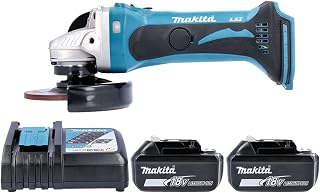
Choosing a Makita cordless angle grinder is not simply a matter of selecting the highest-rated model or the grinder with the most impressive headline specification. The better choice depends on the type of cutting, grinding, deburring, surface preparation and metalwork you expect to carry out, the battery platform already available to you, the disc size you need, and how frequently the tool will be used.
For UK buyers, it is particularly useful to compare the complete tool specification rather than judging a cordless grinder by motor power alone. Battery voltage, brushless motor technology, disc diameter, no-load speed, electronic controls, safety features, ergonomics, battery compatibility and bare-tool versus kit configuration can all have a noticeable effect on the ownership experience.
Makita has a broad cordless professional-tool ecosystem, so buyers who already own compatible Makita batteries may have a different purchasing priority from someone starting a cordless platform from scratch. Before choosing a model, check the exact battery system, charger requirements and supplied accessories listed for the version being considered.
A good cordless angle grinder should combine useful cutting and grinding performance with controllability, sensible ergonomics and appropriate safety technology. For many users, the main attraction of a cordless design is freedom from a mains cable rather than unlimited runtime. That distinction is important when comparing cordless and corded grinders.
Battery platform compatibility should be one of the first checks before buying. Makita offers cordless tools across different battery systems, and batteries are not automatically interchangeable simply because they carry the Makita name.
Many UK buyers will encounter Makita's 18V LXT platform, while higher-demand applications may involve Makita's 40Vmax XGT system. These platforms target different requirements, so comparing the nominal voltage alone does not tell the whole story.
If you already own several Makita batteries, start by identifying the exact platform and then restrict your shortlist to grinders designed for that system. This can avoid the unnecessary cost of buying another battery and charger and keeps your cordless tools within one battery ecosystem.
Makita 18V LXT grinders are particularly relevant to users who already have an LXT battery collection. They can provide a practical balance between portability and cutting or grinding capability for a wide range of workshop, construction, maintenance and fabrication tasks.
The exact performance varies considerably between models. Some are designed around compactness and general-purpose use, while more advanced versions incorporate additional electronic control and higher-performance brushless drive systems. Always compare the specification of the exact model rather than assuming every 18V Makita grinder performs identically.
Makita's 40Vmax XGT range is aimed at users who need a higher-performance cordless platform. These grinders can be attractive to demanding professional users who want cordless mobility without moving immediately to a mains-powered machine.
However, the larger platform can also mean greater battery investment and potentially a different balance between portability, runtime and power. If your work is mostly light-duty deburring or occasional cutting, an 18V solution may make more practical sense. For sustained heavy work, the additional capability of a higher-output platform can become more relevant.
Brushless technology is an important specification when comparing cordless angle grinders. A brushless motor eliminates the conventional carbon brushes used by brushed motors and uses electronic control to manage motor operation.
For a cordless tool, motor efficiency is particularly important because the battery is the energy source. A brushless grinder can therefore be an attractive choice for frequent users who value efficient battery use, reduced brush-related maintenance and modern electronic control.
That does not mean every brushless grinder is automatically the right choice. The complete design still matters. A grinder with excellent motor technology can be a poor fit if its disc size, switch arrangement, battery platform or ergonomics do not match the intended work.
Disc diameter is one of the most important practical differences between angle grinders. In the UK market, compact grinders commonly use discs around 115mm or 125mm, while larger machines are available for applications requiring greater cutting depth or more substantial grinding capacity.
A compact 115mm grinder can be useful when access, manoeuvrability and relatively low tool weight are priorities. Smaller discs are often convenient for general maintenance, light fabrication, trimming and work in restricted spaces.
A 125mm grinder provides a useful middle ground for many users. It offers more disc area than a 115mm machine while retaining a relatively compact form. For general-purpose metalworking and building maintenance, this size can be a versatile option.
Larger grinders can provide increased cutting depth and greater material-removal capability, but they are also generally more substantial machines. They may be unnecessary for users whose normal jobs involve smaller metal sections, bolts, brackets or occasional cutting.
Do not install a disc larger than the size specified for the grinder. The disc diameter, bore, maximum permitted speed and guard arrangement must all be compatible with the tool and accessory.
No-load speed is normally expressed in revolutions per minute (RPM) and indicates how quickly the spindle rotates when the grinder is running without cutting or grinding against a workpiece.
A higher RPM is not automatically better. The appropriate speed depends on the tool, disc and application. Abrasive cutting discs, grinding wheels, flap discs, wire brushes and other accessories can have different maximum operating speeds and intended uses.
Always check the maximum RPM printed on the accessory and ensure it is suitable for the grinder. Accessories should never be selected solely because they physically fit the spindle.
Modern cordless grinders can contain considerably more electronics than older angle grinders. These systems can improve controllability and help protect the motor, battery and user from certain operating conditions.
A soft-start system gradually brings the motor up to operating speed instead of applying full acceleration instantly. This can make the grinder easier to control when starting a cut or grinding operation.
An electronic braking system can reduce the time required for the disc to stop rotating after the tool is switched off. This is useful when moving between work areas or placing the tool down, although the disc should always be treated as potentially moving until it has completely stopped.
Anti-restart or restart-prevention technology is designed to reduce the risk of the grinder unexpectedly starting after an interruption to the power supply or battery connection. Exact behaviour varies by model, so consult the manufacturer's instructions for the specific grinder.
Overload protection can intervene when the motor is subjected to excessive load. It is particularly relevant to cordless grinders because forcing the tool can increase electrical and thermal demands on both the motor and battery.
Some advanced grinders use electronic systems to adjust motor behaviour as load changes. These systems can help maintain usable performance when pressure against the workpiece varies, but they should not be treated as a substitute for correct technique.
Battery capacity is commonly expressed in ampere-hours (Ah). In simple terms, a higher-capacity battery can store more energy, although actual runtime depends on the tool, material, accessory, cutting pressure, temperature and working conditions.
For example, a grinder used for short cuts with frequent pauses may consume considerably less energy than one continuously removing material with a grinding wheel. Consequently, it is difficult to predict an exact runtime from battery capacity alone.
Makita cordless angle grinders can be sold in configurations that differ in their included battery, charger and accessories. This distinction is essential when comparing prices between retailers.
A bare tool can be particularly attractive to an existing Makita user who already owns compatible batteries and a suitable charger. A kit can make more sense for someone entering the relevant battery platform for the first time.
Do not compare a bare-tool price directly with a complete kit without checking what is included. The apparently cheaper option may not represent better value once the cost of a compatible battery and charger is considered.
When comparing the top-rated options, separate genuinely useful features from specifications that may have little relevance to your work.
An angle grinder is a versatile platform, but different accessories are designed for different tasks. Selecting the right grinder is only part of the equation; the correct disc or wheel is equally important.
Thin abrasive cutting discs are commonly used for cutting suitable metal sections, sheet material, bolts and other compatible workpieces. Cutting should be performed with the correct disc and guard, using controlled movement rather than excessive force.
Grinding discs can remove excess weld material and shape suitable metal surfaces. A grinder with good control and appropriate power can make this type of work easier, but aggressive pressure can increase disc wear and place unnecessary load on the machine.
Flap discs can be used for material removal, blending and surface finishing. They can provide a different feel from conventional grinding wheels and are often useful where a smoother transition between surfaces is required.
Compact cordless grinders can be convenient for removing sharp edges and burrs from compatible metal components. For small jobs, manoeuvrability and control may be more important than maximum available power.
Suitable abrasive or wire accessories can help remove surface contamination or prepare metal before subsequent work. Accessory compatibility should always be checked before fitting a non-standard attachment.
Angle grinders are high-speed power tools capable of causing serious injury if used incorrectly. A top-rated grinder does not eliminate the hazards associated with abrasive wheels, sparks, flying fragments, dust, noise or kickback.
Use the grinder only in accordance with its manufacturer's instructions and the instructions supplied with the accessory. Wear suitable eye protection and other personal protective equipment appropriate to the task and material. Hearing protection, suitable gloves, protective footwear and appropriate clothing may also be required depending on the working environment.
Kickback is one of the most important hazards associated with angle grinders. It can occur when a rotating accessory becomes pinched, snagged or suddenly obstructed, causing the tool to react unexpectedly.
Electronic safety systems can help reduce certain risks, but they cannot make kickback impossible. Correct accessory selection, controlled technique, proper guarding and maintaining a stable grip remain essential.
When cutting, avoid twisting the disc in the cut. Do not force an accessory into material beyond the application for which it is designed. The grinder should be operated in a controlled manner that keeps the user out of the likely path of sparks, fragments and potential tool movement.
Although this guide focuses on Makita, buyers may reasonably compare the range with other established power-tool manufacturers before committing to a battery ecosystem.
The best brand is therefore not necessarily the one with the highest headline specification. Battery compatibility, tool availability, accessories, charger investment, ergonomics and the rest of your cordless collection can have a greater effect on overall value.
Maximum no-load speed is only one specification. A grinder with a very high RPM may not be the best option for your work if its disc size, controls, ergonomics or battery platform are unsuitable.
Before ordering a bare tool, confirm that your existing Makita batteries are designed for that exact cordless platform. Battery branding alone is not enough.
More capability can be valuable for demanding applications, but it can also mean a heavier tool or greater battery requirements. A compact grinder can be the more practical choice for intermittent maintenance work.
Consider the complete ownership requirement, including batteries, charger and appropriate accessories. A low bare-tool price is less attractive if you need to purchase an entire battery system.
A grinder is only useful with appropriate discs and accessories. If you regularly cut and grind different materials, budget for the correct consumables rather than choosing a machine based solely on its initial price.
Check the exact disc diameter and bore requirements before buying accessories. Never assume that every angle-grinder disc is compatible with every Makita grinder.
When narrowing a long list to the ten most relevant choices, a consistent comparison method is more useful than simply looking at star ratings. Consider the following criteria for every model:
For DIY users, the ideal grinder is usually one that is easy to handle and compatible with the battery platform already used for other tools. There is little benefit in paying for a highly specialised heavy-duty machine if the intended work consists mainly of occasional cutting, deburring and general maintenance.
A compact Makita grinder can be especially attractive where storage space, manoeuvrability and overall weight matter. Buyers should still prioritise appropriate safety features and use the correct accessories for each job.
Professional users should place greater emphasis on sustained performance, electronic protection, ergonomics, battery availability and compatibility with the wider tool fleet.
For tradespeople who use a grinder regularly, a brushless model with a suitable battery system may provide a more sensible long-term choice than selecting the cheapest available option. If the work involves extended cutting or grinding sessions, having multiple compatible batteries can also be more practical than relying on one battery.
Fabrication work can involve cutting stock, cleaning welds, bevel preparation, deburring and finishing. A versatile grinder should therefore work effectively with the accessories required for those operations while remaining controllable during detailed work.
Disc diameter should be selected according to the material and cutting depth commonly required. For repetitive fabrication, ergonomic design and battery logistics can become just as important as the grinder's maximum output.
If the grinder will spend most of its time stored in a workshop and only be used occasionally, consider whether a compact model is sufficient for the jobs you actually expect to encounter. A smaller grinder can be easier to store and carry and may be more convenient for quick maintenance tasks.
Regular care can help keep a cordless grinder in good working condition. Maintenance requirements vary by model, so the manufacturer's instructions should take priority.
Battery runtime can often be improved through sensible working technique rather than simply buying the largest available battery. Avoid applying unnecessary pressure, use an accessory suited to the task, keep the accessory in good condition and avoid repeatedly forcing the motor into heavy overload conditions.
For professional users, a rotation of compatible charged batteries can provide a more efficient workflow. Keeping batteries correctly stored and maintained is also important for preserving their useful service life.
Product listings for cordless power tools can vary significantly in configuration. Before placing an order, carefully check the exact model designation and supplied equipment.
Customer ratings can be useful, but the average score should not be treated as a complete technical assessment. A grinder can receive positive feedback for being compact and convenient while being unsuitable for someone who needs continuous heavy-duty grinding.
Look for reviews that explain the actual application, frequency of use, battery configuration and accessory type. Pay particular attention to repeated comments about ergonomics, battery consumption, switch operation, vibration, heat management and durability. Individual experiences can vary, so recurring patterns are generally more informative than isolated comments.
For a straightforward purchasing decision, start with the battery platform and application. If you already own compatible Makita batteries, staying within that ecosystem can simplify ownership. Next, choose the disc diameter based on the material and cutting depth you normally require.
After that, compare motor technology, electronic protection, ergonomics, weight and included accessories. Finally, compare current UK retailer prices for equivalent configurations and check verified customer feedback before making the final decision.
Suitable Makita cordless angle grinders can be used for compatible metal-cutting applications when paired with the correct cutting disc. The exact suitability depends on the grinder, disc specification, material and application. Always follow the instructions for both the power tool and accessory.
A brushless model can be a strong choice for frequent cordless use because brushless motor systems can offer efficient operation and reduced brush-related maintenance. However, the right model still depends on disc size, battery platform, ergonomics, electronic controls and intended workload.
Choose according to the workload and battery ecosystem you use. An 18V LXT grinder can be practical for general-purpose applications, while a 40Vmax XGT model may be more appropriate for users seeking a higher-output cordless platform. Confirm the requirements of your specific applications before choosing.
No. Makita has multiple cordless battery platforms and generations, so compatibility must be checked against the exact grinder and battery. Do not assume that all Makita-branded batteries are interchangeable.
Modern cordless grinders can provide substantial performance, but direct comparisons depend on the exact models and workload. Cordless operation also introduces battery capacity and thermal considerations. For continuous heavy work, the intended application and available battery system should be considered carefully.
Choose the disc size based on the jobs you regularly perform. Compact grinders are convenient for general maintenance and restricted access, while larger grinders can be more appropriate when greater cutting depth or material-removal capacity is required.
It depends on the product configuration. Some listings are sold as bare tools, while others are supplied as kits containing batteries and chargers. Always check the exact retailer listing before comparing prices.
The accessories depend on the job. Common categories include suitable cutting discs, grinding wheels, flap discs and other compatible finishing accessories. Each accessory must be correctly sized and rated for the grinder and application.
Weight becomes increasingly important during prolonged use, overhead work and applications requiring precise control. A more powerful grinder may be worthwhile for demanding jobs, but a lighter model can be more comfortable when maximum output is unnecessary.
There is no universal replacement interval. Replace an accessory when it reaches the manufacturer's wear limit or shows damage, excessive wear or other signs that make continued use inappropriate. Never use a cracked, damaged or otherwise unsuitable abrasive accessory.
Yes, an appropriately sized Makita cordless grinder can be suitable for DIY applications. The important consideration is selecting a model that matches the user's battery platform, required disc size, workload and level of experience.
The best top-rated Makita cordless angle grinder for a UK buyer is the model that fits the work rather than simply the model with the highest specification. Start with the battery platform, identify the disc size you actually need, then compare motor technology, electronic protection, weight, ergonomics and included equipment.
For occasional DIY and maintenance, a compact grinder may provide the best balance of convenience and capability. For regular professional work, brushless technology, battery capacity, electronic protection and long-term platform compatibility deserve greater attention. Users carrying out demanding applications should also consider whether the higher-output Makita cordless platform better matches their workload.
Before purchasing, compare the exact model number and configuration, read current verified customer feedback, check the manufacturer's specification and compare equivalent UK retailer listings. This approach is more reliable than choosing solely from a headline rating, advertised RPM or promotional price.