

♥ Wishlist
Compare 7 verified Cordless Angle Grinders products in United Kingdom. Reviews, ratings, pros, cons and buying advice updated for October 2026.
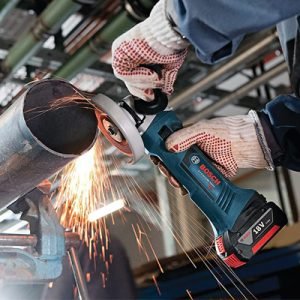
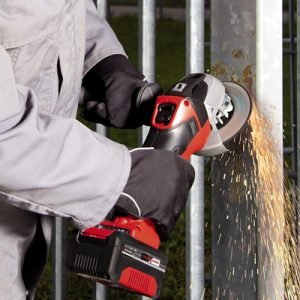
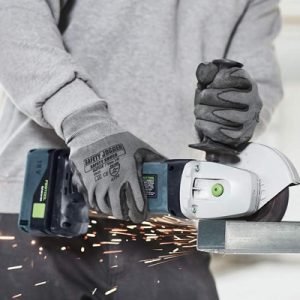
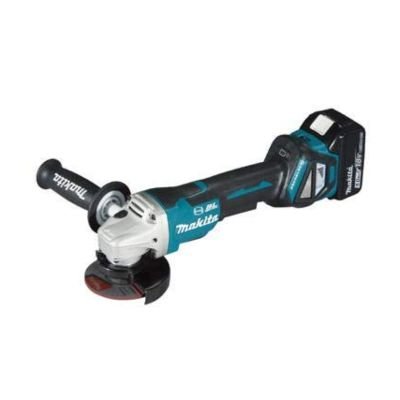
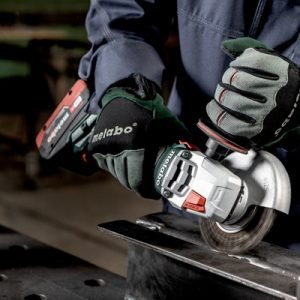
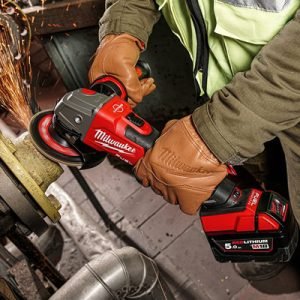
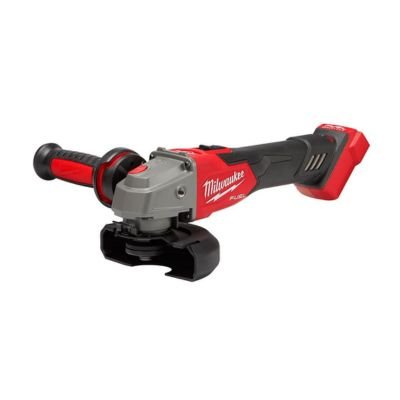
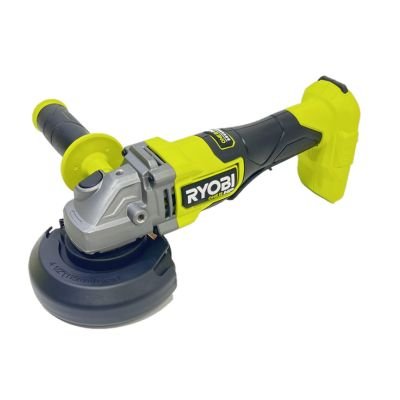


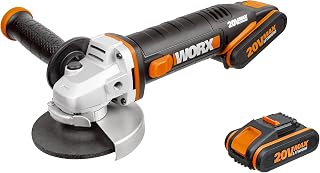


Choosing a cordless angle grinder is not simply a matter of selecting the model with the highest power rating. For UK buyers, the better choice depends on the work you expect to carry out, the battery platform you already use, disc size, motor performance, speed control, handling, safety features and the availability of compatible accessories. A compact grinder that is ideal for occasional cutting may be a poor choice for prolonged grinding, while a high-performance professional model can be unnecessarily expensive and heavy for light DIY tasks.
This buying guide is intended to help you compare cordless angle grinders on the factors that matter in real-world use. Before purchasing, check the manufacturer's current specifications and the exact contents of the kit, because the same grinder may be sold as a bare tool, with one battery, with multiple batteries or as part of a larger kit.
A good cordless angle grinder should provide an appropriate balance between cutting or grinding performance, runtime, control and portability. Battery power removes the need for a mains cable, which can be particularly useful when working outdoors, on vehicles, at construction sites or in locations where a convenient socket is unavailable.
However, cordless convenience does not automatically mean that every battery grinder will outperform a corded alternative. For demanding applications, battery capacity and motor efficiency become particularly important. The best model for your circumstances is therefore the one whose specification matches the workload rather than simply the model with the largest battery or highest headline voltage.
Battery specifications can be confusing because voltage and amp-hour capacity describe different characteristics. Voltage is broadly associated with the electrical system and available power characteristics, while amp-hour capacity indicates how much electrical charge a battery can store. They should not be treated as interchangeable measures of performance.
A higher-capacity battery can potentially provide longer operating time, but it normally adds weight and may change the balance of a compact grinder. For occasional cutting jobs, a smaller battery may make the tool easier to handle. For sustained grinding, a larger capacity battery can reduce interruptions for charging or battery changes.
If you already use a cordless system from brands such as DeWalt, Makita, Bosch Professional, Milwaukee, Metabo or Ryobi, staying within the same compatible battery platform can be a significant consideration. It may allow batteries and chargers to be shared between tools, although compatibility should always be confirmed for the specific model and battery generation.
Published runtime figures should be interpreted carefully. Actual battery life varies according to disc type, material, cutting depth, pressure applied, motor efficiency, battery condition and temperature. A grinder cutting thin sheet material intermittently can consume substantially less energy than one repeatedly grinding heavy steel.
For frequent work, consider the total battery system rather than looking only at the grinder itself. Two compatible batteries can be more useful than purchasing a larger single battery if your workflow involves continuous work and you can charge one battery while using the other.
Disc diameter is one of the most important specifications to compare. In the UK DIY and professional tool market, 115 mm and 125 mm cordless angle grinders are particularly common compact formats.
A 115 mm grinder can be attractive when compact dimensions, relatively low weight and manoeuvrability are priorities. It can be suitable for many light cutting, deburring, surface preparation and grinding tasks, provided the accessory and grinder specifications are appropriate.
A 125 mm grinder provides a slightly larger working diameter and is widely used for general-purpose cutting and grinding. It can offer a useful compromise between compact handling and cutting capacity, making it a strong option for buyers who want one cordless grinder for a broad range of tasks.
Motor design is another useful comparison point. Brushless motors eliminate traditional carbon brushes and use electronic control instead. This design can provide efficiency and reduced routine brush maintenance, while manufacturers may also use electronic systems to manage motor performance and battery consumption.
Brushed grinders can still be perfectly suitable for many occasional users, particularly when initial purchase cost is a priority. Brushless models are often more compelling for frequent users who place greater emphasis on efficiency, durability, electronic control and long-term battery-platform investment.
Do not assume that brushless construction alone guarantees superior overall performance. Motor design should be considered alongside the grinder's gearbox, electronics, thermal management, battery platform, ergonomics and intended workload.
Not every grinding application requires the same rotational speed. A variable-speed grinder can provide greater control when working with accessories or materials that benefit from a lower speed, while a fixed-speed model may be entirely adequate for conventional cutting and grinding.
Electronic controls can also contribute to smoother operation. Depending on the model, these may include soft start, electronic current management, overload protection, thermal protection, speed regulation and braking. The exact functions vary substantially between manufacturers and models, so buyers should check the individual specification rather than assuming that every cordless angle grinder includes the same electronic features.
Angle grinders are high-speed cutting and grinding tools, so safe operation should take priority over convenience. A suitable guard and compatible accessory are essential. The guard should be correctly positioned for the operation being performed and should not be removed simply to make access easier.
Personal protective equipment should be appropriate to the operation. Eye protection is particularly important, and additional protection such as hearing protection, suitable gloves, respiratory protection and protective clothing may be appropriate depending on the material, accessory and working environment. Always follow the manufacturer's instructions and the safety information supplied with the accessory.
The grinder is only one part of the cutting or grinding system. The accessory must be suitable for the grinder, material and intended operation. Never select an accessory solely because its diameter fits the tool.
Cutting discs are designed for cutting rather than side grinding, while grinding discs are designed for grinding applications. Flap discs are commonly used for material removal and surface finishing, and wire accessories can be used for certain cleaning and surface-preparation tasks when specifically compatible with the grinder and application.
A cordless grinder can become tiring surprisingly quickly if the battery, motor and gearbox make the tool front-heavy or difficult to control. Weight should therefore be considered together with balance rather than viewed as an isolated specification.
Pay attention to the position of the main grip, side-handle mounting options, switch arrangement and battery location. A grinder that feels comfortable during a short demonstration may feel very different after repeated cutting or grinding operations.
For overhead or awkward-position work, overall weight can become especially important. Conversely, a heavier high-performance grinder may be preferable for demanding applications where additional power and a more substantial construction outweigh portability.
There is no universal winner between a compact cordless angle grinder and a larger professional-oriented model. They serve different requirements.
For cordless power-tool buyers, the grinder's battery ecosystem can be almost as important as the grinder itself. Buying a bare tool can be economical when you already own suitable batteries and a charger. Starting a completely new battery platform, however, may involve additional expenditure for batteries and charging equipment.
Popular UK cordless ecosystems include ranges from DeWalt, Makita, Bosch Professional, Milwaukee, Ryobi, Einhell and other manufacturers. Battery systems are not universally interchangeable, even where voltage ratings appear similar. Always verify the manufacturer's stated compatibility before purchasing or attempting to use a battery.
If you intend to expand your cordless workshop, consider the tools you may purchase in the future. A grinder that fits an existing battery collection can potentially offer more practical value than a cheaper grinder that requires an entirely separate charging ecosystem.
Cordless models provide freedom from a power cable and can be particularly convenient for mobile work. They are also useful where trailing cables would interfere with the job. The trade-off is the need to manage battery capacity and charging.
Corded angle grinders can remain attractive for long-duration workshop work where uninterrupted mains power is available. They can be especially practical when the grinder is used continuously for extended periods and battery changes would be inconvenient.
For buyers deciding between the two, consider how often the grinder will be used away from a socket. If most work takes place in a workshop with convenient mains power, a corded grinder may still make sense. If portability is a major requirement, cordless operation can justify the additional battery-system considerations.
Voltage should not be used as a simple ranking system. Motor design, electronics, battery technology, gearing, disc diameter and the manufacturer's intended application all influence performance.
A bare tool may appear inexpensive until the cost of a compatible battery and charger is included. Compare complete ownership requirements rather than the tool-only price.
A larger and heavier grinder is not automatically better for DIY users. If most of your work involves light cutting, deburring or occasional surface preparation, a compact model may be easier to control.
Check that suitable cutting and grinding accessories are readily obtainable in the required size and specification. An otherwise excellent grinder becomes less convenient if the accessories you need are difficult to source.
Features such as electronic braking, restart protection, variable speed and overload protection differ between models. Read the exact manufacturer's specification before making a decision.
Remember that the battery contributes to the working weight. When comparing models, consider the grinder together with the battery you expect to use most frequently.
When several models appear similarly rated, use a structured comparison instead of relying on star ratings alone. Customer ratings can provide useful insight into general satisfaction, but they do not replace technical specifications or suitability for a particular task.
For general DIY, a compact 115 mm or 125 mm cordless grinder can provide a useful combination of portability and versatility. The ideal specification depends on whether your projects involve cutting bolts and brackets, removing surface corrosion, preparing metal, sharpening compatible tools or performing occasional masonry-related work with the correct accessory.
DIY users should generally prioritise manageable weight, comfortable handling, a suitable battery platform and straightforward accessory compatibility. Buying a professional-grade grinder with features that will rarely be used may not represent the best overall value.
Metalworking places greater emphasis on motor performance, speed control, heat management, battery capacity and accessory compatibility. Repeated grinding can place considerably more demand on the grinder than occasional cutting, so sustained performance becomes more relevant.
Consider whether the grinder will be used for weld preparation, deburring, material removal, surface finishing or cutting. Different tasks can benefit from different accessories and operating speeds, so a grinder with suitable control features may be more versatile than one selected purely for maximum rotational speed.
For mobile construction work, portability and battery availability can be major advantages. A robust grinder that shares batteries with other site tools may reduce the number of chargers and battery systems required.
Site users should also consider dust exposure, handling, protective features, battery availability and the practicality of carrying spare batteries. Always verify whether the manufacturer's model is designed for the conditions in which you intend to use it.
Regular care can help maintain safe and reliable operation. Before maintenance, remove the battery and follow the manufacturer's instructions for cleaning, inspection and storage.
No-load speed describes the rotational speed of the spindle when the grinder is running without a cutting or grinding load. It is useful for comparing models, but it should not be interpreted as a direct measure of cutting performance.
Once an accessory contacts the workpiece, resistance changes the operating conditions. Motor control, torque characteristics, electronic speed regulation and the pressure applied by the operator all influence how effectively the grinder performs under load.
Always ensure that the maximum speed rating of the accessory is compatible with the grinder. Using an accessory outside its permitted speed range can create a serious safety hazard.
Battery-powered grinders can become substantially heavier once a high-capacity battery is fitted. A large battery may extend working time but can also affect balance and fatigue.
If you perform short cutting operations throughout the day, a lighter battery may be preferable. If the grinder is used continuously and stopping to replace batteries is disruptive, additional capacity may be more valuable. There is therefore no universally ideal battery size.
When comparing cordless angle grinders through an independent buying guide, avoid treating the displayed price or customer rating as the only decision factor. Retail prices, bundle contents and availability can change, so check the current retailer listing before placing an order.
Compare like-for-like configurations. A bare grinder should not be compared directly with a kit containing batteries and a charger without accounting for the additional equipment. Likewise, two apparently identical model names can sometimes be supplied in different configurations, so confirm the exact model number and included accessories.
It is also sensible to compare the long-term cost of ownership. A grinder that fits batteries you already own may be considerably more practical than a lower-priced tool that requires a new battery platform, particularly if you intend to add other cordless power tools later.
The cordless power-tool market changes as manufacturers introduce updated motors, batteries, electronic controls and revised kits. Retailer pricing and package contents can also change throughout the year. For that reason, a model that represents strong value at one point may not remain the most attractive option after a significant price or specification change.
Before buying in 2026, check the latest model number, manufacturer specification, battery compatibility, included equipment and current retailer information. The most useful comparison is the one based on the configuration actually available at the time you intend to purchase.
There is no single best cordless angle grinder for every UK buyer. The right option depends on the intended application, disc size, battery platform, required runtime, handling preferences and budget. A compact grinder may be preferable for occasional DIY, while a higher-performance model may be better suited to frequent professional use.
Both sizes have practical advantages. A 115 mm grinder can be attractive for compact handling and lighter work, while a 125 mm grinder offers a versatile format for many general-purpose cutting and grinding applications. Choose according to the accessories and cutting capacity required for your projects.
Brushless models can be attractive for frequent users because they eliminate traditional motor brushes and can incorporate sophisticated electronic control. However, the value depends on how often the grinder is used and what other tools you own in the same battery ecosystem.
There is no universal runtime because battery consumption varies with battery capacity, material, accessory, pressure, workload and operating conditions. Heavy grinding generally demands more energy than short intermittent cutting. Comparing battery capacity and keeping a compatible spare battery can be more useful than relying on a single advertised runtime figure.
No. Batteries must be compatible with the grinder's specified battery platform. Similar voltage ratings do not automatically mean that batteries can be interchanged. Always follow the manufacturer's compatibility information.
Many cordless angle grinders are designed for metal cutting and grinding when used with appropriate accessories. The suitability of a particular model depends on its motor, battery system, disc size and intended workload. For intensive metalworking, prioritise sustained performance and battery capacity rather than simply choosing the smallest or cheapest model.
For many portable cutting and grinding tasks, a capable cordless grinder can provide an effective alternative. Corded models can still be advantageous for extended workshop use where continuous mains power is readily available. The better choice depends on whether portability or uninterrupted operation is more important.
A bare tool can make sense when you already own compatible batteries and a charger. A kit may be more convenient when starting a new battery platform. Compare the total cost and exact contents rather than comparing bare-tool prices with complete kits.
Use appropriate eye protection and follow the grinder and accessory manufacturer's safety instructions. Depending on the task, additional protection for hearing, hands, respiratory exposure and other hazards may be appropriate. Use the correct guard and accessory, and never operate a damaged grinder or damaged disc.
Check the exact model number, disc diameter, battery compatibility, whether batteries and chargers are included, no-load speed, safety features, accessory requirements and manufacturer's specifications. Also review the current retailer listing because price, availability and bundle contents can change.
Before choosing among top-rated cordless angle grinders, use the following checklist to narrow the options to models that genuinely suit your requirements.
The best top-rated cordless angle grinder is ultimately the model that fits the job, battery ecosystem and working style rather than the one with the most impressive headline specification. For occasional DIY, compact size and manageable weight can be more valuable than maximum output. For regular metalworking or professional site use, battery capacity, motor performance, electronic protection, ergonomics and durability considerations deserve greater attention.
Use customer ratings as one part of the research process, verify the manufacturer's specifications, compare complete kit contents and check current UK retailer pricing before purchasing. Taking those steps makes it easier to identify a cordless angle grinder that offers the right combination of performance, portability, safety and long-term value for your particular needs.