

♥ Wishlist
Compare 29 verified Makita Cordless Mitre Saws products in United Kingdom. Reviews, ratings, pros, cons and buying advice updated for October 2026.




Choosing a cordless mitre saw is about more than finding the largest blade or the highest quoted cutting capacity. The right Makita model should match the type and dimensions of timber you cut, the accuracy you need, how frequently you use the saw, and the battery platform already present in your workshop or van.
Makita's cordless mitre-saw range includes compact machines for lighter trim work as well as larger slide compound models designed for substantially bigger sections of timber. Official Makita technical documentation includes models such as the DLS600, DLS714, DLS111, DLS112, LS002G, LS003G and LS004G, illustrating the breadth of the range rather than a single one-size-fits-all design.
A cordless mitre saw can be particularly useful for UK tradespeople who regularly move between rooms, houses, workshops and construction sites. Eliminating the mains cable makes positioning the saw simpler and avoids having to locate a nearby socket or run an extension lead.
The most useful benefits are usually:
One of the most important purchasing decisions is the battery platform. Makita cordless mitre saws are not all designed around the same battery system, so buyers should confirm the exact model specification before ordering batteries or chargers.
The 18V LXT ecosystem is widely used across Makita cordless tools. A compact 18V mitre saw can make sense for users who already own compatible LXT batteries and primarily cut smaller sections of timber, trim, mouldings or similar materials.
Some larger Makita cordless saws use two 18V LXT batteries together rather than a single battery. This provides the machine with a higher-voltage power configuration while remaining within the LXT battery ecosystem.
This arrangement can be particularly attractive to tradespeople who already have several 18V LXT batteries. However, remember that an 18V X2 machine requires two compatible batteries, so the total battery investment and charging requirements should be considered when comparing its real cost with a single-battery model.
Makita's XGT platform is a separate high-performance cordless system. Models in the XGT mitre-saw range are aimed at users who want a more powerful cordless platform and are prepared to invest in XGT batteries and charging equipment.
Do not assume that an LXT battery can be fitted to an XGT tool simply because both products carry the Makita name. Always check the manufacturer's compatibility information for the exact saw and battery.
Blade diameter is one of the easiest specifications to compare, but it should not be treated as the sole indicator of performance. A larger blade can support a greater cutting envelope on suitable designs, while a smaller saw can be considerably easier to transport and store.
When comparing Makita cordless mitre saws, consider:
For skirting boards and smaller mouldings, an extremely large cutting capacity may provide little practical benefit. For structural timber, wider boards and larger joinery components, capacity becomes much more important.
A sliding compound mitre saw allows the cutting head to travel through the workpiece, generally increasing crosscut capacity compared with a compact non-sliding design.
A sliding model is often the more versatile option for general carpentry because it can handle a wider range of timber dimensions. The trade-off is that the machine normally requires more space behind or around the saw for the sliding mechanism.
Bevel capability determines how easily the saw can be angled for compound cuts. A single-bevel design can be perfectly adequate for many users, but a dual-bevel saw can reduce the need to reposition or turn the workpiece when producing matching compound cuts.
For professional users performing repetitive angled work, dual-bevel operation can save time and make the workflow more consistent. For occasional DIY cutting, however, paying extra for advanced bevel functionality may not provide enough practical benefit.
Mitre saw accuracy depends on more than the printed angle markings. The quality of the detents, adjustment mechanism, fence alignment, blade condition and workpiece positioning all contribute to the finished cut.
Look for a saw that provides:
For skirting, picture frames, door trim and other visible joinery, small angular errors can become obvious when two pieces meet. A saw that remains accurately aligned is therefore often more valuable than one with a longer specification sheet.
The fence is one of the most important parts of a mitre saw because it establishes the reference position of the material. A strong, properly aligned fence helps keep the workpiece stable during cutting and contributes to repeatability.
Before buying, consider the size and shape of the material you normally cut. A fence suitable for small trim may not provide the same practical support for wide boards or larger sections of timber.
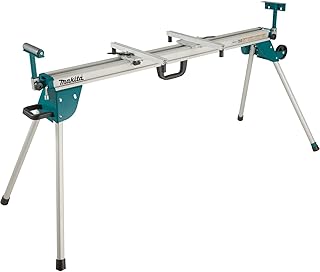
Long workpieces should also be properly supported rather than allowed to hang unsupported from the saw table. Dedicated mitre-saw stands, extension tables and compatible supports can improve stability and reduce the risk of the workpiece shifting during a cut.
Manufacturers commonly publish maximum cutting capacities, but a single headline number does not tell the whole story. The available capacity can change depending on whether the cut is square, mitred, bevelled or a compound cut.
When comparing specifications, check the capacity for the angles you actually use. A saw that looks excellent at 90 degrees may have a substantially different practical capacity when making a 45-degree mitre or bevel cut.
Cordless mitre-saw performance is influenced by the motor, battery system, blade, material, cutting technique and electronic control systems. Avoid choosing a saw solely because one specification appears higher than another.
For demanding work, the ability to maintain controlled blade speed under load can be more useful than a simple no-load speed figure. Softwood, hardwood, sheet materials and composite products can place different demands on the blade and motor.
Makita's cordless saw technology also varies between generations and battery platforms. For that reason, compare the exact model number rather than assuming that every Makita cordless mitre saw has the same motor technology or electronic features.
The supplied blade is only one part of the cutting system. Blade tooth count, tooth geometry, kerf, material and intended application all influence the result.
Fine-tooth blades can be useful when a cleaner finish is more important than maximum cutting speed. They are particularly relevant for visible trim, finished timber and applications where excessive breakout would be undesirable.
A general-purpose blade provides a compromise between cutting speed and finish. This can be a sensible choice for a tradesperson who cuts several types of timber during the same working day.
Specialist blades may be appropriate for particular materials or finish requirements. Always check that a replacement blade is suitable for the saw's diameter, bore, maximum permitted speed and intended material.
Dust collection should be treated as a major buying consideration rather than an optional accessory. Mitre saws can eject substantial amounts of dust and chips because of the open nature of the cutting area.
The UK's Health and Safety Executive advises using suitable extraction to control wood dust and highlights the importance of maintaining extraction equipment. HSE guidance also notes that mitre-saw extraction can be challenging because dust is dispersed around the cutting area rather than being generated at a single enclosed point. :contentReference[oaicite:0]{index=0}
When comparing models, investigate:
A dust bag can be convenient for occasional work, but it should not automatically be considered an equivalent substitute for effective extraction in a professional woodworking environment.
Battery runtime cannot be reduced to a simple number of cuts because cutting conditions vary considerably. Battery consumption depends on the saw, battery capacity, material, blade, cutting frequency and the amount of time the motor is under load.
For regular site work, having multiple compatible batteries can be more useful than attempting to predict an exact runtime. A practical setup allows one battery set to be in use while another is charging.
When comparing battery options, consider the difference between:
A cordless mitre saw may be easier to deploy than a corded alternative, but cordless does not automatically mean lightweight. Larger sliding compound saws, dual-battery configurations and substantial work tables can make professional models sizeable machines.
Think about how the saw will actually be transported. Carrying a machine from a van to a garden is very different from moving it repeatedly between floors of a building.
For mobile carpenters and joiners, carrying handles, balanced weight distribution, a compact footprint and a suitable stand can be more important than a small difference in cutting capacity.
Rather than assuming the newest or largest Makita model is automatically the best, compare the models according to the work they are expected to perform.
The DLS600 belongs to the compact end of Makita's cordless mitre-saw range. It can be an interesting option for users whose priorities include portability and smaller-scale cutting rather than maximum timber capacity.
The DLS714 is another cordless slide compound mitre-saw model in Makita's range. It is worth considering when a buyer wants a more versatile cutting configuration without automatically moving to the largest professional machines.
The DLS111 is a cordless slide compound mitre saw intended for users who need greater capability than a compact trim-focused machine. Its published technical documentation identifies it as a cordless slide compound mitre saw.
The DLS112 is another larger Makita cordless slide compound model. Buyers comparing the DLS111 and DLS112 should examine the exact regional specification, battery configuration, cutting capacities and supplied accessories rather than relying on model-name assumptions.
These models belong to Makita's XGT cordless platform and broaden the choice for users who are already invested in, or are planning to adopt, the 40Vmax XGT system.
Makita's own published vibration and noise documentation identifies the DLS600, DLS714, DLS111, DLS112 and several LS-series XGT models as cordless slide compound mitre saws, so the precise model number should always be checked when comparing specifications. :contentReference[oaicite:1]{index=1}
A cordless Makita mitre saw can make sense when portability, repeated accurate cuts and compatibility with an existing battery system are priorities. Carpenters should pay particular attention to cutting capacity, fence quality, bevel range, extraction and battery logistics.
Joinery work often places greater emphasis on clean cuts and repeatable angles. Blade selection, alignment and fine adjustment may therefore matter more than maximum cutting capacity.
Installers can benefit from cordless operation because work is frequently carried out in finished rooms where trailing cables are inconvenient. A compact saw can be attractive where space is limited.
For occasional home improvement projects, a professional Makita cordless mitre saw may be more capability than necessary. If the saw will only be used a few times each year, compare the total cost of the machine, batteries, charger, stand and blades before choosing a premium configuration.
A larger saw is not necessarily a better saw for every user. Extra capacity can bring additional weight, cost and storage requirements.
A bare-tool price can look attractive until the required batteries and charger are included. Compare the complete working setup rather than the saw alone.
Check the exact battery platform before purchasing. LXT and XGT are distinct systems, and some mitre saws require two batteries.
Capacity is important, but accuracy, fence design, bevel adjustment, extraction, portability and blade availability can have a greater impact on everyday use.
A good mitre saw can become awkward to use if it is placed on an unstable or poorly supported surface. Consider the saw and support system together.
Different materials and finish requirements can justify different blades. Budget for suitable replacement blades if the saw will be used frequently.
Even a high-quality mitre saw can require checking and adjustment after transport or extended use. If accurate joinery matters, periodically check the relationship between the blade, table and fence.
A useful workshop check is to cut suitable test pieces and inspect the resulting joint rather than relying exclusively on the printed scale. A 45-degree setting should produce the intended joint only when the complete saw setup is correctly aligned.
For demanding work, also check whether the workpiece itself is straight and stable. A bowed or twisted board can produce an apparently inaccurate cut even when the saw is correctly adjusted.
Mitre saws should be treated as serious cutting machinery, even when used for short-duration cuts. The UK's Health and Safety Executive states that woodworking machinery should be properly maintained, safeguarded and operated by people who are trained and competent to use it. :contentReference[oaicite:2]{index=2}
Wood dust is also an important occupational health consideration. HSE guidance recommends effective extraction and explains that additional respiratory protection may be necessary for some cutting and sanding activities, particularly where exposure is prolonged or work takes place in enclosed areas. :contentReference[oaicite:3]{index=3}
For professional environments, safety procedures should be based on the applicable workplace risk assessments, equipment instructions and current HSE guidance rather than treating personal protective equipment as the only control measure.
Noise and vibration are easy to overlook when comparing cordless saws. A machine may feel comfortable during a few cuts but become considerably more tiring during a full working day.
Makita publishes technical information covering vibration and sound-power values for its cordless mitre-saw models. These manufacturer figures can be useful when comparing models, but actual exposure depends on the material, task, operating time, environment and working method. :contentReference[oaicite:4]{index=4}
Appropriate hearing protection should be considered where required by the working environment, alongside sensible control of exposure and other workplace safety measures.
Makita is not the only established manufacturer of cordless mitre saws in the UK. Depending on your existing tools, it can also be useful to compare DeWalt, Bosch Professional, Milwaukee and Metabo HPT where appropriate.
The most meaningful comparison is not simply brand versus brand. Compare the battery platform, cutting capacity, blade size, accuracy features, bevel and mitre adjustment, dust collection, portability, warranty terms supplied by the manufacturer or retailer, and the availability of compatible batteries and accessories in the UK.
For a buyer already invested in one cordless ecosystem, staying within that platform can simplify battery ownership and charging. Compare equivalent saw categories rather than comparing a compact Makita directly against a substantially larger DeWalt machine.
Look specifically at cutting capacity, battery requirements, stand compatibility, adjustment systems and the type of work you perform most often.
Bosch Professional offers its own cordless tool ecosystem, so platform compatibility is again an important consideration. A buyer starting from scratch should compare complete system costs, while an existing Makita user may place greater value on battery compatibility.
Milwaukee's cordless platform is another option for professional users. When comparing it with Makita, concentrate on equivalent saw classes and real workflow requirements instead of assuming that a higher voltage, larger battery or larger physical size automatically means superior results.
Retailer listings can present specifications in different ways, so compare like-for-like information. Start with the exact model number and then verify the manufacturer's specification before relying on a retailer's abbreviated description.
Pay particular attention to:
A bare-tool version can be the economical choice for someone who already owns compatible Makita batteries and a charger. It can also prevent unnecessary duplication of equipment.
A kit containing batteries and a charger can make more sense for a new user entering the platform. Compare the complete package rather than assuming the kit is automatically better value.
When checking UK listings, verify exactly what is included in the box. Product bundles can differ between retailers and can change over time.
Customer reviews can provide useful information about packaging, usability, setup, noise, portability and long-term ownership, but they should not replace specification checking.
When reading reviews, give greater weight to comments that explain the actual application. A review from someone cutting small trim is not necessarily useful evidence for someone cutting large construction timber every day.
It is also sensible to distinguish comments about the saw itself from comments about batteries, retailer fulfilment, delivery packaging or accessories supplied in a particular bundle.
The best top-rated Makita cordless mitre saw for a UK buyer is ultimately the model that fits the work rather than simply the model with the most impressive specification. A compact machine can be the smarter choice for trim and installation work, while a larger sliding compound saw can be much more suitable for wider timber and demanding carpentry.
Before making a purchase, compare the exact model number, battery platform, cutting capacities, bevel and mitre functions, blade specification, weight, extraction arrangement and included accessories. Then compare the complete ownership cost, including batteries and charger if required.
For professional use, safety and dust control deserve equal attention. HSE guidance emphasises suitable safeguarding, competent use, maintenance and effective control of wood dust rather than relying on the power tool alone. :contentReference[oaicite:5]{index=5}
There is no single best model for every UK buyer. The right choice depends on cutting capacity, portability, battery platform, material, frequency of use and budget. Compact models can suit trim work, while larger sliding compound models are better suited to wider timber and more demanding applications.
Yes, the appropriate Makita cordless model can be considered for professional carpentry. The important factors are choosing a model with sufficient cutting capacity, using the correct blade, maintaining accurate alignment, managing dust effectively and having enough compatible batteries for the workload.
Do not assume that every Makita battery is suitable for every saw. Check the exact tool and battery compatibility specified by Makita before purchasing or fitting a battery.
No. They are different Makita cordless systems. An 18V X2 tool uses two compatible 18V batteries, while XGT tools belong to Makita's separate high-performance battery platform.
Not necessarily. A sliding model generally provides greater crosscut versatility, but it can also be larger and require more operating space. A compact saw may be preferable when portability and small-material cutting are the priorities.
Dual-bevel functionality is most valuable when you regularly make compound cuts and want to avoid repeatedly turning the workpiece. For straightforward crosscuts and occasional mitres, single-bevel operation may be sufficient.
Choose a blade that is compatible with the saw's diameter, bore and maximum speed and that is designed for the material being cut. A fine-tooth blade can prioritise finish quality, while a general-purpose blade can provide a broader balance between speed and finish.
Suitable cordless mitre saws can be used for hardwood when the saw, blade and operating conditions are appropriate. Use a blade intended for the material, avoid forcing the cut and follow the manufacturer's limitations for the machine and blade.
Effective dust control is strongly recommended. HSE guidance identifies wood dust as a significant occupational health risk and recommends suitable extraction and appropriate additional controls where necessary. :contentReference[oaicite:6]{index=6}
Check the exact model number, battery system, battery quantity, blade size, cutting capacity at the angles you use, bevel and mitre ranges, weight, extraction arrangement, included accessories and the availability of compatible batteries and replacement blades.
If you already own compatible Makita batteries and a charger, a bare tool can avoid unnecessary duplication. If you are new to the platform, a kit may provide a more complete setup. Compare the complete package and confirm exactly what the retailer includes.
Inspect the machine before use and maintain it according to the manufacturer's instructions. Regularly check the blade, guard, fence, table, adjustment mechanisms, battery contacts and extraction equipment, with additional servicing when the saw is used heavily.