

♥ Wishlist
Compare 35 verified Makita Cordless Plunge Saws products in United Kingdom. Reviews, ratings, pros, cons and buying advice updated for October 2026.








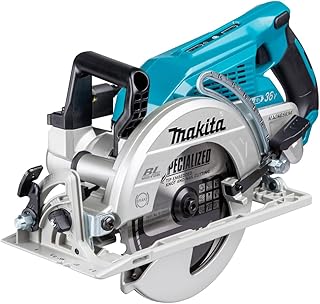
Choosing a Makita cordless plunge saw is less about finding the most powerful-looking specification and more about matching the saw to the materials, cutting depth, guide-rail system and type of work you actually carry out. For UK users, a cordless plunge saw can be particularly useful for site work, kitchen fitting, joinery, flooring, furniture making, sheet-material cutting and general woodworking where access to mains power is inconvenient.
Makita's cordless plunge-saw range is closely associated with its wider battery platform, so compatibility with batteries and chargers can be an important part of the buying decision. Before comparing individual saws, check the exact model designation, battery system, supplied accessories and regional specification. Products that look similar can differ significantly in cutting capacity, electronics, blade size, rail compatibility and what is included in the box.
A plunge saw is designed so the blade can enter the workpiece from above rather than requiring the blade to start at an exposed edge. This makes it especially useful when making controlled cuts in sheet materials such as plywood, MDF, OSB and worktops.
The saw is normally used with a guide rail. The rail provides a straight reference surface while the saw's plunge mechanism allows the operator to position the blade accurately before beginning the cut. This combination can make long, clean cuts considerably easier to control than freehand cutting with a conventional circular saw.
Battery compatibility should be one of the first things to check. If you already own Makita cordless tools, staying within a compatible battery family may reduce the need to purchase another battery and charger.
Do not assume that every Makita battery fits every cordless tool simply because the voltage appears similar. Check the manufacturer's compatibility information for the exact saw and battery generation. Also consider whether the batteries you already own provide sufficient capacity for the cutting work you intend to undertake.
Maximum cutting depth is one of the most important technical specifications for a plunge saw. It determines the thickness of material the saw can cut in a particular configuration.
When comparing specifications, look carefully at whether the quoted depth applies to a 90-degree cut, an angled cut or use with a guide rail. The effective depth can change depending on the setup.
Blade diameter affects the potential cutting depth and the type of blades available for the saw. The blade bore must also match the saw or be compatible with an appropriate fitting arrangement.
For woodworking applications, the number and geometry of teeth can be more important to the finished result than simply choosing a blade with the largest possible tooth count. A fine-tooth blade can be preferable for clean cuts in finished sheet materials, while other blade configurations may be more appropriate for faster or more general-purpose cutting.
Bevel capability allows the saw to cut at an angle rather than remaining at a 90-degree orientation. This can be useful for furniture components, trim work, cabinetry and other applications where angled edges are required.
Look for a bevel mechanism that is easy to set accurately and secure firmly. Clear scales and positive locking arrangements can make repeated angled cuts easier to reproduce.
Electronic control systems can help maintain cutting performance as the load changes. Some Makita cordless saws incorporate electronic features designed to regulate motor performance and protect the tool or battery under demanding conditions.
These systems should not be interpreted as eliminating the need to select an appropriate blade or cutting speed. Blade condition, material, feed rate and cutting technique still have a major influence on performance.
Brushless motors are a major feature across modern cordless power tools. Compared with traditional brushed motor designs, brushless systems eliminate replaceable carbon brushes and can offer advantages in efficiency, heat management and tool design.
For buyers who expect to use a plunge saw frequently, a brushless model can be worth considering as part of the overall tool specification. However, motor technology should be evaluated alongside cutting capacity, battery compatibility, ergonomics and accessories rather than treated as the only deciding factor.
A plunge saw can be capable of accurate freehand work, but guide rails are central to many of the applications for which plunge saws are purchased. The rail provides a straight reference surface and can make long cuts in large boards considerably easier to manage.
When comparing a Makita cordless plunge saw, check guide-rail compatibility before buying. Do not assume that every rail from every manufacturer will provide the same fit or performance.
The correct rail length depends on the size of the workpieces you normally cut. A short rail may be convenient for small components but require repositioning on long panels. A longer rail can provide a continuous reference for large sheet materials but may be less convenient to transport and store.
Even a high-quality saw cannot compensate for a poorly positioned guide rail. Before cutting, confirm that the rail is correctly aligned with the intended cut line and adequately secured against movement.
For repeated work, measuring and marking methods should be consistent. On valuable workpieces, make a careful setup cut or test the configuration on scrap material before committing to the final panel.
Dust control is an important consideration when using a plunge saw indoors. Cutting MDF, engineered boards and other sheet materials can generate significant fine dust, making effective extraction particularly valuable in workshops and occupied environments.
Check the saw's dust-extraction connection and make sure the hose and extractor are compatible. A poorly matched hose can restrict movement or interfere with the saw, while inadequate extraction can allow dust to escape around the cutting area.
Dust extraction does not remove the need for appropriate personal protective equipment and sensible workshop ventilation. Follow the manufacturer's safety instructions for the saw, blade and material being cut.
The supplied blade should be regarded as part of the overall cutting system rather than an unchangeable component. Different materials and finishes often benefit from different blade configurations.
When cutting laminated or coated sheet materials, a blade designed for clean finishing can help reduce visible breakout. Feed rate and support are also important. Even an appropriate blade can produce poor results if the material moves during the cut.
MDF produces fine dust and can be demanding on cutting edges. A suitable woodworking blade combined with effective extraction can make the process more manageable. Because MDF can be abrasive, monitor blade condition rather than continuing to use a blade after cutting performance has deteriorated.
Plywood quality varies considerably. Veneer direction, thickness, adhesive composition and surface finish can all affect the result. A sharp, suitable blade and stable support are particularly important when the visible face of the panel needs a clean finish.
Solid timber introduces additional considerations such as grain direction, knots and changes in density. Select a blade intended for the type of timber and cut required, and avoid forcing the saw when resistance increases unexpectedly.
Worktops and thick panels require particular attention to cutting depth, support and blade selection. Confirm the actual thickness of the workpiece and make sure the selected saw and blade configuration provide sufficient capacity without operating at the limits of the tool unnecessarily.
The main advantage of a cordless plunge saw is freedom from the mains cable. This can simplify movement around a workshop, construction site or installation area and can be particularly useful where power sockets are inconveniently positioned.
A corded plunge saw can still be attractive for users who perform long periods of continuous cutting in a workshop where reliable mains power is readily available. The best choice depends on the working environment rather than on the assumption that cordless is always superior.
Battery capacity is commonly expressed in amp-hours (Ah). A higher Ah rating generally indicates greater stored energy when comparing batteries within the same voltage and technology family, although real-world runtime varies with load, material, blade condition and operating conditions.
For occasional short cuts, a smaller battery may be perfectly practical. For repeated cutting of large panels, having additional batteries can be more convenient than relying on a single pack.
A plunge saw needs to be controlled accurately throughout the cut, so ergonomics matter. Grip shape, trigger arrangement, plunge movement, battery position and overall balance can affect how comfortable the tool is during repeated work.
A technically impressive saw may not be the best choice if it feels cumbersome for the type of work you perform. This is particularly relevant when cutting large panels, making repeated cuts or working in positions where the saw must be carefully controlled.
Remember that advertised tool weight may not always represent the complete working setup. Battery, blade, extraction hose and guide rail can all influence the practical handling characteristics.
For users who regularly carry tools between jobs, the combined weight of the saw, batteries, charger, rails and accessories can also become an important consideration.
The plunge mechanism should move smoothly and predictably. A controlled plunge action helps the operator position the blade and begin a cut deliberately, particularly when starting inside a panel rather than from an edge.
Safety should be considered alongside performance when selecting any power saw. Features can vary by model, so verify the exact specification rather than assuming that every Makita plunge saw has identical equipment.
Always use the saw according to its instructions. Wear suitable eye and hearing protection, use appropriate respiratory protection where required by the material and working conditions, secure the workpiece properly and keep hands away from the blade path.
Voltage alone does not tell you everything about a plunge saw. Cutting depth, motor design, blade specification, ergonomics, rail compatibility and electronics can have greater practical importance depending on the application.
The saw itself may not be the complete system you need. Guide rails, connectors, clamps, extraction adapters, spare batteries, chargers and specialist blades can all affect the overall cost.
A guide rail that is incompatible or unsuitable for the particular saw can undermine the accuracy benefits of a plunge-saw system. Confirm compatibility before purchasing.
If you already use cordless tools, check the exact battery platform rather than purchasing a battery and charger unnecessarily. Conversely, if you are starting from scratch, compare the complete system cost rather than looking only at the bare-tool price.
Tooth count should be matched to the material and desired finish. A very fine blade can be excellent for certain finish cuts but may not be the ideal choice for every application.
Accurate cutting depends on more than the saw. Large panels need appropriate support so that the material remains stable and does not pinch or bind the blade during the cut.
Makita is not the only manufacturer worth considering when shopping for a cordless plunge saw. Depending on the user's existing tools and priorities, alternatives from brands such as Bosch, DeWalt, Festool and Milwaukee may also deserve consideration.
The comparison should focus on the complete working system rather than simply comparing headline motor specifications. Battery availability, existing equipment, rail compatibility, cutting capacity, blade ecosystem and ergonomics can all change which option represents the best fit.
If you are choosing between two similar Makita models, create a side-by-side comparison using the specifications that directly affect your work.
This approach helps prevent a common mistake in power-tool shopping: comparing a bare tool against a kit and assuming the cheaper-looking option is automatically better value.
Makita cordless tools are commonly encountered in configurations where the buyer may need to choose between a bare tool and a package containing batteries and a charger. The right option depends heavily on what you already own.
A bare tool can be sensible when you already have compatible batteries and a charger. It can also be useful for professionals gradually expanding an existing cordless collection.
A complete kit can be more convenient for someone entering the battery platform for the first time. However, compare the included battery capacity, charger, blade and other accessories rather than assuming every kit contains the same equipment.
Cut quality is influenced by several variables working together. A high-quality saw cannot produce consistently clean results if the blade is unsuitable, the rail is moving or the workpiece is poorly supported.
Routine maintenance can help preserve safe and consistent operation. Always disconnect the battery before carrying out maintenance, blade changes or adjustments that could allow accidental activation, and follow the instructions supplied with the exact model.
Remove accumulated dust from the tool, ventilation areas and adjustment mechanisms using an appropriate cleaning method. Excessive dust accumulation can interfere with moving parts and ventilation.
Check the blade for damage, excessive wear or contamination. A dull blade can increase cutting resistance and reduce finish quality. Do not continue using a blade that is damaged or unsuitable for the material.
Inspect the rail for damage, contamination and anything that could affect smooth movement. Keep the rail surface clean and ensure its anti-slip features remain effective.
Look for physical damage to battery packs, contacts and housings. Use only batteries and chargers that are specified as compatible with the tool, and follow the manufacturer's storage and charging instructions.
A plunge saw can be useful for sizing sheet materials and making long straight cuts associated with kitchen installation. However, worktops can be expensive and mistakes can be difficult to correct.
Measure carefully, verify the required cut several times and support the workpiece securely. When the cut must align with an existing cabinet, wall or fitting, use a consistent reference point rather than relying on an improvised measurement.
For finished or laminated worktops, blade selection and cutting direction deserve particular attention. Test the setup on an offcut where possible before making the final cut.
For cabinetmaking and furniture projects, repeatability can be more valuable than maximum cutting power. A guide rail can help produce straight, consistent panel cuts, while a suitable blade can improve the finish on visible edges.
Consider the complete workflow: measuring, marking, rail positioning, panel support, cutting, edge finishing and repeatability. A saw that integrates smoothly into this process may be more useful than one selected purely because it has the highest headline specification.
A cordless plunge saw can be a useful investment for serious DIY users who regularly work with sheet materials or undertake larger woodworking projects. For occasional small cuts, however, the cost of the saw, batteries, charger, rail and accessories may not be justified compared with a simpler circular saw or other cutting solution.
The strongest case for a plunge saw generally comes when accurate, long, straight cuts are a recurring requirement. If most projects involve short cuts, rough construction work or small timber components, another saw type may offer a more practical solution.
The cheapest Makita cordless plunge saw configuration is not necessarily the most economical choice. Total ownership cost can include the saw, batteries, charger, guide rails, rail connectors, clamps, extraction equipment and replacement blades.
For an existing Makita user, a bare tool may provide better overall value because batteries and charging equipment may already be available. A new user may need to account for the complete cordless ecosystem.
When checking current UK prices, compare like-for-like configurations. A product advertised without a battery should not be directly compared with a package that includes batteries and a charger unless the additional equipment is accounted for.
Customer reviews can provide useful information, but they should be interpreted alongside technical specifications. Look for reviews that describe the same type of work you intend to perform rather than relying solely on an overall star rating.
The best Makita cordless plunge saw for a UK buyer is ultimately the model that fits the complete cutting system rather than simply the model with the most impressive specification. Battery compatibility, cutting depth, guide-rail support, blade choice, ergonomics, dust extraction and included accessories can all make a substantial difference to everyday usability.
Before purchasing, compare the exact model specifications and package contents, particularly if several Makita saws appear similar. Check today's UK pricing because retailer offers and kit configurations can change, and make sure the price comparison is based on equivalent packages.
For regular professional panel cutting, prioritise accuracy, repeatability, cutting capacity, battery compatibility and the quality of the guide-rail setup. For occasional DIY use, consider whether the complete cost of a cordless plunge-saw system is justified by the work you actually undertake.
A Makita cordless plunge saw is primarily used for controlled straight and plunge cuts in sheet materials and timber. It is particularly useful for plywood, MDF, laminated boards, worktops and other panels when used with an appropriate blade and, where suitable, a compatible guide rail.
Makita produces cordless tools aimed at professional and demanding users, but suitability depends on the exact model and application. Professional buyers should compare cutting capacity, battery system, durability-related features, ergonomics, accessories and the expected workload before choosing a particular saw.
You may be able to make cuts without a guide rail, but a compatible guide rail is highly useful for the type of long, straight and repeatable cuts for which plunge saws are commonly selected. Check the exact saw and rail compatibility before purchasing accessories.
Yes, a suitable plunge saw and woodworking blade can be used for MDF. Because MDF produces fine dust, effective extraction and appropriate respiratory protection are particularly important. Choose a blade suitable for MDF and avoid forcing the saw through the material.
Yes. Plywood is a common application for plunge saws. For visible surfaces, select a blade appropriate for the desired finish and make sure the panel is properly supported throughout the cut.
A plunge saw can be used for suitable worktop-cutting applications when its cutting depth and blade are appropriate. Because worktops can be costly to replace, accurate measurement, secure support and a carefully tested cutting setup are especially important.
Either configuration can be effective. Cordless models provide freedom from a mains cable, while corded models provide continuous power when mains electricity is readily available. The better option depends on the user's working environment, workload and existing tool ecosystem.
A bare tool can make sense if you already have compatible Makita batteries and a charger. If you are new to the platform, compare the total cost of a kit containing the required battery and charging equipment against buying components separately.
There is no universally best battery capacity. Smaller packs may reduce weight, while higher-capacity packs can provide more stored energy for demanding work. Consider the cutting workload, tool balance and batteries already in your collection.
Blade replacement depends on material, frequency of use, blade quality and cutting conditions. Replace or appropriately service a blade when it becomes dull, damaged or produces noticeably poorer results. A worn blade can increase cutting resistance and make accurate work more difficult.
Depending on the application and battery ecosystem, buyers may also compare Makita with brands such as Festool, Bosch, DeWalt and Milwaukee. The most useful comparison considers the complete system, including saw specifications, rails, batteries, accessories and the type of work required.
Check the exact model number, battery compatibility, cutting depth, blade specification, bevel capacity, guide-rail compatibility, weight, dust-extraction provisions and package contents. Also compare current UK prices for equivalent configurations and review recent verified customer feedback before making the final decision.