

♥ Wishlist
Compare 44 verified Metabo Plunge Saw products in United Kingdom. Reviews, ratings, pros, cons and buying advice updated for October 2026.


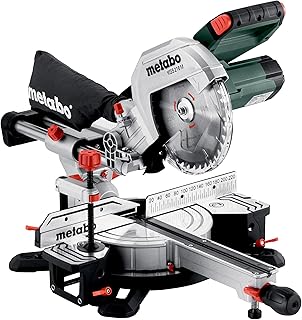


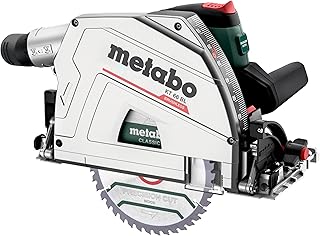


Choosing a Metabo plunge saw for woodworking, kitchen fitting, flooring, cabinetry or general workshop work requires more than looking at cutting depth or headline power. The right saw needs to match the materials you cut, the guide-rail system you intend to use, the available workspace, dust-management requirements and whether you prefer a mains-powered or cordless setup.
Metabo has a strong reputation in professional power tools, and its plunge-saw range is designed around controlled, accurate cutting rather than simply maximum cutting speed. For UK buyers, compatibility with accessories, availability of replacement parts, extraction arrangements and the practical demands of 230V mains power or battery operation can be just as important as the saw itself.
This guide explains the main factors to compare when assessing top-rated Metabo plunge saws in the UK, helping you distinguish between models and configurations without relying solely on star ratings or promotional specifications.
A plunge saw is particularly useful when a conventional circular saw is too restrictive and a table saw is impractical. Instead of cutting only from an exposed edge, the blade can be lowered into the workpiece at a controlled position. This makes plunge saws useful for breaking down sheet materials, trimming panels and producing long, straight cuts with a suitable guide rail.
Metabo is one of the established professional power-tool brands worth considering alongside alternatives from Festool, Makita, Bosch Professional, DeWalt and Milwaukee. The important point is not that one brand is automatically best for every buyer, but that each manufacturer's ecosystem, accessories and preferred power platform can influence the overall cost and convenience of ownership.
The best Metabo plunge saw depends on the work you actually do. A professional kitchen fitter may value portability, repeatable rail cuts and battery compatibility, while a workshop user processing large MDF or plywood sheets may prioritise extraction, continuous mains operation and a comfortable guide-rail setup.
The first major decision is the power source. A corded plunge saw provides a continuous supply of power, which can be advantageous for extended workshop sessions. You do not need to monitor battery charge or keep additional batteries available, although the cable introduces another consideration when handling large panels.
A cordless Metabo plunge saw can make more sense for mobile tradespeople. There is no mains cable trailing across the work area, and the tool can be convenient for installation work where access to power is limited. The trade-off is the need to consider battery capacity, charging time, additional battery cost and the performance requirements of the material being cut.
Cutting depth is one of the most important specifications to compare, but it should not be considered in isolation. A plunge saw's effective cutting depth can vary according to whether a guide rail is fitted and the angle at which the cut is made.
For typical sheet materials, moderate cutting depth may be entirely sufficient. Buyers working with thicker timber or multiple-layer assemblies should examine the manufacturer's stated cutting capacity carefully. If most of your projects involve 18mm boards, paying substantially more for capacity that you rarely use may not provide meaningful value.
A plunge saw capable of bevel cuts can be significantly more versatile for cabinetry, flooring, joinery and construction work. However, the useful range is not simply a number on a specification sheet. Look at how easily the bevel angle can be adjusted, whether the adjustment locks securely and whether the settings are easy to read while wearing work gloves.
For occasional angled cuts, basic adjustment may be enough. For repetitive professional work, quick and accurate bevel adjustment becomes considerably more important.
A plunge saw should be evaluated as part of a cutting system rather than as an isolated power tool. Guide rails help maintain a consistent cutting path and are particularly useful for long cuts across plywood, MDF, worktops and other sheet materials.
Before purchasing, establish which rail is compatible with the particular Metabo model and whether the configuration you are considering includes the required rail. Do not assume that every plunge saw, guide rail and accessory from different manufacturers will work together simply because the products look similar.
For many buyers, accuracy is the main reason to choose a plunge saw instead of a basic circular saw. However, the saw itself is only one part of the equation. Rail alignment, material support, blade selection, operator technique and workpiece movement all affect the final result.
A high-quality guide rail can help maintain a straight path, but it cannot compensate for an incorrectly positioned rail or an unstable workpiece. When breaking down large panels, support the sheet properly so that the cut does not close onto the blade or cause unwanted movement.
One of the most common buying mistakes is focusing heavily on the machine while treating the blade as an afterthought. The blade is the component that directly interacts with the material, so tooth configuration and intended application have a major influence on cut quality.
Different materials can require different blade characteristics. A blade suitable for general timber cutting is not automatically the ideal choice for laminated board, MDF, veneered panels or other sheet products.
For general timber work, consider the tooth count, tooth geometry and intended cutting direction. A lower tooth count can favour faster cutting in suitable timber, whereas a finer blade can produce a cleaner finish in many sheet-material applications.
When cutting plywood, MDF, melamine-faced boards or veneered panels, edge quality can become a priority. A blade designed for cleaner finishing may reduce visible breakout when used correctly, although technique, support and feed rate still matter.
A dull blade can increase cutting resistance and encourage poor technique. It can also make the saw feel less controlled. If a plunge saw that previously cut cleanly begins requiring excessive force, inspect the blade before assuming that the motor or cutting mechanism is at fault.
Dust control deserves serious attention when buying a plunge saw, especially for users cutting MDF and other materials that generate substantial fine dust. A suitable extractor can help capture dust at the cutting area, improving visibility and reducing airborne contamination.
Check the extraction connection and compatibility with the vacuum or dust extractor you already use. If the saw is intended for workshop use, the cost and practicality of the extraction system should form part of the buying decision rather than being considered later.
Metabo is not the only manufacturer competing in the premium plunge-saw market. Comparing ecosystems can reveal important differences that may not be obvious from the basic saw specifications.
Festool is particularly associated with integrated woodworking systems, guide rails and dust extraction. Buyers already invested in Festool accessories may place significant value on ecosystem compatibility. Metabo can appeal to users who already use Metabo equipment or who prefer its broader professional power-tool ecosystem.
Makita has a broad range of corded and cordless tools and a substantial battery ecosystem. For users who already own compatible Makita batteries, switching systems solely for a plunge saw may not make financial sense. Conversely, a buyer already invested in Metabo's cordless platform may prefer to remain within that ecosystem.
Bosch Professional offers a wide range of professional woodworking and construction tools. Comparison should focus on the exact saw, rail compatibility, blade availability, power source and accessories rather than brand reputation alone.
DeWalt is another important option for tradespeople, particularly those already using its cordless platform. When comparing cordless plunge saws, evaluate the complete kit requirements, including batteries and chargers, rather than comparing bare-tool prices.
Milwaukee's cordless ecosystem is a major consideration for users who prioritise battery-powered professional tools. A Metabo model may nevertheless be the better fit when the buyer's existing accessories, intended applications or workshop setup favour Metabo.
When comparing several Metabo plunge saw models, create a simple specification checklist rather than relying on a single headline feature.
Ergonomics are easy to overlook when comparing specifications. A tool that looks excellent on paper can become tiring if the grip, trigger arrangement, balance or adjustment controls do not suit the operator.
Consider where the main controls are positioned, whether the saw feels balanced when placed on a guide rail and how easily depth and bevel adjustments can be reached. For repeated panel cutting, small ergonomic differences can become much more noticeable over several hours.
Weight is not automatically a sign of quality. A heavier saw may feel substantial but can become tiring during installation work. A lighter model may be easier to manoeuvre, particularly when cutting large boards in less convenient positions.
Controls should be straightforward to operate and should minimise the need to reposition your hands during normal cutting. Safety mechanisms should always be used as intended, and buyers should read the manufacturer's operating instructions before using the tool.
More electrical power does not automatically mean a better plunge saw for every application. Cutting performance depends on blade choice, material, cutting depth, feed rate, extraction and overall machine design.
The saw may be only the beginning. Guide rails, connectors, suitable blades, batteries, chargers, dust-extraction accessories and storage can materially change the total cost of ownership.
A premium machine fitted with an unsuitable or worn blade may deliver disappointing results. Always match the blade to the material and desired finish.
Guide rails can look interchangeable while differing in profile, interface and accessory compatibility. Confirm compatibility for the exact model before purchasing additional rails.
Even an accurate plunge saw cannot compensate for a badly supported sheet. Large panels should be supported in a way that keeps the cutting path stable throughout the operation.
A cordless saw sold without a battery and charger can appear inexpensive compared with a complete kit. Compare like-for-like configurations before deciding which offer provides better value.
Prioritise accurate rail cuts, manageable weight, reliable extraction and convenient transport. Cordless operation may be especially useful where installations take place in different locations.
Cut quality, repeatability, guide-rail performance and blade selection are likely to matter more than maximum portability. A strong extraction setup is also valuable in a workshop environment.
DIY users should avoid paying for professional features they will rarely use. A model with suitable cutting capacity, straightforward controls and access to compatible accessories may provide better overall value than the most advanced configuration.
A plunge saw can be useful for accurately cutting boards and sheet materials during renovation work. Portability, dust control and the ability to make clean, repeatable cuts are particularly useful when working inside occupied properties.
A corded model can be attractive when the saw will spend most of its time in a dedicated workshop. Continuous operation removes the need to manage battery charging during longer cutting sessions.
Customer ratings can be useful, but they should not be the only factor in a purchasing decision. Reviews are most valuable when they provide specific information about the buyer's application.
Regular maintenance helps preserve cutting performance and makes problems easier to identify. Always disconnect the tool from its power source before carrying out cleaning, inspection or accessory changes, following the manufacturer's safety instructions.
Remove accumulated dust from accessible areas after use. Pay attention to ventilation openings, the guide mechanism and extraction connections. Do not allow excessive dust to accumulate around moving components.
Check the blade for wear or damage and replace it when necessary. A damaged blade should not be used simply because it still appears capable of cutting.
Keep guide rails clean and protect them during transport. Dirt or damage along the rail can affect smooth movement and cutting accuracy.
Inspect the hose, connector and extractor regularly. A blocked or poorly connected extraction system can reduce dust collection and may affect visibility around the cutting area.
Store blades, rails and accessories so they are protected from impact and contamination. Long guide rails should be supported appropriately to reduce the risk of accidental damage.
Plunge saws are powerful cutting machines and should be treated accordingly. Read the manufacturer's instructions before use and use appropriate personal protective equipment for the task and working environment.
Accurate cutting is usually the result of several small details working together. Start by measuring carefully and marking the intended cut. Position the guide rail securely and confirm that the saw is correctly engaged with it before starting.
Support the material adequately and allow the saw to move at a controlled rate. Avoid excessive downward or forward pressure. If the machine struggles, investigate the blade, material, cutting depth and extraction setup instead of simply applying more force.
For visible edges, consider using a blade appropriate for finishing work and make a test cut on scrap material when the appearance of the finished edge is important.
The cheapest Metabo plunge saw package is not necessarily the best-value option, just as the most expensive configuration is not automatically the most suitable. Value should be judged against the work the tool will perform.
For example, a professional user may benefit from investing in a cordless platform already used across several tools. A hobbyist may find that a corded saw and a suitable rail provide everything required without the additional cost of batteries and charging equipment.
When comparing prices from trusted UK retailers, check the exact model number, included accessories, battery status, charger inclusion and guide-rail configuration. This avoids misleading comparisons between packages that are not equivalent.
There is no single best model for every UK buyer. The right choice depends on cutting depth, power source, guide-rail requirements, materials, frequency of use and budget. A professional user may need a different configuration from a DIY woodworker.
Metabo produces professional-oriented power tools, and its plunge-saw systems can be considered for demanding woodworking and trade applications. Suitability should always be assessed against the specific workload, material and model specifications.
A cordless model can be worthwhile when portability and cable-free operation are important. The decision becomes particularly attractive for users already invested in a compatible Metabo battery platform. If the tool will remain in a workshop for long cutting sessions, corded operation may be more convenient.
A guide rail is not necessarily required for every operation, but it is highly useful for long, straight and repeatable cuts. Buyers who expect to use a plunge saw primarily for sheet materials should seriously consider the appropriate rail system when calculating the total purchase cost.
A suitable plunge saw and blade can be used for MDF when operated according to the manufacturer's instructions. Because MDF can produce significant fine dust, effective extraction and appropriate respiratory protection are important considerations.
Not in every application. A plunge saw is particularly strong at breaking down large sheet materials and making long guided cuts. A table saw offers different capabilities for repeatable rip cuts, smaller workpieces and certain workshop operations. The two tools serve overlapping but distinct purposes.
No. Blade diameter, bore size, maximum permitted speed and compatibility with the specific machine must all be considered. Use blades that meet the manufacturer's requirements for the exact saw.
Dust extraction can be very important, particularly when cutting MDF and other dusty sheet materials. It can improve visibility around the cut and reduce the amount of airborne dust in the work area.
If you already own compatible batteries and a charger, a bare tool may be sufficient. If you are entering the battery platform for the first time, compare the complete cost of the saw, batteries and charger before deciding.
They can be, particularly for DIY users who regularly cut sheet materials and value guided accuracy. Occasional users should compare the total cost with their actual workload and avoid paying for capabilities they are unlikely to use.
A top-rated Metabo plunge saw should be selected according to the complete cutting system, not simply its brand name or review score. Start with the materials and cuts you make most often, then work backwards through cutting depth, bevel requirements, guide-rail compatibility, blade selection, extraction and power source.
For professional users, ecosystem compatibility and long-term practicality can be decisive. For DIY users, ease of use and overall value may matter more. In either case, compare the exact model specifications and package contents before purchasing, and check current UK retailer pricing because configurations and prices can change.
Metabo is a credible option for buyers looking for a professional-oriented plunge-saw system, but the strongest choice is the model that fits your particular workflow. Compare specifications carefully, read relevant customer feedback, consider the cost of essential accessories and choose the configuration that provides the capabilities you will genuinely use.
Before committing to a particular Metabo plunge saw, take a final look at the exact product configuration and confirm that it matches your intended use. Specifications and package contents can differ between models and retailer listings, so always verify the current information before ordering.