

♥ Wishlist
Compare 14 verified Ryobi Cordless Trimmer Hedge Cutters products in United Kingdom. Reviews, ratings, pros, cons and buying advice updated for October 2026.


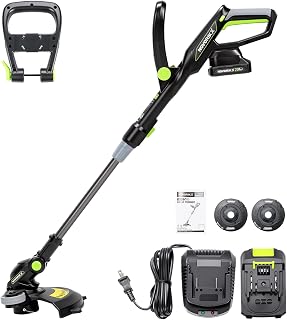


Choosing a Ryobi cordless trimmer or hedge cutter is less about finding the most powerful-looking model and more about matching the tool to the size, density and height of the vegetation you actually maintain. A small garden with light seasonal trimming has very different requirements from a larger UK property with mature hedges, thick growth and long boundary runs.
Ryobi's cordless garden-tool range is particularly useful for buyers who want to build around a shared battery platform. Before choosing a particular model, check whether it belongs to the battery system you already own, whether the required battery and charger are included, and whether the tool's cutting capacity and physical design suit the work you expect to perform.
The terminology can be confusing because retailers and manufacturers may use terms such as hedge trimmer, hedge cutter, grass trimmer and cordless trimmer for different categories of equipment. The first step is therefore to identify the type of cutting task you need to complete.
A hedge trimmer is designed primarily for cutting and shaping hedges. It normally uses a long reciprocating blade with multiple cutting teeth. Blade length, tooth spacing, cutting capacity and overall balance are important when comparing models.
A longer blade can cover more hedge surface with fewer passes, which can be useful when maintaining long, straight boundaries. However, a longer cutting assembly can also make a tool feel less agile, particularly when shaping smaller shrubs or working in confined spaces.
A grass trimmer is intended for cutting grass and weeds around lawn edges, paths, borders, fences and other areas that a mower cannot easily reach. Instead of a hedge-cutting blade, it generally uses a rotating cutting line or a compatible cutting system.
If your primary requirement is lawn edging and clearing vegetation around obstacles, a grass trimmer is usually the more appropriate category. A hedge cutter should not be selected simply because it appears to offer a more substantial cutting mechanism.
Some Ryobi cordless garden systems are designed around interchangeable attachments. These can appeal to homeowners who need several functions but want to avoid purchasing and storing a separate motor unit for every gardening task.
When considering a multi-tool arrangement, compare the complete system rather than focusing only on the power unit. Attachment availability, reach, cutting performance, storage requirements and the total cost of the components all matter.
Battery compatibility should be one of the first checks for anyone considering a cordless Ryobi garden tool. A bare tool can make sense when you already own compatible batteries and a charger, whereas a kit containing a battery and charger may be more suitable for someone entering the platform for the first time.
Do not assume that every Ryobi cordless garden product uses exactly the same battery specification. Check the manufacturer's compatibility information for the specific model and battery family before purchasing.
Battery capacity influences how long a cordless tool can operate between charges, although actual runtime depends on the tool, workload, vegetation, cutting technique, battery condition and other factors.
For occasional light trimming, a smaller battery may be sufficient and can help keep the overall tool lighter. For extended hedge maintenance, a higher-capacity compatible battery may be preferable if the additional weight is acceptable.
Blade length is particularly relevant when comparing cordless hedge cutters. A longer blade can be advantageous for large hedges because it can cover a greater area during each pass. Shorter blades tend to be easier to control when shaping compact shrubs and detailed sections.
Rather than automatically choosing the longest available blade, consider the hedge dimensions and the amount of precision required. Balance can be just as important as nominal blade length.
Tooth spacing provides useful information about the type of vegetation a hedge trimmer is designed to handle. Wider spacing can be beneficial when dealing with thicker stems, while closer spacing can be well suited to finer hedge growth.
Always distinguish between the stated maximum cutting capacity and the material you routinely intend to cut. A specification describing the maximum suitable stem diameter should not be interpreted as a recommendation to force the tool continuously through material at that limit.
A hedge trimmer may appear manageable when held for a few seconds but become tiring during a prolonged trimming session. Weight distribution is therefore an important buying consideration.
Look at the position of the motor, battery and front handle as well as the advertised weight. A well-balanced tool can be easier to manoeuvre than a similarly weighted tool with an awkward centre of gravity.
Handle configuration affects control, comfort and the positions from which the hedge can be trimmed. A rotating or adjustable rear handle can be useful for changing cutting angles, while a substantial front handle can provide greater control when working across the face or top of a hedge.
Buyers should also consider whether the controls can be operated naturally while wearing appropriate gardening gloves.
For taller hedges, a long-reach or pole hedge trimmer can reduce the need to work from a ladder. However, increased reach usually changes the balance of the tool and can make the cutting head feel heavier at the end of the shaft.
Do not judge a pole hedge cutter solely by its maximum theoretical reach. Consider the practical working position, the angle of the cutting head, your ability to control the tool safely and the additional leverage created by a longer shaft.
A compact cordless hedge trimmer is often the simplest choice for low ornamental hedges and regular light maintenance. Manoeuvrability, low fatigue and easy storage can be more valuable than maximum cutting capacity.
For a typical suburban garden with established boundaries, look for a balance between blade length, battery endurance, cutting capacity and weight. A medium-sized hedge can require considerable time to trim, so comfort should remain a priority alongside performance.
Large hedges place greater demands on the operator and the tool. Longer cutting coverage, appropriate tooth spacing, sufficient battery capacity and good weight distribution become increasingly important.
For very thick branches, remember that a hedge trimmer is not automatically a substitute for a dedicated pruning saw or lopper. Forcing a hedge cutter beyond its intended cutting range can lead to poor results and unnecessary strain on the equipment.
A long-reach or articulated hedge trimmer can be worth considering where the hedge is difficult to access from ground level. The ability to adjust the cutting head can also help when trimming the top surface or angled sections.
Safety should take priority over convenience. Avoid using a ladder in a manner that leaves you unable to maintain stable control of the tool, and follow the operating instructions supplied with the specific model.
The major attraction of a cordless hedge cutter is freedom from a mains cable. There is no extension lead trailing through the garden and fewer concerns about accidentally bringing a power cable into the cutting area.
That convenience comes with the need to manage batteries. Runtime, charging time, battery availability and replacement cost can all influence the long-term practicality of a cordless system.
For homeowners who already use compatible Ryobi batteries for drills, saws, blowers or other equipment, a compatible garden tool can potentially make better use of batteries they already own. Buyers starting from scratch should compare the complete kit cost rather than the bare-tool price alone.
One of the strongest reasons to consider Ryobi is the possibility of building a broader cordless tool collection around a compatible battery family. This can simplify storage and reduce the number of different chargers required.
However, compatibility should always be verified at the individual product level. Battery platforms can contain different voltage classes or generations, and a battery that physically resembles another battery does not necessarily mean that it is electrically or mechanically compatible.
A bare tool can be the economical option for an existing Ryobi battery user. It avoids paying for another charger and battery when those components are already available.
A complete kit is generally easier for a new cordless-tool user because it provides the basic components needed to operate the equipment. Compare the included battery capacity as well as the headline kit description.
Some cordless tools are designed around a single battery, while higher-demand equipment may use more than one battery. A dual-battery configuration can influence both runtime and weight.
When comparing models, confirm the exact battery requirement rather than assuming that a larger battery automatically means the tool is compatible or that one battery can operate every model in the range.
Battery voltage is useful when comparing products within a manufacturer's range, but voltage alone does not tell you how effectively a hedge cutter will perform. Motor design, blade geometry, electronics, battery condition and the density of the vegetation all contribute to real-world cutting behaviour.
Similarly, advertised runtime figures should be treated as guidance rather than a guaranteed duration for every garden. Continuous cutting through dense growth can place substantially different demands on a battery than intermittent trimming of light new growth.
Where a specific Ryobi model uses brushless motor technology, this can be an important specification to consider. Brushless systems generally eliminate conventional motor brushes and can offer benefits in efficiency, electronic control and motor design.
That does not mean every brushless model is automatically the best choice. The right product still depends on blade design, ergonomics, battery requirements, workload and price. A homeowner who only trims a small hedge occasionally may value low weight and affordability more than premium motor technology.
An adjustable cutting head can make a hedge trimmer more versatile, particularly when the job involves different cutting planes. A fixed head can be simpler and may feel more straightforward for standard vertical hedge trimming.
For a tall hedge, an articulated head can make it easier to approach the top without holding the entire tool at an awkward angle. For low hedges, the same mechanism may provide useful control when working across the top surface.
Cordless electric hedge trimmers are often attractive for domestic gardens because they do not require a petrol engine. Noise remains a consideration, however, and garden maintenance should still be planned with neighbours and local circumstances in mind.
Check the manufacturer's stated sound information for the exact model if noise is an important factor. Do not rely on assumptions based solely on the fact that a tool is battery powered.
A quality hedge cutter should be assessed for more than cutting performance. Look for sensible control placement, a secure grip, a blade guard or sheath for storage, and safety controls appropriate to the product design.
Hedges can conceal surprisingly difficult obstacles. Garden wire, old fencing, stones, plant supports and other materials can become entangled with cutting equipment. Inspecting the hedge before switching on the tool is therefore an important part of preparation.
It is also useful to identify unusually thick branches before beginning. These can often be dealt with using a suitable pruning tool rather than repeatedly forcing the hedge trimmer into material outside its intended application.
A higher voltage figure is not sufficient evidence that one model will be more suitable for your garden. Consider the complete specification and the actual cutting job.
A long blade can improve productivity on broad hedges but may be cumbersome for smaller shrubs. Select blade length according to hedge size and desired manoeuvrability.
A low headline price can be misleading if it refers to the tool body without a compatible battery or charger. Always calculate the complete setup cost.
Heavy tools can become uncomfortable during long trimming sessions, particularly when the cutting head is held above shoulder height. Compare complete operating weight, including the battery where appropriate.
These tools perform different jobs. A grass trimmer uses a rotating cutting system for grass and weeds, whereas a hedge trimmer uses a reciprocating blade for hedge growth.
A professional-style specification may be unnecessary for someone maintaining a small ornamental hedge a few times each year. Extra capacity can mean additional weight, cost or complexity without providing a meaningful benefit for light domestic work.
Battery compatibility must be checked carefully. Always verify the exact battery platform specified for the tool instead of relying on appearance or brand name alone.
When two models appear similar, compare them systematically rather than relying on marketing terminology.
Ryobi is not the only established brand in the cordless garden-tool market. Depending on your existing equipment and budget, it can also be sensible to compare equivalent products from Bosch, Makita, DeWalt, Einhell, Greenworks and other established manufacturers.
The most meaningful comparison is normally between complete systems rather than isolated hedge trimmers. If you already own several compatible batteries, staying within that ecosystem may offer practical advantages. If you are buying your first cordless garden tool, compare the wider range of tools, batteries, chargers and accessories available in the platform you are considering.
Compare the battery ecosystem, ergonomics, blade specifications and included accessories rather than choosing solely on brand familiarity. Bosch has a broad presence in domestic power tools and garden equipment, making it a relevant alternative for homeowners who value platform compatibility.
Makita is another major cordless-tool manufacturer with extensive battery-powered equipment. For buyers already invested in Makita tools, a compatible garden platform may be more convenient than maintaining a separate battery ecosystem.
DeWalt is particularly relevant to users who already have compatible professional-oriented cordless equipment. Compare the intended duty level, tool weight, battery configuration and overall system cost before deciding.
Einhell offers another broad cordless garden and power-tool ecosystem. Buyers should compare the exact cutting specifications, battery options, ergonomics and accessories for the models under consideration.
Product specifications can appear complicated, but only a handful of figures usually have a major impact on the buying decision.
Regular maintenance can help keep a hedge trimmer ready for its next use. Always follow the manufacturer's instructions for the specific model, particularly regarding lubrication, cleaning and battery handling.
After use, remove plant debris from the cutting assembly according to the manufacturer's instructions. Sap and accumulated vegetation can interfere with smooth blade movement and make later cleaning more difficult.
Check the cutting teeth for damage, unusual wear or deformation. If the blades are damaged, follow the manufacturer's guidance rather than continuing to use the tool in that condition.
Use the supplied blade guard or sheath when storing the hedge cutter if one is provided. This helps protect the cutting assembly and reduces the risk of accidental contact during storage.
Use and store batteries according to the manufacturer's instructions. Avoid exposing battery packs to unsuitable temperatures, moisture or physical damage, and use the specified charger.
Before use, inspect the handles, guards and other accessible components for looseness or damage. Do not operate equipment that appears unsafe or defective.
Cutting performance depends heavily on blade condition. Dull, damaged or contaminated blades can make trimming less efficient and may place additional load on the motor and battery.
Blade sharpening should be carried out according to the manufacturer's recommended procedure. Some users may prefer a qualified service provider when specialist sharpening equipment or procedures are required.
British gardens can expose equipment to damp conditions, particularly during autumn and winter. Store cordless hedge trimmers in a dry, secure location and follow the manufacturer's recommendations for battery storage.
Avoid leaving the tool exposed to rain or storing the battery where it can be subjected to unsuitable temperatures. Before long periods of inactivity, consult the instructions supplied with the battery and charger for appropriate storage practices.
A cordless hedge cutter can be particularly attractive when you value portability, do not want to manage an extension cable and already have access to a compatible battery system. It can also be convenient for gardens with several separated hedge sections where repeatedly repositioning a power cable would be inconvenient.
A corded model can still make sense where continuous operation from a suitable mains supply is more important than unrestricted movement. Petrol equipment may also be considered for specialist applications, although it introduces different considerations around fuel, servicing, emissions, noise and starting.
The appropriate trimming frequency depends on the hedge species, growth rate, desired shape and local conditions. Some hedges benefit from more frequent light maintenance, while others require less frequent shaping.
Rather than trimming according to a rigid calendar, observe the plant and follow appropriate horticultural guidance for the particular species. Avoid cutting during periods when doing so could cause unnecessary damage to nesting wildlife, and check current UK guidance where wildlife protection is relevant.
For a hedge with a broad horizontal top, balance and reach are particularly important. An adjustable head may make it easier to achieve a consistent cutting angle.
A longer-reach design can reduce the need to stretch upward. Consider the weight of the complete tool and whether you can maintain stable control throughout the job.
A longer blade may reduce the number of passes required across a large surface. However, the tool should still be manageable enough to control accurately.
A compact hedge trimmer can provide better precision for small shrubs. Large cutting assemblies can be unnecessarily cumbersome for detailed shaping.
If this is your first cordless garden tool, start by deciding whether you want to commit to a battery platform. Buying several tools from the same ecosystem can be convenient, but the initial investment in batteries and chargers should be considered.
Make a list of the garden equipment you may eventually need, such as a grass trimmer, blower, chainsaw, hedge cutter or pruning tool. Then compare which battery platforms provide the combination of tools that matches your likely requirements.
If you already own compatible Ryobi batteries, the decision can be simpler. Check the exact battery compatibility, then concentrate on the cutting characteristics, ergonomics and reach of the hedge cutter itself.
Also check whether your existing batteries provide the capacity you want for the intended workload. A compact battery that works well in a drill may not provide the same practical experience in a tool used continuously for garden maintenance.
Product listings can differ in ways that are easy to miss. Before purchasing from a retailer, review the complete product description and specification sheet.
Customer reviews can reveal useful information that specifications do not always communicate, including perceived balance, ease of use, battery convenience and suitability for particular garden sizes. They should nevertheless be interpreted carefully.
Look for repeated observations across multiple reviews rather than placing too much weight on a single positive or negative comment. Also distinguish between complaints about the product itself and complaints caused by choosing a tool for a job outside its intended capacity.
When narrowing a list of Ryobi cordless hedge cutters, consider each model against the same criteria. This avoids allowing a prominent specification or attractive product image to dominate the decision.
There is no single best model for every UK garden. The right choice depends on hedge size, vegetation thickness, required reach, preferred blade length, battery compatibility and budget. Compare the current models using the specifications and criteria outlined in this guide.
Some models can be suitable for substantial domestic hedge maintenance, but suitability depends on the exact model and the hedge itself. For large or mature hedges, pay particular attention to cutting capacity, blade length, battery configuration, weight and balance.
Only within the cutting capacity specified for the particular model. Thick branches may require a dedicated pruning saw or lopper instead. Do not assume that a hedge trimmer can safely replace a branch-cutting tool.
That depends on the exact battery platform and hedge trimmer model. Check the manufacturer's compatibility information before purchasing or attaching a battery.
If you already have a compatible battery and charger, a bare tool may be the more practical configuration. If you do not have the necessary battery equipment, compare complete kits and check exactly what is included.
Not automatically. Longer blades can cover more hedge surface, but shorter blades may provide better manoeuvrability and precision. Choose according to hedge dimensions and the type of trimming you perform.
Choose tooth spacing according to the typical thickness of the vegetation you need to cut. Wider spacing can be useful for thicker growth, while closer spacing can suit finer hedge material.
Do not assume that a cordless tool is designed for use in rain or wet conditions. Follow the operating and weather-related instructions supplied with the specific model and keep electrical equipment appropriately protected from unsuitable moisture exposure.
Clean the tool according to the manufacturer's instructions, protect the blade with its supplied guard where applicable, and store the equipment somewhere dry and secure. Store the battery according to its specific instructions.
Not necessarily, but additional reach can make tall hedges easier to maintain from ground level. Consider whether the increased reach and weight distribution will remain comfortable and controllable for your particular garden.
Depending on your requirements, relevant alternatives include Bosch, Makita, DeWalt, Einhell and Greenworks. Compare complete battery ecosystems and equivalent specifications rather than comparing brand names alone.
Running costs depend on electricity used for charging, battery capacity, frequency of use and eventual battery replacement. Existing owners of a compatible battery platform may also avoid the need to purchase an additional battery and charger for every new tool.
Use a suitable battery for the tool, keep the cutting equipment properly maintained, avoid forcing the blade through material beyond its intended capacity and use the tool appropriately for the vegetation. Battery performance naturally varies with workload and operating conditions.
Before choosing among the top-rated Ryobi cordless trimmer and hedge-cutter options, confirm the following:
The best Ryobi cordless hedge cutter for a UK garden is the one whose battery system, cutting capacity, blade dimensions, ergonomics and reach match the work you actually need to perform. A homeowner maintaining a small ornamental hedge may benefit most from a lightweight and manoeuvrable model, while someone managing long or mature boundaries may place greater importance on cutting coverage, battery capacity and reach.
Before making a purchase, compare the exact model specifications, confirm battery compatibility, check what is included in the package and review current retailer information. For buyers already invested in Ryobi cordless tools, platform compatibility can be a significant practical advantage; for new buyers, the wider range of compatible garden and power tools should also form part of the decision.
This guide is intended as independent buying advice for UK consumers. Product specifications, configurations and retailer pricing can change, so verify the latest information for the exact model before purchasing.