

♥ Wishlist
Compare 16 verified Ryobi Cordless Chainsaws products in United Kingdom. Reviews, ratings, pros, cons and buying advice updated for October 2026.
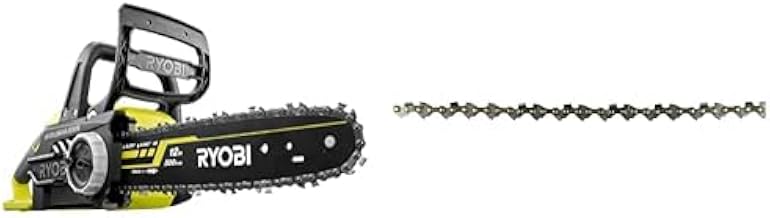


Choosing a Ryobi cordless chainsaw is not simply a matter of selecting the highest voltage or the model with the longest guide bar. For UK homeowners, gardeners and occasional users, the most suitable chainsaw depends on the type and diameter of timber you expect to cut, how frequently you will use it, whether you already own compatible Ryobi batteries, and how much weight you are comfortable handling.
Ryobi's cordless chainsaw range is particularly relevant to buyers who want the convenience of battery power without dealing with petrol fuel, exhaust fumes, spark plugs or routine engine maintenance. However, cordless models still vary considerably in cutting capacity, battery requirements, guide-bar length, chain configuration, weight, runtime and handling characteristics.
This guide explains the specifications and practical considerations that matter when comparing top-rated Ryobi cordless chainsaws in the UK. It is designed to help you distinguish between compact pruning saws, general-purpose cordless chainsaws and more powerful models intended for larger garden work.
Ryobi is well known for its broad range of cordless garden and power tools, making its battery ecosystem one of the major reasons shoppers consider its chainsaws. The ability to use compatible batteries across multiple tools can reduce the need to maintain separate battery systems for every garden machine.
For many UK users, cordless operation is also convenient because there is no petrol to store or mix and no mains cable to manage around trees, hedges and garden structures. A battery chainsaw can be ready to use with relatively little preparation, although the battery must be charged and the chain, bar and safety systems still require proper attention.
Ryobi cordless chainsaws can therefore make sense for homeowners who need a chainsaw for occasional garden maintenance rather than continuous professional forestry work. The right model can provide useful cutting capability while being easier to start and generally quieter at the point of use than a petrol saw.
Battery compatibility is one of the most important considerations when comparing Ryobi cordless chainsaws. Many Ryobi garden tools belong to the ONE+ battery platform, allowing compatible batteries to be shared between a wide selection of tools.
However, buyers should never assume that every Ryobi battery is suitable for every chainsaw simply because both products carry the Ryobi or ONE+ name. Check the exact battery requirements stated for the chainsaw you are considering and compare them with the batteries you already own.
If you are starting from scratch, compare the total cost of the tool, battery and charger rather than looking only at the advertised bare-tool price. A chainsaw that appears inexpensive may require an additional battery and charger before it can be used.
For existing Ryobi users, a compatible bare tool may offer better value because you may already have the required battery and charging equipment. The opposite can be true for a first-time battery-tool buyer, so the complete package should always be considered.
Battery capacity is commonly expressed in ampere-hours, or Ah. In general terms, a higher-capacity battery can provide more stored energy than a lower-capacity battery of the same battery platform, although actual runtime depends heavily on the workload.
Chainsaw runtime is particularly difficult to predict because cutting conditions vary. A saw cutting small, dry branches intermittently may consume considerably less energy than the same saw repeatedly cutting larger, dense or wet timber.
Chain sharpness also matters. A properly sharpened chain cuts more efficiently, whereas a dull chain can force the motor to work harder and make the operator apply unnecessary pressure.
When comparing batteries, consider:
The guide bar is the long component around which the cutting chain travels. Its length is one of the easiest specifications to compare, but it should not be treated as a simple measure of overall chainsaw quality.
A longer guide bar can provide greater cutting reach and may be useful when working with larger timber. However, a longer bar can also increase the size and weight of the tool and may require more motor power to maintain effective chain performance.
For pruning and small garden jobs, a compact bar can be easier to control. For general-purpose firewood and branch cutting, a medium-length bar can provide a useful balance between manoeuvrability and cutting capacity.
The safest approach is to match the guide-bar length to the material you realistically expect to cut. Do not select a larger bar simply because it looks more powerful.
Chain speed is another specification worth comparing when evaluating cordless chainsaws. It can influence how quickly the chain moves through timber and contributes to the overall cutting experience.
However, chain speed should never be considered in isolation. A chainsaw's real-world performance depends on the motor, battery, chain condition, chain design, timber species, moisture content, cutting technique and load placed on the saw.
A high chain-speed figure does not automatically make one chainsaw superior to every other model. Buyers should consider the complete specification and the type of work the manufacturer intends the tool to perform.
Motor technology can influence efficiency, durability, heat generation and battery usage. Brushless motors have become increasingly common in cordless power tools because they eliminate the physical brushes used in conventional brushed motors.
A brushless motor can offer advantages in demanding cordless applications, although the presence of a brushless motor should not be treated as a guarantee that a particular chainsaw is the right choice for every user.
When comparing Ryobi chainsaws, look at the motor technology alongside battery capacity, chain speed, bar length, weight and intended application. The complete system matters more than one specification printed on the box.
Proper chain lubrication is essential for a chainsaw. The chain and guide bar experience substantial friction during cutting, so adequate lubrication helps reduce wear and supports smooth operation.
Many cordless chainsaws include an automatic oiling system that supplies chain oil during operation. This can make the tool easier to use because the operator does not need to manually lubricate the chain after every short cutting operation.
Automatic oiling does not remove the need for maintenance. The oil reservoir still needs to be checked and filled with the appropriate chain oil, and the oiling system should be kept clean and functioning correctly.
Correct chain tension is essential for safe and effective chainsaw operation. A chain that is excessively loose can create operational and safety problems, while excessive tension can increase friction and accelerate component wear.
Tool-free chain tensioning systems use an adjustment mechanism that allows the operator to alter chain tension without carrying a separate spanner or screwdriver. This is particularly convenient for domestic users who may not want to deal with complicated adjustments.
Convenience should not replace careful inspection. Always follow the specific manufacturer's instructions for checking and adjusting chain tension, especially because the chain can change tension as it heats during use.
Chainsaws are powerful cutting tools and should never be selected purely on price or convenience. Safety features deserve as much attention as motor power and battery capacity.
Safety equipment is equally important. Appropriate chainsaw protective clothing, eye and hearing protection, gloves and suitable footwear should be selected according to the task and relevant UK safety guidance. Chainsaw work involving trees, larger timber or difficult cutting positions should be approached with particular caution.
Kickback is one of the most important hazards associated with chainsaw operation. It can occur when the upper portion of the guide-bar nose contacts an object or when the chain is suddenly stopped in a particular cutting situation, potentially causing the saw to move rapidly towards the operator.
Understanding kickback is more important than simply buying a chainsaw advertised as powerful. Operators should learn appropriate cutting techniques, maintain the chain correctly and use the manufacturer's recommended safety equipment and procedures.
Never use a chainsaw in a way that places your body in the potential path of uncontrolled movement. Avoid reaching beyond a stable working position and do not use a chainsaw above shoulder height unless the specific equipment and training are designed for that application.
A chainsaw that looks impressive on a specification sheet can become uncomfortable if it is too heavy for the intended user or poorly suited to the job. Battery weight contributes to the total operating weight, so the chainsaw's advertised tool-only weight may not represent what you actually hold during use.
Balance is also important. A well-balanced saw can be easier to control during repeated cuts, while a front-heavy or awkwardly positioned machine can become tiring during prolonged garden work.
When comparing models, consider the complete operating configuration, including the battery and cutting equipment. If possible, pay attention to handle placement, grip shape and how naturally the machine sits in a controlled cutting position.
Compact cordless chainsaws and pruning saws are useful for homeowners who mainly need to remove smaller branches, cut garden waste or perform occasional tree-maintenance tasks from a stable position.
The main advantage of a compact saw is manoeuvrability. A smaller cutting system can be easier to position accurately, particularly when dealing with numerous small branches.
The limitation is cutting capacity. A compact saw should not be treated as a substitute for a larger chainsaw simply because both use the same battery ecosystem. Always observe the manufacturer's stated limitations and use a larger, more appropriate machine when the material exceeds the tool's intended capacity.
General-purpose cordless chainsaws occupy the middle ground between lightweight pruning equipment and larger saws. They can be attractive for domestic users who need one machine for a variety of garden jobs.
Typical applications can include cutting fallen branches, processing manageable firewood and removing appropriately sized timber from garden maintenance work.
This category is often the most practical choice for homeowners because it balances cutting capability, portability and ease of use. Nevertheless, the best model depends on the diameter of timber you actually encounter rather than the maximum specification alone.
Higher-powered battery chainsaws are designed for users who need more cutting capability and are prepared to accept additional weight, battery demand or cost. These models can be more appropriate when larger garden timber is a regular part of the workload.
Before choosing a larger cordless chainsaw, consider whether your work genuinely requires it. A bigger machine can be less convenient for small pruning tasks, and greater power does not compensate for incorrect cutting technique or unsuitable working conditions.
For extensive tree felling, large-diameter timber, work at height or professional arboricultural applications, a domestic cordless chainsaw may not be the appropriate tool. Such work can require specialist equipment, training and professional expertise.
Battery and petrol chainsaws have different strengths. A cordless Ryobi model is generally attractive to homeowners who value straightforward starting, lower local emissions during operation and the convenience of a rechargeable battery system.
A petrol chainsaw can offer sustained operation with additional fuel and may be preferred for certain demanding forestry applications. However, petrol models involve fuel storage, engine maintenance and additional operating considerations.
Mains electric chainsaws can be suitable for gardens where a reliable outdoor power supply is available. Their major limitation is the cable, which can restrict movement and requires careful management around the cutting area.
A cordless Ryobi chainsaw removes the mains cable and can be taken further around a garden without needing an extension lead. The trade-off is that battery charge is limited and additional batteries may be necessary for longer sessions.
For small gardens close to an outdoor socket, mains power can still be practical. For gardens with trees, detached areas or awkward access, cordless operation can provide considerably greater flexibility.
A bare tool is generally supplied without a battery and charger. This distinction is particularly important when shopping for Ryobi cordless equipment because the headline price can look substantially lower than the cost of a complete ready-to-use kit.
Before comparing prices, determine whether each listing includes the chainsaw, battery, charger, guide bar, chain and other expected accessories. Two apparently similar offers may have very different package contents.
For existing Ryobi users with suitable batteries and a compatible charger, a bare tool can be a sensible way to expand an existing tool collection. New users should calculate the complete purchase cost before deciding which option represents better value.
A longer bar is not automatically better. It adds size and can make a saw less convenient for small jobs. Match the bar to the timber you intend to cut.
Do not assume an existing battery will work simply because it carries the Ryobi name. Confirm the exact compatibility requirements before purchasing.
Always compare like-for-like packages. A bare chainsaw and a chainsaw supplied with battery and charger should not be treated as equivalent offers.
Additional cutting capacity can be useful, but it may also mean greater weight and higher battery consumption. A smaller saw can be more practical for routine pruning and light garden work.
A chainsaw is not a one-time purchase in terms of consumables. Chains eventually need sharpening, maintenance or replacement. Check that appropriate replacement components can be identified for the specific model.
A chainsaw should not be treated like an ordinary garden hand tool. Appropriate protective equipment and safe operating practices are essential considerations when calculating the real cost of ownership.
When two models appear similar, compare them in a consistent order rather than relying on the advertised power figure.
Good maintenance can help preserve cutting performance and extend the useful life of a cordless chainsaw. Always follow the maintenance instructions supplied for the exact model.
A properly maintained chain should cut efficiently without requiring excessive force. If cutting becomes noticeably slower, the saw produces unusually fine dust rather than suitable chips, the cut wanders or the operator has to push aggressively, the chain may require sharpening or inspection.
A dull chain can increase fatigue because the operator may compensate by applying additional pressure. It can also reduce the efficiency of the cutting system. Do not continue using a chain that is damaged, incorrectly fitted or otherwise unsafe.
The guide bar is a working component rather than simply a support for the chain. It should be kept clean and inspected regularly for abnormal wear, damage or deformation.
The groove and oiling areas should remain free of accumulated debris. Follow the manufacturer's instructions for bar maintenance, chain replacement and any recommended bar service procedures.
When replacing a chain, make sure the replacement is appropriate for the exact chainsaw and guide-bar configuration. Chain dimensions are not interchangeable simply because two chains appear similar.
Cordless chainsaw ownership includes battery care as well as chainsaw maintenance. Use the charger and batteries specified by the manufacturer and follow the supplied charging instructions.
Avoid exposing batteries to conditions outside their recommended operating and storage environment. Inspect batteries for visible damage and stop using a battery if it shows signs of serious physical damage or abnormal behaviour.
For occasional seasonal garden work, sensible battery storage is particularly important. Follow the manufacturer's instructions rather than relying on generic assumptions about how long a lithium-ion battery should be stored or whether it should remain connected to a charger.
There is no universal number of cuts that applies to every Ryobi cordless chainsaw and battery combination. Cutting performance varies with timber diameter, wood species, moisture, chain sharpness, temperature, operator technique and the battery's capacity and condition.
Instead of relying on a single claimed runtime figure, consider your normal working pattern. Someone cutting a few branches every weekend has very different requirements from someone processing a large quantity of firewood.
If your sessions are longer, owning a second compatible battery can be more useful than selecting a heavier chainsaw purely for maximum power. It can also allow one battery to charge while another is being used, provided the batteries and charger are suitable for the system.
For firewood preparation, the ideal chainsaw depends heavily on log diameter and quantity. A compact saw may be perfectly adequate for small logs but become inefficient when repeatedly processing larger timber.
Users cutting firewood should pay particular attention to chain sharpness, bar length, battery capacity and ergonomic comfort. Repeated cutting places a different demand on a chainsaw from occasional pruning.
Always secure timber appropriately before cutting. Never attempt to hold a log in place with a foot or hand, and be aware of the possibility of timber movement, pinching and unexpected chain reactions.
For routine garden pruning, compactness and control are often more important than maximum cutting capacity. A lighter chainsaw can be easier to position when dealing with numerous smaller branches.
However, chainsaw work in trees presents additional hazards. If the job requires climbing, working from a ladder, reaching awkwardly or cutting overhead, it is generally more appropriate to use a suitably trained professional rather than attempting to adapt a domestic chainsaw to an unsuitable situation.
A cordless chainsaw is not automatically the best tool for every cutting job. For very small branches, manual pruning tools may be safer and more convenient. For large-scale forestry operations, specialist professional chainsaws and equipment may be more appropriate.
Similarly, if the task involves diseased or structurally unstable trees, overhead branches, climbing, difficult access or potentially dangerous tree failure, professional arboricultural assistance should be considered.
The best buying decision is therefore not always to purchase the most powerful chainsaw. It is to select the correct tool for the actual task.
Ryobi is not the only established manufacturer in the cordless garden-tool market. Depending on your existing battery collection and the type of work you perform, it can be useful to compare Ryobi with brands such as Makita, DeWalt, Bosch, Milwaukee, Einhell, STIHL and Husqvarna.
Battery platforms are usually a major factor in this comparison. If you already own several compatible tools from one manufacturer, staying within that ecosystem can reduce the need to purchase additional chargers and batteries.
However, battery compatibility should never be the only criterion. Compare the chainsaw's intended application, cutting system, weight, safety equipment, replacement components and total ownership cost.
Product listings can change over time, particularly for battery kits, bundle configurations and seasonal promotions. Before buying, check the current listing carefully rather than relying on an old product description or an image showing accessories that may not be included.
Customer reviews can provide useful information about everyday ownership, but they should not replace specification checks or manufacturer instructions. A review describing excellent performance on small garden branches does not necessarily prove that the same model is suitable for large hardwood logs.
Look for recurring themes rather than isolated comments. Useful review topics include battery runtime, ease of chain adjustment, weight, balance, charging convenience, cutting performance and long-term reliability.
Be cautious when reviews discuss specifications incorrectly or compare a model with a completely different class of chainsaw. Technical information should be checked against the current manufacturer documentation.
A lightweight Ryobi cordless model with a compact cutting system is usually the most logical starting point for occasional users who mainly remove manageable branches and garden timber. Ease of handling can be more valuable than maximum cutting capacity.
A mid-range Ryobi cordless chainsaw can offer a useful compromise for homeowners who switch between pruning, cutting fallen branches and preparing moderate amounts of firewood. Prioritise a balanced combination of battery capacity, cutting performance and manageable weight.
If you already have compatible Ryobi batteries, a bare-tool chainsaw can make financial and practical sense. Confirm compatibility first and make sure your existing batteries provide an appropriate capacity for chainsaw work.
Users regularly dealing with larger timber should concentrate on cutting capacity, motor performance, battery requirements and bar length. A higher-powered model may be preferable, but only if its additional weight and battery demand are acceptable.
A cordless chainsaw can be easier to start than a petrol chainsaw because there is no petrol engine to pull-start or warm up. That convenience can make battery models appealing to homeowners who have little experience with petrol garden machinery.
However, ease of starting does not make chainsaw operation inherently safe. A chainsaw remains a high-risk cutting tool. Beginners should read the complete operating instructions, understand the controls, use appropriate protective equipment and avoid tasks beyond their experience level.
New users should also learn how the chain brake works, how to position the saw correctly, how to avoid kickback and how to respond if the chain becomes pinched.
UK gardens can present a wide range of conditions, from small urban plots to large rural properties with mature trees. For many domestic users, the ideal cordless chainsaw is therefore not the model with the largest specification but one that matches the scale of the property and the user's cutting requirements.
Convenient battery operation, manageable weight, suitable bar length, reliable chain adjustment, effective lubrication and accessible replacement components are all important. Weather and storage conditions should also be considered because outdoor equipment needs appropriate protection from moisture and unsuitable temperatures.
The purchase price is only one part of cordless chainsaw ownership. Batteries, replacement chains, chain oil, sharpening equipment, protective equipment and eventual replacement components can all affect the total cost over time.
A model that fits an existing battery platform can sometimes provide better overall value than switching ecosystems for one individual tool. Conversely, someone building a cordless garden-tool collection from scratch may want to compare the broader ecosystem rather than judging one chainsaw independently.
Consider the other tools you may buy in the future, such as hedge trimmers, blowers, grass trimmers, lawn mowers and drills. A coherent battery platform can simplify charging and battery management across multiple tools.
The best Ryobi cordless chainsaw depends on the job. A compact model can be preferable for pruning and light garden work, while a more powerful model may be better for larger branches and repeated timber cutting. Compare cutting capacity, bar length, battery requirements, weight and intended use rather than choosing solely from the model name.
Some Ryobi cordless chainsaws can be suitable for appropriately sized firewood, provided the timber falls within the manufacturer's intended cutting capacity. Larger quantities or larger-diameter timber may require a more powerful machine and additional batteries.
Possibly, but compatibility must be confirmed for the exact chainsaw and battery. Do not assume that every Ryobi battery is suitable for every cordless chainsaw.
They generally avoid petrol-engine maintenance such as fuel mixing, spark-plug servicing and engine-related maintenance. However, cordless chainsaws still require chain sharpening, chain tension checks, bar inspection, chain lubrication, cleaning and appropriate battery care.
Chainsaws require appropriate lubrication for the cutting chain and guide bar. Models equipped with automatic oiling systems still require the oil reservoir to be checked and filled as specified by the manufacturer.
Not necessarily. A longer bar can increase cutting capacity but can also add weight and affect handling. Select a bar length appropriate to the material you intend to cut.
If you already have a compatible battery and charger, a bare tool may be convenient. If you are new to the Ryobi battery platform, compare the complete cost of a kit containing the chainsaw, battery and charger.
There is no universal time interval because sharpening frequency depends on how much and what type of timber you cut. Inspect the chain regularly and sharpen it when cutting performance deteriorates or the chain no longer produces appropriate chips.
The suitability depends on the tree, timber size, location and equipment. Tree felling can be hazardous, particularly around buildings, roads, power lines and other people. Large or difficult trees should be assessed and handled by suitably trained professionals.
Do not assume that a cordless chainsaw is designed for unrestricted use in rain or wet conditions. Follow the exact manufacturer's operating and storage instructions and keep electrical components and batteries away from inappropriate moisture exposure.
Suitability depends on the specific professional application and equipment requirements. Domestic cordless chainsaws should not automatically be considered professional arboricultural equipment. Professional users should select equipment designed and approved for their working environment, workload and required safety procedures.
The strongest reason to choose a Ryobi cordless chainsaw is often the combination of cordless convenience and access to a broader battery-tool ecosystem. For UK homeowners, this can make occasional cutting and garden maintenance considerably more convenient than managing a petrol chainsaw or working around a mains cable.
The right model, however, should be selected according to the work rather than the headline specification. Think about the size of the timber, frequency of use, required cutting capacity, battery availability, operating weight and safety features before comparing prices.
For light pruning, prioritise manoeuvrability and low weight. For mixed garden work, look for a balanced combination of cutting performance and portability. For larger timber, examine motor performance, bar length and battery capacity carefully. If your work involves climbing, overhead cutting, major tree felling or large-scale forestry, consider whether professional equipment and qualified assistance are more appropriate.
Before purchasing, compare the current specifications for the exact Ryobi model, confirm what is included in the package, check battery compatibility and review current retailer information. This approach makes it easier to find a Ryobi cordless chainsaw that genuinely fits your workload rather than simply choosing the most powerful-looking option.