

![Cordless Tacker Staple Gun Nail Gun, 2 in 1 Electric Stapler Nailer USB Rechargable with 2000pcs 8mm Staples and 2000pcs 10mm Nails for Upholstery, DIY [Practical, Portable, Effortless]](https://m.media-amazon.com/images/I/71Q5qZ9VdGL._AC_UL320_.jpg)

♥ Wishlist
Compare 50 verified Cordless Nail Guns products in United Kingdom. Reviews, ratings, pros, cons and buying advice updated for October 2026.







![Cordless Staple Gun, 2in1 Electric Stapler & Nailer, Rechargeable Stapler/Tacker, with 2000pcs 10mm Nails and 2000pcs 10mm Staples [Small, Lightweight, Compact]](https://m.media-amazon.com/images/I/71QuaC-5KlL._AC_UL320_.jpg)


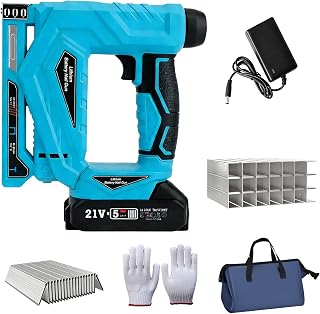
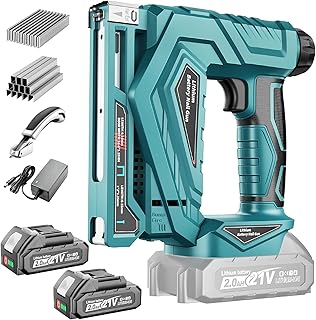


A cordless nail gun can make repetitive fixing work considerably faster and more consistent than driving individual nails with a hammer. For UK users, the right choice depends less on choosing the most powerful-looking tool and more on matching the nail gun's gauge, nail length, magazine capacity, battery system, firing mechanism and intended application to the work you actually do.
This guide is designed for comparing cordless nail guns available to UK buyers in 2026. Rather than treating one specification as proof that a tool is universally better, it looks at the factors that matter when comparing products from established manufacturers such as DeWalt, Makita, Milwaukee, Paslode, Bosch, Ryobi, HiKOKI and Einhell.
Availability, package contents, prices, battery compatibility and retailer stock can change, so always check the current specification and included accessories before purchasing. A tool supplied as a bare unit may require a separate battery and charger, while a kit may include one or more batteries, a charger and carrying equipment.
A cordless nail gun is a battery-powered fastening tool that drives nails or brads into suitable materials without requiring a mains power cable or, depending on the design, an external compressor and air hose. Cordless models are particularly useful where portability matters, including renovation work, second-fix carpentry, trim installation, fencing-related work and general construction tasks.
Different cordless nail guns are designed around different fastener types. A small brad nailer is intended for relatively delicate trim and finishing work, whereas a larger framing nailer is designed for substantially heavier construction applications. Choosing between them is therefore not simply a matter of selecting the model with the highest advertised power.
Nail gauge can be confusing because a higher gauge number generally means a thinner fastener. Consequently, an 18-gauge nail is thinner than a 16-gauge nail, while a 15-gauge nail is thicker again.
An 18-gauge cordless brad nailer is often the most practical option for general indoor finishing work. The smaller brad produces a relatively discreet hole and is useful for attaching mouldings, beading, trim, lightweight panelling and similar components.
The reduced fastener diameter also means that an 18-gauge tool is not automatically the right choice when maximum holding power is required. For heavier timber sections or applications where the joint must withstand greater loads, a larger fastener may be more appropriate.
A 16-gauge nail gun sits between small brad nailers and heavier fastening equipment. It is a popular category for carpentry because it can provide more holding strength than an 18-gauge brad while still being suitable for a wide range of finishing applications.
For UK renovation and woodworking projects involving skirting, door surrounds, timber mouldings and heavier trim, a 16-gauge model can be a useful general-purpose choice when its compatible nail lengths and firing characteristics match the job.
15-gauge finish nailers use a larger fastener and are intended for applications where stronger fastening is required. The larger nail hole may require more filling and finishing, so this category is usually selected for holding strength rather than the smallest possible visible mark.
Framing nailers are designed for substantially heavier construction work. They can accept longer and larger nails than typical finish nailers, but their greater size and weight make them less appropriate for delicate trim.
If the project involves structural timber, framing or other load-bearing construction, the nail specification must be selected according to the requirements of the construction and the manufacturer's permitted fastener range. A cordless framing nailer should not be treated as a universal substitute for an ordinary finish nailer.
Battery compatibility is one of the most important considerations when buying a cordless nail gun. Many professional and DIY power-tool manufacturers build extensive battery platforms in which the same battery family can operate drills, impact drivers, saws, grinders, nailers and other equipment.
If you already own cordless tools, staying within the same battery ecosystem can reduce the need to purchase additional chargers and batteries. DeWalt XR, Makita LXT, Milwaukee M18, Bosch Professional, Ryobi ONE+, HiKOKI Multi Volt and other manufacturer ecosystems have different battery designs and compatibility rules, so the exact model and voltage platform should always be checked.
Do not assume that a battery from one tool in a manufacturer's range will work with every other tool from that manufacturer. Check the precise battery family, voltage and compatibility information for the nail gun.
Battery capacity is commonly expressed in ampere-hours (Ah), but a larger Ah rating is not the only factor determining practical runtime. Nail guns have different power demands, firing mechanisms and operating conditions, while battery age, temperature, nail material and workpiece density can also affect how long a charge lasts.
A compact battery may make a nail gun easier to handle overhead or during detailed trim work. A higher-capacity battery may provide longer operating time but can add weight. This creates an important trade-off between runtime and ergonomics.
For occasional DIY use, a single compatible battery may be sufficient. For professional work involving hundreds or thousands of fasteners, having multiple charged batteries can be more practical than relying on one large battery alone.
Cordless nail guns use different mechanisms to generate the force needed to drive a fastener. Modern designs may use pneumatic-style systems powered by a compressed-air mechanism, flywheel systems, spring-assisted mechanisms or other proprietary technologies.
The mechanism affects firing speed, tool response, noise, vibration, maintenance requirements and battery consumption. Two nail guns accepting the same nail specification can therefore feel substantially different in actual use.
Some cordless professional nailers use a battery in combination with a fuel or gas cartridge. Paslode is particularly associated with this type of cordless fastening system. These tools can offer a different operating experience from purely battery-powered designs and are widely recognised in professional construction environments.
Fuel-powered systems introduce additional consumables and storage considerations. Before buying, check the availability and compatibility of fuel cells as well as the nails required for the specific model.
Battery-only nailers eliminate the need for separate fuel cells and can be attractive to users already invested in a compatible battery platform. The operating characteristics depend heavily on the individual tool's engineering, battery system and firing mechanism.
The firing mode determines how the tool is operated. Sequential firing generally requires the user to activate the contact mechanism and then operate the trigger for each individual fastener. This can provide controlled placement and is particularly useful when accuracy matters.
Contact or bump firing allows faster repetitive fastening on tools that support this feature. However, the correct operating procedure and safety requirements for the particular model must always be followed.
For precision trim installation, a controlled sequential mode may be more useful than maximum firing speed. For repetitive construction work, a suitable rapid-firing mode can improve productivity when used appropriately.
Depth adjustment allows the user to control how deeply a nail is driven into the workpiece. This is a particularly important feature for finishing work because excessive penetration can leave deep marks that require filling, while insufficient penetration can leave the fastener proud of the surface.
A good depth-adjustment system should be straightforward to set and repeat. When comparing nail guns, consider whether adjustment can be made without complicated tools and whether the control is easy to access while wearing work gloves.
Always test the setting on scrap material before beginning visible work. Timber density, nail length and the particular fastener can affect the final result.
Nail jams can interrupt work and become particularly frustrating when the mechanism is difficult to access. A tool-free jam-release design can make routine troubleshooting considerably easier.
When comparing models, inspect how the nose assembly opens, whether the jammed fastener can be accessed safely and whether the manufacturer provides clear instructions for clearing a blockage. Never attempt to remove a jammed nail while ignoring the manufacturer's safety procedure.
Magazine capacity affects how frequently the nail gun needs to be reloaded. A larger magazine can be beneficial during repetitive installation work, while a compact magazine can help keep the tool smaller and easier to manoeuvre.
A common buying mistake is focusing only on the longest nail a tool can accept. The complete usable range is more important. A nail gun capable of accepting very long fasteners may still be a poor choice if it cannot efficiently handle the shorter nails required for most of your projects.
Compare the minimum and maximum compatible nail lengths, nail diameter, head style and collation specifications. Only use fasteners explicitly supported by the manufacturer.
The nail gun is only half of the fastening system. Nail material, coating, length, diameter and collation all influence the suitability of the fastening solution.
For interior mouldings and finishing work, thinner brads or finish nails are often preferred because they reduce visible surface damage. The appropriate gauge depends on the material thickness and the required holding strength.
Hardwood can require different fastening considerations from softwood. A fastener that performs well in softwood may behave differently in dense timber. Test the selected combination on an offcut whenever the finish is important.
Softwood is commonly encountered in construction and carpentry. However, density varies between species and individual pieces, so depth settings should not be assumed to be identical for every timber.
For skirting and architrave installation, users typically need a balance between holding strength, clean appearance and suitable nail length. The nail must penetrate the trim and enter the supporting material sufficiently without causing unnecessary damage.
Cabinetmaking and delicate finishing may favour smaller-gauge fasteners or pins where the appearance of the finished surface is particularly important. A heavier nail gun can create unnecessary holes or damage on thin components.
A cordless nail gun's weight becomes increasingly important during prolonged use. A tool that feels manageable for a few fasteners can become tiring when used continuously, particularly for overhead work.
Look at the complete operating weight rather than focusing only on the bare-tool specification. The battery can make a meaningful difference to the balance and overall weight.
Cordless nail guns can be considerably different in their perceived operating characteristics. The firing mechanism, motor, housing and workpiece all contribute to the sound and vibration produced during use.
Even when a nail gun is marketed as convenient or relatively quiet, appropriate hearing protection should be considered according to the working environment and the manufacturer's safety guidance. Comfort also includes trigger feel, grip texture, balance and the effort required to operate the tool repeatedly.
Integrated LED lights can be useful when installing trim in cupboards, corners, stair areas or other poorly illuminated locations. They are a convenience feature rather than a substitute for proper workspace lighting.
When comparing LED-equipped models, consider the position of the light. Illumination close to the nose of the tool is generally more useful than a light positioned where the magazine or hand can easily block it.
A belt hook can be useful for tradespeople moving between ladders, workbenches and installation areas. It can also reduce the temptation to place the nail gun on unstable surfaces.
If portability is important, check whether the tool includes a belt hook, carrying case or storage solution. Kit contents vary considerably between versions of the same model.
A dry-fire lockout is designed to prevent the tool from firing when the magazine is empty or nearly empty. This can reduce unnecessary trigger operation and may help protect the workpiece from repeated firing attempts without a fastener.
If this feature is important to you, check the manufacturer's exact description because the activation threshold and operation can differ between nail guns.
A protective nose tip can help reduce marks on finished surfaces. This is particularly valuable when working with painted, stained or otherwise visible timber.
Keep in mind that a no-mar tip cannot guarantee a mark-free result under every condition. Excessive driving depth, unsuitable materials, damaged tips or incorrect pressure against the workpiece can still affect the finish.
A nail gun intended for frequent professional use needs to withstand repeated cycling, transport and jobsite conditions. When comparing build quality, consider the construction of the housing, magazine, contact mechanism and adjustment controls rather than judging quality from appearance alone.
Brands such as DeWalt, Makita, Milwaukee, Paslode, Bosch Professional and HiKOKI have extensive power-tool ranges, while Ryobi and Einhell offer options across DIY and enthusiast-oriented tool categories. The correct choice should still be based on the specification and intended application of the individual model.
Professional users often place greater emphasis on durability, battery-system compatibility, fast reloads, serviceability, consistent firing and long-term ergonomics. A tradesperson may use a nail gun every working day, making small ergonomic differences significant over time.
DIY users may place greater importance on purchase cost, ease of use, availability of compatible fasteners and whether an existing battery platform can be used. A premium professional specification may not provide meaningful value if the tool will only be used for occasional home projects.
Cordless nail guns have an obvious portability advantage because they remove the need for a compressor and air hose. This can make them particularly convenient for installation work, repairs and projects where moving an air line would be inconvenient.
A pneumatic nailer can remain attractive in a workshop or production environment where compressed air is already available. Air-powered systems can provide consistent operation without depending on battery charging, although they require a suitable compressor, hose and associated equipment.
For users who already have a compressor and regularly perform high-volume fastening, comparing the complete operating setup rather than the nail gun alone may produce a different conclusion.
More power does not necessarily mean a better finish. A powerful framing nailer can be completely unsuitable for delicate moulding, while a compact brad nailer may not provide sufficient holding strength for heavier construction work.
A nail gun can appear inexpensive until the cost and availability of compatible fasteners are considered. Check the exact nail specification before committing to a tool.
A bare nail gun may look attractive when compared with a complete kit, but the economics change if you need to purchase a battery and charger separately.
Voltage alone does not determine how well a nail gun will perform. Firing mechanism, electronics, battery capacity, tool design and fastener compatibility all matter.
A heavy tool can become uncomfortable during long periods of trim installation. Consider how the tool feels with its normal battery installed.
Using a nail that is too long or too short can compromise the fastening result or damage the workpiece. Follow the manufacturer's permitted fastener specifications.
Do not assume that the same depth setting will produce identical results in every timber. Test the nail gun on an inconspicuous offcut first.
When comparing several highly rated models, use a consistent checklist rather than allowing one impressive specification to dominate the decision.
For skirting boards, the ideal tool depends on the thickness and material of the skirting, the supporting surface and the type of installation. A finish nailer may be appropriate where stronger fastening is needed, while a brad nailer can be suitable for lighter trim and certain finishing tasks.
Pay particular attention to nail length and depth adjustment. The nail needs to provide adequate penetration without unnecessarily damaging the visible face of the skirting.
Architrave is a visible finishing component, so a clean result is important. A suitable nailer should provide controlled depth adjustment and accept an appropriate fastener size for the material being installed.
A no-mar contact tip can be useful, particularly on pre-finished materials. As with any finishing work, testing the tool on an offcut before starting the installation can help establish an appropriate depth setting.
Furniture and cabinet projects generally place greater emphasis on precision than raw driving force. Small-gauge brads or pins can be preferable for delicate components, depending on the joint and material.
For visible surfaces, the combination of nail diameter, depth control and nose protection can matter more than headline firing speed. The correct adhesive, joint design and clamping method may also contribute substantially to the finished assembly.
Renovation work often involves a mixture of materials and awkward working positions. Portability is therefore one of the strongest advantages of cordless fastening tools.
If the renovation involves multiple finishing tasks, a versatile 16-gauge or 18-gauge tool may be more useful than a specialist model, provided its fastener range matches the intended applications. If heavy framing is involved, a dedicated framing nailer may be required instead.
Outdoor fastening places additional demands on the fastener itself. Nail coatings and corrosion resistance become important considerations where timber and fasteners will be exposed to moisture.
Not every cordless nail gun is intended for outdoor structural applications. Check the manufacturer's permitted applications and fastener specifications, and make sure the selected nail is appropriate for the environment.
If you are building a wider cordless tool collection, choosing a battery platform can be almost as important as choosing the first nail gun. A nailer that shares batteries with your drill, impact driver, circular saw and other tools can reduce duplication.
DeWalt has a broad cordless professional tool ecosystem, making its compatible battery platform relevant to users who already own DeWalt equipment. Check the precise battery family for the selected nail gun rather than assuming every DeWalt battery is interchangeable.
Makita offers extensive cordless equipment across several battery platforms. Existing Makita users should verify whether their particular batteries are supported by the nail gun under consideration.
Milwaukee's M18 ecosystem includes numerous professional cordless tools. Users already invested in M18 equipment may value battery compatibility when comparing cordless nailers.
Paslode is strongly associated with cordless nailers and professional fastening equipment. Its fuel-cell-based systems should be assessed with both battery and consumable requirements in mind.
Bosch Professional cordless tools are built around professional battery systems, but compatibility should always be checked for the exact nailer and battery generation.
Ryobi's ONE+ ecosystem covers a broad range of DIY and home-maintenance tools. For users already using compatible ONE+ batteries, platform compatibility may be an important purchasing consideration.
HiKOKI offers cordless tools using its battery technology across different equipment categories. Check the precise voltage and battery compatibility before selecting a nailer.
Einhell's Power X-Change platform covers numerous cordless DIY and workshop products. Existing users may benefit from staying within the same platform where the selected nail gun is compatible.
Customer reviews can provide useful information, but they should be interpreted carefully. A product with a large number of reviews may still receive feedback from users applying it to completely different tasks.
When reading reviews, look for recurring themes rather than isolated comments. Useful areas to examine include battery life, feeding consistency, ease of loading, depth adjustment, weight, balance, jam clearing and compatibility with the nails the reviewer actually used.
Be cautious when a review discusses a specification that is not confirmed by the manufacturer's documentation. Retailer listings can occasionally describe similar products or different kit configurations, so the exact model number should be checked.
Regular maintenance can help keep a nail gun operating consistently. Always follow the manufacturer's maintenance schedule because requirements vary by mechanism and model.
Dust, wood debris and damaged fasteners can interfere with smooth feeding. Keep the magazine and accessible areas clean according to the manufacturer's instructions.
Check the contact area for damage, accumulated debris or worn protective components. A damaged nose can affect both operation and the appearance of the finished surface.
Do not load bent, damaged or incompatible nails. Poor-quality or incorrect fasteners can contribute to jams and inconsistent driving.
Store batteries according to the manufacturer's recommendations and use the correct charger. Avoid using visibly damaged batteries or accessories.
Unless specifically designed for exposure to particular conditions, cordless power tools should be protected from excessive moisture. Outdoor use should follow the manufacturer's environmental guidance.
A nail gun is a high-energy fastening tool and should be treated accordingly. Read the complete manufacturer's instructions before use and wear appropriate personal protective equipment for the task.
One of the most important renovation considerations is what may be hidden behind a surface. Nails can penetrate timber, plasterboard and other materials and may encounter electrical wiring or plumbing.
Before firing a nail into a wall, floor, ceiling or other concealed area, assess the construction and use appropriate detection and inspection methods where necessary. Do not assume that a surface is clear simply because no cable or pipe is visible.
Visible nail holes are influenced by the nail diameter, depth, timber type and finish. Smaller-gauge brads generally leave smaller holes than larger finish nails, but the appropriate fastener must still provide adequate holding strength.
Driving the nail excessively deep can make a hole more noticeable rather than less noticeable. A controlled depth setting followed by appropriate filling and finishing can produce a cleaner result where the application permits it.
A nail gun and a cordless stapler are not interchangeable even when they are used for similar installation work. Nails and staples have different holding characteristics and are suited to different materials and applications.
If a project involves upholstery, insulation, fencing mesh, packaging or certain sheet materials, a stapler may be more appropriate. For visible trim, moulding and many carpentry applications, nails may provide the preferred fastening method.
A hammer remains inexpensive, simple and useful for many fastening tasks. A cordless nail gun becomes more attractive when repetitive fastening, speed, consistent placement and reduced manual striking are priorities.
For occasional projects involving only a few nails, buying and charging a cordless nail gun may offer little advantage. For installing large quantities of trim or performing repeated fastening operations, the time savings can make a cordless tool much more practical.
There is no single price point that defines a good cordless nail gun. Value depends on the intended application, frequency of use, battery platform and kit contents.
A lower-cost model can make sense for occasional DIY work when its specifications meet the job. A professional user may reasonably place greater value on ergonomics, durability, battery compatibility, serviceability and consistent operation.
When comparing prices, compare like-for-like configurations. A bare tool and a complete kit should not be judged as though they contain the same equipment.
There is no single cordless nail gun that is best for every UK buyer. The right choice depends on the type of fastening, nail gauge, nail length, battery platform, working frequency and budget. A professional 15-gauge or framing nailer may be excessive for someone installing lightweight trim, while a small brad nailer may be inadequate for heavier construction work.
They can be worthwhile when portability, fast repetitive fastening and freedom from an air hose are important. They are particularly convenient for installation and renovation work. For very occasional use, however, a hammer or existing pneumatic setup may remain sufficient.
Neither is universally better. An 18-gauge nailer uses thinner brads and is often suited to lighter finishing work, while a 16-gauge nailer uses larger fasteners that can provide greater holding strength. Choose according to the application rather than the gauge number alone.
A 15-gauge nail is generally larger than a 16-gauge nail. A 15-gauge finish nailer is therefore typically selected when a larger fastener and greater holding strength are desirable. The exact nail range and application suitability depend on the individual tool.
Usually not. Different applications call for different fastener sizes and nailer designs. A brad nailer is not a replacement for a framing nailer, and a framing nailer is not a sensible substitute for a precision finishing tool.
Battery-only cordless nail guns do not require an air compressor. Some cordless professional systems use fuel cells in combination with a battery, while pneumatic nailers require compressed air. Check the operating system of the exact model.
Not all of them. Some models operate entirely from a rechargeable battery, while fuel-assisted systems use a compatible gas or fuel cell. The manufacturer's specification will state the required operating system.
No. Nail guns are designed around specific fastener specifications. The nail gauge, length, head type and collation must be compatible with the tool. Using unsuitable fasteners can cause jams, poor performance or damage.
Brand compatibility should not be assumed. The important factors are the exact fastener specification and the manufacturer's compatibility requirements. If a third-party nail meets the stated specification, it may be suitable, but the tool's documentation should be checked before use.
They can be used safely when operated correctly, but they are powerful fastening tools and require appropriate precautions. Follow the manufacturer's instructions, use suitable protective equipment and keep hands and other people away from the firing area.
Runtime varies according to battery capacity, tool design, firing frequency, material and operating conditions. Rather than relying on a single universal runtime figure, compare battery capacity and consider whether carrying a second compatible battery would better suit your workload.
A bare tool can be a sensible choice if you already own compatible batteries and a charger. If you do not, compare the price of a complete kit with the cost of purchasing the required battery and charger separately.
The best battery size depends on whether you prioritise low weight or longer runtime. A compact battery can improve handling, while a larger-capacity battery may reduce the frequency of battery changes. The ideal compromise depends on the job.
Yes, suitable cordless nail guns can be used for skirting installation, provided the nailer and fastener specification match the material and fixing requirements. The appropriate gauge and nail length should be selected for the particular installation.
Yes. A suitable finish or brad nailer can be useful for architrave installation. Depth control and appropriate nail selection are particularly important because architrave is visible finished trim.
Some can, but the exact capability depends on the tool, fastener and hardwood species. Dense timber can require different settings and suitable fasteners. Test the combination on scrap material and follow the manufacturer's specifications.
They can be excellent for DIY users who regularly install trim, moulding, panelling or other suitable materials. For a single small project, the cost of a nail gun and battery system may be harder to justify than a conventional hammer and suitable nails.
Well-known power-tool and fastening brands include DeWalt, Makita, Milwaukee, Paslode, Bosch, Ryobi, HiKOKI and Einhell, among others. Availability varies by model and retailer, so compare the exact specification rather than choosing solely by brand.
Compare gauge, nail-length range, firing modes, depth adjustment, magazine capacity, battery compatibility, operating weight, jam clearing, nose protection, kit contents and the availability of compatible fasteners. These factors provide a more useful comparison than star ratings alone.
The best top-rated cordless nail gun for a UK buyer is ultimately the model that matches the fastening job rather than the one with the longest feature list. Start with the nail type and application, then work backwards to the appropriate gauge, nail length and tool category.
For general finishing, an 18-gauge brad nailer can be a practical option where discreet fastening is important. A 16-gauge finish nailer can provide a broader balance of holding strength and finishing capability, while 15-gauge models are suited to applications requiring larger finish nails. Heavy construction work may call for a dedicated framing nailer instead.
Battery compatibility should then be considered. If you already own a compatible cordless platform, a bare nailer can potentially make more sense than buying another charger and battery. If you are starting from scratch, compare complete kits and the long-term cost of additional batteries and fasteners.
Finally, check the exact manufacturer's specification and current UK retailer information before purchasing. Product configurations can change, and the same model name may be sold in different kits. A careful comparison of the complete specification, current customer feedback, compatible fasteners and total ownership requirements will give you a much stronger basis for choosing the right cordless nail gun.