

♥ Wishlist
Compare 28 verified Milwaukee Cordless Nail Guns products in United Kingdom. Reviews, ratings, pros, cons and buying advice updated for October 2026.

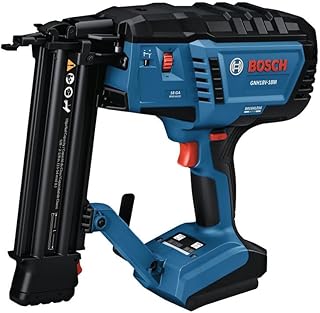


Milwaukee cordless nail guns are designed for users who want the convenience of battery-powered fastening without relying on a compressor, air hose or mains power. For UK tradespeople, contractors, installers, joiners, carpenters and serious DIY users, the most important decision is not simply choosing the highest-rated model. The right nailer depends on the nail gauge, fastener length, material, application, required finish, working environment and the Milwaukee battery platform already available in your tool collection.
Milwaukee's cordless nailer range is primarily built around its M18 battery system, with different nailer types aimed at different fastening jobs. An 18 gauge brad nailer is appropriate for relatively delicate trim and finishing work, while 15 gauge and 16 gauge finish nailers are better suited to applications where a larger, stronger fastener is required. Framing nailers occupy another category entirely, with substantially larger nails intended for structural and heavy-duty timber work.
Before comparing individual products, identify the type of fastening you actually perform most often. A premium framing nailer is not automatically a better choice for installing skirting boards, architrave or cabinet trim. Likewise, a compact brad nailer may be convenient for finishing work but unsuitable when a project requires the holding strength of a larger finish or framing nail.
An 18 gauge brad nailer is generally the most versatile option for detailed finishing applications where minimising visible holes and reducing the risk of splitting thin timber are priorities. Typical uses include attaching trim, mouldings, decorative timber, cabinet components, beading and other relatively light-duty materials.
The smaller diameter of an 18 gauge brad is useful when appearance matters. The fastener leaves a comparatively small entry point, making subsequent filling and finishing easier. However, the smaller nail is not intended to provide the same holding power as a larger finish or framing nail.
When comparing Milwaukee 18 gauge cordless nailers, pay particular attention to the available nail-length range, depth adjustment, trigger operation, dry-fire protection, magazine capacity and the way the tool balances when held at different angles. For repeated installation work, ergonomics can be just as important as headline specifications.
A 16 gauge finish nailer sits between lighter brad-nailing applications and heavier-duty fastening. It is particularly useful when you need more holding strength than an 18 gauge brad can provide while still wanting a relatively neat finish.
Applications can include skirting boards, door and window trim, interior joinery, larger mouldings and general finish carpentry. The thicker fastener provides additional mechanical strength, although the larger hole requires slightly more attention during finishing.
For UK renovation and carpentry work, a 16 gauge cordless finish nailer can be a practical all-rounder when the user frequently moves between different types of interior timber installation. Check the manufacturer's specified fastener range before purchase rather than assuming that all 16 gauge nails will be compatible.
A 15 gauge finish nailer uses a larger fastener than an 18 or 16 gauge tool and is intended for applications where greater holding power is important. These tools are commonly associated with substantial trim, heavier mouldings, door-related installation work and demanding finish carpentry.
The larger angled finish nail can offer a useful combination of penetration and holding strength, but it also produces a more noticeable hole than a brad nailer. For visible finished surfaces, select the nail size according to the material and joint rather than simply choosing the largest fastener available.
Framing nailers are designed for a completely different class of work. They use substantially larger nails and are intended for timber framing and other heavy-duty construction applications where speed and fastening strength are more important than the tiny entry hole associated with a brad nailer.
For UK users, a framing nailer can be relevant to timber construction, studwork, roofing-related timber applications, fencing and other substantial wood assemblies where the specified fastener is suitable for the job. Always check the project specification and applicable requirements before using a cordless framing nailer for structural work.
Nail gauge is one of the first specifications to check because it determines the general class of work for which the tool is intended. In the commonly used numbering system, a lower gauge number represents a thicker nail. Consequently, a 15 gauge finish nail is substantially heavier than an 18 gauge brad.
Do not judge a nailer solely by its gauge. The permitted nail-length range is equally important. A tool designed for shorter brads may not accept the longer fasteners needed for a particular installation, while a framing nailer operates within an entirely different fastener category.
Check the exact manufacturer's specification for the model you are considering and compare it with the nail lengths you already use. This can prevent an otherwise expensive purchase from becoming a poor fit for your existing consumables.
Battery compatibility can have a major effect on the overall value of a cordless nailer. Milwaukee's M18 cordless nailers are part of the M18 battery ecosystem, so existing M18 users may have a significant practical advantage when expanding their tool collection.
If you are new to the platform, remember that the advertised bare-tool price does not necessarily represent the complete cost of ownership. A cordless nailer may require a compatible battery and charger if you do not already own them.
Battery capacity can also influence the balance, weight and working time of the tool. A larger battery may provide more runtime but can make a compact finishing tool feel less nimble during prolonged overhead or awkward-position work.
Weight matters more with a nailer than many buyers initially expect. A tool can be perfectly capable on paper but uncomfortable when repeatedly held at shoulder height, above a workpiece or at arm's length.
Look beyond the bare-tool weight and consider the weight of the complete setup with the battery installed. Grip design, centre of gravity, magazine position and the relationship between the battery and tool body can all affect fatigue.
For occasional DIY use, a little additional weight may not be important. For professional installation work involving hundreds of fasteners, ergonomics can become a significant productivity factor.
Depth adjustment allows the user to control how deeply the fastener enters the material. This is particularly important for finish carpentry because a nail driven too deeply can create unnecessary surface damage, while insufficient penetration can leave the fastener proud of the material.
A good adjustment system should allow repeatable changes as material density, nail length and application requirements change. Always make test shots on scrap material before beginning visible work.
Dry-fire protection can help prevent unnecessary firing when the magazine is empty or nearly empty. This is useful because repeatedly cycling a nailer without a fastener can waste time and may contribute to unnecessary wear.
The exact behaviour of dry-fire protection varies by model, so check the manufacturer's operating instructions rather than assuming that every Milwaukee nailer works identically.
Magazine capacity affects how frequently you need to reload. A larger capacity can be helpful for repetitive work, while a compact magazine may contribute to easier handling in restricted spaces.
Also examine how straightforward the magazine is to load and whether the fastener strip is easy to inspect. Small usability details can become surprisingly important on long installation days.
Different nailers can provide different firing controls and operating modes. Depending on the application, sequential operation can prioritise control and deliberate placement, while contact-style operation may be useful for suitable high-volume applications when the specific tool supports it.
Use only the firing mode permitted by the tool's instructions and appropriate for the work. The ability to fire rapidly should never be treated as a substitute for correct nail placement, material selection or safe handling.
The principal attraction of a cordless nailer is freedom from an air compressor and hose. For installation work inside occupied homes, on renovation sites or in locations where transporting a compressor is inconvenient, this can simplify setup and movement around the work area.
A cordless system can also reduce the number of items that need to be positioned around a workspace. There is no compressor hose to drag across finished flooring and no requirement to locate a suitable mains supply for the compressor itself.
For tradespeople already invested in Milwaukee M18 tools, battery compatibility can make the decision particularly straightforward. Batteries and chargers can potentially serve multiple tools in the same ecosystem, subject to compatibility with the specific product and battery generation.
The choice between cordless and pneumatic equipment depends heavily on the working environment and usage pattern. Pneumatic nailers have long been popular in workshops and professional settings where compressed air is already available. Cordless nailers, by comparison, prioritise portability and rapid setup.
A cordless nailer does not necessarily eliminate all operating considerations. Batteries need to be charged, suitable replacement batteries may be required for intensive use, and the complete tool-and-battery weight should be considered before purchase.
Milwaukee is not the only established manufacturer competing in the cordless fastening market. Buyers may also encounter professional nailers from brands such as DeWalt, Makita, Bosch Professional and other established power-tool manufacturers.
The most sensible comparison is based on the complete battery ecosystem rather than brand reputation alone. If you already own several compatible cordless tools, staying within that platform can reduce the need to purchase additional chargers and batteries.
When comparing equivalent nailers, examine fastener compatibility, tool dimensions, weight with battery, adjustment controls, firing modes, warranty terms, availability of replacement parts and the manufacturer's support information. A familiar brand name should not replace a specification-by-specification comparison.
One of the most common mistakes is choosing a nailer based on appearance or price without checking the required fastener size. An 18 gauge brad nailer cannot simply be used as a substitute for a 15 gauge finish nailer when the project requires the larger fastener.
If you already own Milwaukee cordless tools, check exactly which batteries you have before purchasing a bare tool. Conversely, if you are entering the M18 system for the first time, calculate the cost of the nailer, battery and charger together.
More powerful does not automatically mean more suitable. A framing nailer can be excessive for delicate trim, while a small brad nailer may be inadequate for heavy timber. Match the nailer to the application.
Product specifications can make weight appear straightforward, but real handling depends on the battery fitted, centre of gravity and grip. If possible, physically handle the tool before committing to a purchase, particularly when it will be used for long periods.
A nailer is only useful if suitable nails are readily obtainable. Before purchasing, verify that the required gauge, length, finish and fastener type are available from retailers you normally use in the UK.
Fastener compatibility should always be confirmed using the manufacturer's specifications. Nail gauge, length, angle, collation and other characteristics can vary between nailers, so avoid buying large quantities of consumables until compatibility has been confirmed.
A finish nailer is generally more appropriate than a framing nailer for standard interior trim. The exact gauge should depend on the thickness and construction of the material, the required holding strength and the finish expected after filling and decorating.
An 18 gauge brad nailer can be useful for many cabinet, trim and light joinery tasks where a relatively small fastener is desirable. However, the correct fastening method depends on the joint and material, and a nailer should not be treated as a universal replacement for screws, dowels, adhesives or other joinery methods.
Heavier trim can benefit from a larger finish nail where the material and installation method call for additional holding power. Compare 15 gauge and 16 gauge options according to the specific work rather than selecting solely on the basis of nailer popularity.
A dedicated framing nailer is the appropriate category when a project requires framing nails. Check the nail diameter, length and fastening specification required by the construction method before selecting a tool.
Occasional users should place greater emphasis on versatility, ease of use and total ownership cost. Buying several specialised nailers may not make financial sense if each will only be used a few times. A suitable general-purpose finish or brad nailer may be more practical when it covers the majority of planned projects.
The battery is part of the working system, not merely an accessory. A cordless nailer with a larger-capacity battery may provide longer operating time between charges, but it can also add weight to a tool that is frequently held in one hand.
For repetitive professional work, owning more than one compatible battery can be more useful than relying on a single high-capacity battery. This allows one battery to charge while another is being used, provided the charging arrangement and available batteries suit the workload.
Always use batteries and chargers that the manufacturer specifies as compatible with the nailer. Avoid assuming that physical fit alone establishes compatibility.
Dust, wood debris and construction residue can accumulate around moving components and the magazine. Clean the tool according to Milwaukee's instructions and avoid allowing debris to build up around areas that affect fastener feeding or tool operation.
Check the magazine for damage and make sure fasteners are loading correctly. Bent or damaged fastener strips can contribute to feeding problems, so consumables should also be inspected before use.
Before operation, inspect the tool for obvious physical damage, loose components or other conditions that could affect safe operation. A cordless tool should not be used if its safety-related components are damaged or malfunctioning.
Maintenance procedures vary by model. The manufacturer's manual should take priority over generic advice, particularly for lubrication, internal servicing, troubleshooting and replacement components.
Remove batteries when the tool is not being used for extended periods where appropriate, and store and charge batteries according to Milwaukee's instructions. Protect batteries from conditions that can damage them, including excessive heat, moisture and physical impact.
A cordless nailer is a high-powered fastening tool and should be treated accordingly. Read the model-specific operating instructions before first use and wear appropriate personal protective equipment for the task and environment.
For construction or structural applications, the suitability of the chosen fastener and fastening method should also be confirmed against the relevant project requirements. A powerful nailer does not make an unsuitable fastener or fastening pattern acceptable.
When assessing products for a shortlist, avoid relying on a single star rating or headline feature. A more useful comparison considers the relationship between specifications and the buyer's actual workload.
Customer feedback can be useful, but it should be interpreted alongside technical specifications. Look for reviews from people performing similar work rather than assuming that every rating reflects the same use case.
Particularly useful review topics include feeding consistency, depth adjustment, battery runtime, handling, balance, ease of clearing jams, performance across different timber densities and long-term usability. Comments about packaging or delivery may be useful for a retailer decision but do not necessarily tell you whether the nailer itself is appropriate for professional work.
When researching current products, compare verified customer feedback with the manufacturer's published specifications and check whether reviews relate to the exact model and configuration being considered.
Milwaukee cordless nailers can be sold in different configurations depending on the market and retailer. A bare tool normally makes the most sense for users who already own compatible batteries and chargers. A kit can be more convenient for someone entering the relevant battery platform.
Before comparing prices, make sure you are comparing like-for-like packages. Two listings with apparently different prices may contain different battery capacities, chargers, cases or accessories.
For UK shoppers, also check the exact model designation, included equipment, manufacturer's warranty information and retailer terms before placing an order. Product configurations can change, and the contents of a package should be verified at the time of purchase.
Use the following checklist when comparing current Milwaukee cordless nailers in the UK. Product specifications, configurations and retailer pricing can change, so verify the details for the exact model before purchasing.
There is no single best Milwaukee cordless nailer for every UK buyer. The most suitable model depends primarily on the required nail gauge, fastener length, application and battery platform. An 18 gauge brad nailer can be a sensible choice for lighter finishing work, while 15 gauge, 16 gauge and framing nailers address progressively different fastening requirements.
Milwaukee offers cordless nailers designed for demanding applications, but suitability depends on the particular model and job. Professional users should compare the manufacturer's specifications, permitted fasteners, expected workload, ergonomics and service considerations before choosing a tool.
No. Milwaukee cordless nailers are designed to operate from compatible rechargeable batteries rather than requiring a separate pneumatic compressor and air hose.
Many Milwaukee cordless nailers are part of the M18 system, but compatibility should always be checked against the exact model and battery specification. Do not rely solely on the general M18 branding when purchasing a specific tool.
Neither is universally better. An 18 gauge nailer is generally better suited to smaller, lighter finishing fasteners where a less conspicuous hole is desirable. A 16 gauge nailer uses a larger fastener and can provide greater holding strength for suitable applications.
A 15 gauge nailer uses a thicker, heavier finish nail than an 18 gauge brad nailer. The 15 gauge option is therefore intended for applications requiring more substantial fastening, while an 18 gauge tool is generally preferred when working with lighter trim and when a smaller entry hole is advantageous.
A nailer can dramatically speed up repetitive fastening, but it does not replace every function of a hammer. Manual fastening remains useful for specialised situations, adjustment work, small repairs and applications where a nailer is unsuitable or unavailable.
No. A brad nailer is designed for smaller fastening applications and should not be substituted for a framing nailer where larger structural fasteners are specified.
A bare tool can make sense when you already own compatible Milwaukee batteries and a suitable charger. If you do not have the required battery platform, compare the total price of a complete kit against the combined cost of purchasing the bare tool, battery and charger separately.
Choose according to your working environment. Cordless models are particularly convenient where portability and quick setup matter. Pneumatic nailers can remain attractive for users who already have a compressor and spend much of their time in a workshop or fixed installation environment.
Check the exact model, nail gauge, compatible nail lengths, battery requirements, weight, firing modes, depth adjustment, magazine design, safety features, manufacturer's warranty information and the availability of compatible fasteners. Also compare the complete kit contents and current retailer pricing before purchasing.
The best Milwaukee cordless nail gun for a UK buyer is the one that matches the fastening job rather than simply the model with the strongest specifications or highest headline rating. Start with the nail gauge and application, then narrow the choice using fastener length, battery compatibility, tool balance, depth adjustment, magazine design and overall ergonomics.
For users already invested in Milwaukee M18 tools, battery compatibility can be a major practical advantage. For new cordless-tool buyers, however, it is worth comparing the complete platform cost and considering whether other established ecosystems better match the tools already owned or planned for future purchases.
Before buying, verify the current specifications for the exact Milwaukee model, confirm that the required fasteners are available in the UK, compare bare-tool and kit configurations, and read verified customer feedback alongside manufacturer information. Prices, retailer stock, package contents and product availability can change during 2026, so check the current listing immediately before purchase.