

♥ Wishlist
Compare 23 verified Cordless Nail Guns products in United Kingdom. Reviews, ratings, pros, cons and buying advice updated for October 2026.


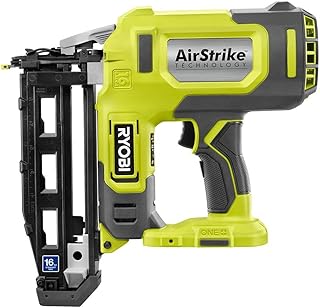


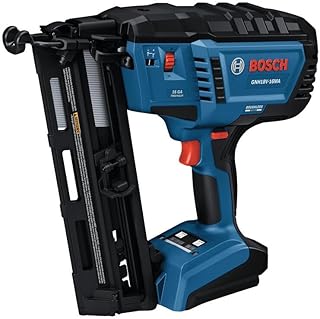

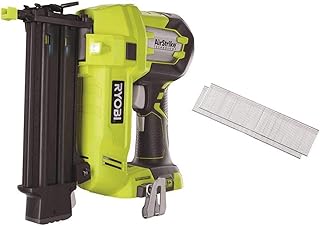

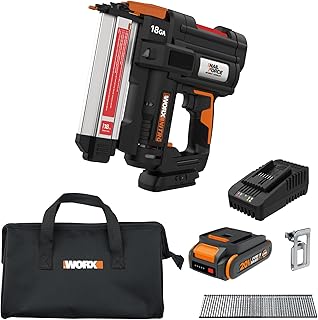
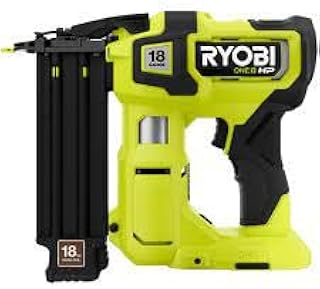
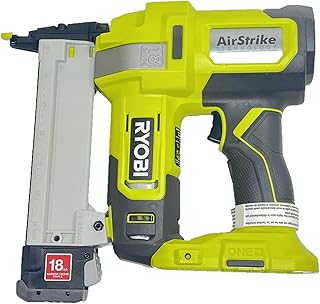


A cordless nail gun can make repetitive fixing work considerably faster than using a hammer, particularly when installing timber trim, skirting boards, architraves, panelling, flooring components or other suitable materials. The important point is that the best cordless nail gun is not simply the model with the highest claimed power or the largest magazine. Nail size, fastener compatibility, material thickness, firing control, battery platform, handling and the type of work you regularly undertake all influence whether a particular tool is genuinely suitable.
For UK buyers, compatibility deserves particular attention because nail guns sold under similar descriptions can use very different fastener systems. A compact 18-gauge brad nailer, for example, is intended for much finer finishing work than a framing nailer. Likewise, a tool described as cordless may use a rechargeable battery, a proprietary fuel system or another operating mechanism. Always check the manufacturer's specifications for the exact model before buying.
This 2026 buying guide is designed to help you compare top-rated cordless nail guns by the factors that matter in real-world use. Rather than treating customer ratings as the only indicator of quality, consider the complete combination of fastening performance, control, ergonomics, consumable availability, battery compatibility and long-term practicality.
A cordless nail gun is a portable powered nailer that does not require a mains power cable during operation. Depending on the design, the driving mechanism may use a rechargeable battery, a battery combined with a fuel cell, or another manufacturer-specific system.
Cordless models are particularly useful where moving around a room, working outdoors or climbing and repositioning frequently would make a corded tool inconvenient. Removing the air hose also makes them more portable than pneumatic nailers, although cordless tools can be heavier because the motor, battery and driving mechanism are integrated into the tool.
Different cordless nailers are designed around different nail types and applications. A finishing nailer is not a substitute for a framing nailer, and a brad nailer should not be selected simply because it is compact and easy to handle. The fastener system must match the job.
18-gauge cordless brad nailers are among the most useful options for detailed finishing work. They generally accept relatively thin brads that leave smaller holes than heavier nails, making them appropriate for applications where appearance matters.
For finish carpentry, the ability to adjust driving depth can be more valuable than maximum driving force. A nailer that consistently places the fastener at the correct depth can reduce filling and sanding work.
16-gauge finish nailers use thicker fasteners than typical brad nailers and are intended for applications requiring a stronger mechanical fixing. They can be useful for heavier trim and joinery where an 18-gauge brad is not appropriate.
Because the nails are larger, the resulting holes can be more noticeable. This makes depth adjustment, firing consistency and correct nail selection particularly important when working on visible finished surfaces.
15-gauge angled finish nailers are designed for heavier finishing applications. The angled magazine can make it easier to reach certain corners and awkward positions, depending on the tool design.
They are often considered when working with substantial mouldings, door casings and similar timber components. However, their larger fasteners are not automatically better for every application. Using a nail that is unnecessarily large can split delicate timber or leave a larger visible hole.
Cordless framing nailers are designed for substantially heavier construction work. They use larger framing nails and are intended for suitable structural or heavy-duty timber applications specified by the manufacturer.
A framing nailer should not be selected for ordinary decorative trim merely because it offers greater driving power. The size and force of framing fasteners can be excessive for delicate materials.
Some cordless fastening tools are designed to accept staples rather than conventional nails, while combination tools may support more than one fastening format. These can be useful for specialist applications, but compatibility must be checked carefully.
Never assume that a tool can accept a particular nail or staple simply because the fastener appears physically similar. The permitted gauge, length, angle, collation and fastening type should be confirmed against the manufacturer's specification.
The first specification to check is the fastener range. Gauge describes the thickness of the nail, while length determines how deeply the fastener can penetrate suitable material.
For example, an 18-gauge brad nailer and a 16-gauge finish nailer may both be marketed for woodworking, but they are designed around different fasteners and provide different levels of holding power. The correct choice depends on the joint, material and finish required.
Check the complete supported range rather than focusing on a single maximum nail length. A tool that accepts a broad range of appropriate fasteners may be more versatile for mixed projects, provided its performance remains suitable across that range.
Depth adjustment allows the user to control how far the nail is driven into the workpiece. This is particularly important when working with finished timber, where a nail driven too deeply can create an unnecessary depression.
A nail sitting proud of the surface can interfere with finishing, while excessive driving can damage the timber or make filling more difficult. A good depth-adjustment system should therefore be easy to understand and sufficiently precise for the intended application.
Different nailers offer different trigger modes. Sequential firing generally requires a deliberate sequence of controls for each fastener and is useful when precise placement is the priority. Contact or bump firing can be faster for repetitive work when supported by the tool and appropriate for the application.
For occasional DIY work, controllable sequential firing may be more important than maximum firing speed. Professional users carrying out repetitive fastening may place greater value on rapid operation, provided the selected firing mode is appropriate and used safely.
Fastener jams can interrupt work and become frustrating when the nose assembly is difficult to access. A tool with a straightforward jam-clearing mechanism can save time during longer projects.
Look for clear access to the nose area and an operating procedure that is easy to follow. Always disconnect or remove the battery according to the manufacturer's instructions before clearing a jam or performing maintenance.
Magazine capacity determines how frequently you need to reload. A larger capacity can be useful for repetitive work, but it can also contribute to overall tool size and weight.
For occasional DIY projects, an enormous magazine may provide little practical benefit. For installation work involving hundreds of fasteners, reducing reload frequency can make the workflow considerably smoother.
A dry-fire lockout prevents the nailer from firing when the magazine is empty or nearly empty, depending on the design. This can reduce unnecessary trigger operation and help protect the workpiece from repeated firing attempts.
When comparing models, check whether the tool includes a dry-fire mechanism and whether the manufacturer explains how it operates.
Battery compatibility can be one of the most important buying decisions. If you already own compatible cordless tools, staying within the same battery ecosystem can reduce the need to purchase additional batteries and chargers.
Major power-tool manufacturers such as DeWalt, Makita, Milwaukee, Bosch and Ryobi offer cordless platforms with different battery systems and tool ranges. Compatibility is normally specific to the manufacturer's platform, so a battery that physically resembles another pack should not be assumed to be compatible.
When comparing a bare tool with a kit, check exactly what is included. A bare nailer may be less expensive initially, but the total cost can be considerably different if you also need a compatible battery and charger.
Battery runtime depends on the nailer, battery capacity, fastener size, material, firing frequency and operating conditions. A larger-capacity battery may provide longer runtime but can also add weight.
For short DIY jobs, portability and balance may matter more than maximum battery capacity. For prolonged installation work, having additional compatible batteries can be more practical than relying on one large battery.
Some modern cordless nailers use brushless motors. Brushless designs can offer efficiency and reduced routine brush maintenance compared with brushed motor systems, although the presence of a brushless motor alone does not establish that one nailer is better for every application.
Consider the complete tool design, including driving mechanism, balance, control electronics, battery system and serviceability, rather than treating motor technology as the sole measure of quality.
There is no single power rating that makes a cordless nail gun suitable for every job. Driving requirements vary according to nail gauge, nail length, timber density and the application.
A compact brad nailer needs to perform differently from a heavy-duty framing nailer. Selecting excessive power for delicate work can be counterproductive because the fastener can be driven too deeply or the material can be damaged.
Instead of asking which nail gun has the most power, ask whether the model can reliably drive the required fasteners into the intended material to the required depth. Manufacturer specifications and application guidance are more useful than a generic power comparison.
A pneumatic nailer can still make sense for a workshop where an air compressor is already available. A cordless model tends to be more attractive when portability, convenience and freedom from hoses are the main priorities.
Mains-powered tools can provide continuous operation without waiting for a battery to recharge, but the power cable limits movement and requires a suitable electrical supply. Cordless nailers trade unlimited mains operation for portability.
For installation work around a property, cordless operation can be significantly more convenient. For a fixed workshop station where portability is unimportant, the advantages may be less significant.
One of the easiest ways to avoid unnecessary expense is to consider your existing cordless tools before selecting a nailer. If you already use an 18V or 20V-class battery platform from a major manufacturer, investigate whether the brand offers a compatible nail gun.
Do not compare voltage figures alone. Battery chemistry, connector design, electronic communication and platform compatibility all matter. A manufacturer's nominal voltage terminology may also differ from another brand's marketing terminology.
It is also worth comparing bare-tool and complete-kit versions. If you already have several compatible batteries and a charger, a bare tool may make more financial sense. If you are entering a new battery platform, a kit containing the necessary battery and charger may be more convenient.
A nail gun may look excellent on paper but still be uncomfortable if its weight distribution does not suit the intended work. Battery position, handle shape, grip angle, trigger design and magazine placement all influence fatigue.
For overhead work, a lighter and well-balanced tool can be preferable to a heavier model with additional features that are rarely used. For repetitive bench work, balance and trigger comfort may matter more than overall compactness.
Consider how the nailer will actually be held. A tool that feels manageable for a few test shots may become tiring after several hundred fasteners.
Integrated LED lights can be useful when working in cupboards, corners, under furniture or in other poorly illuminated areas. Their value depends on placement as well as brightness.
A light positioned close to the nose can help illuminate the fastening area. However, an LED does not replace appropriate general lighting. The workpiece, fastener position and surrounding area should remain clearly visible during use.
The nose assembly determines how the tool contacts the workpiece and can influence placement accuracy. A well-designed contact point can make it easier to position fasteners consistently along trim and joinery.
Trigger design also affects control. A smooth, predictable trigger can be useful when installing visible mouldings where every nail position matters.
Some nailers include features intended to prevent firing unless the nose is correctly engaged with the workpiece. These mechanisms can help with controlled operation, but the exact behaviour varies by model and should be understood before use.
The nail gun and fasteners should be treated as a system. Even an excellent nailer cannot compensate for the wrong nail type, length or material.
Brad nails are commonly used for lighter finishing and woodworking applications. Their relatively small diameter can reduce visible holes, making them useful where appearance is important.
Finish nails provide greater holding power than lighter brads and are appropriate for suitable heavier trim and joinery applications. The larger fastener requires greater care around edges and delicate timber.
Galvanised fasteners can offer increased resistance to corrosion compared with untreated steel fasteners, depending on the galvanising process and environment. For outdoor or damp applications, always check whether the nailer's manufacturer and fastener manufacturer specify the product for that environment.
Stainless steel nails are selected for applications where corrosion resistance is particularly important. They can be relevant to certain outdoor, coastal or moisture-exposed projects, but the precise grade and suitability should be confirmed for the environment.
Choosing a nailer because it has excellent general reviews without checking the required gauge is a common mistake. Start with the fasteners required for the project and work backwards to the nailer.
A tool's maximum nail length is only part of the specification. You should check its full supported range and confirm that the lengths you actually need are included.
More driving force is not automatically better. Decorative timber can be damaged by excessive penetration, while the wrong nail size can weaken or split a component.
A bare tool can appear attractive when compared with a complete kit. Before comparing prices, establish whether you already own a compatible battery and charger.
A heavy nailer may be acceptable for short jobs but uncomfortable for prolonged installation. Weight becomes especially important when working above shoulder height or repeatedly repositioning the tool.
Battery operation describes the power source, not the overall durability or intended workload. Check the manufacturer's stated application, construction, specifications and service information before selecting a tool for demanding professional use.
A nailer is only useful if appropriate fasteners are readily obtainable. Before buying, confirm the correct nail specification and consider the availability and cost of compatible consumables from reputable suppliers.
When comparing several highly rated models, use a consistent checklist rather than relying solely on the headline rating.
This approach helps distinguish a genuinely suitable tool from a highly rated model that simply does not match your intended application.
For occasional DIY users, ease of use can be more important than maximum performance. A suitable model should be straightforward to load, easy to adjust and comfortable enough for the expected project.
DIY users should also consider whether the battery platform will be useful beyond the nailer. Buying into a platform that includes drills, impact drivers, saws and other tools can make the battery investment more useful over time.
If the nailer will only be used for a single small project, however, buying an expensive professional platform may not be the most economical choice. Compare the complete cost of ownership rather than the nailer alone.
Professional users typically need consistent fastening performance, dependable handling and a battery system that supports the workload. Downtime can be more significant on a working site than it is during occasional home improvement.
Professional buyers should pay particular attention to durability, service arrangements, consumable availability, battery options, tool balance and the manufacturer's technical documentation. A model with a strong specification but limited suitability for your particular workload may be less useful than a simpler tool designed around the correct application.
Softwood can generally be easier to penetrate, but excessive driving force may leave noticeable depressions or damage the surface. Test the depth setting on an offcut before beginning visible work.
Harder timber can require more driving force and may behave differently around edges. The nail size and tool should be appropriate for the specific material and application. Avoid assuming that increasing the nail length will solve a fastening problem.
Engineered boards can respond differently from solid timber. Fastener placement, edge distance and nail selection become particularly important because excessive force can damage edges or create poor holding characteristics.
For trim, the goal is usually secure attachment with minimal visible damage. This makes accurate positioning, suitable gauge, controlled depth and an appropriate nail length particularly important.
Nail guns are powerful fastening tools and should be treated as such. Read the manufacturer's instructions before operation and use the protective equipment specified for the tool and task.
For construction work, also consider the requirements of the particular work environment, employer procedures and applicable UK health and safety obligations.
Even a high-quality nailer requires correct technique. Start by testing the selected fastener and depth setting on a scrap piece of the same or similar material.
Position the nose squarely against the workpiece where appropriate and maintain consistent pressure. Avoid firing at an extreme angle unless the tool and application are specifically designed for it.
For visible trim, establish a consistent fastening pattern before starting. Keeping nail positions reasonably uniform can make the finished installation look more professional and can simplify filling and decorating.
Dust, wood debris and other contaminants can accumulate around the magazine and nose assembly. Follow the manufacturer's cleaning instructions and avoid introducing unsuitable lubricants or cleaning products.
Regularly check the contact area, magazine and fastener path for damage or accumulated debris. If the tool begins behaving differently, stop using it and consult the manufacturer's troubleshooting or service guidance.
Use and store batteries according to the battery manufacturer's instructions. Protect battery packs from inappropriate temperatures, moisture, impact and other conditions that can cause damage.
Keep nails dry and protected from contamination. Damaged, bent or unsuitable fasteners can contribute to jams and poor fastening results.
Product specifications can look complicated, but several figures are particularly useful when comparing models.
When researching the UK market, it is sensible to compare established power-tool manufacturers alongside the exact model specifications. Brands commonly associated with cordless power tools include DeWalt, Makita, Milwaukee, Bosch, Ryobi, Hikoki and Metabo, although the availability and suitability of individual nailers can vary by model and market.
Brand familiarity should not replace model-level comparison. A manufacturer may produce several nailers aimed at completely different applications, battery systems and user groups. Always compare the actual specifications of the individual tool.
Customer ratings can provide useful evidence about recurring ownership issues, but they should be interpreted carefully. A high average rating does not necessarily mean a nailer is suitable for your project.
Look beyond the headline score and examine recurring comments about battery consumption, nail compatibility, feeding reliability, depth consistency, ergonomics and ease of adjustment. Give greater weight to reviews describing the actual application and materials being used.
Also distinguish between comments about the tool itself and complaints caused by incorrect nails, unsuitable materials or incorrect settings. Reviews are most useful when they are considered alongside the manufacturer's specifications.
The cheapest cordless nail gun is not necessarily the lowest-cost option over its useful life. Consider the nailer, batteries, charger, consumables and any accessories required to complete the work.
A more expensive model may provide better value if it integrates with batteries you already own or if its specifications better match frequent use. Conversely, paying for advanced professional features can be unnecessary if the tool will only be used for occasional home projects.
When checking current UK prices, compare like-for-like configurations. A bare tool, a kit with one battery and a kit containing multiple batteries are not directly equivalent purchases.
For skirting-board installation, the appropriate nailer depends on the thickness and type of skirting, the substrate and the manufacturer's recommended fastening method. A finish nailer may be appropriate for heavier timber components, while a brad nailer can be better suited to lighter trim and finishing tasks.
Do not select the nailer solely from the name of the application. Check the fastener length and gauge against the actual material and fixing requirements.
Architrave typically benefits from controlled fastening because the timber remains visible after installation. A finish nailer can provide stronger fastening than a small brad nailer, but the appropriate gauge and nail length depend on the material.
Depth adjustment is particularly useful because excessive penetration can create depressions that require additional filling and decorating.
For decorative trim, precision is usually more important than maximum driving force. Consider a nailer's gauge, depth adjustment, nose design and handling characteristics.
An 18-gauge brad nailer may be appropriate for lighter decorative work, while a heavier finish nailer may be more suitable for substantial mouldings. Always follow the requirements of the particular material and installation method.
Furniture and cabinet work generally benefits from compact handling and relatively fine fasteners. A brad nailer can be useful for suitable applications where small fastening holes are desirable.
Accuracy is important because excessive penetration or incorrectly positioned nails can damage finished surfaces. Use scrap material to establish the correct depth before working on the final component.
Construction applications may require a framing or heavy-duty finish nailer rather than a compact brad nailer. The correct tool depends on the structural role of the fastener, timber dimensions and the specified fastening method.
For structural work, do not substitute a general-purpose nailer simply because it can physically drive a nail into the material. Follow the relevant design, building and manufacturer's requirements for the application.
For many DIY users and professionals, cordless nail guns can be worthwhile because they combine portability with rapid fastening. Their strongest advantage is convenience: there is no compressor to transport for battery-operated designs and no air hose to manage.
The trade-off is that cordless nailers can be heavier and depend on battery capacity. The best value comes when the tool's capabilities closely match your workload and, ideally, its battery platform is already useful for other tools.
A cordless nailer may not be the best option if you already have a well-equipped workshop with a suitable compressor and pneumatic tools. It may also be unnecessary for very occasional projects where manually driving a small number of fasteners is simpler.
Likewise, a compact finishing nailer should not be used as a substitute for equipment specifically designed for heavy structural fastening. Choosing the correct tool category is more important than choosing the most powerful cordless model.
If you expect to use a cordless nailer regularly, consider the wider system rather than purchasing the nailer in isolation.
For frequent work, an additional compatible battery can be more useful than buying a second nailer. Keeping one battery charged while the other is in use can reduce interruptions, provided the batteries are approved for the tool.
The cordless power-tool market changes frequently, with manufacturers introducing updated battery platforms, revised tool designs and new kits. Consequently, the exact configuration of a product can matter as much as the underlying nailer.
When comparing products in the UK, check the current model number, included accessories, battery configuration, compatible fasteners and retailer information immediately before purchase. Specifications and kit contents can change independently of the general product name.
Also check that the product is intended for the UK market and that the supplied charger and electrical configuration are appropriate for UK use. Do not rely solely on photographs because similar-looking tools can be supplied in different configurations.
There is no single best cordless nail gun for every UK buyer. The right choice depends primarily on the required nail gauge, nail length, application, material, battery platform, workload and budget. A high-quality brad nailer may be ideal for trim but unsuitable for framing, while a framing nailer may be excessive for delicate finishing work.
Many cordless nailers are designed to provide sufficient driving performance for their intended applications. The relevant question is whether the specific model supports the required fastener and material combination. Always check the manufacturer's specifications rather than judging suitability from battery voltage alone.
Neither system is universally better. Cordless nailers offer portability and eliminate the need for a compressor and air hose, while pneumatic systems can be attractive in workshops where compressed air is already available. Your working environment and frequency of use should determine the choice.
18-gauge brad nailers are commonly considered for lighter trim and fine woodworking, while 16-gauge and 15-gauge finish nailers are used for heavier finishing applications. The correct choice depends on the specific trim, material and fastening requirements.
A nail gun can dramatically speed up repetitive fastening, but it does not replace a hammer for every task. A hammer remains useful for applications requiring manual positioning, adjustment, removal or different types of fasteners.
A battery-operated cordless nailer does not require an air compressor. However, some cordless fastening systems use different operating mechanisms, so check the specifications of the exact model before purchase.
No. Fasteners must meet the nailer's specified gauge, length, collation and other compatibility requirements. Using unsuitable nails can cause jams, inconsistent fastening or damage to the tool.
Brushless technology can provide advantages in efficiency and motor design, but it does not automatically make a nailer the best choice. Compare the complete specification, including fastener compatibility, driving performance, weight, battery system, controls and intended application.
If you already own compatible batteries and a charger, a bare tool can be practical. If you are new to the battery platform, a kit containing the required battery and charger may be more convenient. Compare the complete purchase rather than the advertised tool-only price.
Runtime varies according to battery capacity, tool design, fastener size, firing frequency and material. There is no universal runtime figure that applies to every cordless nailer. For demanding work, carrying an additional compatible battery can be more practical than relying on a single pack.
Some cordless nailers are specifically designed for framing applications. A standard brad or finish nailer should not be treated as a framing tool simply because it can drive nails into timber. Use a dedicated framing nailer when the application calls for framing fasteners and follow the applicable technical requirements.
Maintenance requirements vary by model. Clean and inspect the tool according to the manufacturer's instructions, paying attention to the magazine, nose assembly, fastener path and battery connections. Do not introduce lubricants unless the manufacturer specifies that they are required.
Possible causes include an unsuitable fastener, incorrect depth setting, material characteristics, insufficient driving performance for the selected nail or a mechanical issue. Check the manufacturer's troubleshooting guidance and confirm that the nail size is within the tool's specified range.
Jams can result from incorrect or damaged fasteners, loading problems, unsuitable nail specifications, debris or a mechanical fault. Stop operating the tool and follow the manufacturer's safe jam-clearing procedure. Do not continue firing a tool that appears damaged or unsafe.
The best top-rated cordless nail gun for your needs is the one that matches the fastening job rather than simply the one with the highest rating or most impressive specification. Start with the required nail type and size, then compare compatible models for driving control, depth adjustment, battery compatibility, weight, magazine capacity and handling.
For UK buyers, the battery ecosystem deserves particular attention. If you already own compatible DeWalt, Makita, Milwaukee, Bosch, Ryobi, Hikoki or Metabo tools, a suitable nailer within that platform may provide better overall value than starting another battery system. However, always verify exact model and battery compatibility before purchasing.
Finally, compare the complete package: nailer, battery, charger, consumables and intended workload. Check current UK specifications and kit contents before ordering, and use verified customer feedback as supporting evidence rather than as a substitute for technical specifications. Taking this approach makes it much easier to narrow down the cordless nail guns that genuinely fit your projects in 2026.