



♥ Wishlist
Compare 28 verified Cordless Caulking Guns for Fast, Precise Sealing products in United Kingdom. Reviews, ratings, pros, cons and buying advice updated for October 2026.


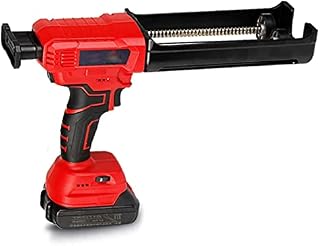


A cordless caulking gun can make a noticeable difference when a project involves long runs of sealant, adhesive or mastic. Instead of repeatedly squeezing a manual trigger, the powered mechanism advances the plunger at a controlled rate, helping reduce hand fatigue and making it easier to maintain a consistent bead. For UK users, the right choice depends on much more than battery voltage or brand name. Cartridge compatibility, dispensing force, speed control, battery ecosystem, anti-drip behaviour and overall handling can all affect whether a model is genuinely suitable for your work.
The best cordless caulking gun for occasional DIY use is not necessarily the best option for a tradesperson using construction adhesive throughout the day. Similarly, a high-force model designed for thick adhesives may be unnecessarily heavy for bathroom sealant or decorating work. This guide therefore focuses on the practical specifications that matter when comparing cordless sealant guns in the United Kingdom.
A cordless caulking gun is a battery-powered dispensing tool designed to push material from a cartridge, foil pack or other compatible container through a nozzle. An electric motor drives a plunger or rod, replacing the hand pressure required by a conventional manual caulking gun.
The tool is commonly used with products such as silicone sealant, decorator's caulk, grab adhesive, construction adhesive, polyurethane sealants and other compatible compounds. The exact materials supported vary between models, so cartridge format and material viscosity should always be checked against the manufacturer's specifications before purchase.
Most cordless models provide some form of variable-speed control. This allows the user to regulate how quickly material is delivered and makes it easier to adapt the tool to different sealants and applications.
Dispensing force is one of the most important specifications when comparing cordless caulking guns. Manufacturers may express it in newtons, abbreviated as N. A higher force rating generally indicates that the mechanism is capable of pushing more resistant materials, although the rating alone does not tell you exactly how a tool will behave with every sealant.
For relatively soft silicone or decorator's caulk, extreme dispensing force may not be necessary. Thick construction adhesive, polyurethane products and other high-viscosity materials can require substantially more effort. Choosing a tool with insufficient force can result in slow material delivery, motor strain or difficulty maintaining a smooth bead.
Conversely, maximum force should not be treated as a simple measure of overall quality. A very powerful tool can be less convenient for delicate finishing work if its speed control is not sufficiently precise.
Speed control is particularly important when working with different sealants. A slow dispensing rate gives the user more time to position the nozzle and maintain a clean bead, while faster settings can be useful when covering long joints.
Look for a trigger or control system that allows fine adjustment rather than relying solely on a small number of fixed speed settings. Precise control is especially helpful around corners, fixtures, window frames, sanitaryware and finished surfaces where excess sealant can create additional cleaning work.
Sealant continuing to emerge after the trigger is released can create unwanted blobs and make finishing more difficult. Many powered caulking guns use an automatic pressure-release or rod-retraction system intended to reduce this problem.
Anti-drip performance is worth considering when comparing otherwise similar models. It can reduce material waste and make it easier to move between sections without leaving sealant behind. The effectiveness of the system can vary according to the material, pressure, nozzle size and dispensing mechanism.
Battery voltage is useful when comparing tools, but it should not be considered in isolation. A cordless caulking gun can be a particularly attractive purchase if it uses batteries you already own for other power tools.
For example, users already invested in a Makita, DeWalt, Milwaukee, Bosch, Ryobi, Metabo or Einhell cordless platform may prefer a compatible tool where an appropriate caulking gun is available within that ecosystem. Using existing batteries can reduce the need to purchase another charger and battery system.
Always check the exact battery compatibility rather than assuming that tools carrying the same brand name accept every battery in that manufacturer's range. Battery generations, voltage platforms and physical interfaces can differ.
Battery capacity is commonly expressed in ampere-hours, or Ah. A higher Ah rating generally provides greater stored energy, although actual runtime depends heavily on dispensing force, material viscosity, speed setting, temperature, battery condition and workload.
A compact battery may be preferable for decorating or occasional DIY because it can keep the tool lighter. A larger-capacity battery can make more sense for extended professional use where changing batteries frequently would be inconvenient.
Before buying any cordless caulking gun, check which container formats it accepts. Many tools are designed around standard cartridges, but not every model supports every size or dispensing system.
Some professional dispensing tools can accommodate different cartridge lengths or capacities, while certain models may require specific holders, plungers or accessories. If you regularly use more than one type of sealant, broad compatibility can be more valuable than a higher headline force rating.
If your work involves foil sausage packs as well as conventional cartridges, confirm whether the gun supports them and whether the necessary conversion equipment is included. Sausage packs can reduce packaging waste and are common in some professional applications, but compatibility varies considerably between tools.
Do not assume that a cartridge gun can accept a foil pack simply because the physical dimensions appear similar. The plunger, holder and dispensing arrangement must be designed for the relevant container format.
The drive mechanism transfers motor power to the sealant container. A well-designed mechanism should deliver controlled movement without excessive vibration, binding or inconsistent pressure.
When comparing models, consider the construction of the plunger rod, rack or drive system, the way pressure is released and how easily the rod can be retracted when changing cartridges. These details may not receive as much attention as battery voltage, but they can have a substantial impact on day-to-day usability.
For bathroom and kitchen sealing, precise low-speed control can be more important than extreme dispensing force. Silicone is usually applied around sinks, baths, shower trays, worktops and other fixtures where a clean and controlled bead is essential.
A manageable tool with good trigger control can be preferable to a heavy high-force model. Weight also matters because awkward positions around fixtures can make a bulky tool difficult to control.
Window and door work can involve long continuous beads and materials with different viscosities. A cordless sealant gun with dependable speed adjustment can help maintain a consistent application rate over longer sections.
Consider battery capacity, ergonomics and cartridge compatibility if the tool will be used repeatedly during installation work.
Construction adhesives can be substantially more resistant to dispensing than some household sealants. If the primary purpose is adhesive application, a high-force cordless model may be more appropriate than a lightweight tool intended mainly for silicone.
Check the adhesive manufacturer's dispensing recommendations as well as the caulking gun's maximum force. A suitable nozzle and correct cartridge configuration are also essential for reliable application.
For occasional decorating, a cordless caulking gun should ideally be easy to load, comfortable to hold and simple to control. Maximum force may be less important than low-speed precision and compact handling.
DIY users should also consider the cost of batteries and chargers if they do not already own tools from the same cordless platform.
Professional users should assess the complete system rather than focusing on one specification. Frequent cartridge changes, long working sessions and demanding materials make ergonomics, battery availability, reliability, dispensing force and maintenance particularly important.
A trade-focused buying decision may justify a larger investment if the tool saves physical effort and improves productivity across repeated jobs. However, the most powerful option is not automatically the most appropriate for every trade.
A manual caulking gun remains a practical choice for occasional applications, especially when only a small amount of sealant is required. It is simple, does not need charging and is generally inexpensive to operate.
A cordless model becomes more attractive when dispensing is frequent, the material is difficult to push or hand fatigue is a concern. Powered dispensing can also make maintaining a consistent flow easier for some users.
Cordless models offer greater freedom of movement and eliminate the need to locate a mains socket or manage an extension lead. This can be particularly useful on construction sites, exterior work and unfinished properties.
Corded equipment can provide continuous operation without battery changes, but the cable can restrict movement and become inconvenient around ladders, scaffolding or partially completed rooms.
For most mobile applications, cordless operation is convenient. For a fixed workshop environment where uninterrupted runtime is more important than portability, the advantages may be less significant.
There is no single force rating that is ideal for every user. The appropriate level depends on the material being dispensed, nozzle size, temperature, cartridge format and desired application speed.
Remember that a sealant can become harder to dispense in colder conditions. Material temperature, cartridge age and nozzle size can all influence the required force.
A high maximum dispensing rate may sound attractive, but excessive speed can make finishing more difficult. If sealant exits the nozzle faster than the user can move the gun, the bead can become oversized or uneven.
Fine low-speed adjustment allows the operator to match material flow to hand movement. This is particularly important for visible joints where appearance matters.
When comparing specifications, therefore, look for a combination of useful maximum speed and controllable minimum speed rather than selecting solely on the highest stated output.
A cordless caulking gun can become tiring if it is front-heavy, bulky or difficult to grip. The cartridge and battery can add considerable weight, particularly with larger professional models.
Pay attention to handle shape, trigger position, balance, battery location and overall length. A well-balanced tool can be easier to guide along a joint and may reduce wrist movement during prolonged use.
If you frequently seal overhead or work from ladders, weight becomes even more significant. A lighter tool can be easier to manoeuvre, although this should be balanced against the dispensing force and battery capacity required for the job.
A good cordless caulking gun should make cartridge changes straightforward. The holder should securely retain the cartridge while allowing the user to remove an empty container without unnecessary effort.
The nozzle has a direct influence on the finished bead. Cutting the nozzle too wide can result in excessive material, while an opening that is too small can restrict flow and increase the pressure required from the dispensing system.
For neat work, cut the nozzle at a suitable angle and size for the joint. Make a clean cut rather than crushing the opening, and use the gun's speed control to match the material flow to the movement of the nozzle.
The best cordless caulking gun cannot compensate completely for an incorrectly prepared nozzle or poorly prepared joint. Application technique remains an important part of achieving professional results.
If you already own several cordless tools, choosing a caulking gun from the same battery family can be financially and practically sensible. Existing batteries can potentially be shared between compatible tools, while an established platform may offer multiple battery capacities and chargers.
Major power-tool ecosystems associated with brands such as Makita, DeWalt, Milwaukee, Bosch, Ryobi and Metabo can be worth considering when available caulking equipment matches your requirements. Einhell is another established cordless tool brand with a broad battery-platform approach.
Always verify the exact model and voltage platform. Brand compatibility should never be assumed solely from the appearance of a battery or from the brand name.
Cordless power tools are often sold either as complete kits containing a battery and charger or as bare tools supplied without them. The better option depends on what you already own.
Not every sealant or adhesive should be used with every dispensing tool. Product viscosity, packaging format and manufacturer recommendations matter.
Before using a cordless caulking gun, check the sealant or adhesive packaging for recommended dispensing equipment. Some products may require a specific pressure capability, nozzle arrangement or cartridge system.
Do not modify plungers or holders simply to make an incompatible cartridge fit. A correct mechanical fit is essential for safe and predictable dispensing.
A higher voltage does not automatically mean a better caulking gun. Motor performance, gearing, dispensing force, speed control and mechanical design all contribute to how the tool performs.
A powerful tool is of limited value if it cannot accept the sealants or adhesives you regularly use. Always check container dimensions and supported formats before buying.
High dispensing force is useful for demanding materials, but precision is equally important. A tool with excellent force but poor low-speed control may be frustrating for detailed sealing work.
When comparing a bare tool with a complete kit, calculate the total cost of ownership. If you are entering a new battery platform, include the price of a suitable battery and charger in your comparison.
A heavy cordless gun may become uncomfortable during long applications. Consider the complete operating weight with the battery and cartridge installed, not merely the weight of the bare tool.
Pressure release can reduce unwanted dispensing, but no anti-drip system eliminates every possibility of excess material. Nozzle design, trigger technique and the characteristics of the sealant still matter.
A high-force trade model may be unnecessary if you only reseal a bath or complete occasional decorating projects. Extra capacity can bring additional weight and cost without providing a meaningful advantage for light applications.
When comparing shortlisted models, use a consistent checklist rather than relying solely on star ratings or headline specifications.
Customer ratings can be useful when researching cordless caulking guns, but they should not be treated as a substitute for technical specifications. A highly rated tool may be excellent for one application and unsuitable for another.
When reading customer feedback, look for comments that relate directly to your intended use. Pay particular attention to recurring observations about dispensing control, battery life, weight, cartridge compatibility, loading, reliability and handling.
Also distinguish between reviews discussing silicone and reviews discussing thick construction adhesives. The same tool can behave very differently depending on the material being dispensed.
Before making a purchase, compare the manufacturer's stated specifications with the cartridge or adhesive information supplied by the material manufacturer. Important details include maximum dispensing force, dispensing speed, compatible container dimensions, battery voltage, battery type, tool weight and included accessories.
For UK purchases, also check the exact model number because similar-looking products can be supplied in different configurations. A listing may describe a bare tool while photographs show a battery and charger, or a kit may contain a different battery capacity from another package.
Proper maintenance helps keep a dispensing tool operating smoothly. Sealant residue should not be allowed to build up around the nozzle holder, plunger or moving components.
The battery is a major component of a cordless tool system. Follow the battery manufacturer's charging, storage and handling instructions rather than relying on general assumptions about lithium-ion batteries.
Use only compatible batteries and chargers. Inspect battery housings for damage and stop using equipment if there are signs of physical damage, abnormal heat or other faults.
If the caulking gun is used infrequently, storing the tool and battery correctly can help avoid unnecessary degradation and ensure the equipment is ready when required.
A cordless caulking gun can improve dispensing consistency, but technique remains crucial. Prepare the joint carefully, select an appropriate nozzle opening and establish a comfortable working position before dispensing.
Read the instructions supplied with both the cordless caulking gun and the sealant or adhesive. Use appropriate personal protective equipment for the material being applied, and provide suitable ventilation where required by the product manufacturer.
Keep hands away from the moving plunger and other pinch points. Do not place fingers near the cartridge outlet while the tool is operating. Remove or isolate the battery according to the manufacturer's instructions before carrying out maintenance or cleaning that could expose you to moving components.
Some adhesives and sealants can contain substances that require specific handling precautions. The product label and safety data supplied for the material should take precedence over generic application advice.
They can be worthwhile if you regularly dispense sealant or adhesive, experience hand fatigue with manual guns or need consistent application over long runs. For occasional small jobs, a manual gun may remain the simpler choice.
There is no universal best model. The right choice depends on the materials you use, required dispensing force, cartridge format, battery platform, working duration, handling preferences and budget.
No. High force is valuable for thick materials, but a tool also needs suitable speed control and ergonomics. Excessive force can be unnecessary for low-viscosity silicone and decorator's caulk.
Many are designed for compatible sealants such as silicone, but compatibility varies by model and cartridge system. Always check the manufacturer's specifications before use.
Some models are designed for high-viscosity adhesives, while others are intended primarily for lighter sealants. Check the stated dispensing force and material compatibility before using construction adhesive.
Usually the important factors are cartridge dimensions, container format and material compatibility rather than the sealant brand itself. Nevertheless, check the gun manufacturer's specifications and the sealant manufacturer's application requirements for every product.
Many powered models incorporate a pressure-release or anti-drip mechanism, but the exact behaviour varies. Check the specification for the particular model rather than assuming that every cordless gun has automatic retraction.
Runtime varies substantially according to battery capacity, dispensing force, material viscosity, trigger use and workload. Manufacturer battery specifications should therefore be treated as model-specific rather than as a universal runtime figure.
Not necessarily. An 18V platform can provide suitable power for demanding applications, but voltage alone does not determine dispensing performance. Force, gearing, motor control and battery capacity should all be considered.
A bare tool can make sense when you already own compatible batteries and a charger. If you are starting a new battery platform, compare the combined price of the tool, battery and charger before deciding.
These are established power-tool brands, but brand reputation alone should not determine the purchase. Compare the specifications of the exact caulking gun, including dispensing force, speed control, battery compatibility, cartridge capacity, weight and included accessories.
For general DIY, prioritise easy handling, good variable-speed control, straightforward cartridge loading, suitable compatibility with the sealants you use and a battery system that is convenient for your other tools.
Tradespeople should usually give greater weight to dispensing force, ergonomics, battery capacity, cartridge versatility, reliability, ease of cartridge changes and compatibility with their existing professional battery platform.
The best top-rated cordless caulking gun is the one whose specifications match the material, workload and battery system you actually use. For occasional home improvement, precise control and manageable weight can be more useful than maximum force. For professional installation and construction work, dispensing power, battery capacity, durability and cartridge versatility may deserve greater priority.
Before choosing between shortlisted models, compare the exact specifications rather than relying on brand recognition or a single customer rating. Check the supported cartridge formats, dispensing force, speed range, battery requirements, weight and anti-drip design, then consider how those characteristics relate to your particular jobs.
For UK buyers, it is also sensible to distinguish between bare-tool and complete-kit pricing, confirm the exact battery platform and check current retailer listings before purchase. Product configurations can change, so verify the specification and included accessories for the precise model you intend to buy.