

♥ Wishlist
Compare 25 verified Cordless Reciprocating Saws products in United Kingdom. Reviews, ratings, pros, cons and buying advice updated for October 2026.
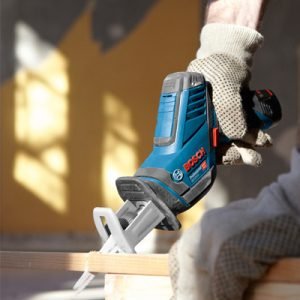
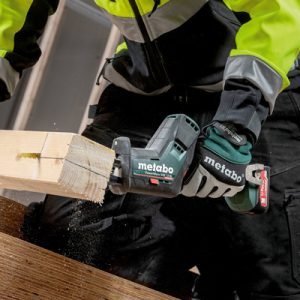
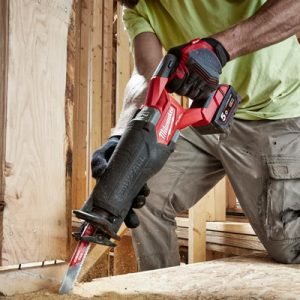
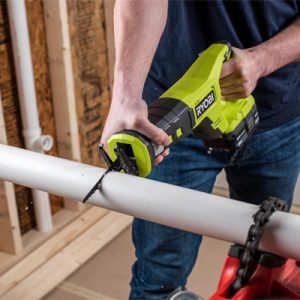


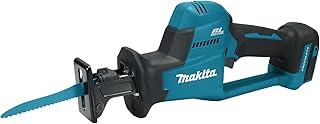


A cordless reciprocating saw can be one of the most useful cutting tools for renovation, demolition, landscaping and general maintenance work. Unlike a corded model, it can be used without keeping a mains cable close to the work area, making it particularly convenient for outdoor jobs, roof spaces, garden work, construction sites and properties where access to a socket is limited.
However, cordless reciprocating saws differ considerably in cutting speed, stroke length, vibration control, battery platform, weight and overall build quality. A model that is ideal for occasional DIY demolition may be a poor choice for frequent professional cutting. The most suitable option therefore depends on the materials you expect to cut, how frequently you will use the saw, and which cordless battery system you already own.
A reciprocating saw uses a rapidly moving blade that travels backwards and forwards through the material. The exposed blade allows the tool to make cuts in locations where a conventional circular saw, mitre saw or jigsaw may be difficult to position.
Typical UK applications include:
The tool is particularly effective when a cut needs to be made quickly in an awkward position. It is not normally the first choice when the objective is a perfectly straight, clean or highly precise finish.
The main advantage of a cordless reciprocating saw is freedom of movement. There is no mains cable to trail across the floor, snag against an object or restrict the distance from a socket. This can make a substantial difference during demolition and outdoor work.
A corded reciprocating saw can still be attractive when continuous mains power is readily available and the tool is used for prolonged cutting. A cordless model, by contrast, introduces battery capacity and charging into the equation.
For many DIY users and tradespeople, the convenience of cordless operation outweighs the need to manage batteries, particularly when the saw shares batteries with other tools.
Battery compatibility should be one of the first buying considerations rather than an afterthought. Major manufacturers such as DeWalt, Makita, Milwaukee, Bosch, Ryobi and Metabo HPT offer cordless tool ecosystems in which batteries can be shared between compatible tools.
If you already own several cordless tools from one platform, buying a compatible bare-tool reciprocating saw can make considerably more sense than starting a completely separate battery system.
Before purchasing, check:
Do not assume that batteries from different manufacturers can be interchanged simply because they have similar voltage ratings. Battery platforms are generally proprietary systems, and compatibility should be confirmed from the manufacturer's specifications.
Voltage is useful when comparing cordless systems, but it should not be treated as a direct measure of cutting performance. Different manufacturers and battery systems can use different conventions for nominal and maximum voltage.
An 18V-class reciprocating saw can provide substantial performance for general DIY, maintenance and construction work. Higher-capacity or higher-voltage systems can be attractive for demanding applications, but the additional battery size may increase the weight of the complete tool.
Instead of choosing solely by voltage, compare the complete specification, including motor performance, stroke length, strokes per minute, battery capacity, tool weight and intended application.
Stroke length describes how far the blade travels during each reciprocating movement. A longer stroke can remove more material per cycle and may be advantageous when making rapid cuts through suitable materials.
A shorter stroke can provide a different balance of controllability and cutting behaviour. Neither specification is automatically superior for every application.
When comparing two apparently similar saws, stroke length can help explain why their cutting behaviour differs even when their advertised battery voltage is similar.
Variable-speed control is highly useful because different materials and blades respond better to different cutting speeds. Starting slowly can also make it easier to position the blade accurately before increasing speed.
For example, aggressive high-speed cutting can be useful when rapidly removing timber, while a more controlled speed may be preferable when cutting certain metals or when trying to reduce unnecessary vibration.
A good variable-speed trigger should allow the operator to modulate the cutting action rather than forcing the saw to operate at one fixed speed.
Some reciprocating saws incorporate orbital action. Instead of moving the blade purely backwards and forwards, the blade follows a slightly more aggressive path that can increase material removal in appropriate applications.
Orbital action can be useful for fast cutting in timber, particularly during demolition. However, it is not necessarily desirable for every material. When cutting metal or when greater control is required, a conventional reciprocating movement may be preferable.
If a saw provides selectable orbital action, that versatility can be valuable because the cutting mode can be matched to the task.
A powerful reciprocating saw cannot compensate for an unsuitable or worn blade. Blade design has a direct effect on cutting speed, finish, durability and the type of material that can be cut safely.
Common reciprocating-saw blade categories include:
Check the manufacturer's blade recommendations before cutting unfamiliar materials. Blade length, tooth geometry, material construction and tooth pitch all influence performance.
Longer is not automatically better. The blade should provide enough usable cutting length for the material while remaining manageable for the task.
A blade that is excessively long can produce unnecessary movement beyond the workpiece. A blade that is too short may not provide sufficient engagement with thicker material.
For demolition, a robust blade with sufficient length and appropriate tooth design can be more useful than simply choosing the most aggressive-looking blade available.
Tooth pitch refers to the spacing of the blade teeth. Coarser teeth can be effective for rapid cutting in suitable soft materials, while finer teeth are generally more appropriate for thinner materials and many metal-cutting applications.
Using the wrong tooth pitch can cause poor cutting performance, excessive vibration, premature blade wear or unnecessary heat.
A practical buying strategy is to select a saw that accepts a broad range of commonly available reciprocating-saw blades rather than focusing exclusively on the tool itself.
A tool-free blade clamp is a valuable convenience feature. It allows the operator to change blades without searching for an additional wrench or tool, which is particularly useful when moving between timber and metal cutting.
Look for a blade-change mechanism that appears straightforward and secure in the manufacturer's documentation. The blade should be firmly retained and the mechanism should be compatible with the blade types you intend to use.
The shoe is the part of the saw that rests against the workpiece. It helps stabilise the tool and provides a reference point while the blade moves through the material.
An adjustable or pivoting shoe can be useful because it allows the contact position to adapt to different cutting situations. A well-designed shoe can also help the operator maintain control when starting a cut.
When comparing models, examine whether the shoe is fixed, adjustable or pivoting and whether the manufacturer's documentation explains how it is intended to be used.
Reciprocating saws naturally generate substantial movement because the blade repeatedly changes direction. Vibration control therefore matters, particularly for users who operate the tool for extended periods.
Features worth comparing include:
A lighter saw is not automatically more comfortable. Balance can be just as important because a well-balanced tool may place less strain on the wrist and forearm during awkward cuts.
Manufacturers may advertise tool weight without a battery, so comparisons can become misleading if one model is evaluated as a bare tool and another is considered with its battery installed.
For cordless reciprocating saws, consider the complete working weight:
A compact model may be easier to manoeuvre above shoulder height or in confined areas. A heavier model may offer advantages in robustness or runtime depending on its design and battery capacity. The best choice depends on how and where the saw will be used.
Battery capacity is normally expressed in ampere-hours, or Ah. A higher Ah rating generally represents greater stored energy within the same battery platform, although actual runtime varies significantly with workload.
Heavy demolition cutting can consume substantially more energy than occasional light cutting. Dense timber, thick metal and aggressive blade selection can also increase battery consumption.
Rather than choosing the largest battery automatically, consider whether you prioritise runtime or manoeuvrability. A smaller battery may reduce the complete tool weight, while a larger pack may reduce the frequency of battery changes.
Brushless motors have become common in higher-end cordless power tools. They eliminate traditional carbon brushes and can offer advantages in efficiency, motor control and maintenance requirements.
Brushed motors can still be perfectly suitable for many DIY applications and may be found in more affordable tools.
When choosing between them, consider the overall tool rather than assuming that brushless automatically means better in every respect. Compare the manufacturer's specifications, intended duty cycle, battery platform, weight and features.
Compact reciprocating saws are designed around manoeuvrability. Their smaller form can be useful when working inside cabinets, between studs, under floors or in other restricted spaces.
Full-size reciprocating saws generally provide a more substantial platform for demanding work and may offer longer strokes, greater cutting capacity or larger battery options depending on the model.
Occasional DIY users do not necessarily need the most powerful cordless reciprocating saw available. A practical model should provide adequate cutting capability while remaining easy to control and compatible with a convenient battery system.
Useful features include variable-speed control, tool-free blade changes, a comfortable grip, a stable shoe and a battery platform that can support other tools you may purchase later.
If the saw will only be used for occasional garden maintenance or small renovation tasks, paying for advanced professional features may provide limited practical benefit.
Tradespeople using a reciprocating saw regularly should pay closer attention to durability, ergonomics, battery availability and the range of compatible blades.
Frequent users may also benefit from features such as brushless motors, improved vibration control, selectable cutting modes, quick blade changes and battery systems with multiple capacity options.
The ability to carry several compatible batteries can be more valuable than selecting a tool solely because it has the highest advertised specification.
Demolition is one of the applications where reciprocating saws excel. The tool can cut timber, remove sections of framing and work through suitable nails or fasteners when paired with an appropriate demolition blade.
For this type of work, look for:
Do not select a demolition saw purely on maximum cutting speed. Control, blade compatibility and the operator's ability to maintain a stable position are equally important.
Metal cutting requires a different approach from timber demolition. Blade selection becomes especially important, and finer-toothed blades are commonly used for suitable metal-cutting applications.
When comparing saws for metal work, consider variable speed, vibration control, blade compatibility and the ability to maintain a controlled cutting rate.
Allow the blade to perform the cutting rather than applying excessive force. The correct blade and cutting technique can have a greater impact on results than simply selecting the most powerful saw.
Plumbers can use reciprocating saws for cutting suitable plastic pipe, metal pipe and other materials encountered during installation and removal work.
A compact body can be particularly valuable when access is restricted. A shorter or more controllable saw may also be easier to position around existing pipework.
When cutting installed pipework, always account for hidden services and confirm what is inside or behind the material before starting the cut.
A reciprocating saw fitted with an appropriate pruning blade can be useful for cutting suitable branches and garden timber. It can be easier to position than some larger garden-cutting tools, particularly when access is awkward.
However, a reciprocating saw should not automatically replace a dedicated pruning saw or chainsaw for every application. Choose the tool according to branch size, access, frequency of use and the manufacturer's permitted applications.
Reciprocating saws can cause serious injury if used incorrectly. Read the manufacturer's instructions before operation and use protective equipment appropriate to the task.
One of the most important precautions during renovation and demolition is understanding what may be concealed behind the visible surface. Walls, floors, ceilings and cabinets can contain electrical cables, water pipes, heating pipes and other services.
Before cutting, determine what is behind the work area as far as reasonably possible. Do not assume that an apparently empty section of wall or floor is free of services.
Where appropriate, use suitable detection equipment and follow applicable electrical, plumbing and building-safety guidance. If the situation is uncertain, stop rather than cutting blindly.
Voltage alone does not tell you everything about a cordless reciprocating saw. Motor design, electronics, stroke characteristics, battery capacity, gearbox design and ergonomics all influence the real-world suitability of the tool.
A bare tool can look considerably more attractive than a complete kit, but the cost of a compatible battery and charger can change the overall purchase calculation. Always compare like with like.
More substantial construction can be useful, but excessive weight can become tiring during overhead, ladder or confined-space work. Consider the complete tool with its battery.
There is no universal blade that provides optimal performance across timber, metal, plastic and demolition applications. Keeping several appropriate blade types available can make a major difference.
A saw is more useful when replacement blades are readily available in the sizes and tooth configurations required for your work.
Professional-grade specifications can be unnecessary for an occasional DIY user. Match the tool to workload instead of buying features that will rarely be used.
When comparing shortlisted models, use a consistent checklist rather than relying solely on star ratings or headline specifications.
Customer ratings can provide useful buying information, but a numerical rating should not be treated as a substitute for technical comparison. Review quality, quantity and relevance all matter.
When reading verified customer feedback, look for comments concerning battery life, cutting performance, weight, vibration, blade changes, build quality and reliability. Pay particular attention to feedback from people using the saw for applications similar to your own.
Also distinguish between reviews of the actual tool and comments concerning delivery, packaging or retailer service. For an independent product comparison, the most useful evidence concerns the tool itself.
Amazon UK listings can change over time, so verify the current product configuration before ordering. A familiar model name may be offered in several versions with different batteries, chargers, accessories or kit contents.
Modern cordless tool batteries require sensible handling. Follow the battery manufacturer's instructions for charging, storage, temperature limits and inspection.
Do not use a battery that shows signs of physical damage. Keep charging equipment and batteries away from conditions prohibited by the manufacturer, and use the correct charger for the battery platform.
If you own several batteries, rotating them according to the manufacturer's guidance can make it easier to maintain an organised workflow without relying on one battery for every task.
Cordless reciprocating saws generally require less routine maintenance than some more mechanically complex tools, but regular inspection is still important.
Although reciprocating saws are primarily associated with rough cutting, technique can improve the quality of the result.
A reciprocating saw is versatile, but versatility does not make it the best tool for every cut.
The main strength of a reciprocating saw is access and versatility, particularly when making difficult or demolition-oriented cuts.
The UK cordless power-tool market includes several established manufacturers with broad product ecosystems. DeWalt, Makita, Milwaukee, Bosch, Ryobi and Metabo are among the brands worth comparing when researching cordless reciprocating saws.
Brand reputation should not replace specification-based comparison. A saw from a well-known manufacturer can still be unsuitable if its battery platform, size, cutting characteristics or kit configuration does not match your requirements.
DeWalt's cordless range is particularly relevant to buyers already using its battery ecosystem. When comparing DeWalt reciprocating saws, pay attention to the specific XR or other platform designation, battery requirements, tool size, stroke characteristics and whether the listing is supplied as a bare tool or kit.
Makita offers a broad cordless ecosystem, making its reciprocating saws relevant to users who already own compatible batteries. Compare the exact model specification rather than assuming that every Makita saw provides the same combination of speed, stroke, size and features.
Milwaukee is another major cordless power-tool manufacturer, with reciprocating saws aimed at demanding trade and professional applications as well as different form factors for specific needs. Buyers should compare the exact battery platform and model specification before choosing between full-size and compact designs.
Bosch offers cordless tools across different user categories. When considering a Bosch reciprocating saw, check the precise battery system and intended market because compatibility between different Bosch cordless ranges should not be assumed without verification.
Ryobi can be particularly relevant to DIY users who want access to a broad cordless ecosystem. Buyers should compare the complete kit contents, battery platform, tool dimensions and intended workload before selecting a model.
The right budget depends on how frequently the tool will be used and whether you already have compatible batteries and chargers.
There is no single price point that guarantees the best choice. The objective is to spend according to actual workload rather than maximum specifications.
A bare tool can be the better option when you already own compatible batteries and chargers. It avoids paying for duplicate equipment.
A complete kit can be more convenient for someone entering a new cordless platform. However, compare the battery capacity and charger included because two kits with the same saw can have very different practical value.
When comparing listings, always calculate the complete cost of getting the saw ready for work.
The best cordless reciprocating saw depends on your intended use, battery platform, budget and preferred tool size. A compact model may be preferable for confined spaces, while a larger professional model may be more suitable for frequent demolition.
Many cordless reciprocating saws are designed for demolition and can cut suitable timber, metal and other materials when paired with the correct blade. Performance depends on the specific saw, battery, blade and material.
A brushless motor can provide advantages in efficiency, control and maintenance requirements, but the overall suitability of the saw depends on its complete design. Compare the motor, battery system, weight, cutting specifications and features rather than selecting solely on the motor type.
It depends on the workload. A larger-capacity battery can provide longer runtime, while a smaller battery can reduce the complete tool weight. For demanding cutting, a suitable higher-capacity battery may be advantageous if its additional weight is acceptable.
Yes, provided the saw and blade are suitable for the particular metal-cutting application. Use a blade designed for the material and follow the manufacturer's operating guidance.
Yes. Cutting timber is one of the most common applications for a reciprocating saw. Select the blade according to the type and thickness of timber and whether nails or other fasteners may be present.
Some can be used with suitable pruning blades for appropriate branches. Check the manufacturer's instructions and use a blade designed for pruning rather than assuming a standard demolition blade is suitable.
Many reciprocating saws use a common style of blade shank, but compatibility should still be confirmed. Blade length, material, tooth configuration and intended application also need to be appropriate for the saw and workpiece.
They can be, provided the user understands the tool's limitations and follows the manufacturer's safety instructions. Beginners should start with appropriate materials and blades, maintain firm control and avoid cutting into areas where hidden services may be present.
It is primarily a rough-cutting and access-oriented tool. Although careful technique can improve accuracy, a circular saw, jigsaw or mitre saw is generally better suited when a clean and precise cut is the main objective.
Choose a compact model when manoeuvrability and access are particularly important. Choose a full-size model when demanding cutting and sustained use are higher priorities. Consider the complete tool weight and battery combination before deciding.
They can be worthwhile for frequent users who benefit from advanced ergonomics, durable construction, battery-system integration and additional control features. Occasional DIY users may find a simpler model provides better value for their actual needs.
There is no universal replacement interval. Replace a blade when it becomes damaged, excessively worn or no longer cuts effectively. Blade life depends heavily on the material, cutting technique, blade quality and workload.
The best top-rated cordless reciprocating saw is not necessarily the model with the highest headline specification or the greatest number of customer ratings. The stronger buying decision comes from matching the saw to the work you actually intend to perform.
Start with the battery platform if you already own cordless tools. Then consider the materials you will cut, the frequency of use, the required tool size, stroke characteristics, speed control, vibration management and blade compatibility. Finally, compare the complete kit contents and current specifications rather than judging a listing from its product title alone.
For occasional DIY work, prioritise ease of use and sensible value. For renovation and demolition, place more emphasis on cutting capability, durability and blade selection. For regular professional use, ergonomics, battery availability, reliability and long-term platform compatibility deserve greater weight.
Before making a purchase, check the latest manufacturer specifications and current retailer listing, compare verified customer feedback that relates to your intended application, and confirm whether you need a bare tool or a complete battery-and-charger kit. This approach makes it easier to identify a cordless reciprocating saw that genuinely fits your requirements rather than simply choosing the most heavily advertised option.