

♥ Wishlist
Compare 30 verified Festool Circular Saws products in United Kingdom. Reviews, ratings, pros, cons and buying advice updated for October 2026.


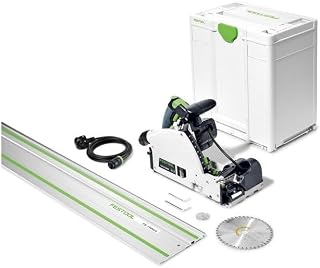

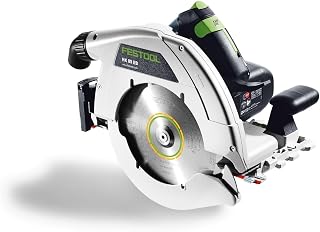


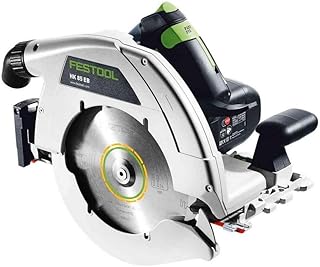


Choosing a Festool circular saw is less about finding the tool with the highest headline specification and more about matching the saw design to the materials, cutting method and working environment. Festool's range includes track-guided plunge saws as well as more conventional circular saw designs, so two tools carrying similar power ratings can serve very different purposes.
For UK buyers, the most useful comparison points include cutting depth, bevel capability, track compatibility, dust extraction, blade diameter, ergonomics, power source, portability and the type of work the saw will perform most frequently. A professional joiner cutting sheet material on site has different priorities from a carpenter making repetitive timber cuts in a workshop, while a DIY user may place greater emphasis on versatility and overall value.
Festool is particularly associated with plunge-cutting systems designed to work with guide rails. A plunge saw can enter a workpiece from above rather than requiring the blade to begin at an exposed edge. This makes the format useful for sheet goods, worktop preparation, flooring, doors and other applications where controlled starting and clean, accurately positioned cuts are important.
The Festool TS 55 family is a prominent example of this type of tool, while the TS 60 represents a higher-capability option within the same general system concept. Exact specifications, included accessories and package contents can differ between versions, so buyers should check the individual model designation rather than assuming every TS-series package is identical.
Traditional handheld circular saws are designed primarily for cutting from an existing edge. They can be particularly practical when working with timber, boards and construction materials where plunge functionality is unnecessary. Models such as the Festool HK series are aimed at this style of cutting and can be useful when portability and conventional circular-saw handling are more important than plunge functionality.
A common buying mistake is comparing every Festool circular saw as though the tools are interchangeable. They are not. A plunge saw with a guide rail can be an excellent choice for accurate sheet cutting but may be unnecessary for straightforward framing work. Conversely, a conventional circular saw may be faster and simpler for repeated edge-to-edge cuts where plunge capability provides little benefit.
Blade diameter has a direct relationship with the maximum cutting depth available from a circular saw, although the usable depth also depends on the saw's construction and cutting angle. Buyers should check the manufacturer's stated maximum depth at 90 degrees and at common bevel settings rather than judging capability solely from blade size.
Bevel capacity determines how effectively the saw can make angled cuts. For carpentry, joinery and construction work, a stable bevel mechanism is often more important than simply having a large maximum angle. Look for clearly marked adjustments, secure locking and a design that allows the angle to be set consistently.
Motor power should be considered alongside blade speed, cutting depth, material type and the saw's ability to maintain useful cutting performance under load. A high power figure alone does not tell you how comfortable or effective a saw will be in real applications.
For UK users, it is also important to distinguish between corded and cordless systems. A corded saw can be attractive for prolonged workshop use where mains power is readily available, while a cordless model can simplify work on site and eliminate the need to manage a power lead.
When considering a cordless Festool circular saw, the battery platform becomes part of the purchasing decision. Buyers who already own compatible Festool cordless tools may gain more practical value from remaining within the same battery ecosystem.
Do not compare cordless saws solely on the advertised battery voltage. Runtime depends on battery capacity, cutting conditions, material, blade selection and workload. A buyer should also establish whether the advertised price includes batteries and a charger or refers to a bare tool.
For a track-compatible Festool saw, the guide rail can be just as important to the overall system as the saw itself. A suitable rail helps the user make long, straight cuts while providing a repeatable reference point.
Before purchasing, check which guide rails are compatible with the specific saw and whether the required rail length suits the material being cut. A short rail may be convenient for smaller panels, whereas long sheet goods can require a longer setup or a carefully planned rail arrangement.
Dust management is an important consideration when comparing professional circular saws. Cutting wood-based sheet materials can produce substantial airborne dust, while plunge cutting can concentrate the cutting operation around a defined area. A compatible dust extractor can therefore make the working environment considerably easier to manage.
Festool tools are commonly considered as part of a broader dust-extraction system rather than as isolated machines. If dust control is important to your work, check the extractor connection, hose compatibility and the manufacturer's recommendations for the exact saw and material being cut.
Dust extraction should not be treated as a substitute for appropriate personal protective equipment, safe working practices or adequate workplace ventilation. UK users should follow the manufacturer's safety instructions and applicable workplace requirements.
The saw itself is only one part of the cutting system. Blade tooth configuration, kerf, tooth count and blade suitability for the material can substantially affect cut quality, speed and finish.
Timber cutting can call for a different blade configuration depending on whether speed or finish is the priority. A coarser tooth arrangement can be useful for efficient rough cutting, while a finer configuration may be preferable where a cleaner finished edge is required.
Plywood, MDF, laminated boards and other sheet materials can respond differently to blade selection. If the visible face of a panel is important, a blade intended for clean finishing may be preferable to a general-purpose construction blade.
Never assume that a general-purpose wood blade is appropriate for every board or composite material. Check the blade manufacturer's compatibility information before cutting unfamiliar materials, particularly products containing coatings, composites or other substances that can require a specialist blade.
Cut quality is influenced by several variables working together. A high-quality saw can still produce poor results if the wrong blade is fitted, the workpiece is inadequately supported or the cutting technique is inconsistent.
Professional users can spend many hours handling a circular saw, making ergonomics an important buying consideration. Weight, handle position, trigger operation, balance, visibility of the cut line and ease of adjustment can all affect day-to-day usability.
A lighter saw is not automatically the best choice. The ideal balance depends on the work. A compact tool can be easier to carry around a job site, while a more substantial machine may feel reassuring during certain demanding cuts. Buyers should consider how the saw feels when held in the positions actually used during their normal work.
For cordless models, compare the complete ownership setup rather than the bare-tool price. Batteries, chargers and additional battery capacity can materially change the total cost of building a usable system.
The Festool TS 55 and TS 60 should be compared according to the cutting capacity and workflow you need rather than simply choosing the newer or more powerful-looking specification.
Exact model specifications and supplied accessories should always be checked against the current UK product listing before purchase because Festool product variants and bundles can differ.
The distinction between the HK and TS approaches is particularly useful for buyers who are unsure whether they need a plunge saw.
If most of your work involves breaking down full sheets accurately, a track-based plunge system deserves serious consideration. If your workload consists mainly of conventional timber cuts, a handheld circular-saw format may be more practical.
Higher-end specifications are only valuable when they solve a real requirement. If your typical materials do not require the additional capacity or functionality, paying more may not improve your results proportionally.
A circular saw can require blades, guide rails, batteries, chargers, connectors and dust-extraction equipment depending on the configuration. Compare the cost of the complete setup rather than the headline tool price alone.
Motor output is only one part of performance. Cutting capacity, blade design, ergonomics, control, extraction and compatibility with your existing equipment can be equally important.
Product bundles can differ. Before ordering, verify exactly what is included in the UK package you are considering, especially batteries, charger, guide rail, carrying case and blades.
Consumable costs matter for frequent users. Check the availability and cost of suitable replacement blades and establish which blade types you are likely to use most often.
A guide rail needs to suit the cuts you actually make. Consider your largest common workpieces before selecting a rail length.
When comparing two or more models, record the specifications in a simple comparison sheet rather than relying on memory. This makes it easier to identify which differences actually matter.
For regular sheet-material work, a track-compatible plunge saw is usually the category worth investigating first. The ability to establish a controlled cutting path makes this format particularly useful for plywood, MDF and other large panels where straight, repeatable cuts are important.
However, the best choice still depends on the thickness and material being cut, the required finish, the frequency of use and whether you already own compatible guide rails and extraction equipment.
Carpenters should consider both plunge and conventional circular-saw designs. A plunge saw can be valuable for precise panel work, door trimming and controlled cuts, while a conventional saw may be more convenient for repetitive construction cuts.
Think about the majority of your workload rather than the occasional job. Buying for your typical work will generally produce a more useful setup than buying for the most demanding task you might encounter once or twice a year.
Workshop users often benefit from prioritising repeatability, extraction, accuracy and compatibility with their existing workholding system. A track-guided saw can provide a flexible alternative to a larger stationary cutting setup for many sheet-material tasks, provided the workpiece is properly supported.
Storage should also be considered. A professional cutting system can include the saw, rails, blades, extractor hose and accessories, so having a practical way to organise these components can make a noticeable difference to everyday workflow.
On a construction site, portability and setup time become particularly important. Cordless equipment can remove the need for a mains lead, while a compact conventional saw can be convenient when cuts are straightforward and performed from the material edge.
Where accurate sheet cutting is a frequent requirement, a track-guided system can justify its additional equipment. Where the main task is fast dimensional cutting of timber, a conventional circular-saw setup may offer the simpler workflow.
Resin, adhesive residue and accumulated material can affect cutting performance. Follow the manufacturer's instructions for cleaning and blade maintenance, and never work on a blade while the saw is connected to a power source.
Look for damaged teeth, excessive wear and other signs that the blade should be replaced or professionally serviced. A damaged blade should not be treated as a minor inconvenience because it can affect both cutting quality and safe operation.
For track-guided work, keep the guide rail and associated contact surfaces clean and in good condition. Dirt or damage can affect positioning and smooth movement.
Check hoses, connectors and collection equipment for blockages or damage. Effective extraction depends on the complete system, not simply the saw itself.
Always prioritise the instructions supplied for the exact Festool model. Do not substitute generic maintenance procedures where the manufacturer provides model-specific requirements.
Circular saws are powerful cutting machines and should be operated according to the manufacturer's safety instructions. Before cutting, secure the workpiece appropriately and make sure the intended cutting path is clear of obstacles.
There is no single correct budget because the total cost depends on whether you are buying a complete system or adding a saw to equipment you already own. A user who already has compatible batteries, rails and extraction equipment may need fewer additional components than someone starting from scratch.
When checking current UK prices, compare like-for-like packages. A lower advertised price may represent a bare tool, while a higher price may include accessories that you would otherwise need to purchase separately.
For frequent professional use, consider cost per year of expected service, consumables, accessories and the value of compatibility with equipment already in your workshop or van. For occasional DIY use, avoid paying for capabilities you are unlikely to use.
Festool is not the only established manufacturer worth considering. Depending on the application and budget, buyers may also want to compare systems from brands such as Makita, Bosch Professional, DeWalt, Milwaukee and Mafell.
The comparison should focus on the complete cutting ecosystem rather than brand reputation alone. Consider guide rails, batteries, extractors, blades, cases, service arrangements and the tools you already own.
Makita offers a broad range of corded and cordless cutting equipment, including systems designed for professional site work. When comparing Makita with Festool, look beyond the tool itself and compare the available battery platform, guide-rail ecosystem, cutting specifications and accessory requirements relevant to your workload.
Bosch Professional is another major option for users building a wider professional power-tool collection. The key question is not simply which brand produces the stronger saw, but which system provides the best combination of cutting performance, compatibility, ergonomics and accessories for your intended work.
DeWalt has a strong presence in professional cordless construction tools. Buyers who spend much of their time on site may find the wider cordless ecosystem an important comparison point. Check battery compatibility, cutting capacity, weight and the availability of suitable blades and guide systems.
Milwaukee is another brand worth considering when cordless site performance and battery-platform compatibility are major priorities. Compare the complete system, including batteries and chargers, rather than comparing nominal voltage figures alone.
Mafell is particularly relevant to buyers focused on specialist professional woodworking and precision cutting equipment. If your work demands a high level of cutting accuracy, it can be worthwhile comparing equivalent saw categories and complete track systems rather than looking only at retail price.
A premium professional circular-saw system may be unnecessary if you only make occasional rough cuts in timber and do not need guide-rail accuracy, advanced extraction integration or a broader professional tool ecosystem. In that situation, a less expensive circular saw from a reputable manufacturer may provide better value.
Customer reviews can be useful, but they should be treated as one part of the buying process rather than a substitute for technical specifications. Look for recurring comments about ergonomics, setup, cutting accuracy, battery life where applicable, dust extraction, adjustment mechanisms and long-term usability.
Pay particular attention to reviews that identify the exact model and package being discussed. A review of one Festool variant should not automatically be applied to every saw in the same product family.
The best Festool circular saw depends on the work being performed. A TS-style plunge saw is generally worth investigating for guide-rail and plunge-cut applications, while an HK-style saw can be more appropriate for conventional edge-starting cuts. Compare cutting capacity, accessories and your normal workflow before choosing.
Yes, they can be, but the purchase should make sense for the user's requirements. Festool equipment is designed with professional applications in mind, so an occasional DIY user should compare the complete cost and functionality against less expensive alternatives.
Neither format is universally better. A plunge saw is advantageous when controlled plunge cuts and guide-rail accuracy are important. A conventional circular saw can be simpler for straightforward cuts that start at the edge of a workpiece.
Several Festool saw systems are designed around guide-rail use. However, compatibility should be confirmed for the exact model before purchasing a rail or assuming that every accessory works across every saw.
Use a blade specified as suitable for the material and the exact saw. Timber, plywood, MDF, laminates and other materials can require different blade configurations. Follow the manufacturer's blade recommendations and never use a blade outside its intended application.
A suitable dust-extraction system can be particularly valuable when cutting wood and sheet materials, especially indoors or in professional environments where dust control is important. Check compatibility between the saw, hose and extractor and follow the relevant safety guidance.
Choose according to your working environment. Corded models can make sense for sustained workshop use with reliable mains power, while cordless models can offer greater freedom of movement on site. For cordless equipment, include batteries and chargers in the total purchase calculation.
A suitable Festool plunge-saw and guide-rail setup can be well suited to accurate plywood cuts. The final result still depends on blade selection, support, cutting technique and correct setup.
They can be used for MDF when fitted with an appropriate blade and operated according to the manufacturer's instructions. MDF can generate significant fine dust, so suitable extraction and respiratory protection should be considered.
There is no universal replacement interval. Blade life depends on the material, cutting frequency, blade quality, cutting technique and workload. Replace a blade when it is damaged or no longer performs as intended, following the manufacturer's guidance.
Not necessarily. The most appropriate model is the one whose cutting capacity, features and system compatibility match your work. Paying for unused capability does not automatically produce better value.
This buying guide is intended for the 2026 UK market, but individual specifications, package contents, availability and pricing can change. Always verify the current product information before purchasing.
The strongest way to choose a top-rated Festool circular saw is to start with the work rather than the product name. Identify the materials you cut, the thicknesses involved, whether you need plunge cutting, whether guide-rail accuracy matters and how frequently the saw will be used.
Then compare the exact Festool models against equivalent options from established manufacturers. Check the complete specification, included accessories, blade requirements, extraction compatibility and current UK package contents. If you already own compatible Festool equipment, system compatibility can be an important advantage; if you are starting from scratch, calculate the cost of the complete setup before making a decision.
Finally, use current UK retailer listings and verified customer reviews to confirm the details that matter most to you, including today's price, stock status, package contents and user feedback on the exact model. This approach helps separate genuinely useful features from specifications that may have little practical relevance to your work.