

♥ Wishlist
Compare 3 verified Hedge Cutters for Easy and Efficient Garden Maintenance products in United Kingdom. Reviews, ratings, pros, cons and buying advice updated for October 2026.


Choosing a hedge cutter for a UK garden involves more than looking at the overall star rating or the headline power figure. Hedge size, branch thickness, hedge height, cutting frequency, available power sources, tool weight and storage requirements can all change which machine is the most suitable choice. A compact cordless hedge trimmer may be ideal for routine shaping of a domestic privet hedge, while a more powerful mains-powered or petrol machine may be better suited to larger, older hedges with thicker growth.
This buying guide is designed to help UK shoppers compare hedge cutters by the characteristics that matter in real use. When assessing products, consider the complete specification rather than focusing on one feature. Blade length, tooth spacing, motor or battery system, cutting capacity, ergonomics, reach, safety features and the availability of compatible batteries can all influence long-term value.
There are three main power options to consider when shopping for a hedge cutter: cordless battery-powered models, mains electric models and petrol-powered machines. Each has advantages and limitations, so the best choice depends on the type of hedge and the way you intend to maintain it.
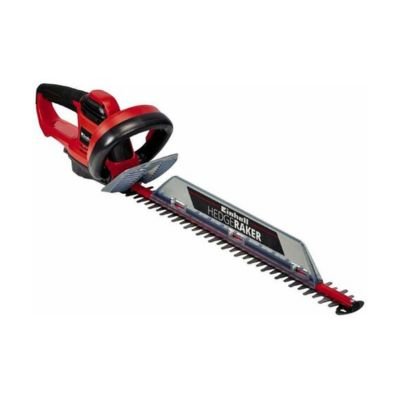
Cordless hedge cutters are increasingly attractive for domestic gardens because they combine electric operation with freedom of movement. There is no mains cable running across the lawn or around the hedge, making them convenient for gardens with awkward access points.
Popular battery ecosystems from brands such as Bosch, Makita, DeWalt, Ryobi and Einhell include hedge cutters alongside other garden and power tools. If you already own compatible batteries and a charger from one of these systems, buying a bare-tool hedge cutter can potentially make more sense than starting a separate battery platform.
Mains electric hedge cutters can be a sensible choice when reliable access to an outdoor power supply is available. They do not require fuel or rechargeable batteries, and operating time is not limited by battery capacity.
The main disadvantage is the power cable. Extra care is needed to keep the cable away from the blade and to prevent it becoming a trip or snagging hazard. Cable management becomes particularly important when working around large hedges, gates, corners and other obstacles.
Petrol hedge cutters remain relevant where mobility and sustained operation are important, particularly for demanding cutting work. They avoid the limitations of mains cables and battery runtime, although they introduce fuel, engine maintenance, noise, vibration and exhaust considerations.
For many typical domestic gardens, petrol equipment can be more machine than necessary. It is worth considering the frequency and scale of the work before choosing an engine-powered model simply because it offers a higher power output.
Blade length is one of the easiest specifications to compare, but a longer blade is not automatically the better choice. A longer cutting bar can cover more hedge surface with each pass, which may help when trimming large, straight sections. However, longer blades can also make a tool feel less nimble and may increase the effort required when shaping smaller or irregular hedges.
Shorter blades can offer greater control around corners, narrow sections and detailed shaping. They may also be easier for some users to handle for extended periods.
Blade tooth spacing is particularly important when comparing hedge cutters for mature or woody growth. The specification indicates the approximate gap between cutting teeth and provides an indication of the type of material the blade is designed to handle.
A hedge consisting mostly of thin, fresh shoots does not place the same demands on a cutter as an established hedge containing thicker woody branches. If your hedge is allowed to become overgrown between maintenance sessions, cutting capacity becomes more important than it would be for frequent light trimming.
Always compare the manufacturer's stated maximum cutting diameter with the actual condition of your hedge. Do not assume that a tool will comfortably cut every branch that happens to fit between its teeth. Very hard, old or unusually thick material may require a different tool or a pruning saw.
Motor specifications can be useful, but comparing wattage, voltage or engine capacity across different hedge cutter designs does not always provide a straightforward indication of real-world performance. Electronic control systems, blade design, gearing, motor efficiency and overall construction also influence how a hedge cutter behaves under load.
For cordless models, battery voltage should not be treated as a direct substitute for a petrol engine's capacity or a mains tool's wattage. A higher nominal voltage does not automatically mean that one hedge cutter will perform better for every application.
Look for a combination of cutting capacity, manufacturer specifications, blade characteristics, weight, runtime information where supplied, and credible customer feedback. This gives a more useful picture than relying on one headline number.
Battery runtime is one of the most important considerations when comparing cordless hedge cutters. The advertised runtime can vary according to battery capacity and how heavily the machine is loaded. Dense foliage, thicker branches, prolonged cutting and repeated acceleration can consume considerably more energy than occasional light trimming.
A useful way to compare cordless products is to calculate the complete ownership requirement rather than comparing the tool price alone. A seemingly inexpensive bare tool can require a separate battery and charger, whereas another package may include everything required for immediate operation.
Hedge cutting can involve repeated movements and prolonged periods of holding the machine at shoulder or chest height. Consequently, weight and balance can have a significant effect on comfort. Two machines with similar specifications can feel very different in actual use because of differences in handle position, battery placement, motor location and blade length.
Pay attention to the stated weight and, where available, whether that figure includes the battery. Some manufacturers quote tool-only weight while others provide information for a complete operating configuration. Comparing like-for-like figures is therefore important.
Some hedge cutters feature adjustable or rotating rear handles that allow the operator to change grip position. This can be useful when switching between vertical and horizontal cutting.
An adjustable handle does not automatically make a hedge cutter comfortable for every user. The mechanism, overall balance, grip design and operating weight still matter. If ergonomic flexibility is important, compare how the handle arrangement works with the type of trimming you expect to perform rather than selecting a model solely because it has a rotating handle.
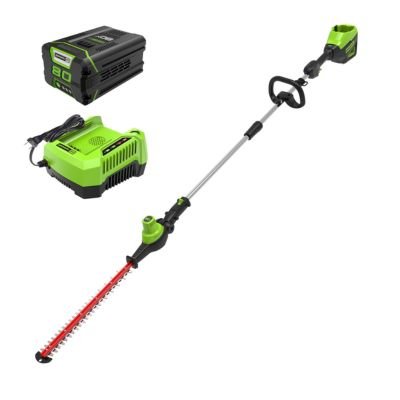
Pole hedge cutters are designed to extend the operator's reach and can be useful for maintaining taller hedges without constantly relying on a ladder. They typically place the cutting head at the end of an extension shaft and may provide several cutting-head angles.
The additional reach comes with trade-offs. A pole-mounted cutter can feel heavier because the cutting head is farther away from the operator's body. Balance and control therefore become especially important.
A hedge cutter contains rapidly moving cutting teeth, so safety should be treated as a primary buying consideration rather than an optional feature. Different products use different combinations of switches, guards and control systems.
Read the manufacturer's operating instructions before using any hedge cutter. Eye protection, suitable footwear and appropriate protective equipment should be considered according to the task and manufacturer's guidance. Keep other people, particularly children, away from the working area and never bypass safety controls.
UK gardens vary considerably, from small urban gardens with low privet hedges to large properties with long boundaries containing dense evergreen growth. Weather, soil conditions and plant species can also influence how quickly hedges grow and how difficult they are to maintain.
For a small domestic hedge, a lightweight cordless or mains electric model may provide a sensible balance between convenience and capability. Larger boundaries may justify a longer blade, higher-capacity battery system or a more powerful machine. Tall hedges may make a pole hedge cutter worth considering, while particularly thick woody growth may call for equipment specifically designed for heavier cutting.
Privet is commonly maintained through regular trimming, meaning a lightweight machine with good control can be more useful than an unnecessarily heavy-duty cutter. Frequent maintenance also reduces the amount of thick woody material that needs to be removed.
Large conifer hedges can require substantial cutting because of their height, width and rapid growth. Reach, blade length, weight and battery endurance become increasingly important as the scale of the hedge increases.
Laurel can produce broad leaves and substantial growth. A cutter with appropriate tooth spacing and sufficient cutting capacity can make routine maintenance easier, although very thick branches may be better handled using a suitable pruning tool.
Holly and other dense, woody hedges can place greater demands on the cutting mechanism. Gloves, eye protection and careful handling are particularly important, while cutting capacity should be checked against the actual thickness of the growth.
Not every premium feature provides equal value. The most useful features are generally those that improve control, reduce unnecessary effort or make the machine better suited to the intended hedge.
Brushless motors are common in modern cordless power tools and can offer efficiency and durability advantages because they do not use conventional motor brushes. They can also support sophisticated electronic control systems.
However, brushless technology should not be treated as a guarantee that one hedge cutter is automatically superior. Battery quality, gearing, blade design, control electronics, build quality and ergonomics all contribute to the overall product.
Brand comparison is most useful when it focuses on the complete ecosystem rather than brand reputation alone. Bosch, Makita, DeWalt, Ryobi and Einhell are examples of established names with ranges of cordless tools and garden equipment, but product specifications and battery compatibility differ between their respective platforms.
If you already own tools from a particular battery family, compatibility can be a major purchasing advantage. Check the exact battery platform rather than assuming that every battery from the same brand works with every cordless garden tool.
More power can be useful, but a large machine may be unnecessary for a small garden. Extra weight can make frequent trimming more tiring, so choose enough capability for the job rather than automatically choosing the largest model.
A cordless hedge cutter advertised as a bare tool may require additional purchases before it can be used. Always compare the complete system cost.
A long blade can improve productivity on broad hedges but may reduce manoeuvrability and increase fatigue. Match blade length to hedge size and your ability to handle the tool comfortably.
Hedge cutters are primarily intended for hedge maintenance. For large woody branches, a pruning saw or suitable lopper may be more appropriate. Forcing material beyond the stated cutting capacity can reduce performance and place unnecessary stress on the machine.
Long hedge cutters need suitable storage space. Battery models also require an appropriate location for batteries and chargers, while petrol machines introduce additional considerations relating to fuel and engine maintenance.
Customer reviews can provide useful information, but individual reviews should be interpreted in context. A user maintaining a few metres of soft growth has very different requirements from someone cutting a long, mature boundary hedge several times each year.
A simple comparison table can prevent an attractive headline feature from distracting you from more important specifications. Record the information for each shortlisted model before making a decision.
Regular maintenance can help keep a hedge cutter performing properly and can also make faults easier to identify before the next major trimming job. Always follow the manufacturer's maintenance instructions and disconnect the power source before carrying out cleaning or inspection.
Plant material and debris can accumulate around the cutting teeth and moving components. Clean the tool according to the manufacturer's instructions after use and allow components to dry appropriately before storage.
Some hedge cutters require blade lubrication as part of routine maintenance. Use only products and procedures recommended by the manufacturer. Correct lubrication can help reduce friction and maintain smooth blade movement.
Inspect the cutting teeth for obvious damage, excessive wear or deformation. A damaged blade should not be ignored simply because the hedge cutter still starts and runs.
For cordless equipment, follow the manufacturer's instructions for charging, storage and temperature conditions. Batteries should be stored safely and protected from unsuitable environmental conditions.
A hedge cutter does not necessarily need replacing simply because it has become less effective. In some cases, cleaning, correct lubrication, blade servicing or replacing a worn component may restore useful performance.
Replacement becomes more compelling when repair costs are disproportionate to the value of the machine, compatible batteries or parts are difficult to obtain, safety components are damaged, or the tool no longer meets the requirements of the hedge.
For a small hedge that receives regular maintenance, prioritise low weight, control and convenience. For medium-sized hedges, look for a balance between cutting capacity, blade length, runtime and ergonomics. For long or mature boundaries, prioritise endurance, appropriate cutting capacity and a machine that you can safely control throughout the job.
Cordless models generally win on freedom of movement, while mains-powered models can be attractive where continuous operation and convenient electrical access are more important. Neither technology is universally better.
For a garden with several disconnected hedge sections, gates and awkward corners, avoiding a power cable can make cordless equipment particularly convenient. For a compact garden close to an appropriate outdoor socket, mains operation may provide all the runtime required without investing in batteries.
Cordless equipment is often attractive to domestic users who want mobility without dealing with fuel and engine maintenance. Petrol machines can make more sense for demanding work where long periods of operation and high cutting performance are priorities.
The decision should account for noise, vibration, weight, maintenance requirements, operating duration and the scale of the hedge rather than simply comparing headline power figures.
The lowest purchase price is not always the lowest overall cost. A hedge cutter that uses a battery platform you already own may represent better value than a cheaper-looking alternative that requires a new charger and battery. Conversely, if you do not own cordless equipment, the complete kit price becomes much more important.
Consider how frequently you will use the tool. Occasional seasonal trimming may not justify paying substantially more for specialist features, while frequent hedge maintenance can make better ergonomics, battery flexibility and durability more valuable.
The appropriate trimming schedule depends on the hedge species, growth rate and desired shape. Many hedges require maintenance at particular points during the growing season, while established formal hedges may need more than one trimming session.
Before cutting, check the condition of the hedge and make sure there are no hidden obstacles, wires or other objects within the foliage. Wildlife can also use dense hedges for shelter and nesting, so responsible hedge management requires consideration of the season and local wildlife guidance.
Good results depend on technique as well as the machine. A sharp, suitable blade helps, but rushing through dense growth can produce an uneven finish and place unnecessary load on the tool.
Use this checklist when comparing the shortlisted hedge cutters in this guide:
There is no single best hedge cutter for every UK garden. A lightweight cordless model may suit a small garden, while a longer-bladed or higher-capacity machine may be more appropriate for a large, mature hedge. The right choice depends on hedge size, branch thickness, cutting frequency, access and personal handling comfort.
Cordless hedge cutters can be a strong choice when freedom of movement is important. They are particularly convenient for gardens where a mains cable would be difficult to manage. Battery cost, runtime and compatibility should be considered before purchase.
Choose a blade length that matches the scale of your hedge while remaining comfortable to control. Longer blades can cover more area per pass, whereas shorter blades can offer greater manoeuvrability for smaller or more intricate hedges.
A brushless motor can offer useful efficiency and durability characteristics, particularly in cordless tools, but it should not be the only purchasing criterion. Compare the complete specification, including cutting capacity, battery system, weight, blade design and ergonomics.
Battery capacity is important if you choose a cordless hedge cutter, particularly for long or dense hedges. Larger capacity can provide greater operating endurance, although actual runtime varies with the workload and cutting conditions.
A long blade can be useful for large, broad hedges, but it may be less convenient for detailed shaping or smaller gardens. Consider blade length alongside tool weight, balance and your ability to control the machine.
Only within the cutting capacity specified for the particular model. Thick woody branches may require a pruning saw or suitable lopper instead. Do not force material that exceeds the manufacturer's stated capability.
Petrol models can be advantageous for demanding, prolonged work, but they are not automatically better for domestic gardens. Electric and cordless models can provide sufficient capability for many routine hedge-maintenance tasks while avoiding some of the maintenance and fuel requirements associated with petrol engines.
Consider a suitable pole hedge cutter with sufficient reach, an adjustable cutting head and manageable weight. The further the cutting head is from your body, the more important balance and control become.
Maintenance requirements vary by model and usage. Inspect the blade regularly and follow the manufacturer's instructions for cleaning, lubrication, sharpening and servicing. Heavy or frequent use can increase maintenance requirements.
No. A more expensive model may provide features that are valuable for demanding work but unnecessary for a small garden. The best value comes from matching the specification to your actual requirements rather than paying for capacity you will rarely use.
The best top-rated hedge cutter is ultimately the one that combines suitable cutting performance with comfortable handling, appropriate power, practical runtime and the right features for your hedge. Start by assessing the hedge itself, then compare the machines against those requirements.
For cordless shoppers, pay particular attention to the battery platform and complete kit contents. For mains-powered users, consider cable management and access to a suitable outdoor power supply. For petrol equipment, factor in fuel, maintenance, noise and vibration as well as cutting capability.
Before purchasing, compare the latest specifications, current retailer prices, customer feedback and manufacturer information for the exact model. Product bundles and pricing can change, so checking the complete package rather than relying on an old headline price is especially important. A careful specification-led comparison is the most reliable way to narrow down the right hedge cutter for your UK garden in 2026.