

♥ Wishlist
Compare 51 verified Makita Cordless Routers products in United Kingdom. Reviews, ratings, pros, cons and buying advice updated for October 2026.


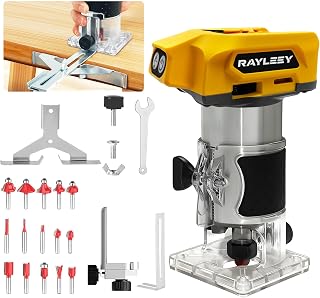


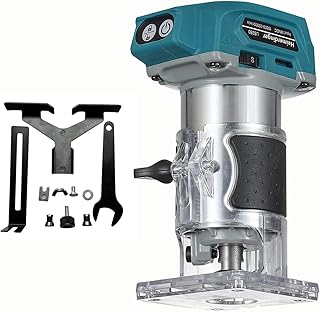


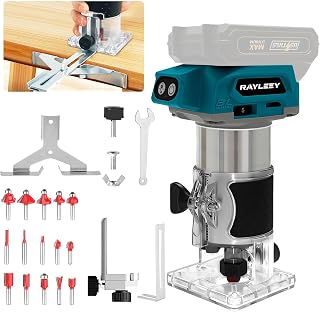

Choosing a Makita cordless router for woodworking in the UK involves more than comparing battery voltage or headline specifications. A compact cordless router can be an excellent choice for trimming laminate, rounding edges, cutting grooves and carrying out general joinery, while a more substantial model may be preferable for repeated routing, larger cutters and demanding workshop work. The right choice depends on the type of timber, cutter size, depth of cut, routing frequency, battery platform and level of control required.
Makita has a broad cordless power-tool ecosystem, so compatibility with batteries and chargers can be an important consideration for existing users. Before buying, check the exact model designation, included accessories, battery requirements and UK specification rather than relying solely on photographs or abbreviated marketplace listings.
The intended applications should determine the type of cordless router you choose. A trim-style router is particularly useful for edge work and smaller routing operations, whereas a larger router may provide greater versatility for heavier work. Typical applications include:
If most of your work consists of trimming and profiling edges, a compact router can be easier to handle than a heavier machine. If you routinely need deeper cuts, larger cutters or extended routing sessions, greater capacity and control may matter more than minimum size.
For cordless tools, battery compatibility can influence the overall value of a purchase. Makita's cordless range includes different battery systems, so check that the router uses the battery platform you already own if you want to avoid purchasing an additional battery and charger.
For someone starting from scratch, the cost of the complete system should be considered rather than comparing bare-tool prices alone. A bare router may appear inexpensive, but the total cost can be considerably different once a compatible battery and charger are included.
Existing Makita users should also check the precise battery compatibility stated for the router. Do not assume that every Makita cordless battery fits every Makita tool simply because the batteries share the same brand.
Makita cordless routers can be encountered in different package configurations depending on the model and retailer. A bare tool generally makes more sense when you already have compatible batteries and a suitable charger. A kit can be more convenient for a new cordless-tool user.
Always compare what is physically included in the package. Product names can be very similar while the contents differ significantly.
Cordless routing performance should not be judged by one specification alone. The practical result depends on the motor, electronic control, cutter diameter, material, cutting depth, feed rate and battery condition.
For light trimming, a compact router may have more than enough capability. Routing hardwood, making repeated passes or using a larger cutter places greater demands on the machine. When comparing models, consider whether the router is intended for light-duty edge work or broader woodworking applications.
Router speed is important because different cutters and materials can require different operating speeds. Variable-speed control provides greater flexibility when working across different materials and cutter sizes.
A high no-load speed can be useful for certain small-diameter cutters, but maximum speed is not automatically better. The cutter manufacturer's recommended operating speed should always take priority, particularly with larger-diameter profiles.
The collet determines which router-bit shank sizes can be securely accommodated. UK buyers should pay close attention to the supplied collet and the sizes supported by the specific model.
Before purchasing additional router bits, verify that their shank diameter matches the router's compatible collet. A router should never be used with a cutter that cannot be correctly and securely retained.
Accurate depth adjustment is essential for repeatable woodworking. Look for a mechanism that allows the cutter height to be set precisely and locked securely.
For joinery and repeated production work, fine control can be especially valuable. For occasional edge profiling, absolute adjustment precision may be less important than simplicity and ease of use.
The base is one of the most important physical features of a router because it determines how securely the tool sits against the workpiece. A broad, stable base can help maintain a consistent cutter position, while a compact design can make intricate work easier.
When evaluating a Makita cordless router, consider whether the supplied base configuration suits your work and whether additional compatible bases or guides are available for the particular model.
One of the most important distinctions in router design is whether the tool provides fixed-depth routing or plunge functionality.
A fixed-style router is well suited to many edge-profile and trimming applications. Once the cutting depth has been established, the cutter remains at the selected height while the router is guided across the workpiece.
A plunge router allows the cutter to enter the material from above and is useful when the cut begins inside a workpiece rather than at an exposed edge. This can make plunge-style routing preferable for certain grooves, mortises, template operations and internal cuts.
Do not assume that a compact cordless trim router can perform every task associated with a full-size plunge router. Match the tool design to the work rather than trying to make one machine cover every possible application.
Routing requires controlled movement. A machine that is technically capable but uncomfortable to hold can be difficult to use accurately, particularly during long sessions.
Consider the position of the controls, grip shape, balance, visibility around the base and overall weight with the battery installed. Battery placement can alter the balance compared with a corded machine, so the bare-tool weight alone does not tell the complete story.
Compact cordless routers can be particularly attractive for overhead, edge and template work because there is no mains cable trailing across the work area. However, the battery adds weight and bulk, so balance remains important.
The principal advantage of a cordless router is freedom from a mains cable. This can make positioning the tool easier and can reduce the likelihood of the cable interfering with the workpiece or routing path.
The trade-off is that runtime depends on the battery and workload. Heavy routing, large cutters, deep passes and repeated operation can consume considerably more battery capacity than occasional edge trimming.
Battery capacity should be considered alongside the application. A higher-capacity battery can provide longer working time between charges, but it may also add weight and change the balance of a compact router.
For short jobs, a smaller compatible battery may offer a more manageable tool. For repetitive workshop work, having a second battery can be more practical than relying on one large battery alone.
Runtime is difficult to express as a universal number because routing conditions vary considerably. Material hardness, cutter diameter, cutting depth, feed speed, pauses and operator technique all affect energy consumption. Avoid treating a claimed runtime from one application as a guarantee for another.
The router itself is only part of the cutting system. The quality, geometry, diameter and condition of the router bit have a direct influence on the finished result.
Use cutters that are appropriate for the router, collet, material and intended speed. The largest available cutter should not automatically be considered the best choice.
Softwood can generally be easier to route than dense hardwood, but the result still depends on cutter sharpness, feed rate and depth of cut. Taking an unnecessarily deep pass can increase the load on the router and make control more difficult.
Dense hardwood demands careful cutter selection and sensible cutting depth. Multiple shallow passes are often preferable to trying to remove a large amount of material in one operation.
MDF can be routed effectively with suitable cutters, but it produces fine dust and can be abrasive. Effective dust extraction and appropriate respiratory protection are important considerations when working with dusty sheet materials.
Trimming laminate and veneer is a common reason to choose a compact router. A sharp, suitable cutter and controlled feed can help reduce chipping and produce a cleaner edge.
Routing can generate substantial amounts of dust, particularly when cutting MDF and other sheet materials. A suitable dust-extraction setup can improve visibility, reduce airborne dust and make cleanup easier.
Before buying, check how the particular router is designed to accommodate dust extraction and whether the necessary accessories are included or need to be obtained separately.
Good workshop housekeeping is especially important when routing. Accumulated dust can obscure the work area and create additional cleanup requirements, while poor visibility can make accurate routing more difficult.
A cordless router is a high-speed cutting tool and should be treated accordingly. Read the manufacturer's instructions before operation and use the cutter, collet and accessories within their stated limits.
Makita is a well-established power-tool brand, but brand recognition should not replace specification checking. The best router for one user may be unsuitable for another because applications, battery requirements and preferred accessories differ.
When comparing UK listings, check whether each price refers to the bare tool or includes batteries, a charger and accessories. A lower headline price does not necessarily represent a lower total cost.
Buying a router before checking the compatible cutter-shank sizes can lead to unnecessary accessory purchases or incompatibility with an existing collection of router bits.
No-load speed and cutting performance are different considerations. A router's ability to maintain controlled cutting under load depends on several factors, not simply the highest advertised RPM.
A larger battery may provide greater capacity, but it also adds weight. For detailed edge work, the handling characteristics of the complete router-and-battery combination can matter more than maximum battery capacity.
Two apparently similar router packages can differ in the included guides, bases, wrenches, extraction components and other accessories. Check the complete package contents before comparing value.
Makita is not the only manufacturer worth considering when shopping for a cordless router in the UK. Depending on the user's existing battery collection and preferred tool ecosystem, alternatives from brands such as Bosch Professional, DeWalt, Milwaukee and Ryobi may also be relevant.
The most useful comparison is not simply brand against brand. Instead, compare the individual machines across battery compatibility, cutter capacity, speed adjustment, base configuration, depth adjustment, ergonomics, included accessories and intended workload.
Makita can be particularly appealing to users who already own compatible Makita cordless tools and want to extend the same battery ecosystem to routing.
Bosch Professional offers a broad range of professional-oriented cordless equipment, making battery-platform compatibility an important comparison point for existing users.
DeWalt's cordless ecosystem is another option for users already invested in its battery platform. Compare the individual router's specifications and accessories rather than assuming that ecosystem compatibility alone determines the better choice.
Milwaukee is another major cordless power-tool brand. Its routers should be evaluated according to the same practical criteria: application, cutter compatibility, control, battery platform and overall handling.
Ryobi can be worth considering for users who prioritise access to a broad cordless-tool ecosystem and are comparing products for general DIY and woodworking applications. The intended workload should remain the deciding factor.
DIY users often benefit from a router that is straightforward to adjust, comfortable to control and compatible with tools already owned. If routing is occasional, spending more for features that will rarely be used may not provide meaningful value.
Experienced users may place greater emphasis on adjustment precision, cutter compatibility, base options, repeatability, dust extraction and the ability to handle a broader range of routing operations.
Frequent users should consider the entire working system rather than focusing on the initial purchase. Battery availability, charging arrangements, accessory compatibility, ergonomics and maintenance requirements can have a greater long-term effect on productivity than a single headline specification.
When comparing models on a UK buying guide, use a consistent checklist. This makes it easier to separate genuinely useful differences from minor specification variations.
Customer ratings can be useful, but the overall star score should not be treated as the only measure of product suitability. Read reviews for details that relate directly to your intended use.
For example, comments about battery compatibility are more useful to an existing Makita user than a general statement that the tool feels powerful. Likewise, reports concerning adjustment, balance, cutter changes or dust extraction can provide more practical information than a simple numerical rating.
Look for recurring themes across multiple verified customer reviews rather than relying on a single unusually positive or negative comment.
When removing substantial material, several controlled passes can be preferable to attempting the complete depth in one operation. This can improve control and reduce the instantaneous cutting load.
A dull cutter can increase cutting resistance and reduce the quality of the finished surface. Inspect router bits regularly and replace or professionally sharpen them when appropriate.
A stable workpiece is fundamental to accurate routing. Clamping should prevent movement without obstructing the router's travel path.
Whenever the final appearance matters, make a test cut on an offcut or similar material. This allows you to confirm cutter depth, profile and feed technique before routing the finished component.
Feeding too quickly can produce a poor finish and place unnecessary load on the tool. Feeding too slowly can also create problems, depending on the cutter and material. A controlled, consistent movement is generally preferable.
Routine care can help keep a cordless router in good working order. Always follow the maintenance instructions supplied for the exact model.
Proper storage is particularly important for cordless equipment. Keep the router and batteries in a clean, dry environment and follow Makita's instructions for battery storage, charging and temperature conditions.
If a router is not used for extended periods, avoid leaving batteries exposed to unsuitable temperatures or storing them in conditions that could cause damage. The battery is a significant component of a cordless tool system, so appropriate care is worthwhile.
Retail listings can change, so check the current product information immediately before purchase. Verify the exact model number, package contents, battery arrangement and manufacturer's stated specifications.
Prioritise compact dimensions, good visibility around the base, comfortable handling and straightforward depth adjustment. A smaller router can be particularly convenient when working around cabinet edges and laminated panels.
Look for a versatile configuration with suitable speed control, practical depth adjustment and compatibility with the cutter sizes you commonly use.
Base stability, visibility and compatibility with the appropriate guide or template accessories should be high on the checklist. The physical dimensions of the router can also affect how easily it follows a template.
Prioritise ergonomics, battery availability, accessory support, adjustment precision and the ability to maintain consistent results over repeated jobs.
Battery compatibility can be one of the strongest reasons to choose a Makita cordless router. Confirm that the exact router model works with the batteries already in your collection before buying.
The cheapest router is not necessarily the best value, and the most feature-rich model is not automatically the right choice. Value comes from matching the machine's capabilities to the work you actually perform.
For occasional DIY work, a straightforward model with the required accessories may offer better value than a larger professional-oriented setup. For frequent woodworking, paying more for useful control, compatible accessories and a better-suited configuration may make more sense.
Remember to calculate the complete system cost. This can include the router, battery, charger, router bits, guides, dust-extraction accessories and any specialist bases required for your intended applications.
There is no single best model for every UK buyer. The right choice depends on the type of routing, required cutter sizes, battery platform, depth adjustment, base configuration, working frequency and budget. Compare the exact specifications and package contents of the models you are considering.
Yes, suitable Makita cordless routers can be used for a range of woodworking tasks when the router, cutter and material are appropriate for the operation. Edge profiling, trimming, grooves and template work are among the applications that may suit cordless routing.
A suitable cordless router can be used for hardwood applications, but cutting depth, cutter size, feed rate and the characteristics of the particular timber all matter. For demanding cuts, controlled multiple passes are often preferable to attempting excessive material removal at once.
It depends on the specific package. Some listings may be for the bare tool while others include batteries and a charger. Always check the exact package contents before purchasing.
Only if the batteries are compatible with the exact router model. Check Makita's stated compatibility information rather than assuming that every Makita battery fits every cordless tool.
Neither is universally better. Compact routers are often convenient for trimming and edge profiling, while larger or plunge-oriented machines can be more appropriate for deeper or more demanding routing tasks. Choose according to the work rather than physical size alone.
A sensible starting selection depends on your projects. Straight, flush-trim, round-over and chamfer cutters can cover several common woodworking tasks, but confirm the required shank diameter and speed range before purchasing.
Variable speed can increase versatility because different cutter sizes and materials can require different operating speeds. However, the cutter manufacturer's recommended speed range should always be respected.
If you already own compatible batteries and a charger, a bare tool may be the more practical configuration. If you are entering the battery platform, compare the complete cost of a kit against purchasing the components separately.
They can be appropriate for professional applications when the particular model's capabilities match the workload. Professional users should pay particular attention to ergonomics, battery logistics, accessory compatibility, repeatability and the type of routing performed regularly.
There is no universal replacement interval. Router-bit life depends on cutter quality, material, cutting conditions, frequency of use and maintenance. Replace or sharpen cutters when their condition prevents safe and satisfactory cutting.
Before placing an order, use the following checklist to make the comparison more objective:
A useful independent buying guide should distinguish between a product being highly rated and a product being suitable for a particular job. Customer feedback can help identify practical strengths and recurring concerns, while technical specifications help establish whether a router can perform the required work.
For UK buyers, the most useful comparison combines intended application, battery compatibility, cutter capacity, adjustment, ergonomics, included accessories and current purchasing information. Specifications should be checked against current manufacturer information, while customer reviews should be interpreted in context rather than treated as a substitute for technical evaluation.
Because product configurations, retailer listings and prices can change during 2026, check the latest specification and package contents before purchasing. A careful comparison is particularly important when two listings appear similar but contain different accessories or battery arrangements.
The best Makita cordless router for a UK buyer is the one that matches the work, cutter sizes, battery system and level of control required. For light trimming and edge profiling, compact handling may be the priority. For broader woodworking applications, look more closely at depth adjustment, base configuration, speed control, cutter compatibility and overall capacity.
Existing Makita users should give particular attention to battery compatibility, while new cordless-tool buyers should compare the complete system cost rather than the bare-tool price. Whatever model you choose, verify the exact specification, package contents and current UK retailer information before purchase.