

♥ Wishlist
Compare 19 verified Makita Cordless Vacuums products in United Kingdom. Reviews, ratings, pros, cons and buying advice updated for October 2026.


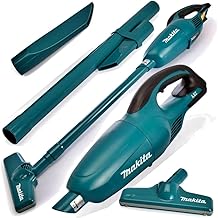


Choosing a Makita cordless vacuum is less about finding the model with the highest headline specification and more about matching the vacuum to the type of cleaning you actually perform. Makita's cordless vacuum range covers compact handheld-style machines, workshop-oriented extractors and more capable models designed for heavier debris. Battery platform, suction performance, filtration, dust capacity, portability, noise, accessories and intended application can all make a meaningful difference.
For UK buyers, compatibility with an existing Makita battery collection can also be an important consideration. Someone who already owns several compatible Makita batteries may place greater value on a bare-tool vacuum, while a first-time cordless-tool buyer may need to assess the total cost of the machine, batteries and charger together.
Not every cordless vacuum is designed for the same job. Understanding the main categories makes it easier to narrow down the best Makita cordless vacuum for your home, workshop, vehicle or trade environment.
Compact Makita cordless vacuums are particularly useful for quick clean-ups, stairs, vehicles, workshops and general household debris. Their lighter construction makes them convenient when a larger machine would be unnecessary.
The trade-off is that compact machines may require more frequent emptying and may not be the best choice for prolonged heavy-duty cleaning.
Workshop-oriented models are designed with practical job-site cleaning in mind. Depending on the specific model, features can include larger dust containers, stronger extraction capability, hose connections and compatibility with particular Makita accessories.
These machines are worth considering for carpentry, joinery, installation work, renovation projects and other applications where dust and debris are generated regularly. However, buyers should check the manufacturer's stated application and filtration arrangement rather than assuming that every cordless vacuum is suitable for fine construction dust.
A cordless dust extractor occupies a different category from a basic household-style vacuum. Extraction equipment can be intended to connect directly to compatible power tools, helping capture dust at the point where it is generated.
If your primary objective is reducing dust from sanding, cutting or drilling, look carefully at extraction compatibility, hose connections, filtration, container capacity and the manufacturer's guidance for the materials involved. A general-purpose cordless vacuum should not automatically be treated as a professional dust extractor.
Suction is one of the most important considerations, but it should not be assessed in isolation. Vacuum performance depends on the interaction between motor output, airflow, filter condition, nozzle design, hose configuration and the type of debris being collected.
A vacuum that feels powerful with loose debris may behave differently when used with a narrow nozzle, a partially blocked filter or a long hose. For that reason, compare the manufacturer's specifications and intended application rather than relying solely on a single quoted suction figure.
Battery compatibility can significantly influence the value of a Makita cordless vacuum. Buyers who already own compatible Makita batteries may be able to choose a bare tool, whereas buyers starting from scratch need to account for the battery and charger as part of the overall purchase.
Runtime varies according to battery capacity, power setting, operating conditions, filter condition and the way the vacuum is used. Maximum advertised runtime figures should therefore be treated as an indication rather than a guarantee of continuous real-world cleaning time.
Higher-power operation can consume more energy, while a clogged filter or restricted airflow can affect performance. If you regularly clean large areas, battery capacity and the ability to swap batteries may be more important than choosing the lightest possible machine.
A larger dust container reduces interruptions, but it can also add bulk and weight. Smaller containers can make a cordless vacuum easier to handle but may require more frequent emptying.
Think about the amount of debris you normally collect in one cleaning session. A compact vacuum can be perfectly adequate for a car interior or small workshop bench, while larger renovation jobs may justify a higher-capacity machine.
Filtration deserves particular attention when a vacuum is used for fine dust. A filter has to remain appropriate for the material being collected, and the filter needs to be maintained according to the manufacturer's instructions.
Do not choose a vacuum solely because a listing mentions a particular filter term. Check the complete filtration specification and intended use. Fine dust, household debris and potentially hazardous materials can have very different extraction requirements.
A dirty filter can restrict airflow and reduce effective cleaning performance. Before buying, consider how easy the filter is to access, clean and replace.
The accessories supplied with a cordless vacuum can influence how useful it is in everyday situations. Two machines with similar basic specifications can have very different practical value if one includes the attachments you actually need.
A crevice nozzle is useful for narrow spaces, gaps around furniture, vehicle interiors and difficult-to-reach areas. It is particularly helpful when the main floor nozzle cannot reach into confined spaces.
A suitable floor nozzle can make a noticeable difference when cleaning larger areas. Check the design and intended surface compatibility if you plan to use the vacuum on carpets, hard floors or mixed surfaces.
Brush tools are useful for dusting delicate surfaces, shelves, dashboards, upholstery and other areas where a narrow suction nozzle may be less convenient.
Extension tubes can improve reach and reduce the need to bend when cleaning floors. They can also make certain high or awkward areas easier to access.
For workshop applications, check whether the hose and connection system are suitable for the tools you intend to use. Do not assume that an accessory from one Makita vacuum is automatically compatible with another model.
For general household cleaning, prioritise manageable weight, convenient emptying, useful floor attachments, sufficient runtime and easy storage. A large workshop extractor may offer more capability than necessary for everyday crumbs, dust and loose debris.
Vehicle cleaning benefits from portability and accessories that can reach between seats, around consoles and into tight gaps. A compact cordless model can be especially convenient because there is no mains cable to manage around the vehicle.
Workshop users should place greater emphasis on dust collection, filtration, capacity, extraction compatibility and durability than on compact dimensions alone. If the vacuum will be used alongside saws, sanders or other dust-producing tools, check the manufacturer's extraction guidance before purchasing.
DIY users often need a versatile machine that can handle occasional drilling debris, sawdust, workshop mess and household cleaning. A model with a useful range of accessories can provide more flexibility than a vacuum optimised for only one task.
Tradespeople should consider battery availability, daily runtime, transportability, extraction requirements, filtration and ease of maintenance. A machine that is convenient for short jobs may be less suitable when it must operate repeatedly throughout a working day.
The biggest advantage of cordless cleaning equipment is freedom from a mains cable. This can be particularly useful on construction sites, in vehicles, outdoors and in locations where sockets are inconvenient.
If you clean continuously for long periods, battery management becomes an important part of the buying decision. If portability is the priority, cordless operation can be considerably more convenient.
Makita is particularly attractive to buyers already invested in its cordless tool ecosystem. However, it is sensible to compare the complete specification rather than choosing a brand name alone.
The most sensible comparison is between machines that perform the same job. Compare battery system, suction and airflow specifications, filtration, capacity, attachments, dimensions, weight and intended application rather than comparing unrelated vacuum categories.
The cheapest machine is not necessarily the most economical choice. Consider whether the package includes the battery and charger, whether the accessories meet your requirements and whether replacement consumables are readily identifiable.
A bare-tool listing can appear significantly cheaper than a complete kit because the battery and charger may not be included. Always establish the total equipment cost before comparing deals.
A cordless vacuum intended for general debris collection should not automatically be used as a substitute for specialist dust-extraction equipment. Check the manufacturer's stated application and filtration requirements for the material involved.
Weight becomes more important when a vacuum is carried upstairs, used above shoulder height, transported between jobs or operated for extended periods. A heavier machine may provide additional capacity or capability, but that does not make it the better choice for every user.
A vacuum without the right nozzle or connection can be frustrating even when the core machine performs well. Check the included accessories before deciding between otherwise similar models.
Headline figures do not tell the entire story. Practical performance also depends on filter loading, airflow restrictions, nozzle design, battery condition and the type of debris being collected.
When comparing several models, use the same criteria for each machine. This avoids choosing a product simply because its listing contains more prominent specifications.
Makita cordless products are commonly encountered in different package configurations, so UK buyers should check exactly what is included before comparing prices.
A bare tool may be the better-value option for someone who already owns the required compatible battery and charger. A complete kit can make more sense for someone entering the battery platform for the first time.
When checking current deals, compare like-for-like packages. A lower advertised price is not necessarily cheaper once the required battery, charger or accessories are added.
Customer reviews are useful when they are interpreted carefully. Instead of focusing only on an overall star rating, look for repeated comments about specific aspects of ownership.
Reviews should complement, not replace, the manufacturer's specifications. Customer feedback can reveal practical usability issues, while official specifications are the better reference for compatibility and technical details.
Regular maintenance helps preserve effective airflow and makes a cordless vacuum easier to rely on. Always follow the instructions supplied for the particular model.
Do not allow debris to accumulate unnecessarily. Regular emptying can make routine cleaning easier and reduces the chance of the container becoming obstructed.
Follow the manufacturer's procedure for cleaning and replacing filters. Avoid using a damaged filter or continuing to operate the machine when the filtration system is not correctly installed.
Hair, fibres, sawdust and other debris can accumulate in narrow passages. Inspect the airflow path when suction appears weaker than expected.
Use and store batteries according to Makita's instructions. Keep battery contacts clean and avoid exposing batteries to unsuitable environmental conditions.
Store the vacuum, accessories and batteries in an appropriate dry location. Keeping attachments together can also prevent the common problem of having the vacuum available but not the accessory required for the task.
Always use a vacuum for the materials and applications for which it is designed. Fine dust, liquids, hazardous substances and combustible materials can require specialised equipment and procedures.
A good purchase is one that fits the user's actual workload. For occasional household cleaning, compact dimensions and easy handling may be more valuable than maximum capacity. For workshop applications, extraction capability, filtration and capacity can become much more important. For professional users, battery availability, durability, maintenance and daily usability may dominate the decision.
There is therefore no single Makita cordless vacuum that is automatically best for every UK buyer. The right choice depends on the cleaning environment, debris type, frequency of use, available batteries and required accessories.
The best model depends on the application. A compact machine may be preferable for vehicles and quick household cleaning, while a higher-capacity workshop model may be more appropriate for DIY and trade work. Compare the intended application, battery system, filtration, capacity, weight and accessories before choosing.
Many compact cordless vacuums can be convenient for vehicle cleaning because they eliminate the need for a mains cable. The most suitable model depends on its accessories, portability, battery runtime and ability to reach narrow areas.
Only use a battery that the particular vacuum is specified to accept. Makita has multiple cordless battery systems, so check the exact model and battery compatibility rather than assuming that every Makita battery will fit.
Package contents vary by model and retailer. Some listings are sold as bare tools, while others may include batteries and a charger. Check the complete product description before comparing prices.
Some are designed specifically for workshop or extraction applications, while others are intended primarily for lighter cleaning. Check the manufacturer's stated extraction capability, filtration requirements and intended use before using a vacuum with power tools.
The answer depends on the exact model, filter system and type of dust. Fine dust can place greater demands on filtration and airflow, so buyers should verify the manufacturer's specifications and safety guidance for the material being collected.
There is no single runtime that applies to every Makita cordless vacuum. Runtime depends on the specific machine, battery capacity, power setting, filter condition and workload. Use the manufacturer's stated runtime information as a guide rather than assuming it represents continuous operation under every condition.
Not necessarily. Higher power potential can be useful for demanding applications, but the best vacuum still depends on weight, capacity, runtime, filtration, accessories and the work being performed. A compact lower-power machine may be more convenient for quick cleaning.
If you already own compatible Makita batteries and a charger, a bare tool may avoid unnecessary duplication. If you do not own the required battery platform, a complete kit can be easier to evaluate because the initial purchase includes the components needed to operate the machine.
Follow the maintenance schedule and cleaning procedure specified for the particular model. Users collecting large quantities of fine dust may need to pay closer attention to filter condition because restricted filtration can affect airflow and performance.
They can be useful for DIY when the selected model matches the job. For general debris and routine clean-up, a versatile cordless vacuum can be convenient. For significant quantities of fine dust produced by power tools, choose a model specifically designed and rated for the required extraction application.
Check battery compatibility, whether the battery and charger are included, suction and airflow specifications, dust capacity, filtration, weight, accessories, intended application and current retailer package contents. Reading verified customer reviews can then help identify practical strengths and limitations.
The strongest way to choose among top-rated Makita cordless vacuums is to start with the job rather than the product name. Decide what you need to collect, where the vacuum will be used, how frequently it will operate and which Makita batteries you already have. Then compare technical specifications, filtration, capacity, accessories, weight and package contents.
For UK buyers, it is also sensible to check current retailer listings before making a decision because prices, bundles, stock status and included accessories can change during 2026. Treat customer ratings as one part of the research process and verify important technical details against the manufacturer's information.
Whether you need a compact vacuum for quick household and car cleaning or a more capable cordless extraction solution for workshop work, careful comparison should help you find a Makita model that provides the right balance of portability, cleaning performance, battery convenience and long-term practicality.