

♥ Wishlist
Compare 28 verified Milwaukee Angle Drills products in United Kingdom. Reviews, ratings, pros, cons and buying advice updated for October 2026.


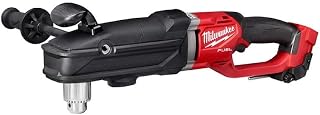


Choosing a Milwaukee angle drill is less about finding the most powerful specification and more about matching the tool to the type of access, drilling, fastening and installation work you regularly perform. Compact right-angle drills are designed for situations where a conventional cordless drill cannot comfortably reach, making them particularly useful for electricians, plumbers, kitchen fitters, carpenters, maintenance professionals, installers and serious DIY users.
For UK buyers, it is worth comparing the complete specification rather than relying on a product's headline voltage or maximum torque figure. Chuck capacity, overall head length, speed range, ergonomics, battery compatibility, control features, weight and the physical shape of the tool can have a greater effect on day-to-day usefulness than one impressive number.
This buying guide focuses on the criteria that matter when comparing top-rated Milwaukee angle drills and closely related right-angle drilling tools. Product specifications, included accessories, battery packages and retailer pricing can change, so check the current listing details before purchasing.
A Milwaukee angle drill is a drilling and fastening tool designed around a compact right-angle or angled head. Instead of positioning the motor and chuck along the same straight axis as a conventional drill, the mechanism allows the user to work in confined spaces where a standard drill would be awkward or physically impossible to position.
This configuration is particularly useful between wall studs, beneath cabinets, inside service voids, around pipework and in other restricted areas. Depending on the specific model, an angle drill may be intended primarily for drilling, fastening or both.
Milwaukee's cordless tool ecosystem also makes battery compatibility an important consideration. Buyers who already own compatible Milwaukee batteries may be able to select a bare-tool version rather than purchasing another battery and charger, while someone entering the system for the first time may need to consider the complete kit.
A conventional cordless drill remains the more versatile choice for general-purpose drilling and screwdriving, but its length can become a serious limitation in restricted spaces. An angle drill changes the physical geometry of the tool, allowing the operator to approach the workpiece from a different direction.
Restricted access: The angled head can make it easier to reach locations that are difficult to approach with a conventional drill.
Improved positioning: The tool can be particularly convenient when working inside cabinets, frames, service spaces and between structural members.
Specialist installation work: Electricians, plumbers and installers can benefit from a tool designed specifically around awkward drilling positions.
Reduced tool length in the working direction: The right-angle configuration can provide more usable clearance in front of the operator.
Battery convenience: Compatible cordless systems eliminate the need for a mains cable in locations where portability is valuable.
There is, however, no universal advantage. A standard drill may provide a better balance for open-space drilling, while an impact driver may be preferable for certain fastening applications. The best choice depends on the work rather than the tool category alone.
The chuck determines which drill bits and accessories can be fitted and how conveniently they can be changed. When comparing models, check whether the tool uses a keyed, keyless or specialised chuck arrangement and identify its stated capacity.
A larger chuck capacity can accommodate a wider range of conventional drill bits, but chuck size should not automatically be treated as a measure of overall tool quality. If your work mainly involves smaller pilot holes, installation holes or screwdriving, a compact chuck arrangement may be entirely appropriate.
Also consider access around the chuck. In a confined-space tool, the physical dimensions of the chuck and head can be just as important as its nominal capacity.
For an angle drill, physical dimensions are among the most important buying criteria. A model that appears powerful on paper may be less useful if its head is too large for the spaces where you intend to work.
Compare the stated head length, overall height and width where manufacturers provide these measurements. Think about the actual clearance around pipes, joists, cabinets, studs and other obstacles rather than simply looking at the tool's total weight.
For repetitive work in tight spaces, a compact head can be more valuable than a higher theoretical power rating that you rarely need.
Variable speed gives the operator greater control over drilling and fastening. Different materials and drill-bit types require different operating speeds, so a useful speed range can make the tool more adaptable.
When comparing specifications, look for the manufacturer's stated no-load speed range and consider whether the control system allows smooth adjustment rather than simply offering a high maximum RPM.
Higher speed can be useful for appropriate smaller-diameter drilling applications, whereas slower controlled operation can be preferable for larger bits, certain materials and fastening tasks. Always follow the manufacturer's instructions for the correct speed and accessory combination.
Torque is important when an angle drill is used for demanding drilling or fastening, but maximum torque figures should be interpreted carefully. A larger published torque figure does not automatically make one tool better for every user.
High torque can be valuable when drilling larger holes or driving fasteners that require substantial rotational force. For delicate installation work, however, controllability and the ability to avoid over-driving may be more important.
Compare torque alongside speed, gearbox design, clutch functionality, motor technology and intended application rather than treating torque as a standalone ranking factor.
Many modern cordless power tools use brushless motors. Compared with traditional brushed motor designs, brushless systems can offer advantages in efficiency, electronic control and motor longevity, although the actual performance depends on the complete tool design.
If you expect to use an angle drill frequently or for demanding professional work, brushless technology can be an important specification to consider. Occasional DIY users may place greater value on purchase cost, compatibility and ergonomics.
Battery voltage should not be used as the sole measure of performance. Different cordless platforms are designed around different combinations of power, size, weight and runtime.
Milwaukee's battery ecosystem includes different tool platforms, so confirm that the angle drill you are considering belongs to a battery family you already own or intend to adopt. A bare tool can look substantially cheaper than a complete kit because the battery and charger are excluded.
Before comparing prices, make sure you are comparing like-for-like configurations. A bare tool, tool with one battery and charger, and larger multi-battery kit are not directly equivalent purchases.
Battery capacity affects how long a cordless tool can operate between charges, but runtime varies substantially according to the material being drilled, accessory size, pressure applied, speed, temperature and workload.
A higher-capacity battery can increase operating time but may also add weight and alter the balance of a compact angle drill. For overhead or prolonged confined-space work, a smaller and lighter battery may sometimes be preferable.
Professional users who already have several compatible batteries should consider the batteries they actually own before choosing a kit configuration.
Precise trigger control is valuable when starting holes, positioning fasteners or working with delicate materials. A tool that responds progressively to trigger pressure can provide more control than one that reaches high speed abruptly.
Electronic protection systems can also help manage conditions such as overload or excessive temperature. The exact functions vary by model, so read the manufacturer's specification for the individual tool rather than assuming every Milwaukee angle drill has identical electronics.
An integrated LED can be surprisingly useful in confined spaces. Areas beneath cabinets, inside framing and around plumbing or electrical installations may have poor natural lighting, and the tool itself can cast shadows over the drilling point.
When comparing models, consider the location and usefulness of the light rather than simply whether an LED is listed as a feature. A well-positioned light can make it easier to identify the bit and drilling point before starting the tool.
Angle drilling often involves unusual wrist and arm positions, so ergonomics deserve more attention than they receive in conventional drill comparisons. Look for a comfortable primary grip, sensible trigger placement and a design that allows the tool to be controlled without excessive wrist strain.
Consider how the drill feels when held horizontally, vertically and overhead. A tool that is comfortable for five minutes may feel very different during a prolonged installation job.
Weight should be considered together with balance. A slightly heavier tool can still feel manageable if its mass is positioned effectively, while a lighter tool can become tiring if the balance places excessive leverage on the wrist.
Battery choice also changes the practical weight of a cordless angle drill. If possible, assess the complete tool-and-battery combination rather than considering the bare-tool weight alone.
Electricians often need to drill through timber framing, joists, cabinets and other structures while working around existing cables, fittings and services. A compact right-angle configuration can make access substantially easier in locations where a conventional drill is difficult to position.
Priorities may include compact dimensions, precise speed control, manageable weight, battery compatibility and dependable chuck performance. When drilling through structural timber or other materials, use the correct bit and follow applicable safety procedures.
Plumbing installations can involve restricted spaces around pipework, cabinets, walls and flooring. An angle drill can provide a useful way of reaching drilling points without requiring the operator to reposition surrounding components unnecessarily.
For plumbing work, pay particular attention to head clearance, grip, battery runtime and control. The ability to operate comfortably at awkward angles can be more important than maximum drilling speed.
Carpenters and joiners may use angle drills for drilling in frames, cabinets, awkward timber assemblies and other locations where a conventional drill is obstructed by the workpiece.
Accuracy and controllability are especially important when working with finished surfaces. A suitable drill bit, appropriate speed and controlled pressure can help produce cleaner results.
Installation work often requires drilling or fastening inside cabinets and other enclosed spaces. Here, the compact geometry of an angle drill can be more useful than raw power.
A lighter configuration may also be preferable when the tool must be held at shoulder height or above for extended periods. Consider battery size carefully because a large battery can change the balance of an otherwise compact tool.
Maintenance work can involve unpredictable access conditions, so versatility is valuable. A right-angle drill can complement rather than replace a conventional cordless drill, providing a specialist solution for spaces where the larger tool cannot be positioned effectively.
The main difference is physical access. A conventional drill driver is usually the better all-rounder because it can handle a broad range of drilling and fastening tasks. An angle drill becomes attractive when the geometry of the workspace is the limiting factor.
Choose a standard drill driver if you primarily work in open areas and want one versatile cordless tool.
Choose an angle drill if restricted access is a frequent problem.
Consider owning both if drilling conditions vary significantly between jobs.
An impact driver is primarily designed around fastening and high-torque screwdriving, while an angle drill is intended around drilling access and controlled rotational work. Although applications can overlap, the two tools serve different roles.
If your work involves long structural screws or demanding fastening, an impact driver may be the more appropriate specialist tool. If the main challenge is getting a drill bit into a restricted location, an angle drill is usually the more logical category to investigate.
Do not select between these tools solely on torque figures. The accessory interface, speed characteristics, control, physical dimensions and intended application all matter.
A right-angle attachment can convert a conventional drill into a solution for certain confined-space applications, and it may be attractive to users who only occasionally need angled access.
A dedicated angle drill, however, is designed around the angled configuration from the beginning. Dedicated construction can provide a more purpose-built solution, particularly for tradespeople who use confined-space drilling regularly.
The appropriate option depends on frequency of use, required clearance, drilling demands, existing tools and budget. An attachment can make sense for occasional work, while a dedicated tool may be more convenient for repeated professional use.
A structured comparison prevents a high headline specification from dominating the decision. Start by identifying the job requirements and then compare each candidate against the same criteria.
Access: Compare head dimensions and overall geometry for the spaces where you actually work.
Power: Check the motor and torque specifications against the materials and hole sizes you expect to drill.
Speed: Compare the available speed range and control characteristics.
Chuck: Confirm chuck type, capacity and compatibility with your preferred accessories.
Battery: Establish which Milwaukee battery platform the tool uses.
Weight: Compare the bare-tool specification and the practical weight with your intended battery.
Ergonomics: Consider grip, trigger position and balance.
Controls: Check for electronic protection, variable speed and other relevant control functions.
Lighting: Consider whether an integrated work light would be useful in your typical working environment.
Kit contents: Confirm exactly what is included before comparing the advertised purchase price.
Product specifications can look similar across several tools, but each number answers a different question. Understanding the terminology helps prevent unsuitable purchases.
No-load speed describes how fast the tool rotates without drilling into a material. It should not be interpreted as the speed the drill will maintain under every working condition.
Maximum torque indicates the rotational force available under specified conditions. Actual working performance depends on the gear, accessory, material and operating conditions.
Chuck capacity indicates the range of shank diameters the chuck is designed to accept. Check accessory compatibility before assuming that every drill bit in your toolbox can be used.
The battery platform determines which batteries can be used with the tool. This is especially important for cordless users who already own Milwaukee equipment.
A tool-only weight excludes the battery. For a cordless purchase, the more useful figure for ergonomic planning is the weight of the complete working configuration.
A higher voltage label does not automatically mean that a tool is the right choice. Power must be evaluated alongside dimensions, gearing, motor design, battery system and intended application.
This is one of the most important mistakes when buying an angle drill. The entire reason for choosing the category is access, so a large head can undermine the principal advantage of the tool.
Always identify whether a listed price refers to the tool alone or includes batteries and a charger. This distinction can make two apparently similar offers fundamentally different.
Excessive capability can add size, weight or cost without providing meaningful benefits for light installation work. Match performance to the material, accessory sizes and workload you actually expect.
If you already own compatible Milwaukee batteries, check the exact platform before buying. If you do not own any batteries, calculate the complete system cost rather than comparing bare-tool prices.
Drill bits, hole saws, countersinks, drivers and other accessories have their own requirements. Check the chuck and accessory specifications before purchasing a tool for a specialised job.
Confined-space drilling can involve awkward positions, making comfort especially important. A technically capable tool can still be a poor choice if it becomes difficult to control during prolonged work.
The drill itself is only one part of the drilling system. The correct accessory should be selected according to the material and hole required.
Wood bits: Select a bit designed for the timber and hole size required.
Twist drills: Suitable variants are commonly used for metal and other compatible materials.
Masonry bits: Use an appropriate masonry accessory and follow the drill manufacturer's guidance for the material.
Hole saws: Useful for larger openings when the drill and accessory are rated for the application.
Spade bits: Often used for larger holes in timber, subject to tool and accessory limitations.
Installer bits: Specialist long-reach accessories can be useful for certain electrical and installation applications.
Always check the manufacturer's instructions for permissible accessories, operating speeds and material applications. A powerful cordless drill does not make an unsuitable or damaged accessory safe to use.
Confined-space drilling can introduce hazards that are easy to overlook. Before drilling into walls, floors, ceilings, cabinets or structural materials, establish what is behind the drilling location.
Wear suitable eye protection and other appropriate personal protective equipment.
Inspect the work area for concealed electrical cables, plumbing and other services before drilling.
Secure the workpiece where appropriate rather than attempting to hold unstable material by hand.
Use a drill bit designed for the material and application.
Follow the manufacturer's operating instructions and accessory limitations.
Remove the battery before carrying out maintenance, accessory changes or adjustments when required by the manufacturer's instructions.
Keep hands away from rotating components and avoid loose clothing around moving parts.
Do not force the tool when an accessory becomes stuck; release the trigger and deal with the obstruction safely.
Routine care can help preserve the tool's condition and make problems easier to identify before they become serious.
Keep ventilation openings free from accumulated dust and debris.
Clean the exterior after dusty drilling operations using an appropriate method recommended by the manufacturer.
Inspect the chuck and accessories for visible damage or excessive wear.
Check the battery and tool contacts for contamination or damage.
Store batteries and tools according to the manufacturer's recommendations.
Do not continue using a tool that develops unusual noises, excessive vibration, burning smells or other abnormal behaviour.
Use only compatible batteries, chargers and accessories specified or approved for the relevant tool.
Before fitting a bit, identify the exact drilling position and determine how the tool will enter the space. A few seconds of planning can prevent awkward positioning and reduce the chance of damaging surrounding surfaces.
Use a speed appropriate to the accessory and material. Avoid assuming that maximum speed produces the fastest overall result. Excessive speed can increase heat, wear and loss of control with unsuitable accessories.
Even though the drill has an angled head, the bit still needs to approach the workpiece correctly. Excessive sideways force can reduce drilling accuracy and place unnecessary stress on the accessory.
Let the appropriate bit and tool combination perform the cutting rather than relying entirely on force. If progress suddenly becomes difficult, stop and determine whether the accessory, speed, material or drilling technique is appropriate.
A Milwaukee angle drill is particularly worth considering when restricted access is a recurring problem rather than an occasional inconvenience.
Electricians working around framing and service spaces.
Plumbers drilling around pipework and installations.
Carpenters and joiners working inside frames or cabinetry.
Kitchen and furniture installers working inside confined cabinets.
Maintenance professionals dealing with varied access conditions.
DIY users who regularly encounter drilling locations where a conventional drill is too long or awkward.
If most of your drilling takes place on an open workbench, exposed wall, floor or easily accessible timber, a conventional cordless drill may provide better all-round value.
An angle drill is a specialist solution. Buying one simply because it has an interesting design may not make sense if you rarely encounter restricted access. In that situation, a quality general-purpose drill driver may be a more practical first purchase.
Milwaukee is a major name in professional cordless power tools, but an independent buying guide should not assume that one brand is automatically the best choice for every application. Depending on the required tool type and battery ecosystem, buyers may also encounter alternatives from brands such as DeWalt, Makita, Bosch Professional, Metabo and Ryobi.
The most sensible comparison is based on the tool category, dimensions, battery platform, specifications, ergonomics, accessory compatibility and the type of work involved. Brand loyalty can be useful when you already own compatible batteries, but it should not replace checking the actual specification.
Prices for cordless power tools can vary according to whether the listing is for a bare tool or a complete kit, and retailer offers can change over time. For this reason, comparing the advertised headline price alone can give a misleading impression of value.
Check whether a battery is included.
Check whether a charger is included.
Compare the battery capacity when kits include batteries.
Check the exact model number rather than relying on similar product names.
Confirm which accessories are included.
Compare current retailer pricing rather than relying on an old advertised price.
Check the manufacturer's current specifications for the exact model.
Before committing to a Milwaukee angle drill, use a final checklist to make sure the model matches the job.
Is the tool genuinely designed for the type of angled drilling you need?
Will the head fit into the tightest space where you expect to use it?
Does the chuck accept your existing drill bits and accessories?
Is the battery platform compatible with batteries you already own?
If buying a kit, are the battery and charger specifications suitable?
Is the weight acceptable for prolonged or overhead use?
Does the speed range suit your materials and accessories?
Are the control features appropriate for drilling and fastening?
Have you compared the complete current package rather than only the bare-tool price?
Have you checked the current manufacturer's specification before purchase?
Customer feedback can be useful when comparing cordless power tools, but it should be interpreted alongside objective specifications. A reviewer using an angle drill for cabinet installation may value compactness and balance, while another user drilling large holes in timber may prioritise torque and battery runtime.
Look for recurring comments about practical characteristics such as ergonomics, chuck performance, balance, access and ease of control rather than relying on a single positive or negative review.
Also check whether reviews relate to the exact model and kit configuration you are considering. Closely related model numbers can have different specifications, accessories and battery arrangements.
If access is regularly the main obstacle, an angle drill can be worthwhile. If you mainly work in open areas, a conventional drill driver is usually more versatile.
Brushless technology can be attractive for frequent use because of its efficiency and electronic control characteristics. Whether the additional specification is worthwhile depends on workload, budget and how heavily the tool will be used.
A bare tool can be sensible if you already own compatible batteries and a charger. A complete kit may be more appropriate when entering the relevant battery platform for the first time.
No. Torque is only one part of the performance equation. For confined-space work, dimensions, balance, control and compatibility can be equally or more important.
It can handle many drilling and fastening tasks, but its specialist geometry does not necessarily make it the best general-purpose replacement. Many professional users will find that the two tool types complement each other.
No assumption should be made about compatibility simply because two tools carry the Milwaukee name. Check the exact battery platform and manufacturer's compatibility information for the individual tool.
Physical access is usually the starting point. Compare the head dimensions and tool geometry against the tightest location in which you intend to work before prioritising secondary specifications.
The best Milwaukee angle drill is the one that solves your particular access and drilling requirements without adding unnecessary size, weight or cost. Start with the workspace, then work backwards to the required dimensions, chuck arrangement, speed, torque, battery system and ergonomics.
For professional users, battery compatibility and long-term ergonomics can have a major effect on the practical value of the tool. For occasional DIY users, a compact model that complements an existing drill may be more useful than purchasing the highest-capability option available.
When comparing the top-rated Milwaukee angle drills available to UK buyers, check the exact model number, current specifications, battery configuration, included accessories and current retailer offer. Product listings and package contents can change, so verify those details immediately before purchase.
A careful comparison should ultimately answer three questions: can the drill physically reach the work area, does it have enough controlled performance for the materials and accessories you use, and does it fit logically into your existing cordless tool system? If the answer to all three is yes, you are much more likely to have selected the right angle drill for your needs.