

♥ Wishlist
Compare 48 verified Milwaukee Batteries and Chargers products in United Kingdom. Reviews, ratings, pros, cons and buying advice updated for October 2026.


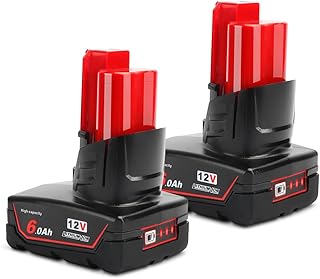


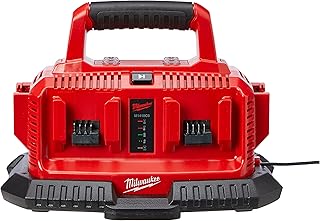


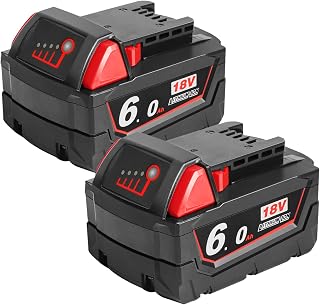


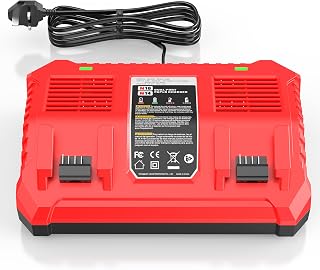


Choosing the right Milwaukee battery and charger is about more than selecting the largest Ah rating. The best combination depends on the Milwaukee cordless tools you already own, the M12 or M18 platform you use, how frequently you work, the balance between runtime and weight, and whether charging speed matters on a busy jobsite. A battery that is ideal for a compact drill may not be the most practical choice for a high-demand saw, grinder or rotary hammer.
This guide is designed to help UK buyers compare Milwaukee battery and charger options more intelligently. Rather than treating every battery as interchangeable in practical terms, consider voltage platform, battery capacity, cell technology, physical size, heat management, charging requirements and the type of work you expect the battery to perform.
Milwaukee is particularly well known for its M12 and M18 cordless ecosystems. These are separate voltage platforms, so choosing the correct family is the first step. Within each platform, different battery capacities and generations can offer very different combinations of runtime, power delivery, weight and cost.
The M12 and M18 systems serve different purposes, and the distinction is more important than simply looking at the Ah figure printed on the battery.
M12 batteries are designed around Milwaukee's compact 12V cordless platform. Their smaller physical size makes them particularly useful for applications where access, portability and tool weight are important. Compact drills, installation tools, inspection equipment and other smaller cordless products can benefit from the reduced bulk of the M12 system.
If you regularly work overhead, inside cabinets, in confined spaces or around existing installations, the smaller format can be a major practical advantage. A higher-capacity M12 battery may provide more runtime, but the lightest option can still be preferable when the tool is used repeatedly throughout a working day.
M18 is Milwaukee's larger cordless platform and covers a broad range of professional power tools. Drills, impact wrenches, circular saws, reciprocating saws, grinders, SDS rotary hammers and other demanding equipment can place substantially greater demands on a battery.
For M18 users, battery selection becomes a balance between capacity, power delivery, heat management, size and weight. A battery with more stored energy can extend working time, but it can also make a compact tool noticeably heavier.
No. M12 and M18 are separate Milwaukee battery platforms and should not be treated as interchangeable. Always match the battery to the platform specified for the tool. Do not attempt to modify a battery, tool or connector to make incompatible equipment work together.
Battery capacity is commonly expressed in ampere-hours, abbreviated as Ah. In simple terms, a higher Ah rating generally indicates greater stored electrical capacity within the same voltage family. It does not, however, mean that a higher-Ah battery is automatically the best choice for every tool.
For example, a compact drill used for short fastening tasks may not benefit enough from a very large battery to justify the additional weight. Conversely, a high-demand saw used continuously may make better use of a larger-capacity pack.
Smaller batteries are attractive when portability and tool balance are priorities. They can make a drill, impact driver or installation tool easier to handle and less tiring during repeated use.
They are particularly useful for short-duration tasks where the battery can be swapped before runtime becomes an inconvenience. If you own several compatible batteries, using smaller packs can also be practical because a depleted battery can simply be replaced with a charged one.
Mid-range capacities often make sense for general-purpose users because they offer a compromise between runtime and weight. They can be a sensible starting point for buyers who use several cordless tools rather than one particularly demanding machine.
Larger packs can be advantageous for applications that consume considerable energy, especially when changing batteries frequently would interrupt the job. They can also make sense when a tool's performance is strongly influenced by the battery's ability to deliver power under heavy load.
The trade-off is increased size and weight. A large battery on a compact drill may be unnecessarily cumbersome, while the same battery can be entirely appropriate on a high-demand saw or grinder.
One of the most common battery-buying mistakes is comparing packs solely by Ah. Battery capacity is important, but it does not describe the entire performance profile of a modern cordless battery.
When comparing Milwaukee batteries, also consider:
Two batteries with similar capacity figures can therefore be very different choices for a demanding cordless tool.
Milwaukee's high-output battery ranges are intended to provide greater capability for demanding cordless applications. They can be especially relevant when a tool draws substantial current or when maintaining performance under load is more important than achieving the lowest possible battery weight.
For buyers considering high-output batteries, the important question is not simply whether the battery is more advanced. The better question is whether the tools and workload justify it.
A professional using an M18 grinder, saw or other high-demand equipment regularly may have a stronger reason to invest in higher-performance battery technology than someone using a compact drill for occasional household repairs.
For drilling and screwdriving, ergonomics can be just as important as maximum runtime. A compact battery can keep the centre of gravity close to the handle and make repetitive fastening work more comfortable.
If the drill is regularly used for larger holes, long drilling sessions or demanding materials, additional capacity may become more useful. Consider how long the tool is normally used between battery changes rather than automatically selecting the biggest pack available.
Impact drivers are often used for repetitive fastening, making tool balance particularly noticeable. Smaller batteries can be attractive for installation and general fastening work, while higher-capacity packs may be useful for prolonged professional use.
Impact wrenches can place considerably greater demands on batteries, particularly when used repeatedly for automotive, construction or heavy-duty fastening applications. Here, battery performance and power delivery can become more important than simply minimising weight.
Match the battery to the impact wrench's intended workload and the fastener sizes you regularly encounter. A battery suitable for light fastening should not automatically be assumed to be ideal for sustained heavy-duty work.
Circular saws are energy-intensive tools, particularly when cutting thicker or denser materials repeatedly. A suitable high-capacity or high-output battery can be more practical than a very small pack when long cutting sessions are expected.
Weight still matters because the saw is handheld and may be used above a work surface. The best choice is therefore a balance between adequate power and manageable handling.
Reciprocating saws can generate substantial load during aggressive cutting. If the tool is used for demolition, construction or prolonged cutting, battery capacity and output capability deserve close attention.
Angle grinders can consume significant battery energy during demanding applications. A larger battery can be useful where long periods of grinding or cutting are expected, but the added weight should be considered carefully for overhead or extended handheld work.
Rotary hammers can place high demands on cordless battery systems, especially during repeated drilling into masonry or concrete. Buyers should pay particular attention to the battery recommendations for the specific tool rather than selecting a pack purely based on capacity.
A battery is part of the tool's overall handling system. Adding a larger pack changes the weight distribution, centre of gravity and feel of the tool.
This can be beneficial when the additional mass helps stabilise a larger machine, but it can be tiring when attached to a compact drill used continuously at shoulder height.
Before buying a large battery, ask:
Modern cordless tool batteries use rechargeable lithium-ion technology. Within that broad category, battery construction, cell selection, electronics, thermal management and pack design all influence practical performance.
For consumers, the key takeaway is that battery technology should be assessed as a complete system rather than by cell terminology alone. Milwaukee's battery electronics and tool communication systems are designed to work together, so genuine compatible packs should be preferred over questionable alternatives.
Modern power-tool batteries are not simply collections of cells. Battery packs incorporate electronic systems that help monitor operating conditions and communicate with compatible tools and chargers.
Depending on the system and battery generation, electronic management can be involved in monitoring factors such as temperature, charging conditions and battery state.
This is one reason buyers should avoid treating a cordless battery as a generic commodity. Compatibility, electronics and charger design are all part of the overall system.
The charger deserves as much attention as the battery, particularly for professional users who depend on cordless tools throughout the working day.
A charger should be selected according to the battery platform and the charging requirements specified by the manufacturer. Compatibility is the first consideration; charging speed and workflow are secondary considerations.
A conventional charger can be perfectly adequate for users who have plenty of time between jobs or who own several batteries. It may also make financial sense for occasional users who do not need rapid battery turnaround.
Faster charging can be valuable on jobsites where batteries are continuously cycled between tools and chargers. However, the practical benefit depends on how many batteries you own and how quickly your tools consume them.
If you have only one battery and rely on a single cordless tool, charging speed can have a significant effect on workflow. If you have several batteries that rotate through different tools, the advantage of the fastest charger may be less important.
A homeowner who uses Milwaukee tools periodically may benefit from a smaller battery and a straightforward compatible charger. There is little reason to pay for maximum capacity if the tools are used for short jobs and charging time is not critical.
A more active DIY user may prefer a balanced battery that can work across several tools. Owning two compatible batteries can also be more convenient than relying on one very large pack.
A tradesperson who depends on cordless equipment every day should consider the complete workflow. Battery capacity, high-load performance, charging speed, number of packs and compatibility across the tool collection can all affect productivity.
Heavy users should assess batteries by the demands of the specific tools rather than attempting to standardise on one battery size for everything. High-demand equipment may justify higher-output packs, while compact installation tools can remain better suited to lighter batteries.
There is no universal number. The right quantity depends on the number of tools being used simultaneously, the length of the working day and access to charging.
A simple one-battery setup may be sufficient for occasional use. For regular work, two or more batteries can create a practical rotation: one battery in use, another charging or ready to use.
Users with several cordless tools may benefit from maintaining a larger battery pool so a single depleted battery does not interrupt work across multiple machines.
This is a useful comparison for buyers who are deciding how to spend their battery budget.
One large battery may be preferable when:
Several smaller batteries may be preferable when:
Battery packs are safety-critical components of cordless power-tool systems. Buyers should be cautious about extremely inexpensive packs that make compatibility claims without providing clear manufacturer information.
Using genuine Milwaukee batteries and chargers designed for the relevant platform reduces the uncertainty associated with unknown construction, electronics, cell quality and protection systems.
When comparing listings, examine the product description carefully and be wary of ambiguous terminology, unusual specifications or claims that appear inconsistent with the manufacturer's established product ranges.
More capacity can be useful, but the largest battery is not automatically the best battery. Weight and handling can become significant disadvantages on compact tools.
Always confirm the platform before purchasing. A battery's capacity number does not replace the need to match the correct voltage family.
The cheapest battery may not provide the combination of capacity, output, durability and compatibility that your work requires. Compare the complete specification and intended use rather than the headline price alone.
Although battery-platform compatibility makes cross-tool use convenient, different tools can have very different requirements. A compact installation tool and a heavy-duty grinder do not necessarily benefit from the same battery size.
Runtime is easy to compare on a product page; fatigue is less obvious. If a tool is used throughout the day, battery weight can have a meaningful effect on comfort.
A battery purchase should be considered alongside charging requirements. Buyers should confirm that the charger is suitable for the battery platform and that its charging performance fits their workflow.
M18 compatibility does not mean every M18 battery has identical physical characteristics or performance behaviour. Battery generation, capacity and construction can differ.
When evaluating two batteries, use a structured comparison rather than focusing on a single specification.
When comparing current listings in the United Kingdom, check the complete product description rather than relying solely on the product title.
A battery-and-charger kit can be convenient when establishing or expanding a cordless system. It may also be useful when the buyer needs both charging equipment and an additional battery.
Buying batteries separately can make more sense when you already own compatible chargers. In that situation, purchasing another charger may provide little additional value unless you need simultaneous charging at different locations.
Compare the actual contents of each option. A product labelled as a kit may include different battery capacities, charger types or quantities, so the headline description should not be the only basis for comparison.
Battery runtime varies according to the tool, material, workload, operating technique and environmental conditions. A battery's rated capacity should therefore be treated as a specification rather than a guaranteed number of working hours.
Runtime can be influenced by:
Battery temperature is an important consideration in high-load cordless work. Demanding applications can generate heat within the battery and tool, and battery management systems are designed to help manage operating conditions.
For professional users, it is sensible to avoid treating a battery as an unlimited energy source. If a battery or tool becomes unusually hot, follow the manufacturer's operating and charging guidance rather than immediately placing a hot pack into a charger or continuing to force the tool through excessive loads.
Proper storage can help protect a rechargeable battery system over time. Follow Milwaukee's current instructions for storage, charging and operating temperatures for the specific battery generation you own.
Battery longevity depends on many factors, including charging habits, operating temperature, workload and storage conditions. The most useful approach is to follow the manufacturer's instructions rather than attempting to apply generic battery rules to every lithium-ion pack.
For a working battery collection, rotating packs can also make practical sense. Instead of repeatedly exhausting one battery while others remain unused, distribute workload across compatible packs according to the requirements of your tools.
Rechargeable lithium-ion batteries should be treated as electrical energy storage devices, not ordinary disposable batteries.
Chargers generally require less maintenance than the tools themselves, but they should still be kept in suitable condition.
A cordless tool is a system comprising the motor, electronics, mechanical components, battery and charger. The battery therefore has a role beyond simply determining how long the tool operates.
On compatible high-demand systems, the battery's ability to deliver current can influence how effectively the tool operates under load. This is particularly relevant to applications where the motor repeatedly encounters high resistance.
However, a more powerful battery cannot turn an unsuitable tool into a different class of machine. The tool's own motor, gearing, electronics and design remain fundamental to its capability.
For many users, mixing battery sizes is actually one of the most practical approaches. A compact battery can remain attached to a drill or impact driver, while a higher-capacity pack can be reserved for a saw, grinder or other energy-intensive tool.
This strategy avoids the disadvantages of using a heavy battery everywhere while still providing additional runtime where it matters.
Milwaukee is not the only manufacturer with a broad professional cordless ecosystem. Buyers comparing cordless systems may also encounter established platforms from brands such as DeWalt, Makita, Bosch Professional and Hikoki.
The important comparison is not simply which brand has the highest battery capacity. Consider the complete ecosystem:
If you already own several Milwaukee tools, remaining within the compatible Milwaukee ecosystem may provide practical advantages because the same battery family can support multiple tools where compatibility allows.
An upgrade can be worthwhile when your existing battery no longer suits the way you work. Signs that a different battery configuration may be useful include frequent battery changes, excessive tool weight, inadequate runtime for a particular application, or insufficient battery performance for a demanding tool.
Before upgrading, determine whether the problem is genuinely the battery. If the tool itself is unsuitable for the application, a larger battery may not solve the underlying issue.
If you are building a Milwaukee collection gradually, it can be useful to think about batteries as part of the overall system rather than buying a new battery without considering future tools.
Start by identifying the tools you are most likely to add. If most future purchases are M18 tools, investing in a sensible M18 battery rotation can be more practical than repeatedly purchasing individual packs. If your work centres on compact installation tools, an M12 setup may make more sense.
For mixed workloads, maintain different battery sizes for different tool categories. Smaller packs can be reserved for compact tools, while larger high-output packs can be assigned to machines that genuinely benefit from their additional capability.
Customer reviews can be useful, but they should be interpreted in context. A reviewer using a battery on a compact drill may have very different expectations from a professional using the same battery on a heavy-duty saw.
Look for reviews that provide useful context, such as:
A review that simply says a battery is "good" or "bad" provides much less buying information than a review explaining how and where the battery was used.
Prices can change frequently, so buyers should compare the current cost rather than relying on historical pricing. Pay attention to what is actually included in the package.
A lower headline price may represent a battery-only product, while a higher-priced listing may include a charger or multiple batteries. Compare the complete package before deciding which option offers better value.
It is also worth checking whether a retailer is offering a battery as part of a broader tool kit. If you already own the tool but need another battery, a battery-only purchase may be more appropriate. If you are expanding into a new platform, a kit can sometimes be more useful because it addresses several system requirements at once.
For a straightforward purchasing decision, use this sequence:
The best Milwaukee battery and charger combination is the one that matches your actual tools and working pattern. There is no single battery capacity that is ideal for every application.
For compact tools, low weight can be more valuable than maximum capacity. For high-demand M18 equipment, greater capacity and output capability can become more important. For regular professional use, a sensible battery rotation and suitable charger can be more valuable than simply purchasing one exceptionally large battery.
Before making a purchase in the UK, confirm the M12 or M18 platform, compare capacity and weight, consider the tool's workload, check charger compatibility and review the exact package contents. Genuine Milwaukee batteries and compatible chargers should be prioritised, particularly for demanding professional applications.
The best Milwaukee battery depends on the tool and workload. A compact pack may be preferable for lightweight drills and installation tools, while a larger high-output battery may be more appropriate for demanding M18 equipment.
No. M12 and M18 are separate battery platforms. Always use a battery specifically intended for the platform and tool in question.
No. A higher Ah rating generally provides more stored capacity, but it can also increase battery size and weight. Choose capacity according to the application.
For general drilling and fastening, a compact or mid-capacity battery can provide a useful balance of handling and runtime. For intensive drilling, larger capacity may be more appropriate.
A circular saw can place substantial demands on its battery, so capacity and output capability deserve particular attention. Check Milwaukee's recommendations for the exact saw model before choosing a pack.
Compatibility depends on the battery platform and the specific tool. Do not assume that every Milwaukee battery works with every Milwaukee cordless product simply because both carry the Milwaukee name.
If you already have a compatible charger, a battery-only purchase may be sufficient. If you need both a battery and charger, a kit can be a more practical option. Compare the complete contents and current UK pricing.
It depends on your workload and number of tools. Occasional users may need only one or two, while professional users often benefit from several batteries that can be rotated between tools and charging.
They can be worthwhile for demanding compatible tools where high-load performance and sustained operation matter. They may be unnecessary for light-duty tools where low weight is the greater priority.
Only when the battery is compatible with the exact tool and platform. A higher-capacity compatible battery can provide greater runtime, but the added weight and dimensions should also be considered.
Store them according to Milwaukee's current safety and storage instructions, away from excessive heat, moisture, physical damage and objects that could short the contacts.
Check the exact model designation, platform, capacity, compatibility information and package contents. Compare the listing with the specifications for your particular Milwaukee tool rather than relying on the product title alone.
Milwaukee offers broad cordless tool ecosystems for professional applications, including M12 and M18 products. Whether it is the right platform for you depends on the tools you need, your workload and the overall cost of building the system.
M12 is generally suited to compact cordless applications where size and weight are important, while M18 covers a broader range of larger and higher-demand professional tools. Choose according to the tools you actually intend to use.
When shopping for Milwaukee batteries and chargers in the United Kingdom, avoid making the decision on Ah rating or price alone. The most useful purchase is the one that fits your Milwaukee platform, matches the demands of your tools and remains comfortable enough for the way you actually work.
For light and precision work, a compact battery can improve handling. For general-purpose cordless tools, a balanced capacity can provide a practical compromise. For demanding M18 equipment, a larger high-output battery can be more appropriate when the additional weight is justified by the workload. If cordless tools are part of your daily routine, investing in a sensible battery rotation and an appropriate charger can also make the entire system more convenient.
Before purchasing, compare the latest specifications, current UK retailer pricing, exact package contents and verified customer feedback. Most importantly, confirm compatibility with your specific Milwaukee tool. That approach is more reliable than selecting a battery simply because it has the largest capacity or the lowest advertised price.