

♥ Wishlist
Compare 24 verified Milwaukee Cordless Inflator products in United Kingdom. Reviews, ratings, pros, cons and buying advice updated for October 2026.
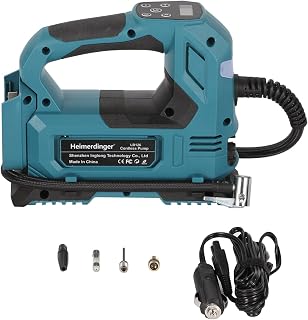


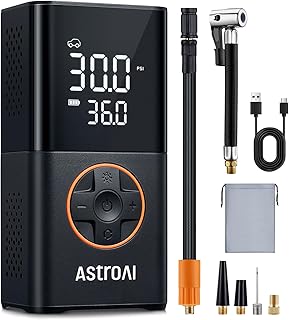


Choosing a Milwaukee cordless inflator is less about finding the most powerful-looking specification and more about matching the inflator to the jobs you actually expect it to perform. A compact inflator can be an excellent choice for topping up car tyres, bicycles and smaller recreational equipment, while a higher-capacity model may be better suited to repeated tyre inflation or workshop use. Before comparing individual products, consider the pressure range, airflow, inflation speed, battery platform, portability, controls, hose arrangement and the type of valve or adaptor you need.
Milwaukee is particularly relevant to cordless-tool buyers because its battery ecosystem covers a broad range of professional power tools. For existing Milwaukee users, a bare-tool inflator can be attractive because the battery and charger may already be available. For someone starting from scratch, however, the cost of entering a battery platform should be included in the overall buying decision rather than looking only at the inflator's advertised tool price.
This guide is intended for UK shoppers comparing Milwaukee cordless inflators and similar options. Product specifications, included accessories, battery bundles and retailer pricing can change, so always check the current specification and package contents before purchasing.
A cordless inflator removes one of the main inconveniences associated with traditional portable compressors: the need to find a mains socket or remain close to a vehicle's 12V outlet. For motorists, cyclists, tradespeople and DIY users, that freedom can make routine pressure checks and top-ups much easier.
The main attraction is convenience. A cordless unit can be kept in a vehicle, carried to a bicycle, taken onto a worksite or stored in a workshop without requiring a dedicated power cable. Milwaukee's established cordless-tool ecosystem can make this particularly practical for people who already own compatible batteries.
One of the most important decisions for Milwaukee buyers is choosing the appropriate battery platform. Milwaukee's M12 and M18 systems serve different priorities, so platform compatibility should be considered before focusing on individual features.
M12 products generally appeal to users who value compactness and lower carrying weight. If your main requirement is occasional tyre top-ups, bicycle maintenance or keeping a small emergency inflator in a vehicle, a compact platform can make sense.
The smaller format can be particularly useful where storage space is limited. A motorist who wants an emergency inflation tool in the boot may place greater value on portability than maximum sustained output.
M18 products are generally more appropriate when the user already operates within Milwaukee's higher-capacity cordless ecosystem or expects more demanding use. The larger battery platform can be advantageous where longer operating periods, higher workload or broader professional-tool compatibility are priorities.
For tradespeople and workshop users, platform continuity can be more important than buying the physically smallest inflator. If your existing tools already use M18 batteries, staying within that ecosystem may simplify charging, storage and battery management.
Tyre pressure is commonly expressed in PSI in many product specifications, while UK motorists may also encounter bar on vehicle information, tyre equipment and pressure gauges. Understanding both measurements makes product comparison easier.
A higher maximum pressure rating does not automatically mean an inflator is better for every application. Most everyday vehicle tyres require considerably less pressure than the maximum pressure capability of a dedicated inflator. Maximum pressure therefore tells only part of the story.
For practical buying decisions, consider whether the inflator can comfortably reach the pressure required by your intended applications and whether its controls make it easy to set that pressure accurately. A model with a useful digital display and straightforward preset function can be more convenient than one with a higher headline maximum but less practical controls.
Maximum pressure is typically a limit rather than an indication of how quickly the tool will inflate a tyre. Inflation performance also depends on airflow, hose design, battery condition, tyre volume, starting pressure and operating temperature.
For that reason, avoid ranking inflators solely by their maximum PSI figure. A balanced assessment should consider pressure capability alongside inflation speed, thermal management, duty cycle, battery runtime and ease of operation.
Inflation speed is one of the most useful specifications to investigate when comparing cordless inflators. However, published inflation times need to be interpreted carefully because manufacturers may use particular tyre sizes, starting pressures, battery conditions and test procedures.
A larger vehicle tyre contains substantially more air than a bicycle tyre. Consequently, a tool that feels extremely quick for a bicycle tyre may behave differently when repeatedly inflating larger automotive tyres.
For motorists, look beyond a simple maximum-pressure figure and investigate the manufacturer's stated inflation performance for an application comparable with your own. If the inflator will be used repeatedly, also consider how heat buildup affects sustained operation.
Airflow describes how quickly an inflator can move air. Higher airflow can help reduce the time required to increase tyre pressure, but the relationship between airflow and actual tyre inflation time is not perfectly linear.
The most meaningful comparison is therefore application-specific performance. If you mainly maintain passenger-car tyres, prioritise information concerning vehicle-tyre inflation rather than assuming that the highest theoretical airflow figure represents the best overall purchase.
Automatic pressure control is one of the most convenient features available on many modern cordless inflators. Instead of manually monitoring the pressure throughout the process, the user can select a target pressure and allow the tool to stop when the selected setting is reached, where that functionality is provided.
This is especially useful when topping up several tyres. Once the desired pressure has been established, repeat inflation can become a simple process of connecting the hose, selecting the target and starting the inflator.
However, users should still verify the tyre manufacturer's recommended pressure using the vehicle handbook, manufacturer's information or the pressure label supplied with the vehicle. The correct target pressure should not be guessed from the maximum pressure printed on the tyre sidewall.
An inflator's displayed pressure should not automatically be treated as the same thing as laboratory-grade measurement accuracy. For critical pressure settings, compare the manufacturer's stated specifications and, where appropriate, confirm pressure with a suitable independent gauge.
Valve connection, temperature and measurement position can also affect readings. Tyre pressure should normally be checked according to the vehicle or equipment manufacturer's instructions, particularly because tyre pressure can change with temperature.
A cordless inflator can have excellent motor performance yet remain frustrating to use if the hose is awkward or too short for your intended application.
For car tyres, a hose should allow comfortable access to the valve without forcing the user to hold the inflator in an inconvenient position. A flexible hose can also be easier to manage around alloy wheels, wheel arches and other confined areas.
Check whether the connection uses a screw-on fitting, clamp-style chuck or another attachment method. The best choice depends on your preferences and the equipment you intend to inflate.
Do not assume that every cordless inflator includes the same accessories. Package contents can vary between models and between bare-tool and kit configurations.
For general household use, useful accessories may include a bicycle valve adaptor, sports-ball needle or tapered nozzle. Automotive users may care more about hose reach and the quality of the tyre connection.
Before ordering, check the exact contents of the specific retailer listing. A photograph of accessories is not always sufficient to determine whether every pictured item is included in the purchase package.
Milwaukee cordless tools are commonly sold in different configurations, including versions supplied without a battery and charger. This distinction can have a significant effect on the true purchase cost.
A bare inflator can be the sensible choice if you already own compatible Milwaukee batteries and a suitable charger. In that situation, buying another battery may add unnecessary cost and equipment.
A battery kit can be more convenient for new Milwaukee users because it provides the essential power components in one package. The correct choice depends on the exact battery size, charger and other Milwaukee tools you expect to use.
When comparing listings, calculate the total cost rather than comparing the headline price of a bare tool against a complete kit. Also check whether the battery capacity supplied with a kit is appropriate for the intended workload.
Battery capacity is usually expressed in ampere-hours, or Ah. A higher-capacity battery can provide more stored energy, but it may also add weight and physical bulk.
For a compact emergency inflator, a smaller battery may be entirely appropriate. For frequent workshop use, a larger battery may provide a more convenient operating experience by reducing interruptions for battery changes.
Runtime should not be judged solely from battery capacity because actual operating time depends on the workload. Inflating a small bicycle tyre, topping up a car tyre and repeatedly inflating multiple larger tyres place different demands on the motor.
If an inflator is intended for roadside use, portability becomes a major buying criterion. Think about where it will be stored, how frequently you will carry it and whether the battery remains attached during storage.
Consider the overall dimensions with the battery fitted, not just the bare tool. A compact body can still become relatively bulky when combined with a larger battery.
A carrying case can also improve organisation, particularly if the kit includes adaptors, cables or multiple accessories. If a case is important to you, verify that it is included rather than assuming that every package has one.
For UK motorists, emergency tyre inflation is one of the most practical applications for a cordless inflator. It can be useful for correcting gradual pressure loss or topping up tyres before a journey, provided the tyre itself is safe to use.
An inflator should not be treated as a solution for a damaged tyre. If a tyre has suffered a puncture, visible sidewall damage, severe pressure loss or another safety issue, inflating it and continuing to drive may be inappropriate. Follow the vehicle manufacturer's guidance and seek professional assistance where necessary.
Bicycle tyres often require a different approach from automotive tyres. Valve type is particularly important because bicycles may use Presta or Schrader valves, depending on the wheel and tyre setup.
Before buying an inflator for cycling, verify that the required valve connection is supported directly or through an included adaptor. High-pressure road-bike tyres can also have different requirements from mountain-bike or hybrid-bike tyres.
For cyclists, compact size, controllable pressure and convenient valve compatibility may be more important than maximum airflow. A large automotive-oriented inflator can be unnecessarily cumbersome for someone who mainly maintains bicycle tyres.
Sports balls, air beds, inflatable toys and other low-volume products can often require specialised nozzles or needles. The availability of these accessories can therefore matter more than raw motor specifications for occasional household users.
Check the supplied accessories and verify that the pressure requirements of the item fall within the inflator's intended operating range. Never exceed the manufacturer's stated pressure limit for an inflatable product.
A cordless inflator and a conventional compressor serve overlapping but different purposes.
If your requirement is simply maintaining tyre pressure, a cordless inflator can be more convenient than setting up a compressor. If you need continuous compressed air for spray equipment, pneumatic tools or high-volume applications, a dedicated compressor may be more appropriate.
Milwaukee is not the only manufacturer offering cordless inflation equipment. Buyers who already own another battery platform should consider whether switching ecosystems is genuinely worthwhile.
Brands such as Makita, DeWalt, Bosch Professional and Ryobi also offer cordless tools across their respective ecosystems. The most sensible purchase is often the inflator that fits the battery system you already use, provided its specifications meet your needs.
For an existing Makita user, a Makita inflator may provide better ecosystem continuity than moving to Milwaukee solely for one tool. A Milwaukee user may reasonably reach the opposite conclusion. Compare the actual inflator specifications, battery compatibility and included accessories rather than selecting a brand purely by reputation.
DeWalt is another major professional cordless-tool ecosystem. Buyers should compare inflation performance, pressure controls, portability, battery availability and total system cost. The better option depends on the application rather than brand name alone.
Bosch Professional's cordless ecosystem is also relevant to UK tool users. If your workshop already contains compatible Bosch Professional batteries and chargers, staying within that platform may reduce overall ownership cost.
Ryobi is particularly relevant to DIY and home users who may already own compatible ONE+ tools. When comparing a Ryobi inflator with a Milwaukee model, consider intended workload, battery ecosystem, accessories, controls and long-term tool ownership rather than assuming that a professional-oriented brand is automatically the best fit.
Not every feature deserves the same weight in a buying decision. Prioritise features that directly improve the tasks you perform.
Some specifications look impressive but may have limited relevance to your actual requirements.
If your normal application is car-tyre maintenance, an exceptionally high theoretical pressure limit may offer little practical benefit.
An airflow figure is difficult to interpret without knowing how the manufacturer measured it. Application-specific inflation performance is usually more useful.
A high-capacity battery can increase runtime but also increases weight and cost. For occasional tyre top-ups, maximum battery capacity may be unnecessary.
Multiple nozzles are useful only when you actually need them. Avoid paying extra for accessories that will remain unused.
Maximum pressure does not tell you how quickly the inflator performs on your particular tyre or how convenient it is to use.
A bare-tool price can look attractive until the cost of a compatible battery and charger is added.
Milwaukee has multiple battery platforms. Always verify compatibility with the exact model and battery family.
Two apparently identical listings may differ because one is a bare tool while another includes a battery, charger, case or additional accessories.
A tyre inflator is designed for pressure inflation rather than necessarily providing the continuous air supply required by pneumatic workshop equipment.
Repeated inflation creates more workload than an occasional pressure top-up. If you need to inflate several tyres regularly, examine manufacturer guidance concerning operating time and cooling.
A compact model may be excellent for emergency vehicle storage but less convenient for high-frequency workshop use. Conversely, a larger tool may be unnecessary for someone who wants a lightweight bicycle inflator.
A simple comparison framework helps prevent one impressive specification from dominating the decision.
If your workshop already contains Milwaukee cordless tools, battery compatibility should be near the top of your checklist. A bare inflator may offer the most economical route when you already have the required battery and charger.
However, do not buy a tool solely because it matches your existing battery system. Confirm that its pressure range, performance and physical design are appropriate for your intended applications.
If you do not currently own a Milwaukee battery platform, compare the complete ecosystem cost. A cordless inflator may require a battery and charger, and those components can materially change the purchase price.
Think beyond the first tool. If you expect to purchase additional cordless equipment such as drills, impact drivers, grinders, saws or lighting products, battery-platform compatibility may become increasingly valuable.
For a vehicle emergency kit, portability and dependable operation are more important than workshop-oriented features. Consider the physical size, battery state management, storage conditions, hose convenience and ease of use.
It is sensible to familiarise yourself with the inflator before an emergency occurs. Check that the battery is charged, keep the necessary adaptors together and understand the controls before storing the tool in the vehicle.
Professional users should place greater emphasis on workload, repeatability, battery availability and operating convenience. If the inflator will be used several times a day, a model designed around the appropriate workload can be more suitable than the smallest available option.
Consider whether several batteries are already available at the workplace. Multiple charged batteries can be more useful than relying on a single high-capacity pack, particularly when the inflator is one of several cordless tools competing for battery availability.
Home users may not need professional-level output. If the inflator will be used occasionally for car tyres, bicycles and household inflatables, a compact model with straightforward controls can provide a better balance of convenience and cost.
Look for features you will actually use, such as a clear display, preset pressure and automatic shut-off. A large battery and extensive accessory package may not provide meaningful value for occasional use.
Cordless inflators require relatively little routine maintenance, but sensible care can help preserve performance and reliability.
Cordless-tool batteries should be handled according to the battery manufacturer's instructions. Avoid exposing batteries to unsuitable temperatures, moisture or physical damage.
For an emergency vehicle kit, remember that battery condition can change during long periods of storage. Check the battery periodically and follow the manufacturer's recommendations for storage and charging rather than assuming that a battery stored for months will remain ready for immediate use.
Tyre inflation should always be treated as a safety-related task. Use the pressure recommended by the vehicle or equipment manufacturer, not an arbitrary value based on the tyre's maximum pressure marking.
Inspect the tyre before inflation. A tyre with severe damage, a damaged sidewall, a significant puncture or another visible defect may require professional inspection rather than repeated inflation.
Keep hands, clothing and loose objects away from moving parts and ventilation openings. Use batteries, chargers and accessories that are specified as compatible with the tool, and follow the manufacturer's operating instructions.
UK vehicles commonly provide recommended tyre pressures through information supplied with the vehicle. Depending on the vehicle, this information may be found in the owner's documentation, on a vehicle label or through other manufacturer-provided information.
Some vehicles specify different pressures for normal loading and heavier loads. There may also be different recommended pressures for front and rear tyres. Check the correct specification for the vehicle and driving conditions rather than applying one generic pressure to every tyre.
Tyre pressure changes with temperature. For that reason, pressure checks should follow the vehicle manufacturer's recommended procedure, with particular attention to whether the specified pressure is intended to be checked when the tyres are cold.
If you have just completed a long drive, the pressure reading may differ from the reading obtained when the tyre is cold. Avoid making unnecessary adjustments based solely on a warm reading unless the manufacturer's guidance specifically addresses the situation.
Online listings can contain multiple configurations for the same or similar tool. Before purchasing, compare the exact model designation and package contents rather than relying on the product title alone.
Customer reviews can provide useful information that specifications do not always capture, such as how convenient the hose connection feels, whether the display is easy to read, how practical the tool is to store or how well the accessories suit everyday use.
Reviews should nevertheless be interpreted as individual experiences rather than controlled tests. Look for recurring observations across multiple reviews, especially when the comments relate directly to your intended application.
Pay particular attention to reviews discussing the exact configuration you intend to buy. A review for a bare tool cannot necessarily tell you what to expect from a different kit containing another battery or accessory package.
Use this checklist when comparing shortlisted models:
Prioritise convenient tyre connection, suitable automotive inflation performance, accurate and easy-to-use controls, portability and battery availability. Automatic shut-off is particularly useful when checking several tyres.
Pay greater attention to inflation performance, workload and duty cycle because larger tyres can require substantially more air. Confirm manufacturer guidance for the type and size of tyres you intend to service.
Valve compatibility, pressure control, portability and compact storage can be more important than maximum airflow. Confirm that the model and supplied accessories suit your bicycle's valve type.
A versatile model with useful adaptors can make sense if you expect to inflate several types of equipment. Avoid paying for professional-level capacity if your actual workload is occasional.
Battery ecosystem compatibility, repeated-use capability, durability considerations, operating controls and battery availability should receive greater weight. If Milwaukee batteries are already standard in your tool collection, platform compatibility can simplify ownership.
A Milwaukee cordless inflator is not automatically the ideal solution for every inflation task. If you only need an emergency inflator once or twice a year and do not own compatible Milwaukee batteries, a different type of inflator may provide better overall value.
Likewise, if your main requirement is operating pneumatic tools, filling large air reservoirs or supplying compressed air continuously, a dedicated compressor may be more appropriate.
The best buying decision is therefore application-led: start with the job, determine the performance required and then select the tool platform that meets those requirements at a sensible total ownership cost.
The best choice depends on the intended application, battery platform and required workload. Existing Milwaukee users should first identify whether an M12 or M18 solution fits their current battery collection, then compare pressure capability, inflation performance, controls, accessories and overall package contents.
Suitable Milwaukee inflators can be useful for topping up vehicle tyres when their pressure range and performance match the application. Always check the exact model's manufacturer's specifications and follow the vehicle manufacturer's recommended tyre pressure.
Not in every situation. A cordless tyre inflator is designed primarily for inflation and pressure maintenance. A conventional workshop compressor can be more appropriate when a continuous supply of compressed air is required for pneumatic tools or other high-volume applications.
Choose according to your existing battery ecosystem and workload. M12 can be attractive when compactness is important, while M18 may be preferable for users already invested in that platform or those expecting heavier cordless-tool use. Check the exact specifications of the models being compared.
No. Maximum PSI is only one specification. Inflation speed, airflow, pressure control, battery performance, duty cycle, portability and hose design can have greater practical importance depending on the application.
Package contents vary. Some listings may be sold as bare tools while others may include a battery and charger. Always check the exact retailer listing and model configuration before buying.
Potentially, provided the model supports the required pressure and valve arrangement. Check whether the bicycle uses a compatible valve or requires an adaptor, and verify that the inflator is suitable for the tyre pressure involved.
The answer depends on the condition of the tyre, the reason for pressure loss and the capabilities of the particular inflator. A severely deflated tyre may require substantially more work than a normal pressure top-up. If the tyre has been damaged or punctured, inflation should not be treated as a substitute for proper inspection and repair.
Battery capacity affects available energy and can influence how many inflation tasks can be completed before recharging. Larger batteries can also add weight and cost, so choose capacity according to workload rather than automatically selecting the largest available battery.
It can be useful for motorists who want a portable way to address gradual tyre-pressure loss or perform routine top-ups. If stored in a vehicle, pay attention to battery storage recommendations and periodically check that the battery remains in a suitable condition.
The accuracy of pressure measurement depends on the specific product and its specifications. Digital displays can make target selection convenient, but users should follow the manufacturer's instructions and, where appropriate, verify pressure using a suitable gauge.
Follow the vehicle manufacturer's recommendations and check pressures as part of routine vehicle maintenance. Pressure should also be checked when circumstances such as a long journey, heavy loading or suspected pressure loss make an additional check appropriate.
Look for information about real-world usability, hose connection, controls, pressure-setting convenience, battery behaviour, portability and the exact application tested. Give greater weight to repeated observations across multiple independent customer experiences than to isolated comments.
The strongest Milwaukee cordless inflator choice is the one that matches your actual workload rather than the model with the most impressive headline specification. For UK buyers, the decision should begin with the intended use, required pressure and inflation frequency. From there, compare M12 and M18 compatibility, battery requirements, inflation performance, controls, hose design, accessories and total ownership cost.
Existing Milwaukee users should generally start by checking which battery platform they already own. Buyers entering the Milwaukee ecosystem for the first time should compare the complete cost of the tool, battery and charger and consider whether they plan to purchase other compatible cordless equipment in the future.
Before placing an order, verify the exact model number, current specification, package contents, battery configuration and today's price. Read current customer feedback for practical ownership information and compare the shortlisted options against the jobs you actually need the inflator to perform.
A thoughtful comparison of these factors is more useful than choosing solely on maximum PSI, brand recognition or a single advertised performance figure. The right cordless inflator should provide the pressure capability, portability, battery compatibility and convenience needed for your particular vehicle, bicycle, workshop or household applications.