

♥ Wishlist
Compare 32 verified Milwaukee Cordless Impact Drivers products in United Kingdom. Reviews, ratings, pros, cons and buying advice updated for October 2026.


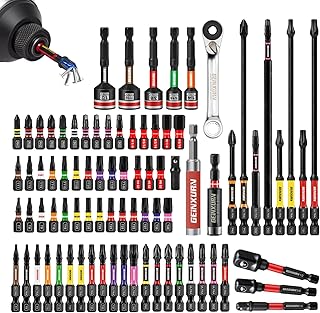

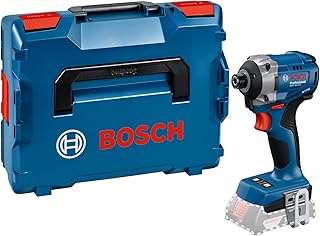


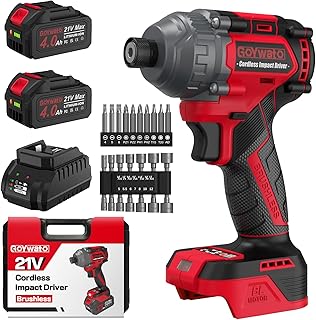


Choosing a Milwaukee cordless impact driver is less about finding the model with the biggest headline torque figure and more about matching the tool to the type of fastening work you actually perform. Milwaukee offers compact impact drivers for everyday installation work, high-output models for demanding construction applications, and cordless systems built around different battery capacities and performance levels. The right choice depends on fastening size, working space, duty cycle, control requirements, battery compatibility and how often the tool will be used.
For UK buyers, it is also worth considering the wider cordless platform before purchasing. A bare tool can be particularly attractive when you already own compatible Milwaukee batteries and chargers, whereas a kit may make more sense when starting a cordless collection. Always check the exact model designation, battery configuration, charger supplied, included accessories and UK retailer specification before ordering because apparently similar product names can represent substantially different packages.
One of the most important purchasing decisions is distinguishing an impact driver from an impact wrench. The two tools use an impact mechanism, but they are designed for different fastening tasks and normally use different drive interfaces.
If the main task is driving long timber screws, structural screws, decking screws, cabinet fixings or general construction fasteners, an impact driver is usually the more appropriate category. If the job involves removing wheel nuts, suspension components or large machine bolts, an impact wrench is normally the better tool.
Milwaukee has built a substantial cordless power-tool ecosystem around its battery platforms. For a buyer already invested in the brand, this can be one of the strongest reasons to choose another Milwaukee tool. Compatible batteries can potentially be shared across a broad range of tools within the appropriate platform, reducing the need to purchase a separate battery and charger for every machine.
The benefits go beyond convenience. A cordless impact driver eliminates the air hose associated with pneumatic tools and avoids the restriction of a mains cable. That makes it practical for roof work, first-fix construction, joinery, electrical installation, maintenance, kitchen fitting and general site work where the operator frequently moves between locations.
Milwaukee's higher-performance cordless tools also demonstrate why specifications should be considered as a group rather than judged by a single number. Torque, speed, impacts per minute, physical dimensions, weight, trigger response, electronic control and battery technology all influence how useful an impact driver will be in real working conditions.
Before comparing individual impact drivers, identify which Milwaukee battery platform the tool belongs to. Platform compatibility should be treated as a fundamental buying criterion rather than an afterthought.
The M12 range is based around Milwaukee's compact 12V-class battery system. Tools in this platform are particularly useful when low weight, small dimensions and accessibility matter more than maximum fastening power. An M12 impact driver can be appealing for electricians, installers, maintenance workers and tradespeople who spend long periods working in restricted spaces.
The principal advantage is portability. A smaller battery and compact tool body can make a noticeable difference when the operator is working overhead, inside cabinets, between joists or in confined service areas.
The M18 system is Milwaukee's larger 18V cordless platform and contains a much broader range of higher-output tools. M18 impact drivers are generally the more appropriate choice for intensive construction and professional fastening when greater performance and runtime are required.
The larger platform can also make more sense for users who already own M18 drills, saws, grinders, lights or other equipment. Battery sharing can make a new tool purchase considerably more practical when compatible batteries and charging equipment are already available.
Within a cordless platform, battery selection can affect more than runtime. Higher-capacity and higher-output battery packs can change the balance, size and weight of the tool while potentially allowing demanding cordless machines to deliver stronger sustained performance.
A compact battery may be preferable for repetitive overhead fastening, while a larger battery can be more suitable for extended heavy-duty work. There is no universally best battery size because the ideal choice depends on the application.
Torque is one of the most frequently advertised impact-driver specifications, but it should not be used in isolation. A higher maximum torque figure does not automatically mean a tool is better for every application.
Maximum torque is particularly relevant when driving large fasteners or working with resistant materials. However, excessive power can make delicate fastening more difficult if the tool does not provide sufficient control. For cabinetry, electrical installation and smaller fixings, controllability can be more useful than maximum output.
When comparing specifications, check whether the quoted torque figure refers to the same measurement standard and operating condition. Manufacturer specifications are preferable to comparisons based solely on third-party listings, because inconsistent testing methods can make apparently precise figures difficult to compare directly.
No-load speed indicates how quickly the tool's output shaft rotates without a fastening load. Higher speed can make a difference when driving many smaller fasteners, but speed is only useful when the operator can control it effectively.
A good impact driver should provide a useful combination of speed and trigger control. Multi-speed or selectable operating modes can be especially valuable when switching between delicate installation work and demanding construction fastening.
Impact rate describes how frequently the impact mechanism engages under the relevant operating conditions. A higher impact rate can contribute to efficient fastening, particularly when the fastener encounters increasing resistance.
However, impact rate should be considered alongside torque and rotational speed. Looking at only one of these specifications can give an incomplete impression of the tool's capabilities.
Most cordless impact drivers use a 1/4-inch hex quick-change interface. This allows compatible driver bits and hex-shank accessories to be inserted and removed quickly.
Check whether the chuck accepts the type of bits you routinely use. A secure bit-retention system is particularly important for professional work where accessories are changed frequently.
Overall length can be more important than raw power when working in confined spaces. A shorter impact driver can fit between framing members, inside cupboards or behind installed equipment where a larger tool becomes awkward.
When comparing models, consider the complete working configuration rather than the bare tool body. A larger battery can alter the practical balance and may affect access in restricted locations.
Tool weight matters most when the impact driver is used continuously or at arm's length. A lighter model may reduce fatigue during repetitive fastening, while a heavier high-output tool can be worthwhile when demanding work takes priority.
Do not compare bare-tool weights with fully equipped weights without checking the manufacturer's measurement conditions. Battery weight can materially change the final working weight.
Brushless motors are now common in professional cordless power tools and are an important consideration when comparing Milwaukee impact drivers. A brushless motor eliminates conventional motor brushes, allowing the electronic control system to manage motor operation without the same brush arrangement found in traditional brushed designs.
For a cordless tool, the practical advantages can include efficient operation, reduced mechanical wear associated with brushes and sophisticated electronic management. Brushless technology is particularly useful in modern high-performance battery tools where motor output and battery management are closely integrated.
However, the presence of a brushless motor should not be treated as proof that one specific model is automatically better than another. Tool design, gearing, impact mechanism, electronics, thermal management and battery compatibility all contribute to overall performance.
Modern professional impact drivers can offer considerably more control than older single-speed tools. Depending on the model, electronic modes may alter speed, power delivery or the way the tool behaves during fastening.
This is particularly useful when one impact driver has to perform multiple jobs. A controlled setting can be preferable for smaller screws and finished surfaces, while a higher-output mode can be selected for longer or larger construction fasteners.
A variable-speed trigger gives the operator more control over the initial rotation of the bit. This can make it easier to start a screw accurately, prevent the bit from slipping and reduce unnecessary damage to the fastener head.
For professional users, trigger response is often more meaningful than a headline maximum speed. A tool that is powerful but difficult to modulate can be less convenient for precision work than a slightly less aggressive model with excellent control.
Impact drivers are particularly useful for driving long screws into timber because the impact mechanism can deliver substantial rotational force without requiring the operator to resist the same reaction torque associated with some conventional drills.
For joinery and finished timber, however, excessive power can cause problems. The operator should select an appropriate mode, use the correct bit and control the trigger carefully. Pre-drilling may still be appropriate for certain timber species, edge locations or larger fasteners.
Decking work often involves repetitive fastening and long screws. A cordless impact driver can be convenient because there is no mains cable to manage around the work area.
Outdoor applications also increase the importance of tool protection and battery storage. Batteries should be protected from extreme environmental conditions and stored according to the manufacturer's instructions.
Impact drivers can handle many metal fastening applications when paired with appropriate accessories and fasteners. The correct drilling and fastening technique is important because excessive force can damage threads, bits or the workpiece.
For larger nuts and bolts requiring sockets, an impact wrench is generally the more suitable category.
For electricians and installers, compact dimensions and controlled power can be more important than maximum torque. A smaller Milwaukee impact driver may be easier to manoeuvre around consumer units, cable trays, cabinets and equipment.
When working around finished surfaces or delicate fixtures, controlled fastening is essential. The impact driver should never be treated as a substitute for a torque-controlled fastening method when a precise specified torque is required.
Some Milwaukee professional tools incorporate connected-tool functionality through the company's ONE-KEY ecosystem. Where available, connected features can provide additional control or management options beyond a conventional trigger and mechanical selector.
These features may be valuable for professional fleets, maintenance departments and contractors managing multiple tools. Individual tradespeople should consider whether connected functionality provides a genuine benefit for their workflow before paying extra for it.
If digital control is not useful to you, a simpler model may offer better value. If tool management, customised settings or inventory control are important, connected features can become considerably more relevant.
Battery capacity is commonly expressed in ampere-hours, but capacity alone does not tell the entire story. Battery design, cell technology, output capability, temperature and tool electronics can all influence practical performance.
For occasional DIY use, buying several large batteries may add unnecessary cost and weight. For professional site work, having multiple compatible packs can reduce interruptions because one battery can be charging while another is in use.
Milwaukee impact drivers are commonly available as bare tools as well as kits containing batteries and charging equipment. The better option depends heavily on what you already own.
Always check the contents of the exact listing. Two packages carrying a similar tool name can differ in battery capacity, number of batteries, charger type, case and accessories.
One of the easiest mistakes is assuming that every Milwaukee cordless battery fits every Milwaukee cordless tool. The M12 and M18 platforms are different systems, so platform compatibility must be checked before purchase.
It is also important to distinguish physical compatibility from performance expectations. A battery may physically fit a tool within the same platform while different battery capacities produce different weight, runtime and performance characteristics.
Before ordering, confirm the platform, exact model number and manufacturer's stated battery compatibility. Do not rely solely on photographs or a retailer's abbreviated product title.
A compact model is generally the strongest choice when access and fatigue reduction are priorities. It can be particularly useful for cabinet installation, electrical work, maintenance and overhead fastening.
A mid-range professional model can provide a useful balance between size and output. This type of tool is often appropriate for tradespeople who need one versatile impact driver for a wide range of construction tasks.
A high-output model makes more sense when large fasteners, structural applications and demanding workloads are common. The additional performance can be valuable, but the user should accept that maximum-output tools may be larger, heavier and more expensive.
Prioritise controllability, bit retention, compact dimensions and comfortable handling. If the work includes large structural screws, additional torque can be valuable, but a very high-powered model is not automatically ideal for delicate joinery.
Versatility is usually the main consideration. A robust M18 model can be attractive where the impact driver will regularly handle long screws and demanding construction fasteners.
Compact size, low weight and precise trigger control can be more useful than maximum output. An M12 model may be worth considering when accessibility is critical, while M18 can be preferable where heavier fastening is also required.
Control is especially important around finished panels, hinges, brackets and cabinetry. Look for a model with useful electronic control rather than choosing solely by maximum torque.
A compact model may provide more than enough capability for routine household projects. Consider the total cost of the battery ecosystem before purchasing a bare tool if you do not already own compatible batteries.
A powerful impact driver cannot compensate for poor-quality or unsuitable accessories. Impact-rated bits are designed for the repeated shock loading associated with impact tools and should be selected where the application requires them.
Using ordinary non-impact accessories in demanding impact applications can increase the likelihood of premature failure. Always check the accessory manufacturer's compatibility guidance.
For professional work, maintaining several spare bits is sensible. A damaged bit can cause poor engagement, cam-out and damage to the fastener head.
Cam-out occurs when the driver bit slips out of the fastener recess. It can damage both the bit and screw and is particularly frustrating when working with finished materials.
An impact driver is not automatically a precision torque tool. The final tightening torque can vary according to fastener size, material, thread condition, battery state, impact duration, accessory characteristics and operator technique.
Where a manufacturer, vehicle specification, structural requirement or engineering procedure specifies an exact tightening torque, use an appropriate calibrated torque tool rather than relying on an impact driver's electronic setting alone unless the tool and procedure are specifically validated for that application.
This distinction is particularly important for automotive, mechanical and safety-critical work. An impact driver is excellent for rapid fastening, but precision torque requirements should be treated separately.
Impact mechanisms naturally generate vibration and a characteristic rattling sound. Professional users who operate impact tools frequently should consider ergonomics as part of the buying decision.
Look for a comfortable grip, balanced battery position, accessible controls and a trigger that can be operated naturally. A tool that feels comfortable for a few minutes may become tiring after several hours of repetitive work, so overall handling is an important consideration.
Appropriate hearing and personal protective equipment should be used according to the working environment and relevant UK workplace requirements.
Integrated LED work lights can be surprisingly useful for impact drivers. They can illuminate the immediate fastening area when working inside cabinets, under furniture or in poorly lit construction spaces.
The placement of the LED is worth considering because different designs illuminate the workpiece differently. A light that produces fewer shadows around the bit can make it easier to position the driver accurately.
Small design features can have a significant impact on day-to-day usability. A belt hook can allow the tool to remain accessible when the operator needs both hands for positioning materials.
Some users prefer a reversible hook, while others rarely use one. If the tool will be carried frequently around a construction site, check how the hook attaches and whether its position suits your preferred working hand.
A suitable storage system helps protect the impact driver, batteries and accessories. Some buyers prefer stackable professional storage systems, while others simply need a compact case for transport.
Consider the complete kit rather than the tool alone. If the package includes batteries, chargers and accessories, check whether there is a practical way to store everything together.
Professional construction environments can expose cordless tools to dust, moisture, impacts and frequent transportation. A tool intended for daily site use should therefore be evaluated for construction quality, protection features and serviceability rather than simply its advertised power.
No cordless power tool should be treated as waterproof unless the manufacturer explicitly states the relevant protection level and operating conditions. Avoid leaving batteries or tools exposed to rain, condensation or extreme temperatures, and follow the manufacturer's storage guidance.
When two Milwaukee models appear similar, compare them using a structured checklist instead of relying on the product name.
More power is useful only when the application needs it. A high-output impact driver can be unnecessary for light installation work and may make delicate fastening harder.
The advertised bare-tool price does not represent the complete cost for someone who does not already own compatible batteries and a charger.
M12 and M18 are separate battery systems. Confirm compatibility before ordering.
A lower-priced package may contain no battery or charger, while a higher-priced package may include one or more batteries and additional accessories. Compare the complete contents.
Large high-output tools can be excellent for heavy fastening but awkward in tight spaces. Always consider the physical environment where the tool will be used.
Choose accessories designed for the loads imposed by impact tools when required by the application.
The 1/4-inch hex interface and intended application of an impact driver are different from the socket-based design of an impact wrench.
Where an exact torque is specified, use the appropriate torque-controlled equipment and follow the relevant procedure.
Milwaukee is not the only established cordless power-tool manufacturer worth considering in the UK. Depending on your existing battery collection and preferred tool characteristics, alternatives from DeWalt, Makita, Bosch Professional and Hikoki may also be relevant.
The most sensible comparison is usually between equivalent professional platforms rather than brands in isolation. Compare battery ecosystems, impact-driver dimensions, output, control systems, accessories, warranty terms, local retailer support and the other tools you expect to buy in the future.
Both brands have extensive professional cordless ranges. For a buyer already invested in either battery platform, staying within that ecosystem can simplify future purchases. Compare equivalent models rather than assuming one brand is universally superior.
Makita has a large cordless tool ecosystem and a strong presence among UK trade users. Tool ergonomics, battery availability and the particular models you need should influence the decision.
Bosch Professional offers a broad range of cordless equipment and accessories. When comparing it with Milwaukee, check the relevant voltage platform, tool size, battery compatibility and intended workload.
Hikoki is another professional-focused option with a broad cordless range. Buyers should compare the specific impact-driver models and battery ecosystems rather than making a decision based purely on brand reputation.
A simple way to approach the decision is to think about the largest and smallest fastening tasks you regularly perform.
A top-rated product should not simply have a large number of positive customer ratings. For meaningful commercial comparison, consider the quality and relevance of the available evidence.
Customer reviews can reveal practical issues that specification sheets do not always communicate, but reviews should be interpreted carefully. A model receiving criticism from a user performing an application outside its intended design is not necessarily a poor impact driver.
Rather than focusing exclusively on the overall star rating, look for repeated comments about the specific characteristics that matter to you.
Verified customer reviews are most useful when they describe the application, fastening type and operating conditions. A short rating without context provides much less information for a technical buying decision.
The cheapest Milwaukee impact driver is not necessarily the best value, and the most expensive model is not necessarily the best choice. Value depends on the amount of work the tool will perform and the features you genuinely need.
For occasional use, a compact model may deliver all the necessary capability without paying for advanced connected functions or maximum output. For professional users, paying more for improved ergonomics, higher output, advanced control and compatibility with an established battery system can make sense when the tool is used frequently.
When checking prices in the UK, compare the complete package. A bare tool and a full kit should not be compared as though they contain the same equipment.
Remove dust, debris and loose material from the exterior after use. Pay particular attention to areas around ventilation openings and the bit holder.
Check that the quick-change chuck operates correctly and that accessories are retained securely. If the mechanism becomes difficult to operate or develops unusual play, stop using the tool until it has been inspected appropriately.
Replace worn, rounded or damaged bits. Continuing to use a damaged bit can increase the likelihood of poor engagement and fastener damage.
Store batteries according to Milwaukee's instructions and avoid unnecessary exposure to excessive heat, moisture and physical impact. Do not use a battery that shows signs of serious physical damage.
Heavy fastening can generate substantial heat. If the tool or battery becomes unusually hot, allow it to cool and follow the manufacturer's operating guidance rather than forcing continued operation.
Accessory selection affects both performance and safety. Use bits, holders, adapters and other components that are appropriate for impact-driver applications.
Cordless tools are convenient, but lithium-ion batteries require appropriate handling. Use the manufacturer's recommended charger and compatible battery system. Do not attempt to modify battery packs or use damaged charging equipment.
Keep batteries away from excessive heat and sources of ignition, and follow the storage, transportation and charging guidance supplied with the product. If a battery becomes swollen, damaged, unusually hot or otherwise abnormal, discontinue use and follow the manufacturer's safety instructions.
The best Milwaukee impact driver for a professional tradesperson can be very different from the best option for a homeowner. Professional users generally place greater emphasis on daily durability, battery availability, ergonomics, serviceability and productivity.
A DIY user may place greater emphasis on affordability, compact size and compatibility with a smaller cordless collection. There is little value in paying for capabilities that will rarely be used.
Despite its versatility, an impact driver is not the correct tool for every fastening or drilling job.
Choose a compact impact driver when your work involves many awkward fastening positions, frequent overhead use or long periods of repetitive operation. A smaller tool can also make it easier to maintain a straight alignment with the fastener in cramped spaces.
Compact does not necessarily mean unsuitable for professional work. In many trades, the ability to access restricted locations is more valuable than having the highest available output.
A high-output impact driver becomes more attractive when long structural fasteners, heavy timber construction or other demanding fastening tasks are routine. Additional power can reduce the effort required from the operator and increase productivity when the tool is appropriately matched to the fastener.
However, high output should be balanced against size, weight, battery requirements and the possibility of over-tightening smaller fasteners.
When reviewing a shortlist of ten Milwaukee cordless impact drivers, use the following checklist to make the comparison consistent.
An impact driver can be a useful starting point for a larger cordless tool collection. Before buying additional tools, decide whether your priority is portability through M12 or maximum versatility through M18.
Once a battery platform has been established, future purchases can sometimes be made as bare tools because the existing batteries and charger can be shared with compatible equipment. This can reduce duplication, although every new tool should still be checked for exact battery compatibility.
A typical professional collection might include an impact driver, drill, circular saw, reciprocating saw, grinder, work light and other specialist tools. The best platform is therefore often the one that supports the widest range of tools you genuinely expect to use.
For UK shoppers comparing Milwaukee cordless impact drivers in 2026, product listings can change over time. Model availability, kit configuration, battery inclusion, retailer pricing and promotional offers should therefore be checked at the point of purchase rather than assumed from an older comparison.
Pay attention to whether the listing is specifically for the UK market and whether the package includes the expected charger and battery configuration. Imported products can have different package contents or charging arrangements, so buyers should verify the complete specification before ordering.
For current purchasing decisions, compare today's retailer price with the specification and package contents rather than judging value from an old recommended retail price.
There is no single best Milwaukee impact driver for every UK buyer. The most suitable model depends on fastening requirements, desired tool size, battery platform, workload and budget. Compact M12 models can suit accessibility-focused applications, while M18 models are generally more appropriate when higher output and professional workload capacity are priorities.
M12 impact drivers can be very useful for applications where compact size and manageable weight are important. Whether M12 is powerful enough depends on the size and type of fasteners you use. For demanding structural fastening, an appropriate M18 model may be more suitable.
Not necessarily. M18 generally offers a larger platform and higher-output options, while M12 can provide a major advantage in compactness and portability. The better platform is the one that matches the work and other cordless tools you use.
No. M12 and M18 are separate Milwaukee battery platforms. Always verify the battery compatibility specified for the exact tool.
Milwaukee impact drivers commonly use a 1/4-inch hex quick-change interface. The appropriate bit type depends on the fastening application. For demanding impact applications, use accessories designed and rated for impact-tool use.
An impact driver can be used with suitable hex-shank drilling accessories for certain applications, but it is not a direct replacement for a conventional drill. If drilling is a major part of your workload, a dedicated cordless drill may provide better control and accessory versatility.
Yes. Driving screws into timber is one of the common applications for impact drivers. Select the correct bit, control the trigger and choose a suitable power setting to avoid over-driving the fastener.
An impact driver can potentially operate compatible hex accessories, but it is not the same as a dedicated impact wrench. For larger nuts and bolts, particularly automotive applications, a socket-based impact wrench is normally the more appropriate tool.
Brushless technology can offer advantages in modern cordless tools, particularly for users who expect frequent use and want an efficient professional tool. Whether the additional cost is worthwhile depends on workload, performance requirements and the specific model.
If you already own compatible Milwaukee batteries and a charger, a bare tool can be practical. If you are new to the relevant battery platform, a kit may be more convenient because it provides the components needed to operate the tool.
Use a battery that provides the required balance between runtime, output and weight. Compact packs can improve manoeuvrability, while larger or high-output batteries can be advantageous for demanding workloads when supported by the tool.
Milwaukee offers impact drivers aimed at professional users, including models designed for demanding cordless applications. The correct choice should be based on the specific fastening work, battery platform, tool dimensions and workload rather than brand alone.
Yes. A compact model can be particularly suitable for DIY projects involving timber screws, furniture assembly, decking and general maintenance. DIY buyers should consider the total cost of the battery system if they do not already own compatible Milwaukee equipment.
Neither specification should be considered in isolation. Torque is important for resisting fastening load, while speed affects how quickly the tool rotates. The best combination depends on the fasteners and materials involved.
No. Higher torque can be valuable for demanding fastening, but it may be unnecessary for lighter work. Tool size, weight, control, battery compatibility and intended application are equally important.
Only if its connected-tool features provide a practical benefit for your work. Professional fleet management and customised tool settings can make connected functionality useful, while occasional users may prefer a simpler tool.
The best top-rated Milwaukee cordless impact driver for a UK buyer is the model that delivers the right combination of power, control, dimensions, battery compatibility and ergonomics for the actual job. Avoid choosing purely on torque, star ratings or the lowest headline price.
Start by deciding between M12 and M18, then identify the fastening tasks the tool will perform most often. Compare torque, speed, impact rate, modes, dimensions and weight. After that, check battery and charger requirements, kit contents, accessory compatibility and current UK retailer pricing.
For compact installation and light-to-medium fastening, prioritise size, weight and control. For demanding construction work, place greater emphasis on output, battery capability and durability. If your work involves larger nuts and bolts, consider an impact wrench instead. If exact tightening torque is critical, use suitable torque-controlled equipment.
Finally, verify the exact product specification and package contents before purchasing. Milwaukee's extensive cordless range means that selecting the right model within the correct battery ecosystem can be more important than simply choosing the most powerful tool available.