

♥ Wishlist


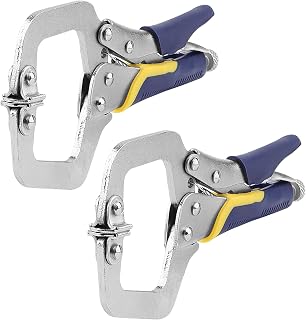


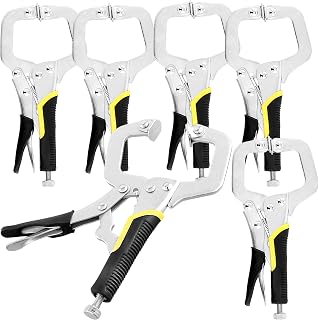

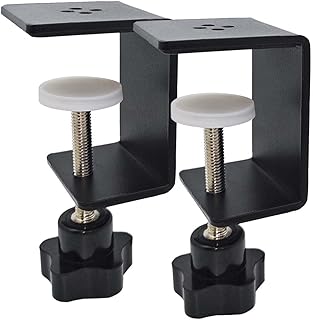


C Clamps are versatile workshop accessories designed to hold materials securely during cutting, drilling, gluing, welding, assembly and repair tasks. Their familiar C-shaped frame provides a stable structure, while the threaded screw allows you to adjust the clamping pressure and accommodate different workpiece thicknesses.
For UK DIY enthusiasts, tradespeople, woodworkers and workshop users, a dependable clamp can make many jobs easier. Holding a workpiece securely reduces unwanted movement and helps you work with greater control. A suitable C Clamp can also leave both hands available for positioning tools or carrying out detailed work.
Clamp size is one of the most important factors to consider before buying. Smaller C Clamps can suit compact repairs, light assembly and smaller workpieces. Larger models provide greater reach and can accommodate thicker materials or larger components.
Consider both the opening capacity and throat depth rather than choosing a clamp based only on its overall dimensions. The opening determines how thick a workpiece the clamp can accommodate, while throat depth affects how far the clamp can reach across the material. Matching these measurements to your project helps ensure effective positioning and secure holding.
Woodworkers commonly use C Clamps for holding boards, panels, frames and components during assembly. They can help keep pieces aligned while adhesive sets or while holes and joints are prepared. When working with finished or delicate timber, place suitable protective material between the clamp contact points and the workpiece to reduce the risk of surface marks.
For furniture repairs, joinery and workshop projects, having several clamp sizes available can be useful. Different projects often require different levels of reach and opening capacity, so a versatile selection can provide greater flexibility.
C Clamps are also useful for metalworking, fabrication and repair applications where components need to remain stable. They can help hold pieces during positioning, drilling, fitting and assembly. For heavier applications, select a robust clamp with suitable dimensions and clamping capacity for the materials being handled.
Always choose equipment appropriate for the task and avoid exceeding the manufacturer's recommended capacity. Correct positioning is also important because a clamp should apply pressure securely without creating unnecessary stress on the workpiece.
The threaded screw is a key feature of a traditional C Clamp. Turning the screw changes the position of the contact point, allowing the user to adjust the opening and pressure. This makes C Clamps adaptable to a variety of workpiece sizes.
Apply only the pressure required to hold the material securely. Excessive force may damage softer materials, distort components or make the clamp unnecessarily difficult to release. A controlled approach helps achieve stable results while protecting the workpiece.
Check the maximum opening to make sure the clamp can accommodate the thickness of the material. A clamp that is too small will not provide sufficient clearance.
Throat depth determines the usable reach of the clamp. A deeper throat can be beneficial when the clamping point is positioned farther from the edge of a workpiece.
Consider the construction and intended application. Workshop and heavy-duty projects may require a stronger frame than occasional light DIY tasks.
Look for a screw mechanism that allows controlled adjustment. The contact point should suit the type of material and application. Protective pads or blocks may be useful when working with surfaces that could mark easily.
A C Clamp can be a useful addition to a home workshop. It can assist with gluing, temporary positioning, repairs, assembly and other tasks where keeping components still is important. Because the design is straightforward and adjustable, one clamp can often serve several different purposes.
When building a basic workshop collection, consider buying different sizes rather than relying on a single large clamp. A selection gives you more options when working with small components, narrow boards or larger assemblies.
Before use, inspect the frame, screw and contact surfaces for damage or excessive wear. Position the clamp securely and ensure the workpiece is properly supported. Tighten the screw gradually and use enough pressure to prevent movement without over-tightening.
Do not use a C Clamp as a substitute for lifting equipment or for applications outside its intended purpose. Follow the manufacturer's instructions and recommended working limits. Appropriate personal protective equipment should also be used when the wider task involves cutting, drilling, grinding, welding or other workshop hazards.
C Clamps offer a simple solution to a common workshop problem: keeping materials firmly positioned while work is carried out. Their adjustable design makes them suitable for many jobs, from woodworking and furniture assembly to metalworking and household repairs.
Choosing the right size and using the clamp correctly can improve stability, accuracy and convenience. Explore the C Clamps category to compare suitable options for your workshop, trade or DIY requirements.
Find reliable C Clamps for woodworking, metalworking, repairs, assembly and general DIY work. Designed to provide controlled holding pressure, C Clamps are a practical choice when materials need to stay firmly in position while you work. Their adjustable screw mechanism makes it easy to accommodate different material thicknesses and apply pressure where it is needed. Whether you are building furniture, securing workpieces for drilling, supporting repairs or completing workshop projects, choosing the right C Clamp can improve accuracy and stability. Explore the range to find a suitable size and configuration for your application.