

♥ Wishlist
Compare 24 verified Bosch Power Tool Sets for DIY & Trade Projects products in United Kingdom. Reviews, ratings, pros, cons and buying advice updated for October 2026.


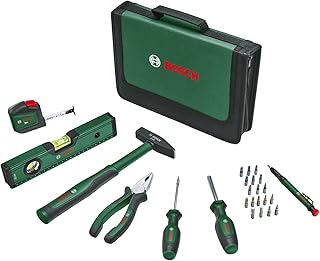


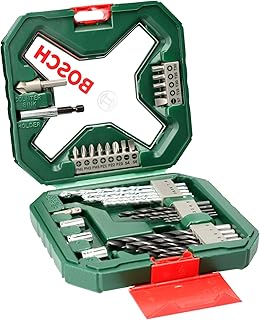


Choosing a Bosch power tool set is less about selecting the kit with the largest number of tools and more about matching the platform, tool types, battery system and included accessories to the work you actually expect to do. A compact set can be a better choice for occasional DIY, while a larger combination kit may offer considerably more value for someone regularly working on renovation, carpentry, installation or general maintenance projects.
For UK buyers, it is particularly important to compare the complete contents of each kit rather than judging a set by its headline tool count. Two Bosch sets may both contain several power tools but differ substantially in battery capacity, charger configuration, included accessories, tool performance and intended use.
Before comparing individual Bosch sets, make a list of the jobs the tools will actually perform. Drilling into masonry, assembling furniture, driving screws, cutting timber, sanding surfaces and installing fixings all place different demands on a power tool.
One of the most important distinctions when shopping for Bosch power tools is the difference between the consumer-oriented Bosch DIY range and Bosch Professional tools. They are designed for different users and should not be treated as interchangeable simply because both carry the Bosch name.
Bosch DIY tools are generally aimed at homeowners, hobbyists and people carrying out occasional maintenance or renovation work. Bosch Professional tools are developed for more demanding applications and professional users. The correct choice therefore depends on workload, expected frequency of use, tool requirements and budget rather than brand recognition alone.
A Bosch DIY set can be a sensible option for household projects where tools are used periodically rather than continuously. Furniture assembly, shelving, picture hanging, basic repairs, light woodworking and garden-related maintenance can all fall into this category.
For an occasional user, a manageable kit with useful accessories may provide better overall value than paying for professional-grade equipment whose capabilities will rarely be used.
Bosch Professional equipment is more relevant when tools are expected to handle frequent workloads, longer working sessions or demanding materials. Tradespeople and serious DIY users should assess the specifications of individual tools rather than assuming that a multi-tool set automatically provides the performance required for every application.
For professional work, factors such as duty cycle, ergonomics, battery availability, accessory compatibility, service arrangements and the availability of individual replacement tools can become just as important as headline power figures.
Cordless power tool sets are most useful when the batteries and chargers can support the rest of your tool collection. A set containing several cordless machines may initially look attractive, but its long-term value depends heavily on the battery ecosystem behind those machines.
Before buying, identify the exact battery platform used by the tools in the kit. Do not assume that every cordless Bosch product uses the same battery system simply because the tools have the same brand name.
Voltage is one specification worth checking, but it should not be interpreted as a simple measure of overall tool quality. Different tool platforms are designed around different requirements, and a higher nominal voltage does not automatically mean that one complete kit is better for every application.
Compare the voltage alongside motor design, torque, speed, battery capacity, tool size and the intended application.
Battery capacity is commonly expressed in ampere-hours, or Ah. In broad terms, a higher Ah rating can provide more stored energy, although actual runtime varies according to the tool, workload, material, operating conditions and battery technology.
A compact battery can be preferable for overhead work or precision applications because reduced weight can make the tool easier to control. A higher-capacity battery may be more appropriate when longer periods of operation between charging are important.
For a multi-tool cordless kit, two batteries can be particularly useful because one can be charging while another is being used. However, the ideal arrangement depends on the type of work and charger speed.
The ideal combination depends on your projects. A set with four tools is not necessarily better than a two-tool package if two of the additional machines will rarely be used.
A drill driver is one of the most versatile additions to a home workshop. It can handle screwdriving and drilling applications where hammer action is not required. Look for useful speed control, an appropriate chuck, adjustable torque settings and an ergonomic grip.
A combi drill adds hammer drilling capability, making it more versatile for common household applications involving masonry. For UK homes, this can be particularly useful when installing shelves, brackets, cabinets and other fixtures into brick or similar materials.
However, hammer drilling capability should not be confused with the performance of a dedicated rotary hammer. If repeated drilling into hard masonry or concrete is expected, compare the specifications and intended applications carefully.
An impact driver is designed primarily for driving screws, bolts and other fasteners. Its impact mechanism can make demanding fastening work easier, particularly when dealing with longer screws or tougher materials.
It is not a direct replacement for a drill driver. For general household use, a drill driver may be more versatile, whereas users who regularly drive large numbers of fasteners may appreciate having both tools available.
A cordless jigsaw can be useful for curved cuts, cut-outs and general sheet-material work. When assessing one included in a set, consider blade compatibility, variable-speed control, cutting capacity, base stability and the availability of suitable blades.
A reciprocating saw is useful for rough cutting and demolition-style work. It can be particularly practical during renovation projects where speed and access are more important than producing a finely finished edge.
An angle grinder broadens the range of applications considerably, including suitable cutting, grinding and surface-preparation tasks. Because grinding and cutting involve significant mechanical and material hazards, buyers should consider safety features, correct accessories and the tool's intended applications before selecting a kit containing one.
A cordless sander can make a combination kit substantially more useful for woodworking, decorating preparation and surface finishing. Check sanding-pad dimensions, dust-management arrangements, speed control and battery weight when comparing models.
Manufacturers and retailers may describe a package according to the number of tools included, but tool count alone says very little about the practical value of a kit. A set containing several specialist machines may be less useful to a homeowner than a smaller package containing the tools they use most frequently.
For example, someone primarily assembling furniture may obtain more practical value from a quality drill driver, batteries and useful accessories than from a larger demolition-oriented kit. Conversely, someone renovating a property may benefit from a wider selection of cutting and fastening equipment.
Specifications become much more useful when compared according to the application. A buyer should avoid focusing on one impressive figure while ignoring the characteristics that determine how the tool behaves during real work.
Torque is particularly relevant to drills and drivers. Higher torque can be useful for demanding fastening and drilling applications, but controllability is also important. A tool with adjustable torque settings can provide better control when working with smaller screws or delicate materials.
No-load speed indicates how quickly a tool operates without a working load. Higher speed can be useful for certain drilling, cutting or finishing tasks, but the appropriate speed depends on the accessory and material.
For drills, examine the chuck design and its supported accessory range. A robust chuck can make changing drill bits and accessories more convenient, while the supported size should match the applications you expect to perform.
For reciprocating saws and similar machines, stroke rate can influence cutting behaviour. It should be considered alongside stroke length, blade selection, material and the intended cutting application.
When comparing saws, cutting capacity is often more meaningful than simply comparing motor or battery specifications. Check the manufacturer's stated capacities for the materials and cutting orientations relevant to your work.
Tool weight becomes increasingly important during repetitive work. A heavier tool may be perfectly manageable for short tasks but tiring during extended overhead drilling, sanding or fastening. Consider the combined weight of the tool and battery rather than the bare-tool weight alone.
Motor technology can influence the long-term characteristics of a cordless tool. Brushless motors eliminate conventional motor brushes and can offer advantages in efficiency, durability and maintenance requirements, depending on the tool design and application.
Brushed tools can still be perfectly appropriate for occasional DIY work, particularly when the lower purchase cost is more important than maximum runtime or long-term heavy-duty use.
When comparing two sets, consider the motor technology alongside the complete specification. Paying more for brushless tools makes more sense when you expect frequent use and want the characteristics associated with that platform.
A power tool is only as useful as the accessories available for the work. Drill bits, screwdriver bits, saw blades, sanding sheets and grinding accessories are consumable or application-specific items that can significantly affect results.
A kit that includes a large quantity of inexpensive accessories should not automatically be considered better value than a smaller kit with fewer but more relevant accessories.
Different materials require different drill-bit designs. Wood, metal and masonry drilling should be approached with accessories intended for the relevant material. Using an inappropriate bit can reduce performance and may damage the bit, workpiece or tool.
Check whether the supplied driver bits cover the fastener types you commonly encounter. Phillips, Pozidriv, Torx and other profiles have different applications, and the correct bit fit can reduce slipping and fastener damage.
Jigsaw and reciprocating-saw performance depends heavily on blade selection. Blade tooth design, material and geometry should match the workpiece and the required finish.
For sanding tools, check pad dimensions and the attachment system before buying replacement abrasives. A kit that uses readily available consumables can be more convenient over its working life.
Technical specifications do not tell the entire story. If a tool is uncomfortable to hold, difficult to control or excessively heavy with its battery installed, its theoretical performance may be less useful in practice.
Cordless Bosch power tools offer obvious convenience for work where electrical cables are inconvenient. They are especially practical for outdoor projects, unfinished buildings, quick repairs and locations where access to mains electricity is limited.
Corded tools can still make sense for applications requiring prolonged operation without battery changes. The best choice depends on the job rather than on the assumption that cordless technology is always superior.
For household DIY, prioritise versatility and ease of use. A useful starting combination can include a drill or combi drill, suitable batteries and a charger, followed by additional tools based on actual projects.
If your work involves furniture, shelving and routine household repairs, fastening capability may be more important than demolition tools. If you regularly undertake woodworking, cutting and sanding tools may provide greater value.
Renovation projects often require a wider range of tasks than ordinary maintenance. Drilling, screwdriving, cutting, sanding and dismantling may all be required during a single project.
A combination kit can therefore be attractive because several tools share the same battery platform. Nevertheless, compare each machine individually and consider whether the kit contains the right tools rather than simply the highest number of machines.
Professional users should place greater emphasis on productivity, durability, ergonomics and battery management. A tool that is used every working day deserves a different assessment from one used for a few household repairs each month.
More tools do not necessarily mean more value. Unused tools still contribute to the purchase cost and storage requirements. Select a combination that corresponds to realistic future use.
Two kits can contain similar tools but differ considerably in the batteries supplied. Always examine the exact battery quantity and capacity before comparing the overall package.
A bare tool can appear inexpensive because batteries and chargers are excluded. When comparing sets, calculate the complete system you actually need rather than comparing individual headline prices.
Bosch is an established power-tool manufacturer, but the Bosch name by itself does not tell you whether a particular machine is suitable for your application. Check the specification and intended use of the actual model.
A tool that looks attractive on paper may become tiring when combined with a high-capacity battery. Consider total working weight and balance.
Budget for suitable blades, drill bits, driver bits, sanding materials and other consumables. The initial kit is only part of the cost of owning and using power tools.
Battery compatibility should always be verified at the platform and model level. Never purchase additional tools or batteries based solely on the Bosch brand name.
Power tools should be selected and operated according to their intended applications and the manufacturer's instructions. Protective equipment, suitable accessories and safe working practices are particularly important when drilling, cutting, grinding or sanding.
Good battery management can make a cordless tool system easier to live with over time. Use the correct charger and follow the manufacturer's instructions for charging, storage and operating conditions.
Avoid treating batteries as interchangeable components unless the manufacturer specifies compatibility. Store batteries appropriately and inspect them for visible damage before use. A battery that is damaged, unusually hot, swollen or otherwise abnormal should not be used until its condition has been appropriately assessed.
Routine maintenance helps keep power tools ready for use. The appropriate maintenance schedule varies by tool type and workload, so the manufacturer's instructions should take priority.
A good storage system can be surprisingly important when buying a multi-tool set. Several cordless machines, batteries, chargers and accessories can quickly occupy substantial space.
Consider whether the included storage arrangement suits the way you transport and use the tools. A compact case can be useful for occasional household work, while a modular storage system may be more appropriate for people who expect their tool collection to grow.
Customer reviews can provide useful information, but they should be interpreted alongside manufacturer specifications and the reviewer's intended application. A complaint from someone using a compact DIY drill for continuous heavy-duty work does not necessarily indicate that the tool is unsuitable for its stated purpose.
When reading verified customer reviews, look for recurring comments about battery performance, ergonomics, ease of use, accessory quality, charging, build quality and suitability for particular applications. Give greater weight to detailed reviews that explain the workload and materials involved.
Instead of comparing only the advertised price, consider the cost of creating the same usable collection from individual tools. Account for the batteries, charger, accessories and storage included in each package.
A set can offer strong value when several included tools are genuinely useful and share a compatible battery system. Conversely, a cheaper-looking package may become less attractive if you immediately need to purchase additional batteries, chargers or application-specific accessories.
Bosch is not the only established choice in the UK power-tool market. Depending on the user and application, buyers may also compare ranges from DeWalt, Makita, Milwaukee, Ryobi, Einhell and other established manufacturers.
The most useful comparison is not simply brand against brand. Compare the complete battery ecosystem, tool range, specifications, ergonomics, accessory availability and intended market.
DeWalt is widely associated with professional and trade-oriented cordless equipment. When comparing it with Bosch, examine the specific tool platform and workload rather than assuming either brand is universally superior.
Makita offers extensive cordless tool ecosystems covering a broad range of applications. A useful comparison should consider the tools you intend to own over time, not merely the contents of one starter kit.
Milwaukee has a strong focus on professional cordless equipment and offers broad platform coverage. Buyers should compare equivalent tool categories and specifications while also considering battery and accessory costs.
Ryobi is particularly relevant to consumers interested in a broad cordless ecosystem covering household, garden and workshop applications. Bosch may be preferable for buyers whose priority is specifically the Bosch tool range and its associated platform.
Einhell is another brand worth considering when building a cordless tool collection. Compare the individual specifications, battery platform, intended workload and overall system cost rather than relying on the number of products in a kit.
For a buying guide updated in 2026, the most useful approach is to assess current product specifications and current customer feedback rather than relying on historical popularity alone. Product configurations can change, and retailers may sell different combinations under similar kit descriptions.
Before purchasing, verify the exact model numbers, battery configuration, charger, accessories and current retailer information. This is especially important for combination kits because apparently similar packages can contain different tool variants.
Buying a complete set is not always the most economical option. If you already own several compatible tools, purchasing only the missing machines may make more sense. Similarly, if your work requires one high-performance specialist tool but little else, a large combination kit can leave you paying for equipment that remains unused.
Individual purchases can also make sense when you have very specific requirements for cutting capacity, drilling performance, tool size or battery capacity that are not available in the combination package you are considering.
You do not necessarily need to purchase every tool at once. A sensible strategy is to start with the tool that solves the largest number of your immediate problems, then expand within the same compatible ecosystem as new requirements arise.
The best Bosch power tool set is ultimately the one that provides the right combination of tools, battery capacity, performance and usability for your own workload. There is no single kit that is automatically ideal for every UK buyer.
For occasional DIY, prioritise versatility, manageable weight and sensible battery provision. For renovation, look for a balanced selection of drilling, fastening, cutting and finishing tools. For professional use, place greater emphasis on the appropriate Bosch Professional platform, productivity, ergonomics, durability and battery management.
Before making a purchase, compare the exact tool models rather than relying solely on the kit name. Check battery compatibility, capacity, charger configuration, included accessories and intended applications. Then compare current specifications, verified customer reviews and the complete cost of building the tool collection you actually need.
The best set for home DIY depends on the jobs you expect to perform. A versatile combination centred around a drill or combi drill is often a sensible starting point, while additional cutting, sanding or fastening tools should be selected according to your projects.
Bosch offers both consumer-oriented and professional tool ranges. Professional users should examine Bosch Professional equipment and compare the exact specifications with the demands of their work rather than selecting a kit based only on the Bosch name.
Neither is universally better. A combi drill adds hammer-drilling capability and can therefore be more versatile for household masonry work. A standard drill driver can be preferable when hammer drilling is unnecessary and compactness or simplicity is more important.
Compatibility depends on the specific Bosch battery platform and tool. Do not assume that batteries are universally interchangeable across every Bosch cordless product. Always verify compatibility for the exact tools and batteries involved.
For occasional DIY, one battery may be sufficient. Two batteries can provide greater flexibility for larger projects because one can be used while another is charging. The ideal capacity and quantity depend on the tools and workload.
Brushless technology can be attractive for users who expect frequent or demanding use because of its potential efficiency, durability and reduced brush-related maintenance requirements. Occasional users may place greater value on overall affordability and may not need every advantage associated with a brushless platform.
A kit can provide good value when you need most of its included tools and can share the supplied batteries and charger. Individual tools may be better when your requirements are specialised or when you already own compatible Bosch equipment.
Check the exact model numbers, tool configuration, battery quantity and capacity, charger, included accessories, storage arrangement and intended applications. Also compare current specifications and verified customer reviews, because similar-looking kit descriptions can contain different combinations of equipment.
Bosch offers tools suitable for a wide range of woodworking tasks, but the appropriate model depends on whether you need drilling, driving, cutting, sanding or another application. Blade or accessory selection, cutting capacity, speed control and ergonomics should all be considered.
No single combination kit is likely to cover every workshop application. A starter set can provide a useful foundation, after which specialist tools can be added as your projects become more demanding.
Choose the smaller set if you mainly need a few versatile tools and want to minimise cost and storage requirements. Consider a larger set when you have regular use for most of the included machines and the shared battery platform provides a practical advantage.
A top-rated Bosch power tool set should be judged by practical suitability rather than by tool count or headline specifications alone. The strongest choice for one UK buyer may be a compact DIY kit, while another buyer may need the greater capability of a Bosch Professional combination.
Focus on the jobs you perform, select the appropriate Bosch platform, verify battery compatibility, compare complete specifications and account for the accessories and batteries you will need. That approach makes it easier to identify a Bosch power tool set that provides useful long-term value instead of simply purchasing the largest package available.