

♥ Wishlist
Compare 34 verified Hand Tool Sets products in United Kingdom. Reviews, ratings, pros, cons and buying advice updated for October 2026.


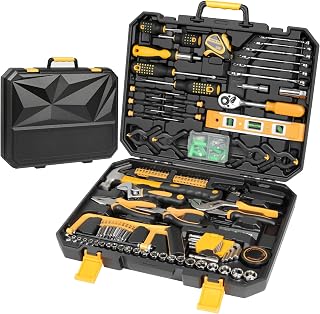


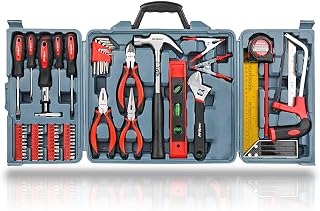


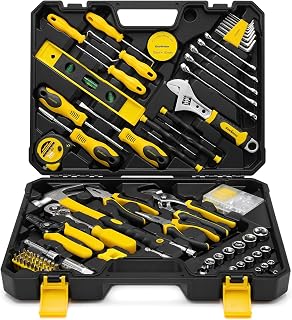
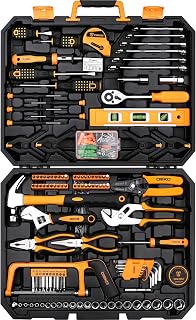

A good hand tool set should make everyday repairs, assembly work and maintenance easier without forcing you to buy individual tools one at a time. For UK buyers, the right choice depends on more than the number of pieces in the box. Socket sizes, drive sizes, screwdriver types, spanner coverage, construction materials, storage, ergonomics and the type of work you expect to perform can all affect whether a set represents good value.
When comparing top-rated hand tool sets, look beyond headline piece counts. A 100-piece kit is not automatically more useful than a carefully selected 60-piece kit. Some large sets count adapters, bits, extensions and duplicate sizes as separate pieces, while a smaller professional-oriented set may concentrate on frequently used tools.
The ideal contents vary according to whether the set is intended for household maintenance, DIY, automotive work, furniture assembly or more demanding workshop tasks. However, several tool categories are particularly useful in a general-purpose UK hand tool kit.
One of the first specifications to check is whether the set provides the metric sizes you actually use. Metric fasteners are common across modern vehicles, appliances, furniture, bicycles and machinery, so a general-purpose UK tool kit should normally provide useful metric coverage.
Do not judge socket coverage solely by the smallest and largest sizes advertised. The intermediate sizes can be more important for everyday work. Check the exact socket list before buying, particularly if you already own some tools and are looking to fill gaps.
Imperial tools can still be useful for certain older equipment, specialist machinery and applications involving imperial fasteners. If your work regularly involves such hardware, a mixed or specialist set may be more appropriate than a purely metric collection.
Ratchet drive size is an important technical specification that is sometimes overlooked when comparing hand tool sets. Common drive sizes include 1/4-inch, 3/8-inch and 1/2-inch.
A multi-drive kit can be particularly useful because it provides greater flexibility. However, more components also mean more storage space and potentially more pieces that are rarely used. Choose drive sizes according to your actual applications rather than simply selecting the largest set.
Socket design affects how easily a tool can engage with a fastener. Standard sockets are suitable for many everyday jobs, while deeper sockets can be useful when threaded studs or extended fasteners prevent a shallow socket from reaching the nut properly.
Access can also depend on the shape of the ratchet head and the available working angle. A compact ratchet can be advantageous in confined spaces, while a longer handle can provide additional leverage where appropriate.
When comparing sets, check whether the kit contains standard and deep sockets, extension bars and adapters. If the set includes bit sockets, examine the supplied bit profiles rather than assuming that a high piece count means broad screw compatibility.
Many quality hand tools use alloy steels designed to balance strength, hardness, durability and manufacturing practicality. Chrome vanadium steel is commonly associated with sockets, spanners and other hand tools, but the material name alone should not be treated as a complete quality assessment.
Manufacturing quality, heat treatment, dimensional accuracy, surface finishing and overall design also influence how a tool performs. A well-made tool should fit its intended fastener appropriately and maintain useful engagement during normal use.
For screwdrivers and driver bits, the steel specification, tip geometry and manufacturing quality can be more important than simply looking for a particular material label. The correct bit profile should also match the screw head to reduce the risk of slipping or damaging the fastener.
Combination spanners combine an open-ended jaw with a ring end, giving one tool two common functions. When assessing a set, check the actual size range and whether the sizes are supplied in sensible increments.
Useful considerations include:
For automotive or workshop users, a more comprehensive spanner range can be valuable. For occasional household use, an unnecessarily large selection may add cost and storage requirements without providing much practical benefit.
Screwdrivers are among the most frequently used hand tools in a home workshop, but many sets provide only a basic selection. Before choosing a kit, consider the screw types you commonly encounter.
A useful screwdriver collection may include multiple sizes of Phillips and slotted drivers, while specialist work can require other profiles such as Torx or Pozidriv. Driver bits can broaden the selection without requiring a separate full-size screwdriver for every profile.
Handle design also deserves attention. A comfortable grip can make a noticeable difference when a screwdriver is used repeatedly. Look for sensible handle proportions, a secure grip and a shaft length appropriate to the intended application.
Pliers are often included in general-purpose tool sets, but the selection can vary considerably. A kit containing several pliers is not necessarily better if all of them perform similar functions.
Always check the intended capacity of cutting tools. A general-purpose cutter should not be treated as a substitute for a tool specifically designed for hardened wire, cable or other demanding materials.
Tool ergonomics can be easy to overlook when comparing specifications, particularly when shopping online. A tool may have excellent material specifications but still be awkward to use if its handle shape, balance or grip does not suit the task.
For screwdrivers and pliers, consider grip shape, surface texture and the amount of force normally required. For ratchets, consider handle length, head profile and access. For hammers, balance and handle construction can influence control and comfort.
Ergonomics become increasingly important when a tool set is used frequently rather than occasionally. A homeowner performing a few repairs each month may have different priorities from someone maintaining machinery every day.
The case supplied with a hand tool set is part of the practical value of the purchase. A well-organised case makes it easier to identify missing tools and return components to their correct positions.
Before choosing a set, consider whether the case has clearly defined locations for each component, whether the tools remain secure when the case is moved, and whether the case is compact enough for your storage area.
Large sets can require substantial cupboard, workshop or vehicle storage. If you frequently carry tools between locations, portability may be more important than having the maximum possible number of pieces.
Piece count is one of the easiest specifications to compare, but it can also be misleading. A set advertised with a very high number of pieces may contain numerous driver bits, adapters and repeated accessories.
Instead of asking only how many pieces are included, ask:
A carefully selected 80-piece kit can therefore be more useful to a particular buyer than a 200-piece kit filled with accessories they rarely need.
For household DIY, versatility is usually more valuable than specialist coverage. A sensible general-purpose set should make it possible to assemble furniture, tighten common fasteners, perform basic maintenance and deal with everyday repairs.
Look for a balanced combination of screwdrivers, pliers, hex keys, sockets, a ratchet, extensions and common spanner sizes. A compact case can also be preferable when the kit is stored indoors rather than permanently kept in a workshop.
Popular manufacturers to compare in this category include Stanley, Draper, Sealey and Bahco, although the exact contents and specifications should always be checked for the individual set rather than assuming every product from a brand is identical.
Automotive users generally need broader socket coverage and a stronger emphasis on ratchets, extensions, spanners and access. A useful automotive-oriented set may include multiple drive sizes and a combination of shallow and deep sockets.
Before purchasing, identify the fastener sizes used by the vehicle or equipment you intend to maintain. Check whether the kit includes the required socket sizes and whether the ratchet and extensions provide appropriate access.
Automotive work can also involve stubborn fasteners. A standard ratchet should not automatically be used as a substitute for a purpose-designed breaker bar when additional leverage is required. Always follow appropriate workshop procedures and the vehicle manufacturer's guidance.
Professionals and frequent users generally benefit from prioritising durability, dimensional consistency, replacement availability and ergonomic design over maximum piece count.
Brands such as Bahco, Facom, Wera, Milwaukee, DeWalt and Stanley offer tool ranges that can be worth comparing across different applications. However, brand reputation should be only one part of the decision. Examine the specifications of the exact set, because tool selection, drive sizes, warranty terms and intended use can differ significantly between product lines.
For workshop environments, consider whether the set provides enough coverage to reduce interruptions without becoming unnecessarily bulky. A modular approach can sometimes be more practical: purchase a core set and add specialist tools individually as requirements become clear.
When comparing established hand tool manufacturers, avoid assuming that one brand is automatically the best choice for every application. Different product ranges can target different users and price levels.
The correct choice should ultimately be based on the exact specifications, intended application and value of the individual set rather than the logo printed on the case.
A large set can look attractive because it appears to offer better value. However, unused accessories still take up space and increase the amount of equipment you need to organise.
Always inspect the complete socket-size list. A kit can have an impressive total piece count while missing several sizes that you regularly need.
The lowest purchase price does not necessarily represent the lowest long-term cost. For tools that will be used frequently, durability, usability and the usefulness of the included selection should also influence the decision.
General-purpose hand tools should be used within their intended application. Do not assume that a ratchet, screwdriver or plier is designed for every high-force task simply because it looks robust.
A poorly organised case can make a large tool set frustrating to use. Storage quality matters especially when tools are transported regularly.
Some sets include a large number of small driver bits. These can be useful, but they should not be treated as equivalent to additional full-size tools when comparing overall kit value.
When two sets appear similar, use a specification-by-specification comparison rather than relying on headline marketing.
Customer reviews can be useful, but they are most valuable when you look for recurring patterns rather than focusing on a single enthusiastic or negative comment.
Pay attention to comments about socket fit, ratchet operation, case durability, missing components, tool finish, handle comfort and long-term usability. Reviews that identify the exact product and describe the task performed are generally more informative for commercial research than short comments that provide no practical context.
Also check the date of reviews. Product specifications, packaging and manufacturing details can change over time, so recent feedback may provide more relevant information about the current version.
Before placing an order through a retailer, verify the manufacturer's or retailer's current specification page where available. Product listings can contain abbreviated descriptions, and different variants can have very similar names.
Confirm the exact model number, number of pieces, socket sizes, drive sizes, included accessories and case configuration. Also check whether the displayed price applies to the precise configuration you are evaluating.
Because online prices and stock can change, treat price and availability as current-market information rather than permanent characteristics of a product.
Even quality hand tools benefit from sensible maintenance. Keeping tools clean and dry helps preserve their condition and makes defects easier to identify.
Metal tools can deteriorate when exposed to moisture, condensation, dirt and unsuitable storage conditions. This is particularly relevant in garages, sheds and unheated workshops where temperature changes can encourage condensation.
Store tools in a dry environment and avoid leaving them exposed to damp surfaces. If surface corrosion appears, address it appropriately before it becomes more extensive. Always follow the tool manufacturer's care recommendations for plated or specially finished surfaces.
One of the simplest ways to reduce tool and fastener damage is to use the correct size and profile. A socket that is too large can slip, while an incorrectly sized screwdriver can damage a screw head.
Whenever possible, ensure the tool is fully seated on the fastener before applying force. Keep the tool aligned with the fastener and avoid using excessive force when the component does not move as expected. A stuck fastener may require a different technique or specialist tool rather than progressively increasing pressure on a standard hand tool.
A complete set can be a practical starting point for someone establishing a home workshop or replacing a mixed collection of old tools. It can also provide consistent storage and complementary components.
Individual purchases may be more sensible when you already own a substantial collection and only need specialist sizes. In that situation, buying another large kit can create unnecessary duplication.
The best approach is often to identify your most frequently performed jobs first and then determine whether a complete set provides meaningful coverage of those tasks.
A general-purpose kit cannot realistically cover every specialist application. Mechanics, electricians, bicycle technicians, engineers and precision-assembly users may require tools with different designs and specifications.
For specialist work, consider a dedicated set designed around the relevant fasteners and working environment. This may provide better access and more appropriate tool geometry than a large general-purpose kit.
Homeowners typically benefit from a balanced selection rather than a professional-sized collection. Basic repair and maintenance tasks can often be handled with a combination of screwdrivers, pliers, hex keys, common sockets, a ratchet, spanners and a few useful accessories.
Think about the jobs you expect to perform over the next several years. Furniture assembly, curtain and fixture installation, bicycle adjustments, appliance maintenance and general household repairs may require different combinations of tools. Choosing around those realistic needs can produce better value than selecting a kit solely because it has the highest piece count.
Workshop users should give additional consideration to organisation, durability, access and size coverage. A set that stays in a workshop can be larger than one intended for occasional household use, provided the additional components are genuinely useful.
It may also be worth considering whether a tool set integrates with an existing toolbox, drawer system or storage cabinet. Consistent organisation can save time when frequently switching between tools.
The phrase “top rated” should not be interpreted as a guarantee that one hand tool set will be ideal for every buyer. Ratings and reviews can reflect different expectations, usage patterns and budgets.
A homeowner may prioritise a compact case and broad general-purpose coverage, while a mechanic may care more about socket range, drive sizes and workshop durability. A product can therefore receive positive feedback while still being unsuitable for a particular application.
Use ratings as one part of the research process. Combine them with specifications, intended use, tool coverage, ergonomics, storage and current pricing before making a decision.
Value is not simply the relationship between piece count and price. A more meaningful comparison considers how many of the included tools you are likely to use and whether those tools meet your requirements.
For example, paying more for a kit may make sense if it includes several tools you would otherwise need to purchase separately. Conversely, paying extra for a large number of accessories that will remain unused may not improve the overall value.
Compare the total contents against your existing collection. If you already own high-quality screwdrivers and pliers, a socket-focused set could be more economical than buying another complete kit.
Hand tools should be used for their intended purposes and within their stated limitations. Inspect tools before use and do not continue using components that are cracked, badly worn or otherwise damaged.
If you are starting from scratch, a complete set can provide a useful foundation. However, you do not need to own every specialist tool immediately.
This approach reduces duplication and lets your collection develop around your actual maintenance needs.
Rather than treating every tool kit as interchangeable, it is useful to classify sets by their intended role.
Before choosing among top-rated hand tool sets in the UK, review the complete specification rather than relying on the product title alone. Confirm the exact model, included tools, metric socket sizes, drive sizes, spanner range, screwdriver selection, pliers, accessories and storage system.
Then consider how often you will use the kit and whether you need a compact household collection or a more comprehensive workshop solution. Established brands such as Stanley, Bahco, Draper, Sealey, DeWalt, Wera, Milwaukee and Facom can provide useful products to compare, but the individual specification remains more important than brand recognition alone.
Finally, compare current retailer pricing, read recent customer feedback, verify the exact configuration and consider whether every major component has a practical purpose for you. The strongest hand tool set is not necessarily the largest or most expensive option; it is the one that provides the right tools, sizes, usability and storage for the work you actually intend to do.
There is no single hand tool set that is best for every UK buyer. The right option depends on whether you need tools for household DIY, automotive maintenance, furniture assembly, workshop work or professional use. Compare the exact contents, socket sizes, drive sizes, construction, storage and current customer feedback before deciding.
There is no ideal piece count. A useful set might contain fewer tools but provide better coverage of the sizes and tool types you actually need. Always examine what the manufacturer counts as an individual piece before comparing large and small kits.
Yes. Metric fasteners are common across many modern household, automotive, bicycle, furniture and mechanical applications. Buyers should check the exact metric socket and spanner sizes included rather than assuming that every set provides the same coverage.
Neither is universally better. A 1/4-inch drive is useful for smaller fasteners and confined areas, while 3/8-inch is a versatile option for many general mechanical applications. Buyers who perform varied work may benefit from a set containing more than one drive size.
They can be worthwhile for frequent users who benefit from better ergonomics, comprehensive coverage, consistent construction and long-term usability. Occasional DIY users may obtain better value from a smaller set that contains only the tools they regularly need.
Brands such as Stanley, Bahco, Draper, Sealey, DeWalt, Wera, Milwaukee and Facom are worth including in a comparison. However, compare the exact product specifications because different ranges from the same manufacturer can be designed for very different applications.
A large set can be convenient when you are building a collection from scratch. Individual tools may be preferable if you already own many basics and only need particular sizes or specialist equipment. Compare the contents against your existing toolbox before purchasing.
Look for secure tool retention, clearly identified storage positions, practical organisation and a size appropriate to your storage space. If you transport the kit regularly, portability and case durability become more important considerations.
Consider the manufacturer's stated materials, construction, dimensions, intended use and specifications, then compare these details with current customer feedback. Socket fit, ratchet operation, tool finish, ergonomics, case quality and completeness are useful areas to investigate.
No. Piece counts can include small accessories, adapters and driver bits. A smaller kit with useful sockets, spanners, screwdrivers and pliers can provide better practical value than a larger kit containing components you rarely use.
Some are designed with professional and workshop users in mind, while others are intended primarily for occasional DIY. Check the manufacturer's intended application and the specifications of the exact kit. Professionals should pay particular attention to durability, ergonomics, tool coverage and compatibility with their existing equipment.
There is no fixed replacement schedule. Properly maintained tools can remain useful for a long time, while damaged or excessively worn components should be replaced when their condition affects safe or effective use. Regular inspection is more useful than replacing tools according to an arbitrary timetable.
For an independent buying guide, a meaningful comparison should consider more than popularity or headline piece counts. Product specifications, tool coverage, intended application, materials, ergonomics, storage, current customer feedback and overall usefulness all contribute to a sensible purchasing decision.
Product information and retailer conditions can change, so buyers should verify the latest specification, configuration, price, availability and applicable retailer terms before purchasing. Recommendations should be treated as guidance for commercial research rather than a guarantee that a particular set will meet every user's requirements.