
♥ Wishlist
Compare 25 verified Milwaukee Power Tool Sets for Professional and Trade Use products in United Kingdom. Reviews, ratings, pros, cons and buying advice updated for October 2026.
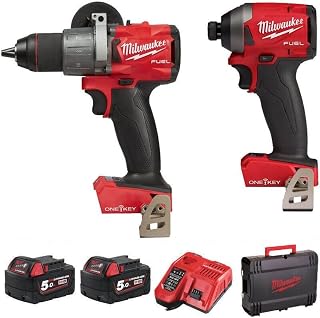


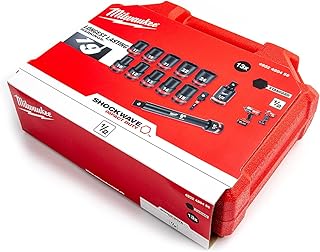


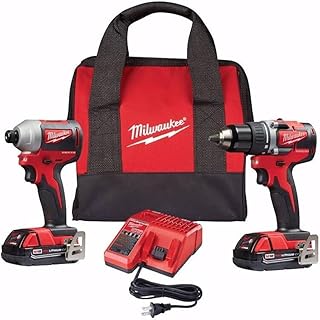


Choosing a Milwaukee power tool set is less about buying the largest bundle and more about selecting a platform, tool combination and battery capacity that match the work you actually do. Milwaukee's cordless range is built around interchangeable battery systems, with M12 and M18 covering different size and performance requirements. Within those platforms, ranges such as FUEL add higher-performance brushless tools and electronic control features.
For UK buyers, the most useful comparison is therefore not simply the number of tools in the box. Consider the type of work, battery compatibility, charger configuration, tool-only versus complete-kit pricing, ergonomics, storage, replacement batteries and whether the set leaves room for future expansion.
A good set should provide practical coverage rather than several tools that duplicate the same function. A compact kit containing a drill driver, impact driver, saw and useful accessories can be more valuable for general maintenance than a larger bundle filled with specialist tools you rarely use.
The M12 and M18 systems serve different priorities. M12 is designed around a compact 12V-class cordless platform, while M18 is the larger 18V platform intended for applications where greater power, capacity or tool size may be appropriate.
M12 sets can make sense where compact dimensions and low weight are more important than maximum output. They are particularly attractive for lighter-duty installation, maintenance, fastening and work in confined areas.
M18 is the more appropriate starting point for many professional users who need a broad selection of full-size cordless equipment. The platform includes drills, impact tools, saws, grinders and many other categories.
Some users benefit from maintaining both platforms. A compact M12 tool can handle precision or access-sensitive work while M18 equipment covers heavier applications. However, buying into two battery systems also means managing separate batteries and charging requirements. For a first cordless tool purchase, choosing one platform and expanding within it can be simpler.
Milwaukee FUEL tools are positioned as higher-performance products within the manufacturer's cordless range and commonly use brushless motor technology combined with electronic control systems. The important buying question is whether those additional capabilities are useful for your applications.
A professional tradesperson using a drill, impact wrench or saw throughout the working week may have a stronger reason to prioritise a high-performance model than an occasional DIY user. Paying more for advanced specifications only makes sense when the extra performance, control, durability or runtime characteristics are relevant to the work.
Battery capacity is one of the most important specifications to compare when evaluating cordless power tool sets. Amp-hour capacity indicates the battery's stored electrical capacity, but it should not be interpreted as a guaranteed number of minutes of runtime. Actual runtime depends on the tool, workload, material, operating conditions and battery technology.
A smaller battery can be preferable for drills, installation tools and overhead work because reduced weight can make the tool easier to control. Larger batteries can be more appropriate for high-demand applications where extended operation is more important than minimum weight.
A kit with three small batteries is not automatically better than a kit with two larger batteries. Compare the capacity, number of batteries, charger configuration, included tools and intended applications together. Also check whether the quoted battery specification refers to the batteries actually included or to compatible options sold separately.
Tool count is one of the easiest specifications to misunderstand. A large bundle can look impressive while providing limited practical value if several included tools are rarely needed.
A two-tool combination can be ideal for buyers starting from scratch. Drill-driver and impact-driver combinations are particularly versatile for construction, assembly, installation and general maintenance. A smaller set can also leave more budget available for batteries, accessories and storage.
Mid-sized bundles can provide a useful foundation for a home workshop or professional tool collection. Look for complementary tools rather than several variations of the same function. A drill, impact driver, reciprocating saw and compact circular saw, for example, may cover substantially more applications than a bundle built around one tool category.
Large kits are most compelling when you already know you need most of the included tools. Professional users may benefit from a broad collection because buying several tools together can simplify platform selection and battery management. For occasional users, however, unused tools can make an apparently attractive package poor value.
A drill driver is often the central tool in a cordless collection. Compare chuck capacity, speed ranges, torque characteristics, clutch settings, ergonomics and overall weight. For drilling into different materials, the available modes and compatible accessories are also important.
An impact driver is useful for repetitive fastening and applications where a conventional drill driver may be less convenient. Look at fastening control, speed settings, impact mechanism characteristics, size and compatibility with the fasteners and accessories you use.
For automotive, mechanical and heavy fastening work, an impact wrench can be considerably more relevant than an impact driver. Do not compare these tools solely by their appearance or battery platform. Their intended fastening applications and torque characteristics are different.
A cordless circular saw can add substantial versatility to a kit. Compare blade diameter, cutting capacity, adjustment mechanisms, visibility of the cutting line, ergonomics and compatibility with the batteries supplied.
Reciprocating saws are useful for demolition, renovation, cutting timber and certain installation tasks. A compact model may be easier to manoeuvre, while a larger tool may be more appropriate for demanding cutting applications.
A cordless angle grinder can be useful for cutting and grinding metal and other suitable materials. Buyers should pay particular attention to disc compatibility, safety features, control, ergonomics and the battery demands of the application.
An oscillating multi-tool can fill a very different role from a circular or reciprocating saw. It is particularly useful for detailed cutting, trimming, scraping and work in awkward locations. If renovation and finishing work are part of your routine, this can be a high-value addition to a multi-tool collection.
Brushless motors have become a major feature of modern cordless power tools. Unlike traditional brushed motor designs, brushless systems use electronic control rather than conventional mechanical brushes to manage motor operation.
For buyers, the practical advantages can include efficient operation, potentially improved runtime and reduced mechanical brush wear. However, brushless technology should not be the only purchasing criterion. A well-designed tool's ergonomics, gearing, electronics, battery system and intended application are equally important.
Specifications should always be interpreted in the context of the tool's intended job. Maximum torque, no-load speed and impact rate can be useful comparison points, but a higher published figure does not automatically make one tool better for every application.
A powerful tool that is uncomfortable to hold can become tiring during prolonged use. When comparing Milwaukee sets, consider the complete working weight of the tool with the battery installed rather than looking only at the bare-tool specification.
Grip shape, balance, trigger position, controls, vibration, LED lighting and access to adjustment mechanisms can all affect usability. A compact tool may be preferable for repetitive installation work, while a heavier model may be acceptable for short-duration high-load applications.
Storage is an often-overlooked part of a power tool purchase. A case can make transportation easier, protect equipment from unnecessary knocks and help keep batteries and accessories together.
When evaluating a bundle, check exactly what storage is supplied. Do not assume that every multi-tool kit includes the same type of case or modular storage system. If the kit does not include storage, factor the cost and space requirements of a suitable solution into your overall buying decision.
Accessories can substantially affect the immediate usefulness of a cordless tool set. However, the presence of accessories should not distract from the quality and suitability of the primary tools.
Always verify the exact contents of the package. Product bundles can change, and similarly named kits may contain different batteries, accessories or storage arrangements.
The largest kit is not necessarily the best value. If half of the tools will spend most of their lives unused, a smaller set can be the more sensible purchase.
Buying one M12 tool and several M18 tools without considering future requirements can create a more complicated battery setup. Decide which platform fits your primary work before building a larger collection.
A tool-only product may look dramatically cheaper because it does not include batteries or a charger. Compare complete ownership costs rather than headline tool prices.
Higher capacity can mean additional runtime, but it can also add weight and affect balance. Choose the battery according to the application instead of assuming that the largest capacity is always best.
Maximum torque or speed figures are useful data points, not a complete definition of tool quality. Ergonomics, controls, size, application suitability and battery compatibility should also influence the decision.
Milwaukee's cordless ecosystem contains distinct battery platforms and product generations. Always confirm compatibility between the exact battery and tool before purchasing additional equipment.
Milwaukee is not the only established cordless platform available to UK buyers. Depending on your priorities, it can be useful to compare the ecosystem with brands such as DeWalt, Makita, Bosch Professional and HiKOKI.
Both brands offer extensive professional cordless ecosystems. Compare the specific tools you expect to purchase rather than attempting to select a brand based only on reputation. Battery platform breadth, tool availability, ergonomics, accessory compatibility and the individual specifications of the tools that matter to you are more useful comparison criteria.
Makita has a broad cordless range and is another major option for users who want to build a multi-tool platform. The best choice depends on the categories you need, battery requirements, tool ergonomics and the overall cost of building your intended collection.
Bosch Professional offers a substantial cordless range aimed at professional and demanding users. Compare platform compatibility, individual tool specifications and the availability of the equipment required for your particular trade or workshop.
HiKOKI is another established professional power tool manufacturer. Buyers considering both should compare complete tool ecosystems rather than judging either brand from one drill or impact tool. The ideal platform is the one that provides the right combination of performance, compatibility, ergonomics and long-term expansion options.
For household DIY, prioritise versatility, manageable weight and reasonable battery requirements. A compact drill driver and impact driver can cover a wide range of furniture assembly, repair and installation tasks, while a saw or multi-tool can be added if renovation work is planned.
DIY buyers should avoid paying for specialist professional equipment simply because the specification looks impressive. If the tool will only be used a few times each year, ease of use and sensible overall cost may matter more than maximum performance.
Professional buyers should start with the tasks performed most frequently. An electrician, carpenter, plumber, builder and automotive technician can have very different priorities even when they all use cordless power tools.
Use the following checklist when comparing two or more kits. It helps prevent a large tool count or attractive headline specification from hiding an unsuitable package.
Value should be calculated from the equipment you will actually use. Start by identifying the individual tools you need, then compare the combined cost of buying those tools separately with the cost of an appropriate kit. Include batteries, chargers and storage in both calculations.
A bundle can be attractive when it includes several tools you already planned to purchase. Conversely, a bundle containing unwanted equipment may be poor value even when its total number of components appears high.
Milwaukee produces many closely related tools, and model names can be easy to confuse. Before buying, verify the exact model numbers, battery platform, included accessories and package contents. This is particularly important when comparing listings from different retailers.
When shopping online, compare the exact product configuration rather than relying on photographs or abbreviated product titles. Check whether the listing is for a bare tool, a complete kit or a bundle with additional batteries and accessories.
Good maintenance can help preserve the condition and usability of power tools. Follow the manufacturer's instructions for the exact model because maintenance requirements vary between tools.
Remove dust, chips and debris after use, particularly around ventilation openings and moving components. Do not use cleaning methods that could force contaminants into the tool or damage electrical components.
Inspect batteries for visible damage before use and follow the manufacturer's storage and charging instructions. Avoid using batteries that show signs of physical damage or abnormal behaviour.
Blades, bits, discs and other accessories should be suitable for the tool and material. Worn or damaged accessories can reduce performance and may increase safety risks.
Periodically inspect chucks, blade mechanisms, guards and other user-accessible components according to the manufacturer's instructions. If a tool develops an unusual noise, vibration or operating behaviour, stop using it until the cause has been assessed.
Cordless operation removes the trailing mains cable but does not eliminate normal power-tool hazards. Appropriate eye protection, hearing protection, gloves where suitable for the particular task, secure workpieces and correct accessories remain important considerations.
The best set depends on the work you need to perform, your preferred battery platform and your budget. For a first purchase, prioritise a useful combination of tools and batteries rather than selecting solely by tool count.
Neither platform is universally better. M12 prioritises compact cordless tools, while M18 provides a larger ecosystem of tools for applications where greater size and capability may be appropriate. Choose according to your workload.
They can be worthwhile for frequent or demanding users who can make practical use of the additional performance and features. Occasional DIY users may find that a less expensive Milwaukee option meets their requirements.
M12 and M18 are separate battery platforms, so buyers should not assume that an M12 battery can be used with an M18 tool or vice versa. Always verify compatibility for the exact products being considered.
A kit is attractive when it contains most of the tools you need and provides batteries and charging equipment at a sensible overall cost. Individual purchases can make more sense when you need only one or two specialist tools.
Milwaukee offers cordless tools across a broad professional-oriented range. Suitability depends on the exact tool, application and working conditions, so professional buyers should assess individual specifications rather than relying solely on the brand name.
Compare the exact models, motor technology, speed and torque characteristics, size, weight, included batteries, charger and storage. Consider whether the batteries supplied are appropriate for the amount of work you expect to perform.
No. A higher-capacity battery can provide more stored energy but may also increase weight and bulk. For compact installation work, a smaller battery can be more comfortable, while demanding applications may benefit from additional capacity.
There is no single replacement interval that applies to every battery. Service life depends on usage, charging practices, storage conditions and other factors. Follow Milwaukee's guidance and replace batteries when they become damaged or no longer perform acceptably.
Write down the jobs you need to complete first, identify the tools required for those jobs, choose the appropriate battery platform and then compare complete kit contents. Verify model numbers and battery compatibility before placing an order.
Before choosing a Milwaukee power tool bundle in the UK, make the decision around your actual workload rather than the marketing size of the package. The strongest purchase is usually the one that gives you the right tools, batteries and platform for today's jobs while leaving sensible room for future expansion.
For many cordless-tool users, the first Milwaukee set is the beginning of a larger system rather than a one-time purchase. Once you own suitable batteries and a charger, future bare tools on the same compatible platform may become more convenient to consider. This makes the first platform decision particularly important.
For an occasional DIY user, a compact and practical kit may provide all the capability required. For a professional, the better strategy can be to select a platform capable of supporting the wider range of tools needed across different jobs. In either case, compare the exact products available in the UK, verify specifications before purchasing and judge the package by how effectively it solves your real-world requirements.