

♥ Wishlist
Compare 53 verified Compact Pipe Cutter products in United Kingdom. Reviews, ratings, pros, cons and buying advice updated for October 2026.


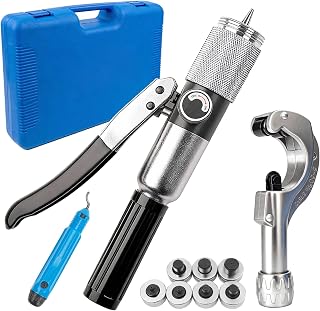


A compact pipe cutter is a deceptively simple tool, but the right design can make a substantial difference when working in confined spaces, around existing pipework or on installation and repair jobs where a full-size cutter is inconvenient. The best compact pipe cutters combine controlled cutting, a sharp and durable cutting wheel, a secure grip on the pipe and a body small enough to manoeuvre where access is restricted.
For UK buyers, the most important consideration is not simply whether a pipe cutter has a high customer rating. Compatibility with the pipe material, supported diameter range, cutting mechanism, build quality, replacement-wheel availability and the type of work you intend to undertake all deserve attention. A compact cutter designed primarily for copper may not be the appropriate choice for tougher metals, while a tool intended for plastic pipe can have a very different cutting mechanism from a traditional rotary metal-pipe cutter.
Brands such as Rothenberger, Monument, Bahco, Silverline, Draper and Faithfull offer different approaches to pipe-cutting tools, so comparing the actual specification is more useful than choosing purely by brand name. Product descriptions should always be checked carefully because apparently similar compact cutters can differ considerably in capacity, materials and intended applications.
A compact pipe cutter is designed around accessibility. Traditional pipe cutters can provide excellent leverage and control, but their larger frames may be awkward to rotate when a pipe is positioned close to a wall, behind a cabinet or inside a narrow service area. A compact model reduces the physical footprint around the pipe and can allow the user to complete a cut with repeated short rotations.
The cutter normally grips the pipe between a cutting wheel and one or more guide rollers. As the tool is rotated around the pipe, the cutting wheel gradually scores and penetrates the material. Tightening the mechanism incrementally maintains contact between the wheel and pipe until the cut is complete.
This controlled cutting action is particularly useful for applications where a clean, reasonably square cut is required without using a powered tool. It can also reduce the amount of surrounding space needed compared with equipment that requires a long cutting stroke or a large cutting arc.
Small dimensions are useful only when they match the job. An extremely compact cutter may have a restricted pipe diameter range, less comfortable adjustment or limited compatibility with harder materials. Conversely, a slightly larger compact cutter may offer a better balance of accessibility, durability and cutting capacity.
Consider where the tool will actually be used. If most work involves exposed copper pipe on a workbench, maximum compactness may be less important than comfortable operation. If the cutter is intended for maintenance work behind fixtures or within service voids, overall dimensions and minimum operating clearance become much more significant.
Pipe material is one of the most important buying criteria. A cutter should be selected according to the material specified by the manufacturer rather than assuming that any rotary pipe cutter can handle every type of pipe.
Copper is a common application for compact rotary pipe cutters. A suitable cutter should provide a controlled cutting action without unnecessarily deforming the pipe. The condition and sharpness of the cutting wheel are important because excessive force can produce a poor cut or distort thin-walled tubing.
For plumbing work, the ability to produce a clean, reasonably square end can simplify subsequent preparation for fittings. After cutting, the pipe should be inspected and appropriately deburred where required.
Some compact metal pipe cutters can be used with brass or other suitable softer metals, but compatibility varies by design. The manufacturer's stated material range should therefore take precedence over assumptions based on the appearance or thickness of the pipe.
Harder metals place greater demands on the cutting wheel, frame and adjustment mechanism. A compact cutter specifically engineered for tougher metal pipe may be required. Attempting to cut material outside the tool's intended specification can accelerate wheel wear, damage the mechanism or result in an unsatisfactory cut.
Plastic pipe requires particular attention because plastic-specific cutters may use a scissor, ratchet or blade arrangement rather than a conventional rotary cutting wheel. A rotary cutter intended for metal tubing should not automatically be considered suitable for plastic pipe.
When shopping for a compact pipe cutter, identify the exact pipe material first, then select a cutter whose manufacturer explicitly lists that material as compatible.
Always check the cutter's supported diameter range before purchasing. Compact pipe cutters are often designed for relatively narrow tubing, making them excellent for certain plumbing and maintenance applications but unsuitable for larger pipework.
Pay attention to both the minimum and maximum supported diameter. A cutter that technically covers the required pipe size may still be inconvenient if the pipe is close to the edge of its operating range. Working near the limits of a tool can also affect ease of adjustment and manoeuvrability.
The minimum supported diameter is particularly important for small-bore tubing. If the rollers cannot correctly locate the pipe or the cutting wheel cannot maintain stable contact, the cutter may slip or produce an uneven cut.
The maximum capacity determines whether the tool can handle larger tubing. Do not assume that a larger-looking frame automatically means a larger cutting capacity. The actual specification is the useful measurement.
UK product listings may describe pipe dimensions using metric measurements, imperial measurements or both. Plumbing products can also be described using nominal pipe sizes that do not directly correspond to the outside diameter. Comparing the manufacturer's stated capacity with the actual pipe specification helps prevent compatibility mistakes.
The cutting wheel is one of the most important components in a rotary pipe cutter. Its edge needs to maintain a controlled cutting profile while withstanding repeated contact with the pipe material.
A high-quality wheel can make the cutting process smoother and more predictable, while a worn or damaged wheel may require additional pressure and produce poorer results. The wheel is a consumable component on many cutters, so replacement availability is an important long-term consideration.
Before buying, check whether replacement wheels are available for the particular cutter. A tool with an otherwise durable frame may have a significantly longer useful life when replacement cutting components can be obtained easily.
It is also worth checking whether replacement wheels are supplied by the original manufacturer or whether compatible alternatives are specified. The correct replacement component should match the cutter and intended pipe material.
Because the cutting wheel has a precision edge, avoid storing the tool where the wheel can be knocked against other metal tools. Keeping the cutter clean and protected can help preserve the mechanism and cutting components between jobs.
The adjustment mechanism controls how firmly the cutting wheel engages with the pipe. A good mechanism should allow gradual adjustment rather than forcing the user to apply excessive pressure in one movement.
Fine adjustment is particularly useful because pipe cutters work by progressively deepening the cut. Applying too much pressure too quickly can distort softer tubing, increase resistance and place unnecessary stress on the cutting wheel.
A smooth adjustment screw or comparable mechanism makes it easier to maintain controlled pressure. The adjustment should feel predictable, with enough resistance to prevent unwanted movement during cutting without being unnecessarily difficult to operate.
The adjustment knob matters more than it may initially appear. Compact tools are often operated in awkward positions, so a small or slippery knob can make fine adjustment uncomfortable. A textured or suitably shaped adjustment point can provide better control, particularly when wearing work gloves.
Guide rollers support the pipe while the cutting wheel performs the cut. Their alignment affects how consistently the tool tracks around the pipe.
When comparing compact cutters, look for a design that holds the pipe securely and keeps the cutting wheel properly aligned with the intended cutting path. Loose, damaged or poorly maintained rollers can contribute to uneven cutting and increased friction.
For frequent use, the durability of the roller assembly can be as important as the cutting wheel itself. A robust frame and well-made moving components can make a compact cutter more dependable over repeated jobs.
The cutter frame needs to withstand repeated tightening forces while remaining compact enough for restricted access. Common construction materials include steel, alloy and engineered components, with the exact combination varying between products.
A substantial metal frame can provide useful rigidity and resistance to deformation. This can be particularly valuable when the cutter is used regularly or on materials that require more cutting force.
Plumbing tools can encounter moisture, condensation and damp working environments. Corrosion-resistant finishes or suitable protective coatings can therefore be beneficial, although the tool should still be cleaned and dried after use when exposed to water.
A heavier tool is not automatically better. In overhead, confined or repetitive work, unnecessary weight can become inconvenient. The ideal balance depends on whether your priority is portability, durability, frequent professional use or occasional household maintenance.
One of the biggest reasons to choose a compact pipe cutter is access. A tool that looks excellent on a workbench can be awkward when the pipe is positioned against a wall or surrounded by other components.
Consider the tool's total length, width and height as well as the space required to rotate it. The physical dimensions of the cutter are only part of the equation because your hand also needs enough clearance to operate the adjustment mechanism.
Some compact cutters are designed specifically for situations where the tool cannot make a complete rotation around the pipe. In these circumstances, repeated partial turns can progressively move the cutter around the tubing.
This feature can be particularly valuable in repair and maintenance work. However, users should still verify that the particular design is intended for restricted-access cutting rather than assuming that every compact cutter provides the same level of manoeuvrability.
A useful comparison should go beyond star ratings. Customer feedback can provide useful information about general ownership, but technical specifications determine whether a cutter is actually appropriate for the job.
A compact pipe cutter is primarily an access-focused tool, whereas a conventional full-size pipe cutter can provide additional leverage and capacity. Neither design is universally superior.
If you regularly work in cramped locations, compactness can be worth prioritising. If you mainly prepare lengths of pipe before installation, a larger cutter may offer more convenient handling and capacity.
A hacksaw is versatile and can cut many materials, but a pipe cutter offers a different set of advantages. A rotary pipe cutter follows the circumference of the pipe and is designed to create a controlled cut around the tubing.
A hacksaw can be useful when working with materials or dimensions outside a cutter's specification, but the resulting cut may require more attention before the pipe is used. The surrounding space required for the saw's stroke can also make it less convenient in confined installations.
For routine cutting of compatible small-diameter pipe, a compact pipe cutter can be a more specialised and convenient option. A hacksaw remains useful as a general-purpose cutting tool rather than a direct replacement for every pipe-cutting application.
Powered tools can reduce cutting time on suitable jobs, but they introduce considerations such as access, noise, sparks, power availability, battery management and the need to control the tool around existing installations.
A manual compact pipe cutter requires no battery or mains supply and can be particularly practical for isolated repair work. It also provides direct mechanical feedback as the cut progresses.
The appropriate choice depends on the material, location, quantity of cuts, required speed and working environment. For a small number of cuts in an awkward position, a compact manual cutter can be a highly practical addition to a toolbox.
A compact pipe cutter is especially useful when you need to cut compatible pipe in locations where a larger tool would be difficult to rotate.
A compact pipe cutter is not the right solution for every application. Consider another cutting method when the pipe diameter exceeds the cutter's capacity, when the material is not approved for the cutter or when the installation does not provide sufficient space to operate the mechanism.
For particularly hard materials, specialist cutting equipment may be more appropriate. Likewise, plastic pipe may require a dedicated plastic-pipe cutter rather than a metal-tube rotary cutter.
A high rating can indicate positive customer satisfaction, but it does not establish that the tool is suitable for your particular pipe. Always compare the technical specification with your application.
This is one of the most important mistakes. Copper, steel, stainless steel and plastic can require different cutting approaches. Confirm compatibility before purchasing.
A cutter may support a maximum diameter that looks suitable while failing to accommodate very small tubing. Check the complete operating range.
Small overall dimensions do not necessarily mean that a cutter can operate efficiently in an extremely restricted installation. Consider how much rotational and hand clearance is required.
The cutting wheel will eventually wear during normal use. Replacement availability can have a major effect on the practical lifespan of the tool.
A pipe cutter is designed to progressively deepen the cut. Excessive pressure can increase the risk of damaging the wheel, deforming softer pipe or making the cutting process unnecessarily difficult.
Always follow the instructions supplied with the specific cutter because adjustment methods and material limitations vary between models. The general cutting principle is to position the tool squarely around the pipe, bring the cutting wheel into contact and rotate the cutter while gradually increasing pressure.
Do not force the cutter simply because the pipe is taking longer to separate. If the tool is difficult to rotate or the cutting action appears abnormal, stop and check the wheel, pipe compatibility, alignment and adjustment.
Rotary cutting can leave a sharp internal or external edge depending on the pipe and cutter design. Deburring is therefore an important finishing step when required by the particular application.
A clean pipe end can make subsequent fitting and assembly easier and can reduce the likelihood of leaving sharp edges that could interfere with installation. Use an appropriate deburring tool and follow the requirements of the fitting system or installation instructions.
Do not assume that a visually clean cut automatically means the pipe requires no preparation. Inspect the end carefully before proceeding with the next stage of the job.
Compact pipe cutters contain relatively few components, but proper care can help maintain reliable operation. After use, wipe away metal particles, dirt and moisture. Pay particular attention to the cutting wheel, rollers and adjustment mechanism.
Residue around the wheel can affect smooth movement and make inspection more difficult. Remove debris using a suitable cleaning method rather than allowing accumulated particles to remain in the mechanism.
Look for visible damage, excessive wear or changes in cutting performance. A damaged wheel should be replaced with the appropriate component rather than continuing to force the cutter through the material.
Guide rollers should turn appropriately and should not show obvious damage or excessive play. Any deterioration that affects pipe stability should be addressed before further use.
Keep the adjustment screw and moving parts clean. If the manufacturer specifies lubrication, use the recommended method and lubricant. Avoid indiscriminate lubrication where it could attract abrasive debris.
Store the tool in a dry environment where the cutting wheel will not be struck by heavier equipment. A toolbox compartment or suitable protective storage area can help prevent accidental damage.
Pipe cutting should always be approached with the material, installation and surrounding environment in mind. Wear suitable eye protection when there is a possibility of debris, and use appropriate hand protection where the work requires it.
Before cutting an installed pipe, make sure you understand what the pipe carries and that the relevant system has been safely isolated. Never cut an unidentified or potentially pressurised pipe simply because it appears suitable for a compact cutter.
After making a cut, handle the pipe ends carefully because freshly cut metal can have sharp edges. Follow the appropriate installation, isolation and safety procedures for the specific plumbing or maintenance task.
If the cutter will be used regularly, certain details become more important than they might be for occasional DIY work.
Marketing descriptions sometimes highlight features that sound impressive but have limited relevance to your particular application. A large feature list does not necessarily indicate a better pipe cutter.
For a compact manual cutter, basic mechanical quality is usually more important than decorative features. A well-made frame, accurate adjustment, suitable rollers and an appropriate cutting wheel are fundamental to the tool's usefulness.
Similarly, a very broad claimed application range should be examined carefully. Verify the actual materials and diameters specified by the manufacturer rather than assuming that a single tool can replace every pipe-cutting method.
Customer reviews can be useful when interpreted alongside technical specifications. Instead of focusing only on the average rating, look for repeated comments concerning the same practical characteristics.
Reviews are most useful when they provide specific observations that can be compared with the manufacturer's specification. A review describing successful cutting of one particular pipe does not necessarily prove compatibility with every similar-looking pipe.
Brand reputation can be a useful starting point, particularly when comparing specialist hand tools, but it should not replace specification checking. Established tool manufacturers such as Rothenberger, Bahco, Monument, Draper and Faithfull have product ranges covering different plumbing and workshop applications.
Different brands may prioritise different characteristics. One model may focus heavily on confined-space access, another on broader material compatibility, while another may be positioned as a general-purpose plumbing tool. Compare the individual model rather than assuming every product from a familiar brand has identical construction or capabilities.
When considering less familiar brands, pay particular attention to the clarity of the technical specification, replacement-part information, intended materials and dimensions. These details can be more informative than brand recognition alone.
For occasional DIY plumbing, simplicity is often more valuable than an oversized feature set. Look for a cutter that covers the pipe sizes you are likely to encounter, is explicitly compatible with the relevant material and has an adjustment system that is easy to understand.
A compact design is particularly useful for homeowners who do not want a large specialist tool taking up space in a toolbox. However, avoid buying solely because a product is described as compact. Confirm that it still provides adequate capacity and stable pipe support.
For regular maintenance work, durability and replacement components become more important. A robust frame, dependable rollers and a replaceable cutting wheel can be more valuable over time than a minimal purchase price.
Where tools are carried between locations, also consider overall weight, storage convenience and the ability to inspect or maintain the cutting mechanism easily.
For restricted-access work, prioritise physical dimensions and operating clearance. The cutter should be small enough to fit around the pipe while leaving sufficient space to turn the tool and operate its adjustment mechanism.
A tool specifically described by its manufacturer as suitable for confined or close-clearance applications can be preferable to a generic cutter with a similarly small appearance. If possible, compare the dimensions of the tool with the actual working area before buying.
For a general toolbox, portability, versatility and durability are usually the key considerations. A compact cutter that covers the pipe sizes commonly encountered in household plumbing can be more useful than a specialist model designed for a narrow application.
Consider pairing the cutter with an appropriate deburring tool and keeping a spare compatible cutting wheel available if the tool is used regularly.
The best value is not necessarily the lowest-priced cutter. Value comes from matching the tool's construction and capabilities to the work it will perform.
For occasional use, there may be little benefit in paying for features you will never use. For frequent work, however, a better-built cutter with replaceable components can be more economical over its useful life.
When comparing prices, consider the complete ownership picture: the cutter itself, replacement wheels, maintenance requirements and whether the tool covers the pipe sizes you actually need.
If several compact pipe cutters appear suitable, narrow the selection in stages rather than trying to choose from every available product at once.
Pipe diameter alone does not describe the complete cutting requirement. Wall thickness and material hardness can affect the effort required to make a cut and the suitability of a particular cutting wheel.
Thin-walled tubing may be susceptible to deformation if excessive pressure is applied, while thicker or harder tubing can place greater demands on the cutter. Where the manufacturer specifies limitations relating to wall thickness or material, those requirements should be followed.
This is another reason not to compare compact pipe cutters solely by diameter range. Two tools with similar stated capacities can have different intended applications.
When pipe is being prepared for a fitting, joint or subsequent installation process, the quality of the cut can affect how easily the next operation can be completed. A controlled cut can reduce the amount of corrective preparation required.
The cutter should be kept properly aligned with the pipe rather than deliberately tilted. If the cutting wheel repeatedly wanders from the intended cutting path, inspect the setup and condition of the tool before continuing.
Pipe cutting is not a single category with one universal tool. Copper tube, stainless steel, steel pipe, plastic pipe and specialist tubing can require different equipment. A compact rotary cutter can be excellent for the materials it was designed for but inappropriate outside those limits.
This distinction is particularly important when shopping online because product photographs can make different tools appear almost identical. The written specification should always be treated as the decisive source for compatibility.
A useful product listing should provide enough information to establish whether the cutter is suitable before purchase. Ideally, the specification should identify the intended pipe material, cutting capacity and key construction details.
If important specifications are missing, avoid making assumptions based solely on the product photograph or a generic description.
Although these tools are small, proper storage helps protect their most important working parts. Keep the cutter away from loose tools that could strike the wheel or adjustment mechanism.
If the tool has been used around water, wipe it dry before storage. Where appropriate, protect exposed metal surfaces against corrosion according to the manufacturer's care recommendations.
Keeping the cutter with its compatible replacement wheel, if one is carried, can also make the tool easier to maintain when needed.
These symptoms do not necessarily mean that the entire cutter needs replacing. In some cases, cleaning, correct adjustment or replacement of a worn cutting wheel may resolve the issue. Follow the manufacturer's maintenance guidance for the particular model.
Online shopping makes it easy to compare many compact pipe cutters, but product titles can sometimes emphasise marketing terms rather than the specifications that determine suitability.
When comparing UK listings, open the detailed specification rather than relying on the headline. Check the stated pipe material, diameter range, product dimensions and included components. If two listings appear to describe the same model but show conflicting specifications, verify the information against the manufacturer's documentation before making a decision.
It is also sensible to check the exact model number. Similar-looking products within a manufacturer's range can have different capacities or cutting mechanisms.
The best compact pipe cutter for one UK buyer may be completely different from the best choice for another. The ideal product is the one that combines the necessary pipe compatibility, capacity and accessibility with a construction quality appropriate for the expected workload.
For occasional DIY jobs, prioritise compatibility, ease of use and sensible size. For professional or frequent maintenance work, give greater weight to frame durability, adjustment quality, replaceable cutting components and long-term serviceability. For confined-space applications, make physical access the first consideration rather than treating compact dimensions as a secondary feature.
A compact pipe cutter is used to cut compatible pipe or tubing while taking up less operating space than many conventional pipe cutters. It is particularly useful for small-diameter pipe and applications where access around the pipe is restricted.
Many compact rotary pipe cutters are designed for copper tubing, but compatibility should always be confirmed for the specific model. The supported diameter range and material specification should be checked before use.
Some models are designed for suitable steel or harder metals, while others are intended primarily for softer tubing. Do not assume that a copper-tube cutter can safely or effectively cut steel. Check the manufacturer's material specification.
Only use a compact cutter on stainless steel when the manufacturer specifically states that the model is suitable. Stainless steel can require a cutting wheel and frame designed to cope with its material characteristics.
Not necessarily. Plastic pipe often requires a dedicated plastic-pipe cutting tool. Check the manufacturer's instructions and material compatibility before using any cutter on plastic.
No. Smaller dimensions improve access but can come with reduced capacity or handling comfort. The best size is the smallest tool that still provides suitable capacity, control and durability for your application.
Possible causes include incorrect adjustment, unsuitable pipe diameter, an unsuitable or worn cutting wheel, poor alignment or a tool being used outside its intended specification. Inspect the cutter and verify compatibility before continuing.
The cutter should be adjusted according to the manufacturer's instructions, with enough pressure for the wheel to engage the pipe without excessive force. Rotary cutters are generally intended to deepen the cut progressively rather than being tightened aggressively at the beginning.
Cutting wheels are wear components and can eventually require replacement. The replacement interval depends on the material being cut, frequency of use, cutting technique and condition of the wheel.
Use it only on compatible materials and diameters, avoid excessive adjustment force, keep the wheel and rollers clean, inspect moving parts regularly and replace worn components when necessary. Proper storage also helps protect the cutting mechanism.
They can be useful in professional plumbing and maintenance when the particular model meets the required material, diameter and durability requirements. For frequent trade use, construction quality and replacement-component availability deserve particular attention.
Compatibility is the first priority. Confirm the pipe material and diameter before comparing secondary features such as grip, frame finish or compactness.
For compatible pipe and situations where a controlled circumferential cut is useful, a pipe cutter can be more convenient. A hacksaw remains more versatile for materials and applications outside the cutter's specification.
Some are specifically designed for restricted access, but the amount of available clearance still matters. Check the tool's physical dimensions and the manufacturer's description of its intended access conditions.
For regular use, replaceable wheels can be a useful long-term feature because the cutting wheel is subject to wear. For occasional use, the importance is lower, but replacement availability can still be beneficial.
Compare the individual models rather than choosing solely by brand. Look at material compatibility, capacity, dimensions, adjustment mechanism, construction and replacement components. The best choice is the model that matches your actual pipe and working conditions.
Before selecting a compact pipe cutter, use the following checklist to make the comparison more objective:
The best top-rated compact pipe cutter for UK buyers is not simply the product with the highest rating or the smallest body. A genuinely suitable choice combines the right cutting mechanism, compatible materials, adequate diameter capacity, dependable adjustment, stable guide rollers and a compact form that suits the working environment.
For most buying decisions, start with compatibility and capacity, then consider access, construction quality, cutting-wheel durability and maintenance. If the tool will be used frequently, replacement parts and overall mechanical robustness become increasingly important. If it is intended mainly for occasional DIY work, straightforward operation and sensible value may matter more.
Before purchasing, compare the latest specifications for the exact model, read verified customer feedback for practical ownership information and check today's prices from reputable UK retailers. Product specifications, availability and pricing can change during 2026, so the final decision should always be based on the current listing and the manufacturer's stated requirements.