
♥ Wishlist
Compare 52 verified Chisels Hand Tool products in United Kingdom. Reviews, ratings, pros, cons and buying advice updated for October 2026.


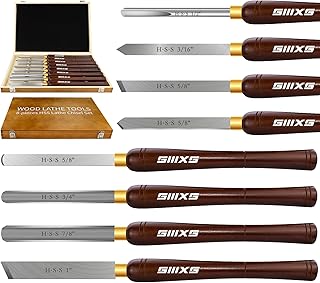
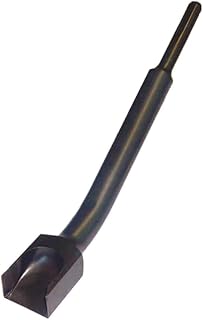


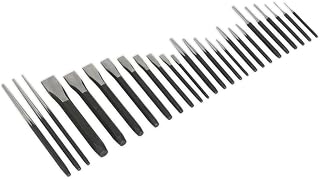


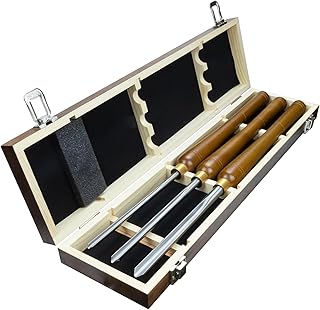


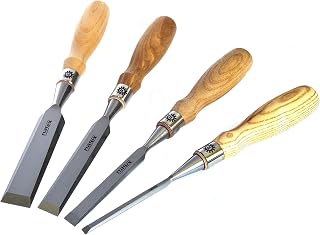


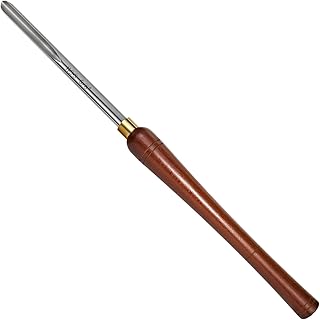


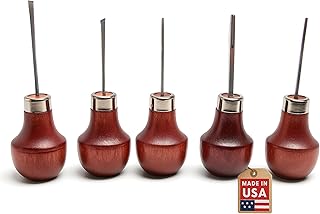
Choosing a chisel is not simply a matter of selecting the sharpest blade or the largest set. The right hand chisel depends on the material being worked, the type of cut required, how much force will be applied, how accurately the cut must be controlled, and whether the tool will be used for occasional DIY work or regular professional woodworking.
For buyers in the UK, a useful starting point is to separate chisels into their intended applications. General-purpose bevel-edge chisels are versatile for woodworking, mortising chisels are designed for heavier joint work, firmer chisels suit demanding bench work, and specialist chisels are intended for particular tasks such as paring, carving or detailed joinery. A well-selected collection does not necessarily need dozens of sizes; a small range covering the most useful widths can be considerably more practical.
When comparing the best top-rated chisels, consider the complete tool rather than focusing only on the blade material. Steel quality, heat treatment, edge retention, handle construction, balance, ferrules, back flatness, sharpening requirements and the manufacturer's intended use all influence how useful a chisel will be over time.
Bevel-edge chisels are among the most versatile choices for general woodworking and joinery. Their bevelled sides make it easier to work into corners, including the internal corners of joints such as dovetails. They are commonly used for trimming joints, cleaning waste from mortises, chopping small recesses, removing excess material and general bench work.
A good bevel-edge set can therefore be a sensible starting point for a DIY enthusiast, furniture maker or woodworker who wants one collection capable of handling a broad range of tasks. The exact profile varies between manufacturers, so compare the thickness and side geometry rather than assuming every similarly sized chisel will behave identically.
Mortise chisels are designed for work where the tool may receive repeated blows from a mallet. They generally have a heavier construction than lightweight bench chisels, with a blade profile intended to withstand the stresses associated with chopping mortises.
If you regularly make traditional mortise-and-tenon joints, a dedicated mortise chisel can be preferable to using an ordinary bench chisel. For occasional household repairs, however, buying a complete specialist mortising collection may be unnecessary when a robust general-purpose chisel can cover the work required.
Firmer chisels traditionally have a comparatively robust rectangular-sided construction and are intended for demanding woodworking tasks. They can be useful when strength and controlled material removal are more important than getting into very tight corners.
For a modern buyer, the important consideration is not the name alone. Look at the blade thickness, edge geometry, handle design and stated intended use to determine whether the particular model is appropriate for chopping, paring or general bench work.
Paring chisels are intended for controlled, fine cuts rather than heavy hammering. They are useful for refining joints, removing thin layers of material and achieving a precise fit. Their lighter construction can provide excellent control, but they should not normally be treated as substitutes for heavy-duty mortising or striking chisels.
If your priority is fine furniture joinery, fitting doors, trimming joints or producing clean finishing cuts, a dedicated paring chisel can be a valuable addition after establishing a basic bench-chisel collection.
Carving chisels and gouges are designed around shaped cutting edges rather than the flat blades used by most bench chisels. They are appropriate for decorative carving, sculptural work and controlled shaping of timber.
Do not judge a carving tool solely by the number of pieces in a set. The profile and geometry of each cutting edge matter more than having a large assortment of similar tools.
Cold chisels and masonry chisels belong to a different category from woodworking chisels. They are intended for materials such as metal, brick, concrete or masonry, depending on their design. A woodworking chisel should not be substituted for a masonry or metalworking tool simply because both have a sharpened edge.
Likewise, a masonry chisel should not be used for precision furniture joinery. Matching the tool to the material is one of the simplest ways to avoid premature damage and poor results.
Blade steel is an important part of chisel performance, but steel grade alone does not tell you everything about how a chisel will behave. Heat treatment, hardness, edge geometry and manufacturing quality all affect practical performance.
Carbon-steel chisels are widely associated with traditional woodworking tools. They can provide excellent cutting performance when properly heat-treated and sharpened, but they generally require sensible storage and maintenance to minimise corrosion.
For a UK workshop, this is particularly relevant if tools are stored in an unheated garage, shed or other area where condensation and changes in humidity occur. A good chisel can last for many years, but its condition depends heavily on storage as well as the original material.
Some manufacturers use alloy steels, including chrome-vanadium formulations, to balance toughness, hardness and durability. These steels are common across quality hand tools, although the exact performance depends on the manufacturer's formulation and heat-treatment process.
Rather than assuming one steel designation is automatically superior, compare the tool's construction, intended application and reputation for consistency. A well-made chisel with appropriate heat treatment can be more useful than a poorly manufactured tool carrying an impressive-sounding steel description.
Stainless steel offers greater resistance to corrosion than many conventional carbon steels, which can be attractive for storage in environments where moisture is a concern. However, corrosion resistance should not be treated as the only measure of quality. The cutting performance and edge characteristics still depend on the particular steel and manufacturing process.
Heat treatment is one of the less visible but most important aspects of a quality chisel. The blade needs an appropriate balance between hardness and toughness. If it is too soft, the edge may deform or require frequent sharpening. If it is excessively hard or poorly treated, the cutting edge may be more susceptible to chipping under inappropriate use.
For buyers comparing chisels from brands such as Stanley, Irwin, Bahco, Narex, Faithfull and Robert Sorby, look beyond the brand name and examine the intended application and construction of the specific range. Different product lines from the same manufacturer can be designed for very different levels of work.
A thicker blade is generally better suited to tasks where the chisel needs to withstand greater force, while a thinner blade can offer improved access and control for certain precision tasks. There is no universally ideal blade thickness.
For heavy chopping, joint preparation and mortising, robustness is usually a higher priority. For trimming dovetails, paring joints or reaching into restricted spaces, a more refined profile can be advantageous.
When comparing product specifications, check the complete blade dimensions rather than looking only at the nominal width. Two chisels described as the same width can have noticeably different blade thicknesses, side bevels and overall profiles.
Chisel width is one of the most practical buying considerations. Common woodworking sizes range from narrow blades for detailed work to much wider blades for removing larger areas of waste. The best combination depends on the projects you undertake.
For a general-purpose woodworking collection, prioritise useful size spacing rather than buying several chisels that are only slightly different in width. A carefully selected set can provide better coverage with less duplication.
A beginner does not necessarily need a large professional set. For general DIY and woodworking, a compact selection of commonly useful widths can cover many jobs. The ideal set becomes larger only when your work demands additional sizes or specialist profiles.
Before purchasing a large boxed set, consider what you actually build. A person fitting hinges, locks and timber trim around a home has different requirements from someone producing traditional furniture joints every week.
A sensible collection can be built progressively. Start with versatile sizes, identify which tasks you perform most frequently, and then add specialist tools as your woodworking develops.
Traditional wooden handles remain popular because they provide a familiar feel and can be comfortable during extended hand-tool work. Beech, ash and other hardwoods are commonly associated with quality hand-tool handles, although the precise timber and construction should be checked for each product.
Wooden handles can also appeal to buyers who value traditional workshop tools. Their suitability for striking depends on the design of the particular chisel, so do not assume that every wooden-handled chisel is intended for heavy mallet work.
Modern synthetic handles can offer excellent durability and resistance to workshop conditions. Some are shaped to provide a secure grip and may be designed specifically for repeated striking.
For professional or frequent use, inspect the handle shape carefully. A tool can have an excellent blade but still feel uncomfortable if the grip is too narrow, too bulky or poorly matched to the way you work.
If a chisel is designed to be struck with a mallet, the handle should be constructed accordingly. Look for clear manufacturer guidance about whether striking is permitted. Never assume that a decorative or lightweight handle can safely tolerate repeated heavy blows.
A ferrule can help reinforce the connection between a wooden handle and the blade assembly, particularly in tools designed for demanding work. On traditional chisels, handle construction is an important part of the tool's overall durability.
When inspecting photographs or specifications, look for a handle that appears securely assembled and appropriately designed for the intended use. Pay attention to any visible gaps, poorly finished transitions or construction details that could affect long-term durability.
The back of a woodworking chisel is not simply the reverse side of the cutting edge. For precision work, a properly prepared back provides the reference surface used when honing and controlling the cutting edge.
A chisel may require some initial preparation before it performs at its best. Depending on the product, this can involve flattening and polishing part of the back and establishing a suitable bevel on the cutting edge. Buyers who expect a new chisel to be immediately ready for precision work should check the manufacturer's specifications and understand the preparation required.
Many woodworkers use a primary bevel combined with a smaller secondary or micro bevel. The purpose is to make routine honing quicker while maintaining a controlled cutting geometry.
The exact angle is not equally important for every application. A geometry suited to delicate paring work may not be ideal for heavy chopping. Tougher woodworking tasks generally benefit from an edge geometry appropriate to the impact and material involved.
One of the most useful ways to compare chisels is to consider the trade-off between edge retention and ease of sharpening. A blade that remains sharp for a long time can reduce interruptions, while a blade that is easy to hone can be convenient for frequent maintenance.
There is no benefit in choosing a chisel solely because it promises exceptional edge retention if the tool's geometry or handle design is unsuitable for your work. Similarly, a chisel that is quick to sharpen may be preferable for a workshop where tools are honed frequently.
Good chisels depend on good sharpening. Even an expensive chisel becomes frustrating when the edge is dull, damaged or poorly formed.
The sharpening system should be considered part of the cost of owning quality chisels. A premium set that sits unused because the owner has no practical sharpening method may be less useful than a moderately priced set that is maintained correctly.
Do not assume a larger set is automatically better value. The useful measure is how many of the included tools will actually be used.
For frequent workshop use, durability and consistency become more important than appearance. A professional-oriented chisel should be evaluated for blade quality, predictable sharpening behaviour, handle comfort, edge stability, dimensional accuracy and suitability for the intended workload.
Professional users should also consider replacement availability. If one frequently used size becomes damaged or lost, being able to replace that individual size can be more practical than replacing an entire collection.
DIY buyers often benefit most from versatility. If your projects include fitting hinges, installing locks, repairing furniture, trimming timber, assembling flat-pack furniture or performing occasional joinery, a general-purpose bevel-edge set may provide sufficient coverage.
Prioritise comfortable handles, sensible size selection and straightforward maintenance. There is little reason to pay for specialist features that will never be used.
Furniture making places greater emphasis on precision than many general DIY tasks. The ability to remove small amounts of timber cleanly can be more valuable than maximum impact resistance.
For dovetails, mortise-and-tenon joints, housing joints and other furniture-making techniques, consider side clearance, blade thickness, edge geometry and the ability to register the chisel accurately against a reference surface.
A cabinetmaker may therefore prefer a combination of high-quality bench chisels, specialist narrow chisels and paring tools rather than relying on one heavy-duty set for every operation.
Installing hinges and recessed hardware requires controlled removal of relatively small amounts of timber. A narrow, sharp chisel can be more useful than a very heavy tool, particularly when creating clean recesses.
When working around finished surfaces, edge control is especially important. Work gradually rather than attempting to remove the entire recess in one aggressive cut. A sharp chisel allows the user to make smaller adjustments and reduces the temptation to apply excessive force.
Traditional mortise-and-tenon work can justify dedicated mortising chisels, especially when substantial amounts of waste need to be removed by chopping. The tool should be appropriately robust and matched to the size of the mortise.
Using a chisel narrower than the mortise can make progressive chopping easier and provide better control. A wider tool may remove more material per cut but can require greater force. Matching the chisel width to the joint is therefore more important than simply choosing the largest available blade.
Dovetail work benefits from narrow, accurately ground chisels with suitable side clearance. The tool needs to reach into the corners of the joint without unnecessarily damaging surrounding timber.
For fine dovetails, a compact chisel with a comfortable handle can be easier to control than a large general-purpose tool. Edge sharpness is particularly important because dovetail work often involves small cuts where excessive force can quickly cause damage.
Hardwoods can place greater demands on the cutting edge than softer timber. The correct approach depends on the species, grain direction and task, but a durable edge and suitable bevel geometry are important.
Do not assume that a harder material always requires a harder blade. Toughness, edge geometry and proper sharpening also matter. Work with a sharp edge and take controlled cuts rather than attempting to force a dull chisel through resistant timber.
Softwood can be easier to cut but may present its own challenges, particularly around knots, end grain and changing grain direction. A very sharp edge is still essential for producing clean results.
When trimming softwood joints, avoid relying on brute force. Controlled cuts help prevent the blade from following the grain and removing material beyond the intended line.
Even the best chisel cannot compensate for ignoring grain direction. Timber can split or tear when the cutting edge is driven in the wrong direction, particularly near corners and end grain.
Experienced woodworkers often make shallow cuts first, establish the boundaries of the area being removed and then progressively deepen the cut. This approach improves control and reduces the likelihood of accidentally breaking out material beyond the desired line.
A large set may look attractive because it appears to offer more tools for the money. However, unused specialist sizes do not necessarily add value. A smaller collection containing the widths you actually use can be a better long-term purchase.
Price is an important consideration, but the cheapest chisel is not always the lowest-cost option over its useful life. Frequent sharpening, damaged handles, poor edge stability or unsuitable construction can make an inexpensive tool frustrating to use.
Well-known brands such as Stanley, Irwin, Bahco, Narex, Faithfull and Robert Sorby offer established hand-tool ranges, but the brand name alone should not determine the purchase. Compare the specific model, construction, intended application and available sizes.
A blade can be excellent while the handle feels uncomfortable in your hand. If the chisel will be used frequently, grip shape and overall balance deserve as much attention as the steel.
Not every chisel is designed for mallet blows. Always follow the manufacturer's intended-use guidance. A tool designed for controlled hand pressure should not automatically be treated as a heavy-duty striking chisel.
Leaving sharp chisels loose in a toolbox can damage cutting edges and create an unnecessary safety risk. Individual sleeves, racks, protective guards or organised storage can help protect both the tool and the user.
When comparing two or more options, use the same criteria for each one. This prevents attractive packaging, a high piece count or a familiar brand name from overshadowing the characteristics that matter to your particular work.
Product listings can contain a mixture of useful technical information and marketing language. Concentrate first on measurable specifications and intended use.
Check the number of pieces, individual blade widths, overall dimensions where provided, handle material, blade material, product weight, storage arrangement and manufacturer's instructions. If a listing makes a broad claim such as exceptional durability or professional performance without explaining the construction behind it, treat the statement as a marketing claim rather than a substitute for technical information.
Customer feedback can provide useful information that specifications do not always reveal, but reviews should be interpreted carefully. Look for repeated comments about the same characteristic rather than relying on one unusually positive or negative experience.
Useful review themes include handle comfort, edge condition on arrival, sharpening behaviour, blade consistency, corrosion resistance, case quality, size accuracy and suitability for the advertised task. Pay attention to whether reviewers are using the tool for the same application you have in mind.
A review from someone performing occasional household repairs may not be directly comparable with feedback from a professional furniture maker using the same chisel every working day.
The safest approach is to follow the manufacturer's instructions. Product descriptions and specifications should make clear whether the handle and blade assembly are designed for striking.
Traditional woodworking chisels intended for chopping generally have construction suited to controlled mallet use. Paring chisels and delicate specialist tools should not be treated as interchangeable with heavy chopping chisels.
Regular honing is generally easier than waiting until the cutting edge becomes badly damaged. A sharp chisel requires less force and gives the user greater control.
Do not store chisels where the cutting edges can knock against other metal tools. Edge guards or suitable workshop storage can prevent accidental damage.
Keep blades clean and dry after use. If the tools are stored in a damp garage, shed or workshop, consider the environmental conditions carefully. Suitable corrosion protection may be appropriate for some blade materials, provided it is compatible with the manufacturer's care recommendations.
Check handles for cracks, loose components, excessive mushrooming or other signs of damage. A damaged handle should not be ignored simply because the blade remains sharp.
Woodworking can leave resin, glue or other residues on the blade. Clean the tool appropriately rather than allowing deposits to accumulate. Avoid methods that could damage the steel, finish or handle.
Chisels are simple hand tools, but a sharp cutting edge can cause serious injury when handled carelessly. Use a stable work surface, secure the timber appropriately and keep both hands positioned away from the cutting path.
The striking tool should match the chisel design. A wooden woodworking mallet is commonly associated with traditional bench and mortising work because it can provide controlled impact without treating the chisel handle like a general-purpose metalworking tool.
Always follow the manufacturer's instructions. A metal hammer can be inappropriate for a chisel handle that was not designed to withstand that type of impact.
Good storage should protect both the cutting edges and the user. A workshop rack can make frequently used chisels easy to access, while protective sleeves or a dedicated case may be preferable for portable toolboxes.
Store blades so they cannot collide with one another. If you carry chisels to different locations for site work, choose a storage solution that prevents the tools from moving around and contacting other equipment during transport.
A practical collection can be expanded as your projects become more specialised. Start with general-purpose chisels that cover the majority of your work. Once you encounter a recurring limitation, add a tool specifically designed to solve it.
Budget chisels can be suitable for occasional DIY work, particularly when the workload is light and the buyer is prepared to perform basic sharpening and maintenance. Check the construction carefully and avoid assuming that a low price automatically makes a tool poor.
Mid-range tools can offer a useful balance between purchase cost, durability, comfort and performance. They are often appropriate for serious DIY users and woodworkers who want dependable tools without necessarily investing in specialist professional ranges.
Premium chisels can be worthwhile for users who spend significant time woodworking and will benefit from consistent manufacturing, refined ergonomics and high-quality blade preparation. The additional cost makes the most sense when the tool will be used regularly enough to justify the investment.
Paying more can make sense when you use a chisel frequently, require accurate joinery, value consistent blade geometry or want a tool that can remain part of your workshop for many years.
For occasional DIY jobs, however, premium construction may not produce a proportionate improvement. The better purchase is the one whose features match your actual workload rather than the highest-priced option available.
For buyers in the United Kingdom, consider where the tools will be used and stored. Home workshops may be located in garages, sheds or utility areas where humidity and temperature vary significantly. Corrosion protection and suitable storage can therefore be important practical considerations.
UK buyers should also pay attention to product descriptions, delivery details, included accessories and the precise contents of a set when comparing listings. A set sold as a particular number of pieces may include accessories or storage components, so check the detailed contents rather than comparing piece counts alone.
For imported tools or products listed by marketplace sellers, check the stated manufacturer information and product specifications carefully. Product names can sometimes be similar across different ranges, so confirm the exact model and included sizes before making a purchase.
Beginners should prioritise versatility, ease of sharpening and comfortable handling. A straightforward bevel-edge set is often more useful initially than a collection dominated by specialist tools.
Learning to sharpen and control a basic chisel is more valuable than owning a large number of profiles. Once you understand how blade geometry, grain direction and cutting pressure affect the result, it becomes easier to decide which specialist chisels are genuinely worth adding.
Experienced users can place greater emphasis on details such as blade thickness, side clearance, balance, handle profile, steel characteristics and compatibility with an existing sharpening system.
At this stage, individual chisels can often make more sense than complete sets. You may already own several general-purpose sizes and simply need a particularly narrow, thick or long-bladed tool for a specific technique.
If a chisel requires excessive force for the task, repeatedly loses its edge, feels unstable in the hand or cannot reach the required area without damaging surrounding timber, the problem may be tool selection rather than technique alone.
Similarly, a heavy mortising chisel may be unnecessarily cumbersome for delicate trimming, while a lightweight paring chisel may be inappropriate for repeated mallet work. Matching the tool to the operation is one of the most effective ways to improve both results and tool life.
For a practical buying decision, consider performance as a combination of several characteristics rather than a single specification.
A properly sharpened chisel can remove material with controlled pressure. When an edge becomes dull, users may naturally compensate by applying more force, increasing the likelihood of slips, inaccurate cuts and damage to the workpiece.
Regular maintenance is therefore not merely about obtaining a cleaner finish. It is an important part of controlled hand-tool technique.
Choose a versatile set covering several useful widths. Prioritise durability, comfortable handles and easy maintenance.
Look for accurately ground bench chisels with good edge control and suitable side clearance. Precision and sharpening performance are particularly important.
Consider robust chisels designed for mortising and chopping, supplemented by finer bench chisels for fitting and finishing joints.
Choose tools based on cutting profiles, sweep shapes and the type of carving rather than relying on a conventional flat-blade woodworking set.
Durability, secure storage and handle robustness can be particularly important when tools are transported between locations. Consider a protective case or organised tool storage system.
Several established hand-tool manufacturers are commonly encountered by UK buyers, including Stanley, Irwin, Bahco, Narex, Faithfull and Robert Sorby. Each product range should still be evaluated on its own specifications rather than assuming every chisel from a particular brand has identical characteristics.
When comparing brands, examine the specific range, intended application, blade construction, handle design, available sizes, sharpening requirements and current customer feedback. A specialist woodworking range and a general-purpose DIY range from the same manufacturer can have very different characteristics.
Good value is determined by usefulness rather than the number printed on the packaging. A six-piece set containing six frequently useful widths may be more valuable to a particular woodworker than a larger collection containing specialist tools that remain unused.
Consider the cost of the complete toolkit required to use and maintain the chisels. If the set requires additional sharpening equipment, storage and accessories, include those needs when comparing overall value.
You do not necessarily need to wait until a chisel becomes completely blunt before sharpening it. If the edge begins to lose cutting efficiency, a brief honing session may restore performance more quickly than allowing substantial damage to develop.
Keep sharpening equipment clean and use a consistent technique. Avoid repeatedly changing the bevel geometry without a reason, as this can create unnecessary work and make it harder to establish a predictable cutting edge.
No single chisel is ideal for every woodworking task. A robust chopping chisel, a fine paring chisel and a narrow dovetail chisel are designed around different priorities.
For basic DIY, one versatile chisel can handle many jobs. As the complexity and precision of woodworking increase, a small collection of specialised tools becomes increasingly useful.
There is no meaningful universal lifespan because usage varies enormously. A chisel used occasionally for light DIY may see very little wear, while a professional tool used every day can experience substantially more sharpening and impact.
Longevity depends on blade material, heat treatment, frequency of use, sharpening technique, storage, impact conditions and whether the chisel is used only for its intended purpose. Proper care can significantly extend the useful life of a quality hand tool.
A good bevel-edge bench chisel is usually one of the most versatile choices for general woodworking. The ideal size range depends on the joints and projects you work on, so compare the individual widths included in each set rather than selecting purely by brand or piece count.
They can be worthwhile for frequent woodworking, precision joinery and users who value consistent construction and long-term maintainability. For occasional DIY, a well-chosen mid-range or budget-friendly set may be entirely adequate.
Choose a practical spread of narrow, medium and wider bench chisels rather than buying many nearly identical widths. The exact selection should reflect the type of joinery and DIY work you expect to perform.
Bench chisels are general-purpose woodworking tools designed for a broad range of tasks. Mortise chisels are generally more robust and specifically designed for chopping mortises and handling repeated impact from an appropriate mallet.
Only when the particular chisel is designed for striking and the manufacturer permits that use. Always follow the manufacturer's instructions. Delicate paring or specialist chisels should not automatically be treated as striking tools.
Some chisels may require preparation before they deliver their best precision performance, while others may arrive with a more usable edge. Check the manufacturer's guidance and inspect the back and cutting edge before beginning detailed work.
Sharpening frequency depends on the timber, cutting technique and amount of use. Instead of following a fixed timetable, monitor the edge. If cutting becomes noticeably less controlled or efficient, it is usually time to hone or sharpen the blade.
Neither construction is universally better. Wooden handles offer a traditional feel and can be very comfortable, while modern synthetic handles can provide durability and consistent grip characteristics. Choose according to intended use, ergonomics and manufacturer specifications.
A set is convenient when building a collection from scratch. Individual chisels are often more efficient when you already own basic sizes and need to fill specific gaps. Compare the actual sizes and applications rather than simply counting pieces.
Choose chisels with suitable edge durability, appropriate geometry and a handle designed for the intended work. Keep the edge sharp and make controlled cuts, particularly when working against difficult grain or dense timber.
Narrow bevel-edge chisels with suitable side clearance are commonly useful for dovetail work because they can reach into corners and remove small amounts of timber accurately.
There is no single feature that determines quality. Blade geometry, steel and heat treatment, edge stability, handle design, balance and suitability for the intended application all contribute to performance.
Store them so the cutting edges cannot strike other tools. A dedicated rack, case, sleeve or protective storage arrangement can help prevent edge damage and make the workshop safer and more organised.
Do not assume that a woodworking chisel is suitable for metal, brick or concrete. Use a chisel specifically designed for the material and application. Using the wrong tool can damage the blade and create an unsafe working situation.
They can be, provided the particular chisel matches the beginner's intended tasks. A straightforward, versatile bench-chisel set is generally easier to learn with than a collection dominated by specialist tools.
Look for repeated feedback concerning edge retention, sharpening, handle comfort, blade consistency, construction quality and suitability for the advertised application. Give greater weight to reviews from people performing similar work to yours.
The best top-rated chisel is ultimately the one that matches the work you actually intend to perform. For general DIY and woodworking, versatile bevel-edge chisels can provide broad coverage. For traditional joinery, robust mortising tools may be more appropriate. For furniture making and precision work, blade geometry, side clearance, sharpening behaviour and control become increasingly important.
When comparing options in the UK market, look beyond ratings and headline claims. Check the exact specifications, included sizes, handle construction, intended use, maintenance requirements and customer feedback. Consider the conditions in which the tools will be stored, the frequency with which they will be used and whether you are building a basic toolkit or investing in equipment for regular woodworking.
A carefully selected set of quality chisels can remain useful for years when it is sharpened correctly, protected from unnecessary impact, stored appropriately and used for the work it was designed to perform. The strongest buying decision is therefore not necessarily the largest set or the most expensive model, but the combination that gives you the right cutting profiles, sizes, durability and control for your projects.