

♥ Wishlist
Compare 37 verified Caulking Guns Hand Tool products in United Kingdom. Reviews, ratings, pros, cons and buying advice updated for October 2026.


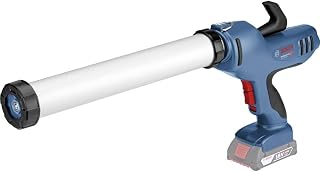


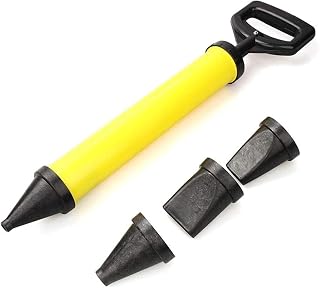


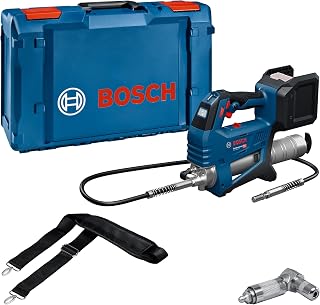


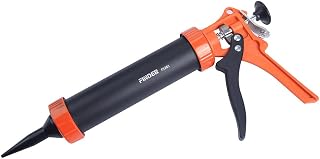


Choosing the right caulking gun is less about finding the most expensive tool and more about matching the applicator to the sealant, cartridge type, job size and level of control you need. A good hand-operated caulking gun should allow smooth material delivery, predictable bead control and comfortable operation without excessive hand fatigue.
For UK DIY users, decorators, maintenance workers, joiners, bathroom installers and general tradespeople, the choice can range from a basic skeleton-frame gun for occasional jobs to a heavier-duty enclosed-frame or high-thrust design for thicker sealants and repeated applications. Before buying, check the cartridge capacity, thrust ratio, frame construction, plunger design and suitability for the products you intend to use.
A highly regarded caulking gun should make the application process easier rather than simply providing a mechanism for squeezing a cartridge. The most useful characteristics are controlled extrusion, comfortable handling, dependable construction and compatibility with commonly used sealants.
Skeleton-frame guns are among the simplest manual applicators. Their open design keeps weight down and provides easy visibility around the cartridge and nozzle. They are particularly suitable for occasional DIY sealing, decorating and general maintenance.
Their simplicity can be an advantage, but inexpensive skeleton guns may offer less rigidity and less refined trigger control than heavier professional-style models. If you regularly work with thick adhesive or sealant, compare the mechanism and thrust ratio rather than choosing purely on appearance.
Half-barrel designs provide more support around the cartridge than an open skeleton frame while retaining relatively easy access to the material. They can be a useful middle ground for homeowners and tradespeople who want additional cartridge support without the bulk of a fully enclosed frame.
Enclosed-barrel guns surround the cartridge more completely. This construction can provide useful support when greater force is required and can help keep the cartridge aligned during application.
They are worth considering when working frequently with construction adhesives, dense sealants or other materials that require greater trigger pressure. The additional structure can also make the tool feel more substantial in demanding applications.
High-thrust models are designed to make difficult-to-extrude materials easier to apply. Instead of requiring the user to rely entirely on hand strength, the mechanism converts trigger movement into greater force at the plunger.
A high thrust ratio is not automatically better for every job. With a soft sealant, excessive mechanical advantage can make it harder to control the bead. The best choice depends on the viscosity of the material and the precision required.
Traditional ratchet mechanisms are familiar to many DIY users and can be perfectly adequate for light-duty sealing. They are generally straightforward to operate and can be economical.
The main consideration is control. Some basic ratchet mechanisms can require more frequent trigger squeezing and may continue exerting pressure on the cartridge after the trigger is released. For occasional small jobs this may be acceptable, but regular users may prefer a smoother mechanism.
Smooth-rod mechanisms are often preferred when controlled, continuous extrusion is important. The rod can move more progressively through the mechanism, helping the user regulate material flow.
For bathroom sealant, kitchen worktops, window frames and other applications where appearance matters, smooth operation can make a noticeable difference to the finished bead.
The thrust ratio describes the mechanical advantage provided by the applicator. It is one of the most useful specifications to consider when comparing manual caulking guns.
A lower thrust ratio is generally more appropriate for materials that flow relatively easily and for applications where delicate control is important. A higher ratio provides greater force at the plunger and can be useful for thicker, more resistant materials.
Do not select a gun solely because it has the highest stated ratio. More mechanical advantage can also make a soft material emerge too quickly, increasing the chance of an oversized or uneven bead.
The material being dispensed should influence the applicator you choose. Silicone sealant, acrylic decorators' caulk, grab adhesive, hybrid polymer sealant and other cartridge-based products can have substantially different extrusion characteristics.
Read the cartridge or manufacturer's technical information to determine whether the material is suitable for manual application and what type of applicator is recommended. The required extrusion force can vary considerably between formulations.
Before ordering a caulking gun, check the cartridge dimensions it is designed to accept. Many common sealants are supplied in standard cartridge formats, but not every applicator accommodates every container.
Also consider the cartridge length, diameter and plunger arrangement. A gun may appear physically large enough while still having an incompatible plunger or retaining system.
If you regularly switch between different sealants, an adaptable gun can be more convenient than a model designed around a single cartridge format. However, compatibility should always be confirmed from the manufacturer's specifications rather than assumed from photographs.
Steel is commonly used where rigidity and durability are priorities. A substantial steel frame can withstand repeated loading and high trigger forces, making it a sensible choice for frequent users.
Aluminium can provide a useful balance between structural strength and reduced weight. This can be particularly appealing when a caulking gun is carried around a job site or used overhead.
Plastic can be perfectly suitable for grips, triggers and other non-load-bearing parts, especially on lighter-duty guns. The important consideration is how the overall mechanism is constructed and whether the load-bearing areas remain rigid when pressure is applied.
A caulking job can involve hundreds of trigger movements, particularly when sealing flooring edges, skirting boards, windows or long kitchen runs. A poorly shaped handle can therefore become uncomfortable even if the gun performs adequately at first.
One of the most useful features on a manual caulking gun is a mechanism that stops or reduces pressure on the cartridge when the trigger is released. Without effective pressure release, sealant can continue to emerge from the nozzle after the trigger movement has stopped.
This matters because unwanted extrusion can create blobs at the end of a bead, waste material and make finishing more difficult. Different mechanisms achieve pressure release in different ways, so check the manufacturer's description before buying.
The plunger is responsible for transferring force into the cartridge. It should contact the cartridge properly and remain aligned throughout the application.
A stable plunger can make extrusion more predictable. A poorly matched or loose mechanism may create uneven pressure, especially when the user is applying significant force. For professional or frequent DIY work, inspect the plunger design and cartridge-retention system as carefully as the trigger.
Some caulking guns incorporate rotating cartridge barrels or related positioning features. These can be useful when following corners, curves or awkward joints because the cartridge can be positioned more conveniently relative to the direction of travel.
Such features are not essential for straightforward sealing, so they should be treated as a convenience rather than a reason to overlook more important characteristics such as mechanical quality, compatibility and trigger control.
For occasional household work, an uncomplicated manual gun is often sufficient. If your projects include sealing around skirting boards, window frames, sinks, baths, worktops or general gaps, prioritise comfort and controllability.
A DIY user does not necessarily need a professional heavy-duty gun. A more powerful mechanism can add weight and may make soft sealants harder to control. Instead, choose a model suited to the materials you are actually likely to use.
Frequent users should place greater emphasis on mechanical durability, trigger ergonomics, cartridge stability and resistance to wear. If the gun is used throughout a working day, small differences in trigger force and comfort can become much more significant.
For professional applications, it can also be worthwhile keeping different applicators for different classes of material. A precision-oriented gun may be preferable for finishing sealant, while a high-thrust applicator can be reserved for dense construction products.
Bathroom and kitchen sealing demands control because visible joints need to look neat as well as perform their sealing function. A smooth, predictable extrusion rate makes it easier to apply a consistent bead before tooling.
When sealing around sinks, baths, shower trays and worktops, choose a gun that allows you to maintain steady pressure while moving at a controlled speed. The quality of the final result depends on preparation and technique as much as on the applicator.
Sealing around window and door frames can involve long runs and corners that require precise control. A comfortable gun with reliable pressure release can reduce interruptions and make it easier to stop the bead cleanly.
For exterior applications, always make sure the selected sealant is appropriate for the substrate and exposure conditions. The gun itself cannot compensate for a sealant that is unsuitable for the intended environment.
Decorating applications often demand a smaller and more controlled bead than heavy construction work. A smooth-action manual gun can be useful for skirting boards, architraves, trim, internal joints and small gaps.
For these tasks, selecting the highest thrust available may actually be counterproductive. Fine control is usually more valuable than maximum extrusion force.
More power is not always an advantage. If your primary sealant is easy to extrude, an overly powerful mechanism can make controlled application more difficult.
Always verify the cartridge format before purchasing. A low-cost gun is poor value if it cannot properly accommodate the sealant cartridges you use.
The cheapest gun may be adequate for a single small repair, but regular users should consider construction quality, trigger design, pressure release and long-term usability.
Rotating barrels, decorative finishes and additional accessories can be useful, but the basic mechanism remains the most important part. Trigger action, plunger movement and frame rigidity should receive priority.
A gun that feels acceptable for five minutes may become uncomfortable during a long sealing session. Handle design and trigger force deserve attention before buying.
Different formulations require different amounts of extrusion force. Check the sealant specifications and choose the applicator accordingly.
When comparing shortlisted models, use the same criteria for each one rather than relying on a headline feature or overall appearance.
Brand reputation can be a useful starting point when comparing manual applicators, but it should not replace checking the specifications of the individual model. Established tool manufacturers such as Tajima, Cox, Milwaukee, Makita, Irwin, Stanley and Wolfcraft offer products across different tool categories and application requirements.
For a particular caulking gun, check the manufacturer's stated cartridge compatibility, thrust characteristics, construction details and intended application. Product ranges can contain both entry-level and professional-oriented models, so the brand name alone does not determine whether a particular gun is right for your job.
Remove loose material, dirt, dust, grease and failing old sealant. The surface should be suitable for the chosen sealant and as clean and dry as the manufacturer's instructions require.
Insert the cartridge securely into the frame and make sure it is seated correctly against the plunger. Poor cartridge positioning can interfere with smooth extrusion.
Cut the nozzle at an angle appropriate to the desired bead size. A smaller opening generally provides more control, while a larger opening produces more material. Follow the sealant manufacturer's instructions where provided.
If the cartridge has an internal seal, open it using the method recommended by the manufacturer. Avoid creating an unnecessarily large opening that could affect material flow.
Apply steady trigger pressure while moving the gun at a controlled speed. Trying to compensate for an inconsistent bead by changing speed dramatically can produce an uneven finish.
Use the gun's pressure-release mechanism if available. This helps reduce excess sealant emerging after the bead has ended.
Some sealants require tooling within a limited working period. Follow the product instructions rather than relying on a universal timing rule.
A quality caulking gun can improve control, but neat sealing requires several factors to work together. Prepare the joint carefully, select an appropriate nozzle opening and maintain consistent movement.
Masking tape can sometimes help create clean edges, although its suitability depends on the surface and sealant. Remove masking material according to the sealant manufacturer's guidance and before the material becomes difficult to finish.
Most importantly, avoid applying more material than necessary. A controlled bead is generally easier to tool and finish than an excessive amount of sealant.
Cleaning should be performed according to the type of sealant being used. Uncured material is generally easier to remove than cured material, so dealing with spills and residue promptly can save considerable effort.
If a cartridge is not empty, follow the sealant manufacturer's storage instructions. Some products can be temporarily protected by sealing the nozzle, but the usable life of an opened cartridge varies by formulation and storage conditions.
Do not assume that every cartridge can be stored indefinitely once opened. Check the product information when preserving partially used sealant matters.
A manual caulking gun is often the simplest choice for occasional work because it does not require batteries, charging or additional electrical equipment. It can also provide direct control over extrusion and is generally easy to carry.
Battery-powered applicators become more attractive when large quantities of sealant must be applied or when repeated manual trigger force would become tiring. However, they typically cost more and add weight and complexity.
For occasional household sealing, a well-chosen manual gun is usually worth considering before moving to a powered alternative. For high-volume professional work, compare the productivity and ergonomic benefits of powered systems against their additional cost and maintenance requirements.
Pneumatic applicators are aimed primarily at users who have access to a suitable compressed-air system and require consistent powered extrusion. They can be useful in specialist or production environments, but they are unnecessary for most ordinary household sealing tasks.
For a portable UK DIY toolkit, a manual gun remains considerably simpler because it requires no compressor or air supply.
Purchase price should be considered alongside how often the tool will be used. A basic gun may be perfectly sensible for one small repair, while a frequent user may benefit from paying more for better ergonomics, smoother operation and stronger construction.
The key question is not whether an expensive gun is objectively better. It is whether its additional features and construction provide benefits that matter to your workload.
A budget model can be appropriate when you only need to seal a small number of joints occasionally and use relatively easy-to-extrude materials. In that situation, paying for professional-grade construction may not provide enough additional value.
Nevertheless, check the basic specifications before buying. Even an inexpensive tool should be compatible with your cartridge and capable of producing enough pressure for the material you intend to apply.
Consider upgrading when you regularly experience excessive hand fatigue, inconsistent extrusion, frame flex, poor pressure release or difficulty dispensing thicker materials.
A stronger applicator can also make sense when sealing forms a regular part of your work rather than an occasional household task.
Focus on affordability, cartridge compatibility, comfortable handling and adequate control. There is little benefit in choosing a very high-thrust professional applicator if you only use soft decorating caulk a few times each year.
Look for a smoother mechanism, stronger frame and better pressure release. If you tackle bathrooms, kitchens, decorating and maintenance projects regularly, versatility becomes increasingly valuable.
Prioritise consistent extrusion, trigger comfort and fine control. The ability to produce clean, repeatable beads is generally more important than maximum mechanical force.
A durable, versatile applicator with appropriate thrust and cartridge compatibility can be a practical all-round choice. If several different materials are used, consider whether one gun can handle them effectively or whether specialist applicators would be more suitable.
Pay particular attention to thrust ratio, frame rigidity, plunger strength and trigger ergonomics. Dense adhesives and sealants can place significantly greater demands on the applicator than ordinary decorating caulk.
Product descriptions can contain several technical terms that are useful when comparing models. Instead of focusing on marketing language, identify the specifications that directly affect your application.
Customer ratings can be useful when researching a caulking gun, but a high rating alone does not establish that a model is the best choice for every application. Users may be evaluating the tool for completely different materials, workloads and expectations.
When reviewing customer feedback, look for comments concerning trigger force, cartridge compatibility, smoothness, durability, leakage, pressure release and ease of use. Give more weight to feedback that describes the actual application and conditions rather than relying solely on a star rating.
When comparing prices from UK retailers, consider the complete value of the tool rather than the purchase price alone. A slightly more expensive model may be worthwhile if it provides better ergonomics and construction for regular use.
Conversely, a feature-heavy professional applicator can represent poor value for someone who only performs occasional household sealing. Your expected frequency of use should therefore be one of the main factors in deciding how much to spend.
Prices and retailer availability can change, so check current UK pricing and product specifications before making a purchase.
Follow the instructions supplied with both the caulking gun and the sealant. Wear appropriate protective equipment where the product instructions recommend it, and provide adequate ventilation when required.
The best choice depends on the sealants you use, how frequently you work and the level of control required. For occasional DIY, a simple manual gun can be sufficient. For frequent or demanding work, a stronger frame, smoother mechanism and suitable thrust ratio may provide better results.
No. Higher thrust provides more mechanical advantage, which can help with thick materials, but it can make soft sealants harder to control. Match the thrust to the material rather than selecting the highest figure automatically.
A smooth-action gun with a comfortable trigger and effective pressure release is generally easier to control. The appropriate thrust level also matters because excessive trigger force or excessive mechanical advantage can both reduce usability.
They can be worthwhile for frequent users who benefit from improved ergonomics, stronger construction and smoother operation. For occasional DIY work, a simpler model may offer better value.
Potentially, provided the applicator is compatible with the cartridges and can generate the required extrusion force. Check the specifications of both the gun and the specific products you intend to use.
There is no universal ideal ratio. Choose a lower ratio when precise control of easy-flowing material is important and a higher ratio when dispensing more resistant sealants or adhesives.
Yes. Frame construction affects rigidity, weight and durability. Steel can provide substantial rigidity, while aluminium may offer a useful balance of strength and weight. The quality of the overall mechanism is more important than the material name alone.
Some manual mechanisms continue applying pressure to the cartridge after trigger movement stops. A gun with an effective pressure-release system can help reduce this problem. Excessive material pressure, cartridge characteristics and sealant viscosity can also affect continued flow.
Use an appropriate nozzle opening, maintain consistent trigger pressure and move the gun at a steady speed. Surface preparation and correct sealant selection are also important.
Many cartridge-based construction adhesives are designed for use with manual applicators, but the required extrusion force can be much greater than that of ordinary decorating caulk. Check the adhesive manufacturer's recommended applicator requirements.
Yes, particularly for light-duty applications where easy access and low weight are useful. For demanding materials or frequent use, a more rigid design with a stronger mechanism may be preferable.
Focus on durability, trigger ergonomics, suitable thrust, cartridge stability, reliable pressure release and smooth operation. The ideal specification depends on the materials and workload.
For a useful buying decision, compare each shortlisted manual caulking gun according to the same practical criteria: extrusion control, thrust, cartridge compatibility, construction, ergonomics, pressure release, intended workload and overall value.
Product specifications should be checked against current manufacturer and retailer information because models, accessories, packaging and availability can change. Customer feedback is most useful when it relates directly to the materials and applications you expect to undertake.
The right caulking gun is ultimately the one that provides the appropriate level of mechanical assistance without sacrificing control. For occasional household jobs that may mean a straightforward, lightweight applicator; for frequent trade or construction work, a stronger high-thrust design may be the more sensible investment.