

♥ Wishlist
Compare 56 verified Clamps Hand Tool products in United Kingdom. Reviews, ratings, pros, cons and buying advice updated for October 2026.








Choosing the right clamp is less about finding the clamp with the biggest headline specification and more about matching the tool to the material, workpiece size, required pressure and type of job. A clamp that is excellent for holding timber during glue-up may be unsuitable for delicate furniture, while a compact quick-grip clamp can be convenient for general DIY but may not provide the reach or rigidity required for larger woodworking projects.
For UK buyers, the range is particularly broad. Traditional F-clamps, G-clamps, C-clamps, quick-grip clamps, trigger clamps, parallel clamps, sash clamps, spring clamps and specialist woodworking clamps all serve different purposes. Established manufacturers such as Bessey, Irwin, Stanley, Bahco, Draper, Silverline, Faithfull and Wolfcraft offer different approaches to clamping force, construction, adjustment and usability.
The most useful way to compare top-rated clamps is therefore to look beyond customer ratings alone. Pay attention to throat depth, maximum opening, rail construction, pressure mechanism, jaw protection, handle design, locking action, materials and the type of work for which the clamp is intended.
Clamp specifications can appear straightforward, but several measurements determine whether a particular model will actually work for a project. The most important specifications are opening capacity, throat depth, clamping force, rail or frame construction and adjustment mechanism.
The maximum jaw opening indicates how wide an object can be accommodated between the jaws. This is one of the first measurements to check because a clamp that cannot open sufficiently simply cannot be used for the intended application.
A larger maximum opening is not automatically better. Long clamps can be heavier, occupy more storage space and may be less convenient for small components. For everyday DIY, several appropriately sized clamps can be more useful than a small number of very large models.
Throat depth describes how far the clamping pressure can reach from the edge of the workpiece. Two clamps can have the same maximum opening but behave very differently when pressure needs to be applied farther from the edge.
Deep-throat clamps can be advantageous for larger boards, assemblies and projects where the point of pressure is not close to an accessible edge. For small workpieces, however, a deep throat may add unnecessary size and weight.
Clamping force describes the pressure generated by the mechanism. Higher force can be valuable for demanding applications, but maximum pressure should never be treated as a reason to tighten a clamp as hard as possible.
Excessive pressure can deform timber, mark soft materials, squeeze too much adhesive from a joint or damage a finished surface. Good clamping is about applying sufficient, controlled pressure rather than maximum pressure.
On many F-style and woodworking clamps, the rail is a major structural component. A rigid rail helps the jaws remain aligned under load. Thin or flexible rails can be less suitable for demanding work because the clamp may flex as pressure increases.
Look at the shape, thickness and construction of the rail rather than relying solely on a manufacturer's description such as heavy-duty. A buyer comparing several models should consider whether the rail appears appropriate for the expected workload.
Jaw alignment is particularly important when joining boards. Ideally, the jaws should apply pressure without unnecessarily twisting or tipping the workpiece.
Parallel clamps are designed around this principle and can be useful for cabinetmaking, furniture construction and other applications where maintaining a flat, accurately aligned assembly matters.
F-clamps are among the most versatile clamps for workshops and DIY work. They generally consist of a fixed jaw, a sliding jaw and a long rail. Their relatively straightforward design allows them to cover a wide range of applications.
They are particularly useful for woodworking, assembly, gluing and holding components while drilling or fastening. Different sizes make it possible to choose a compact clamp for small jobs or a longer model when greater reach is required.
When comparing F-clamps, examine the rail stiffness, sliding-jaw mechanism, handle shape and quality of the pressure pad. A smooth adjustment mechanism can make repeated repositioning considerably easier.
G-clamps, sometimes called C-clamps, use a threaded screw to generate pressure. Their metal construction and straightforward mechanism make them popular for applications where rigidity is more important than rapid adjustment.
They are useful for metalworking, woodworking, repairs and general workshop tasks. Because the screw mechanism can be tightened progressively, they provide precise control over pressure.
The main trade-off is speed. Adjusting a G-clamp can take longer than using a trigger clamp, particularly when the opening needs to change substantially.
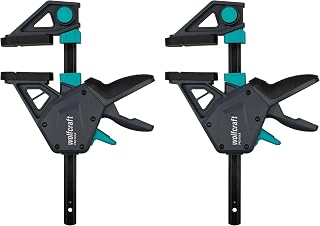
Quick-grip clamps are designed around convenience. A trigger or handle mechanism allows the user to move the jaw and apply pressure rapidly.
They are particularly useful for DIY, temporary positioning, light assembly and tasks where the clamp needs to be moved frequently. One-handed operation can also be helpful when the other hand is holding a workpiece.
However, buyers should distinguish convenience from heavy-duty performance. Not every trigger clamp is intended to deliver the same sustained pressure or rigidity as a substantial workshop clamp.
Parallel clamps are designed to keep the jaws parallel as pressure is applied. This makes them especially useful for woodworking assemblies where maintaining square, flat and accurately aligned components is important.
They are commonly considered for cabinetmaking, furniture construction, edge joining and larger glue-ups. Their size and price can be greater than basic general-purpose clamps, so they make the most sense when their alignment advantages are actually useful.
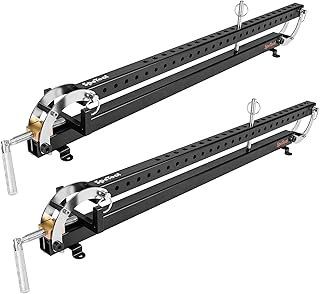
Sash clamps are traditionally associated with woodworking and larger assemblies. They provide substantial reach and can be useful when clamping long boards, panels or frames.
Their larger physical dimensions mean storage should be considered before purchasing several long sash clamps. For small DIY tasks, they may be unnecessarily cumbersome.
Spring clamps are simple, compact and quick to position. They are useful for holding lightweight materials temporarily, supporting small components and assisting during assembly.
They are generally not a replacement for a high-force screw clamp. Their strength lies in speed and convenience rather than maximum pressure.
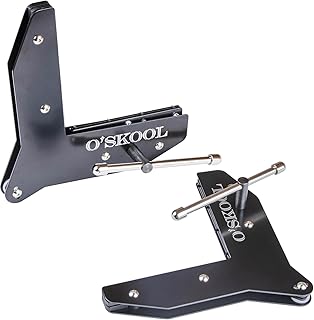
Corner clamps and specialist designs can be valuable when conventional clamps struggle to hold a particular geometry. They can help with right-angle assemblies, picture frames, boxes and other projects where maintaining a specific position is important.
The specialist design can make a substantial difference, but these clamps are less versatile than general-purpose models. Consider them when the application is frequent enough to justify a dedicated tool.
Steel is widely used for clamp rails, frames, screws and other load-bearing components. Its strength and rigidity make it appropriate for demanding workshop applications.
Steel components may add weight, but the additional mass is not necessarily a disadvantage when stability is important. The balance between strength, weight and corrosion resistance should be considered according to the intended environment.
Cast iron is associated with rigid workshop clamps, particularly traditional G-clamps and heavy-duty designs. It can provide substantial rigidity but is comparatively heavy.
A cast-iron clamp can be useful when the tool will remain positioned during demanding work, but it is not always the most convenient choice for repetitive repositioning.
Aluminium can reduce weight while providing useful structural strength. Lightweight clamps can be particularly attractive for users who frequently move tools around a workshop or work above bench height.
However, the construction of the complete clamp matters more than the material name alone. Rail profile, thickness, jaw design and mechanism all influence practical performance.
Modern clamps often combine metal load-bearing components with plastic or composite handles, housings or protective elements. This can improve comfort and reduce weight.
Plastic does not automatically mean poor quality. The important question is whether the load-bearing components and adjustment mechanism are appropriate for the application.
One of the most common buying mistakes is assuming that more clamping force is always better. In woodworking, the purpose of a clamp is normally to keep components correctly positioned while an adhesive cures or while another operation is performed.
Excessive pressure can create several problems. Softwood can become indented, finished surfaces can be marked, boards can shift or bow, and adhesive can be squeezed out of the joint. The correct amount of pressure depends on the material, joint and adhesive.
For general assembly, moderate and controllable pressure is often more useful than an extremely high maximum rating. For structural workshop applications, a stronger clamp may be appropriate, but the user should still apply pressure progressively.
The contact area between a clamp and a workpiece deserves more attention than it often receives. Bare metal jaws can leave marks on timber, painted surfaces, laminate and other finished materials.
Protective jaw pads can reduce the risk of damage and distribute pressure over a wider area. Some clamps incorporate pads as part of the design, while others may require separate protection.
When working with finished furniture, it is sensible to use suitable protective material even when a clamp has nominally soft contact surfaces. Dust, grit or hardened adhesive trapped between the pad and workpiece can still cause scratches.
Small clamps are convenient for model making, small woodworking projects, repairs, craft work and lightweight assembly. Their compact dimensions make them easy to store and quick to reposition.
Medium-size clamps are often the most versatile option for a general DIY workshop. They can handle a broad range of assemblies without becoming excessively heavy or difficult to position.
Large clamps are useful when working with wide boards, substantial frames, doors, panels and other large assemblies. Before buying, check both maximum opening and throat depth because a long rail alone does not guarantee the required reach.
A single clamp rarely covers every workshop situation. A long clamp may technically accommodate a small project but can be awkward to position. Conversely, several short clamps may be easy to use but unable to reach across a larger assembly.
A practical collection can therefore combine compact quick-grip clamps with medium F-clamps and larger woodworking clamps. Users who regularly build furniture may also benefit from dedicated parallel or sash clamps.
When building a clamp collection, prioritise the sizes you are most likely to use rather than purchasing a large set simply because it contains the greatest number of pieces.
Check the actual maximum jaw opening and compare it with the thickness of the material you commonly work with. Leave enough practical clearance for positioning rather than selecting a size that only works at its absolute limit.
Consider how far from the workpiece edge you need to apply pressure. Deep assemblies can require considerably more throat depth than their overall width might suggest.
A rigid rail can improve stability and reduce unwanted movement under pressure. This is especially relevant for longer F-clamps and woodworking applications.
Trigger clamps generally excel at fast adjustment, while screw-operated clamps can provide more deliberate pressure control. Decide whether speed or controlled tightening is more important for your work.
Handle design becomes increasingly important when clamps are used repeatedly. A handle should provide enough grip for controlled tightening without creating unnecessary pressure points on the hand.
Inspect whether the pressure pad can move, pivot or otherwise accommodate the workpiece. A suitable pad can help distribute pressure and reduce the risk of concentrated marking.
The way the moving jaw travels along the rail affects setup speed. A smooth sliding mechanism can be particularly valuable when a clamp is repeatedly repositioned.
For quick-release clamps, check whether the mechanism provides a secure hold and releases predictably. A clamp that is difficult to release can slow down repetitive work.
Weight should be considered alongside strength. A very heavy clamp may feel reassuring on a workbench but become inconvenient when used overhead, carried around a site or repositioned frequently.
Look at the complete construction rather than one prominent feature. Threads, rails, jaws, handles, pads, locking components and moving parts all contribute to the overall usability of the tool.
Neither design is universally better. The right choice depends on the task.
Quick-grip clamps are convenient because the operator can generally position and tighten them rapidly. They are excellent for temporary holding, general DIY and tasks where speed matters.
Screw clamps usually take longer to adjust but can provide a more deliberate tightening action. G-clamps and many traditional woodworking clamps are therefore useful when the operator wants greater control over applied pressure.
For a general workshop, owning both styles can be more practical than trying to make one design perform every job.
Traditional F-clamps are highly versatile, but the jaws do not necessarily maintain the same parallel relationship throughout adjustment. Parallel clamps are specifically designed to keep their jaws aligned.
This distinction becomes important during panel glue-ups and cabinet construction. Maintaining alignment can reduce the amount of correction required while an assembly is being clamped.
For occasional DIY repairs, however, a traditional F-clamp may provide more than enough capability without the additional size or specialist design of a parallel clamp.
Ratings can provide useful information, but they do not explain whether a clamp is suitable for your particular application. A highly rated compact trigger clamp may be excellent for general DIY while being completely inappropriate for a large furniture glue-up.
Buyers often focus on maximum opening and overlook throat depth. This can result in a clamp that technically opens wide enough but cannot position its pressure point where it is needed.
Maximum force is not the same as better clamping. Controlled pressure and appropriate jaw placement are usually more important than simply applying as much force as possible.
Large assemblies may require multiple clamps positioned at suitable intervals. Buying one exceptionally large clamp does not necessarily solve the problem of maintaining even pressure across a wide panel.
Larger clamps can be heavier and more cumbersome. If most projects involve small components, several smaller clamps may be considerably easier to use.
Long sash and woodworking clamps can occupy considerable wall or rack space. Plan where clamps will be stored before purchasing a large collection.
For frequently used workshop equipment, consider whether pads or other wear components can be replaced. A clamp that remains serviceable after a small component wears out can be more practical over the long term.
Start by positioning the workpieces accurately before applying significant pressure. The clamp should support the intended alignment rather than being used to force badly positioned components into place.
Place the jaws so that pressure is distributed appropriately. On delicate materials, use suitable protection between the clamp and the surface.
Tighten progressively and inspect the assembly as pressure increases. If components begin to bow, twist or move out of alignment, release the pressure and correct the setup rather than simply tightening further.
When several clamps are required, distribute them sensibly across the assembly. On wide glue-ups, alternating the position of clamps above and below the workpiece can help manage unwanted movement, depending on the construction and project requirements.
Woodworking glue-ups demand more than simply applying high pressure. The surfaces need to be properly prepared, the boards correctly positioned and the clamps arranged so the assembly remains stable.
Dry-fit the components before applying adhesive. This helps identify whether the selected clamps have enough opening capacity and whether there is sufficient access for positioning them.
Use protective pads where necessary, especially with finished surfaces. Tighten the clamps gradually and check the alignment repeatedly during the process.
For large panels, multiple appropriately sized clamps can provide more useful control than attempting to rely on one or two very high-force clamps.
Softwood can be relatively easy to mark under concentrated pressure. Protective pads and moderate tightening can help reduce unwanted indentation.
Hardwood assemblies may require substantial stability during glue-up, but the required pressure still depends on the joint and adhesive. A rigid clamp with reliable adjustment can be useful for maintaining alignment.
MDF can be vulnerable to edge damage and localised pressure. Clamp placement should be considered carefully, particularly near edges and corners.
Plywood is commonly used in furniture and workshop projects and can benefit from controlled clamping during assembly. Protect finished faces when necessary.
Finished surfaces deserve particular care. Clean the contact areas and use suitable protection to prevent clamp pads from trapping debris against the material.
For general household use, convenience is often more important than extreme clamping force. Quick-grip clamps are useful for temporarily holding components while drilling, cutting, fastening or assembling.
Spring clamps can be handy for lightweight temporary holding, while small G-clamps can provide a more secure screw-operated grip where compact dimensions are useful.
A homeowner who only occasionally performs DIY work may find that a small selection of versatile clamps is more practical than a large professional-style collection.
Furniture construction places greater emphasis on repeatability, alignment and reach. Cabinet doors, frames, carcasses, shelves and panels can require different clamp configurations.
F-clamps provide versatility, while parallel clamps can be particularly useful when assembling cabinets or large panels. Long sash-style clamps may be appropriate for larger traditional woodworking projects.
When choosing clamps for furniture making, consider the largest assembly you expect to build rather than choosing solely according to today's project.
Metalworking can place different demands on clamps because workpieces may be heavier and fabrication processes can involve drilling, grinding, cutting or welding.
Rigid metal clamps such as G-clamps can be useful for holding components securely during workshop operations. However, clamps used around heat or welding operations must be selected and positioned according to the specific risks of the task.
Do not assume that a general-purpose woodworking clamp is suitable for high-temperature fabrication simply because it can physically hold the material.
Clamps can improve stability when drilling or cutting by preventing a workpiece from moving unexpectedly. The clamp should hold the material securely without interfering with the tool path.
Always position the clamp so that the cutting or drilling operation cannot contact the clamp body, rail, screw or handle. Check clearance before starting the operation rather than relying on visual estimation once the tool is running.
One-handed clamps can be particularly useful when the operator needs one hand to hold or align the workpiece. Trigger mechanisms can make this type of setup faster than traditional screw-operated clamps.
However, one-handed operation should not be confused with suitability for every application. For heavy assemblies requiring substantial sustained pressure, a more rigid clamp design may be preferable.
Fast release can make a significant difference in repetitive work. A clamp that takes only moments to reposition can save considerable effort when multiple assemblies are being completed.
When comparing quick-release systems, look for predictable operation and a mechanism that can be used without excessive force. Smooth release is especially useful when a clamp is being repositioned repeatedly.
Sawdust, adhesive residue and workshop debris can interfere with moving jaws. Wipe rails regularly and remove hardened material before it affects adjustment.
On screw-operated clamps, inspect the threaded components periodically. Keep them clean and follow the manufacturer's maintenance recommendations for lubrication where appropriate.
Inspect pads for wear, cracking or embedded debris. A damaged or dirty pad can increase the risk of marking a workpiece.
Check that sliding jaws, triggers, locking mechanisms and pressure pads operate as intended. If a clamp becomes unusually difficult to adjust, identify the cause rather than forcing the mechanism.
Metal clamps should be kept dry and stored in an appropriate environment. If surface corrosion develops, address it before it affects the operation of moving parts or threaded components.
Long clamps are best stored where their rails will not be repeatedly knocked or bent. Wall-mounted storage or suitable racks can make larger workshop collections easier to organise.
A clamp is a holding tool, not a substitute for safe working practices. Before starting a cutting, drilling or machining operation, verify that the workpiece is securely supported and that the clamp cannot interfere with the tool.
Do not exceed the manufacturer's intended use or load limits. Avoid modifying structural components or using damaged clamps for demanding work.
Keep fingers clear of pinch points when tightening or releasing clamps. Large mechanisms can generate significant mechanical force, and sudden release can cause movement of the workpiece or clamp.
When working with power tools, ensure the clamp cannot obstruct the blade, bit, disc or other moving component. Recheck the complete setup before switching the tool on.
If you are starting from scratch, there is no need to buy every clamp type immediately. Build the collection around the work you actually perform.
There is no universal number. The answer depends on project size and the type of work.
For small household repairs, two or four clamps may be enough. A woodworking hobbyist undertaking regular glue-ups may need considerably more because assemblies often require several points of pressure at once.
For cabinetmaking and furniture work, consistency between clamps can also matter. Having several clamps with similar operating characteristics can make a large assembly easier to set up and adjust.
Several established manufacturers are commonly associated with hand clamps and workshop clamping equipment. Bessey has a broad range of traditional and specialist clamping products, while Irwin is well known for hand tools including quick-grip-style clamps. Stanley offers a wide selection of tools aimed at general users, and Bahco has a long-standing presence in professional hand tools.
Draper is another familiar name in the UK tool market, with products spanning DIY and workshop applications. Silverline and Faithfull also offer options across different price and use categories, while Wolfcraft is particularly associated with workshop and woodworking accessories.
Brand reputation should be one consideration rather than the sole deciding factor. Compare the specification, construction, intended use and current product documentation for the exact model.
Clamp sets can offer a convenient way to build a workshop collection, but the number of pieces should not be the only consideration.
A lower purchase price can make sense for occasional, light-duty DIY work. If a clamp is only used a few times a year, the requirements may be modest.
For frequent workshop use, durability, adjustment quality and consistency can become more important. A premium clamp may offer features or construction that are valuable when the tool is used repeatedly.
The sensible comparison is therefore not simply cheap versus expensive. Consider the cost in relation to expected frequency of use, required performance, workpiece size and the consequences of clamp failure or movement.
A higher-end clamp can make more sense when you regularly perform demanding glue-ups, build furniture, work with large assemblies or depend on repeatable positioning.
Premium construction may also be worthwhile when the clamp is handled constantly and smooth adjustment saves time on every project. For occasional household use, the same features may offer little practical benefit.
A budget clamp can be perfectly reasonable for light-duty positioning, occasional repairs and simple DIY projects. The important point is to stay within its intended application.
Check the construction before use and do not rely on a lightweight clamp for applications requiring more force or rigidity than its design can safely provide.
Customer reviews can reveal useful information about ergonomics, adjustment, packaging, durability and practical usability, but they should be interpreted in context.
Look for recurring comments rather than isolated experiences. If multiple buyers independently mention the same issue, it may deserve closer investigation. Conversely, a single complaint may relate to misuse, an individual defective item or an application outside the intended purpose.
Pay attention to reviews that explain what the clamp was used for. A review from someone using a compact clamp for lightweight craft work does not necessarily tell you how the same clamp will perform during heavy woodworking glue-ups.
Before choosing a clamp, compare the manufacturer's stated specifications with your own project requirements. Verify dimensions, opening capacity, throat depth and intended application.
Where product listings provide different measurements, check the manufacturer's documentation and the exact model number. Clamp ranges can contain several visually similar variants with substantially different sizes or mechanisms.
For UK purchases, also check the current retailer listing, delivery details, product availability and price because these can change independently of the underlying tool specification.
Jaw: the surfaces that contact the workpiece and apply pressure.
Throat: the distance from the rail or frame to the clamping point, determining how far into a workpiece the clamp can reach.
Opening capacity: the maximum distance the jaws can accommodate.
Rail: the structural bar along which the moving jaw travels on many F-style clamps.
Pressure pad: the component that contacts the workpiece and transfers pressure.
Quick release: a mechanism that allows rapid movement or removal of the clamp.
Clamping force: the pressure generated by the clamp mechanism.
Parallel jaws: jaws designed to remain parallel during clamping, particularly useful for accurate woodworking assemblies.
The best clamp is not necessarily the one with the highest specification. Workshop efficiency is influenced by how quickly a clamp can be positioned, how easily it can be adjusted and whether it remains stable throughout the job.
A quick-grip clamp can save time during repeated temporary holding. A screw-operated clamp can provide deliberate pressure adjustment. A parallel clamp can reduce alignment problems during large woodworking assemblies. A long sash clamp can solve a reach problem that smaller clamps simply cannot address.
Thinking about workflow helps prevent buying tools based solely on headline specifications.
For a typical UK home workshop, versatility and storage are often important considerations. Space can be limited, particularly in garages, sheds and compact work areas.
Medium-sized clamps can form a practical foundation because they cover a broad range of general jobs. Additional larger or specialist clamps can then be added when a particular project requires greater reach or more controlled alignment.
Consider where clamps will be stored, how frequently they will be used and whether their dimensions are compatible with the workbench and materials in the workshop.
Workshops, garages and sheds can experience changes in temperature and humidity. Metal tools should be stored in conditions that minimise corrosion, especially where moisture is present.
Woodworking projects can also respond to environmental conditions. When clamping timber, ensure the underlying material and joint are appropriately prepared rather than expecting the clamp to correct problems caused by unsuitable stock or assembly conditions.
You do not always need to buy a new clamp to improve a clamping setup. Better positioning can make a significant difference.
Use appropriate protective pads, check the alignment before tightening and avoid applying unnecessary pressure. On large assemblies, use multiple clamps to distribute pressure rather than relying on one clamp at an extreme position.
For repeat projects, mark or note useful clamp positions and develop a consistent setup method. This can make future assemblies faster and reduce the need for repeated adjustments.
Long-term suitability depends on more than initial appearance. Frequent users should consider the durability of the rail, jaw mechanism, threads, pressure pad and handle.
Mechanisms that remain smooth and predictable after repeated adjustment are particularly valuable in a workshop. It is also worth considering whether the manufacturer provides documentation and replacement components for the relevant model.
A clamp that is easy to maintain and remains useful across many projects can provide better practical value than one selected purely because it has an attractive initial price.
Value is the relationship between purchase cost and useful performance over the period you expect to own the tool. A low-cost clamp that is rarely used can represent good value if it meets the task reliably. A frequently used professional clamp may justify a higher investment if its construction, ergonomics and adjustment save time across many projects.
Compare the exact specifications, not simply the brand or number of clamps in a package. Consider the size range you receive, usable opening, throat depth, construction and intended application.
Sets can be attractive when you are starting a workshop because they may provide several sizes at once. They are most useful when the included dimensions match your likely applications.
Buying individually can make more sense when you already have several clamps and know exactly which size or type is missing. This avoids accumulating duplicates that spend most of their time in storage.
Before purchasing a set, compare the individual sizes and specifications rather than judging the package solely by its clamp count.
Long-reach clamps can solve problems that compact models cannot, but their greater length can introduce additional flex and make positioning more cumbersome.
When comparing long clamps, pay close attention to rail rigidity and throat depth. The useful question is not simply how long the clamp is, but how effectively it can transfer pressure to the required point without excessive movement.
For adhesive assembly, clamps primarily keep the joint surfaces correctly positioned while the adhesive develops sufficient strength. The correct pressure depends on the adhesive, materials and joint configuration.
Too little pressure may allow movement or poor contact, while excessive pressure can force excessive adhesive from the joint or distort the components. Follow the adhesive manufacturer's instructions and use the clamp as a positioning and holding tool rather than assuming maximum force produces the strongest joint.
Most clamp marks occur because pressure is concentrated on a small area, the material is relatively soft, the contact surface is contaminated or the clamp is tightened excessively.
Use protective pads or suitable scrap material when appropriate. Keep the contact surfaces clean and inspect the setup before tightening. On finished timber, test the contact arrangement on an inconspicuous area if there is any doubt about marking.
Beginners usually benefit from versatility rather than specialist equipment. A small selection of medium-sized quick-grip and F-style clamps can cover many common household and woodworking tasks.
Once you identify the projects you perform most frequently, add specialist clamps where they solve a recurring problem. This approach avoids filling a workshop with tools that appear useful in theory but rarely get used.
Experienced woodworkers often place greater emphasis on repeatability, alignment, reach and workflow. A clamp may be judged by how easily it integrates into a particular assembly method rather than simply whether it can generate enough pressure.
For example, a furniture maker may value parallel jaws and consistent operation, while a general repair workshop may prioritise quick positioning and compact storage.
Ergonomics matter when clamps are used repeatedly. Consider the handle shape, trigger resistance, release action and whether the adjustment mechanism can be operated comfortably.
A well-designed handle should allow controlled tightening without requiring awkward wrist positioning. One-handed mechanisms should also be evaluated for ease of operation when the clamp is already supporting a workpiece.
Clamps are often awkward to store because many models are long and irregularly shaped. Wall-mounted racks, dedicated clamp storage and organised vertical arrangements can make better use of limited workshop space.
Keep frequently used clamps within easy reach and separate specialist models from everyday clamps. Good organisation can also reduce the risk of accidentally damaging long rails.
There is no single best model for every user. For many general DIY tasks, a medium quick-grip or F-style clamp offers a useful balance of opening capacity, convenience and versatility. The appropriate choice depends on the size and material of the workpiece.
Neither is universally better. G-clamps can provide rigid screw-operated clamping, while F-clamps generally offer greater versatility and faster repositioning across different opening sizes.
Yes, quick-grip clamps can be very useful for many woodworking tasks, especially temporary positioning and light to moderate assembly. For larger glue-ups requiring substantial rigidity or carefully controlled alignment, traditional woodworking or parallel clamps may be more suitable.
Choose based on the largest opening and throat depth you actually need. If you work on a wide range of projects, owning several sizes is generally more practical than relying on one oversized clamp.
The number depends on the panel dimensions, joint arrangement, clamp type and assembly method. Multiple clamps are commonly more useful than relying on one high-force clamp because pressure can be distributed across the assembly.
Yes. Excessive pressure, concentrated contact and contaminated jaw surfaces can mark or dent wood. Use appropriate protection and tighten only as much as necessary for the application.
They can be worthwhile for frequent users who value durability, smooth adjustment, rigidity, repeatability and long-term workshop performance. Occasional DIY users may find a simpler clamp adequate.
Parallel clamps are often worth considering for cabinet assembly because maintaining jaw alignment can help with accurate positioning. F-clamps can also be highly useful depending on the construction and available access.
Opening capacity describes how wide the jaws can separate. Throat depth describes how far the clamp can reach into the workpiece from its edge. Both measurements can determine whether a clamp will work for a particular assembly.
They are useful if you frequently reposition clamps or need one-handed operation. They are less essential when your work primarily involves deliberate, high-pressure screw clamping.
Usually not. Different designs solve different problems. A versatile F-clamp can cover many tasks, but specialist woodworking, corner, parallel or long-reach applications can benefit from dedicated designs.
Keep rails and threads clean, inspect pads and moving mechanisms, prevent corrosion and store clamps safely. Follow the manufacturer's maintenance guidance for the specific model.
The best top-rated clamp is ultimately the one that matches the job rather than the one with the most impressive headline specification. A compact quick-grip clamp can be an excellent choice for rapid DIY work, while a rigid G-clamp can be preferable for controlled screw clamping. Woodworkers working on larger assemblies may benefit from F-clamps, sash clamps or parallel clamps, depending on the type and scale of their projects.
For UK buyers in 2026, the most reliable approach is to compare exact specifications, construction, intended application and current customer feedback rather than choosing solely by brand, price or review score. Brands such as Bessey, Irwin, Stanley, Bahco, Draper, Silverline, Faithfull and Wolfcraft provide useful points of comparison, but the right model still depends on your requirements.
Before making a purchase, measure the workpieces you normally handle, decide how much reach you need, consider whether speed or high controlled pressure matters more, and think about how many clamps your typical projects require. A carefully selected collection of complementary clamps will usually be more useful than a collection chosen simply for its size or piece count.