


♥ Wishlist
Compare 47 verified Cordless Inflators for Fast, Convenient Air Inflation products in United Kingdom. Reviews, ratings, pros, cons and buying advice updated for October 2026.


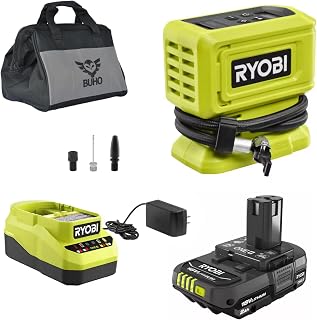


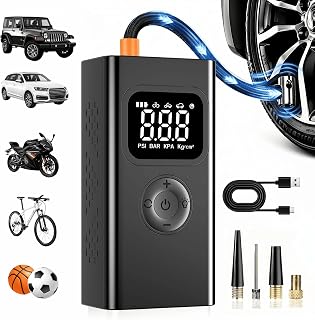


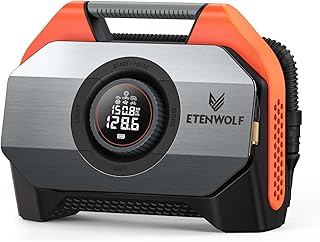

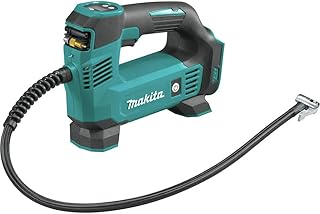


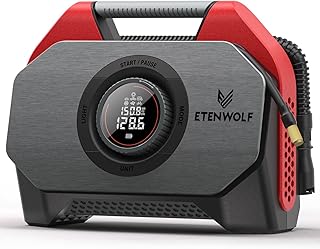


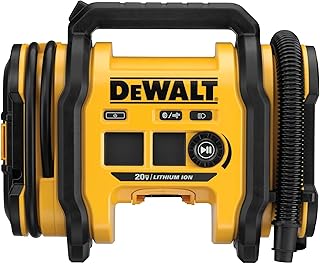

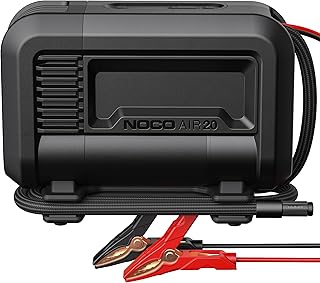


A cordless inflator can be one of the most useful compact power tools to keep in a car, garage, workshop or home. Unlike a conventional mains-powered compressor, a battery inflator can be used away from a socket, making it particularly convenient for topping up car tyres, bicycle tyres, motorcycle tyres, sports equipment and other inflatable items. The best choice, however, depends on more than maximum pressure. Inflation speed, battery platform, pressure control, hose design, display accuracy, portability, heat management and the accessories supplied can all affect how useful an inflator is in everyday UK conditions.
When comparing cordless inflators, consider the jobs you are actually likely to perform. A compact inflator intended for occasional tyre-pressure adjustments has different requirements from a higher-capacity model used frequently in a garage or workshop. Similarly, an inflator designed around a manufacturer's rechargeable battery platform may be particularly attractive if you already own compatible tools and batteries from that range.
A good cordless inflator should make routine inflation straightforward rather than simply offering an impressive specification on the box. Several features deserve attention when comparing models.
The choice between a cordless inflator and a traditional compressor depends largely on the type and frequency of work. Cordless inflators prioritise portability and convenience. They can be taken to a vehicle, bicycle, garden shed or roadside location without relying on a nearby mains socket. Their compact size also makes them easier to store.
A conventional compressor can be more suitable for applications requiring a continuous supply of compressed air or frequent operation with pneumatic equipment. Compressors are generally a different class of tool, particularly when an air receiver and sustained airflow are required.
For routine tyre pressure maintenance, emergency top-ups and occasional inflation tasks, portability can be more important than the capabilities associated with a workshop compressor. Buyers should therefore compare tools according to their intended use rather than assuming that a larger or more powerful compressor is automatically the better option.
A 12V inflator that connects to a vehicle's power supply can be an economical solution for motorists, but it requires access to a suitable power connection and normally remains tied to the vehicle. A cordless model has the advantage of being independent of the vehicle's electrical system, provided its battery has sufficient charge.
This distinction can matter when inflating bicycle tyres, sports equipment or items away from the car. On the other hand, a 12V unit can be useful as a dedicated vehicle accessory because it does not depend on a separate rechargeable tool battery.
When comparing the two, consider the total ownership setup rather than just the tool price. A cordless inflator may make particular sense for someone who already owns compatible batteries, while a standalone 12V model may appeal to someone who wants an uncomplicated car-only solution.
Cordless inflators are commonly sold either as part of a battery ecosystem or as standalone rechargeable products with an integrated battery. The distinction can have a significant effect on long-term value.
Brands such as DeWalt, Makita, Bosch, Milwaukee, Ryobi and Einhell offer cordless tool ecosystems in which compatible batteries can be shared across multiple tools, although compatibility must always be checked within the specific product range.
If you already own several tools from one platform, a bare-tool inflator can potentially be a convenient addition because you may already have the required battery and charger. This can also simplify storage and charging.
Do not assume that batteries are interchangeable simply because tools carry the same voltage designation or belong to the same brand. Battery compatibility can depend on the exact platform, generation and tool specification.
Integrated-battery inflators can be appealing when portability and simplicity are priorities. There is no separate tool battery to carry, and the unit can be charged using its specified charging arrangement. This format can work particularly well as an emergency vehicle accessory or occasional household tool.
The trade-off is that battery capacity and charging arrangements are tied to the inflator itself. Buyers should therefore examine charging time, expected runtime and manufacturer operating guidance before choosing this design.
UK buyers will commonly encounter both PSI and bar when looking at tyre pressures and inflator specifications. PSI means pounds per square inch, while bar is another pressure unit widely used on tyre-pressure information in the UK and Europe.
Many modern inflators allow the user to select between different pressure units. This is useful because vehicle manufacturers, tyre manufacturers and equipment manufacturers may present recommended pressures differently.
The important point is to use the pressure specified for the particular tyre or inflatable item rather than choosing a target based on the inflator's maximum rating. Maximum pressure is a capability of the tool; it is not an appropriate operating pressure for every application.
One of the most common buying mistakes is choosing an inflator solely because it advertises a high maximum PSI figure. Maximum pressure tells you how much pressure the pump is designed to generate under specified conditions. It does not by itself tell you how quickly the unit will inflate a particular tyre.
Inflation speed can be influenced by motor performance, airflow, hose design, battery condition, tyre volume, starting pressure and operating temperature. A compact inflator capable of very high pressure may still take considerably longer to fill a large-volume tyre than a product optimised for greater airflow.
For normal vehicle use, compare the manufacturer's published inflation information where available and consider the size of the tyres you expect to service. For bicycles and sports equipment, the priorities can be different because these applications often involve smaller air volumes and potentially higher target pressures.
Automatic shut-off is one of the most useful convenience features on a modern cordless inflator. Instead of manually stopping the pump at the desired pressure, the user can normally select a target and allow the tool to stop when that setting is reached.
This can be particularly useful when checking and adjusting all four vehicle tyres. It can also reduce the risk of continuing to inflate after reaching the intended setting, although users should still remain attentive and follow the manufacturer's instructions.
Look for controls that make the preset pressure easy to adjust. A complicated interface can be frustrating when several tyres need attention. A clear display is especially helpful in poor lighting or when working outdoors.
A digital pressure display can make an inflator much easier to use, but the presence of a digital screen does not automatically guarantee that every reading will be perfectly accurate. Measurement performance depends on the tool's design and operating conditions.
When evaluating a model, look at how the display is presented, whether pressure units can be changed and whether the manufacturer's documentation provides information about the gauge or measurement system. For safety-critical tyre-pressure decisions, use the vehicle or tyre manufacturer's recommended procedure and do not rely blindly on a single gauge.
The hose is easy to overlook when comparing cordless inflators, yet it directly affects usability. A hose that is too short can make awkward valves difficult to reach, while an unnecessarily bulky hose can make a compact inflator less convenient to store.
Also examine how the hose connects to the tyre valve. A secure connection can reduce air leakage during inflation. Some designs incorporate the hose into the body of the inflator for storage, while others use a separate detachable hose.
Most vehicle tyres use Schrader-type valves, while many bicycles use Presta valves. A versatile inflator may therefore require an adaptor for bicycle applications. Sports equipment commonly requires a needle adaptor.
Before buying, check exactly which connectors and adaptors are included. An apparently inexpensive inflator can become less convenient if additional accessories are required for the jobs you expected it to handle.
Battery capacity is another specification that should be considered in context. A higher-capacity battery can provide more operating time, but it can also add weight and bulk. For an inflator that lives in a vehicle, a smaller and lighter setup may be preferable if the tool is only used for occasional pressure adjustments.
For workshop or fleet use, longer operating endurance can be more important. Buyers who already own compatible batteries should compare the capacities they have available with the manufacturer's recommendations for the inflator.
Battery condition also matters. Rechargeable batteries can perform differently depending on charge level, age, temperature and storage conditions. Avoid assuming that the runtime of a new battery will remain identical throughout its service life.
A vehicle emergency kit places a premium on compactness. A good car-oriented cordless inflator should be easy to store without taking up unnecessary boot space and straightforward to operate when a tyre needs attention.
Useful features for motorists include:
Remember that a cordless inflator is not a substitute for inspecting the cause of a rapidly losing tyre. If a tyre repeatedly loses pressure, the underlying issue should be investigated rather than repeatedly corrected with an inflator.
Bicycle users should pay close attention to valve compatibility and pressure control. Road-bike tyres can require significantly higher pressures than many car tyres, while mountain-bike tyres generally involve larger volumes and different pressure requirements.
Presta compatibility is particularly important for many road and performance bicycles. If an inflator does not directly support the valve type, check whether an appropriate adaptor is supplied and whether it provides a secure connection.
For cyclists, portability can be more important than battery size. A compact unit that fits into a workshop cupboard, vehicle or riding kit can be more useful than a heavier inflator designed primarily for garage use.
Many cordless inflators can be used with balls and other inflatables when the correct adaptor is available. However, these items have very different pressure and volume requirements from vehicle tyres.
A needle adaptor is commonly used for sports balls. Insert the adaptor carefully and avoid forcing it into the valve. Keep in mind that the small volume of many sports balls means that a powerful inflator can increase pressure quickly, so preset controls and careful monitoring are useful.
Inflators generate heat during operation, particularly when working against high pressure or when used for extended periods. This is why manufacturers may specify operating intervals, cooling periods or restrictions on continuous use.
Do not interpret a high-pressure rating as permission to run an inflator continuously. Follow the manufacturer's operating instructions and allow the tool to cool when required. Repeatedly ignoring thermal limitations can affect performance and may shorten the service life of the equipment.
This is particularly relevant when inflating multiple large tyres consecutively. A tool that is perfectly suitable for occasional top-ups may not be the right choice for high-volume, repetitive work.
Construction quality matters because an inflator may be transported frequently and used in environments containing dust, moisture and temperature changes. Look for a housing that appears suitably robust for the intended environment and examine the quality of controls, hose connections and battery interfaces.
Metal components can be useful in areas exposed to mechanical stress, while engineered plastics can help keep the overall tool lightweight. The best material choice depends on the component and intended use rather than on whether a product contains the largest possible amount of metal.
For occasional domestic use, a lightweight design may offer better overall usability. For demanding workshop applications, durability and resistance to repeated handling can carry more weight in the decision.
Portable inflators use high-speed motors and compressors, so some operating noise is normal. If you expect to use the tool frequently, consider how comfortable it is to hold and operate as well as its headline specifications.
Important ergonomic details include the position of the controls, handle shape, weight distribution, display visibility and ease of connecting the hose. A tool that is technically capable but awkward to operate can be less satisfying in regular use.
Maximum PSI is only one part of the specification. Select an inflator according to the pressures and tyre sizes you actually need to handle.
A tool sold without a battery can appear less expensive at first. If you do not already own a compatible battery and charger, calculate the complete setup before comparing prices.
Battery systems are not universally interchangeable. Confirm exact platform compatibility before purchasing a bare tool.
Inflation claims can depend on test conditions, starting pressure and tyre size. Treat manufacturer figures as useful specifications rather than assuming they represent every real-world situation.
An inflator may be suitable for several applications only when the necessary adaptors are available. Check the supplied accessory list carefully.
Repeated inflation can place a significant thermal load on a compact pump. Always check the operating guidance before using a tool continuously.
If the inflator will spend most of its life in a vehicle, portability may matter more than maximum performance. A compact design can be easier to store and more likely to be carried when needed.
A structured comparison makes it easier to distinguish meaningful differences between products. Instead of judging models by one headline specification, consider the following categories.
Prioritise portability, easy pressure selection, automatic shut-off, a clear display and sufficient battery capacity for routine tyre maintenance. If the inflator will remain in the boot, consider its storage dimensions and resistance to ordinary transport.
A versatile model with interchangeable batteries and multiple adaptors may provide better overall utility. Compatibility with other tools can be more valuable than buying a completely standalone system.
Valve compatibility, compactness, pressure control and portability should be high on the list. Confirm that the tool supports the pressure range required by the bicycles you own.
Look for a compact unit with a hose arrangement that can reach motorcycle valves comfortably. Storage size and battery readiness can be particularly useful for riders who carry emergency equipment.
Consider durability, cooling behaviour, battery endurance and inflation performance. If the workload involves repeated high-volume inflation, compare the cordless inflator against a conventional compressor rather than assuming a battery pump is automatically the best solution.
When researching cordless inflators in the UK, established power-tool brands can be useful starting points because their product ecosystems may include compatible batteries, chargers and other equipment. Names buyers may encounter include DeWalt, Makita, Bosch, Milwaukee, Ryobi, Einhell and other established manufacturers.
Brand familiarity should not replace specification-based comparison. Two products from well-known manufacturers can be designed for very different applications. Check the exact model, battery platform, supplied accessories, operating limits and manufacturer's technical information before making a decision.
A bare-tool package normally makes the most sense when you already own a compatible battery and charger. This can avoid unnecessary duplication and allow one battery system to power several tools.
A complete kit can be more appropriate for someone entering a particular cordless platform for the first time. When comparing kit prices, account for everything included rather than comparing the bare-tool price with a complete competitor package.
Always verify the exact contents of the package. Product listings can vary by model number, market and configuration, so the battery capacity, charger, adaptors and storage case should be checked against the current specification before purchase.
Before committing to a model, work through a simple checklist:
Correct tyre pressure is important for safe vehicle operation, tyre performance and normal vehicle handling. Use the pressure recommended by the vehicle manufacturer or tyre manufacturer for the relevant application rather than relying on the maximum pressure printed on the tyre sidewall.
Inspect a tyre before inflation. If there is visible damage, a puncture, a bulge, a damaged valve or another obvious defect, repeatedly adding air may not address the underlying problem. Seek appropriate professional assistance where necessary.
Do not exceed the specified pressure of the tyre, inflatable item, valve or inflator. Keep hands, clothing and loose objects away from moving components, and follow the manufacturer's instructions regarding battery use, charging, ventilation, operating temperature and cooling intervals.
Basic care can help keep a portable inflator ready for use. After operation, allow the unit to cool according to the manufacturer's guidance before storing it. Keep ventilation openings free from dust and debris and inspect the hose and connectors periodically for signs of damage.
Recharge and store batteries according to the battery manufacturer's recommendations. Avoid storing rechargeable batteries in unsuitable temperatures or in conditions where they can be damaged by moisture or impact.
Keep adaptors together with the inflator so that the tool remains ready for the applications for which it was purchased. If the unit is kept in a vehicle, periodically check its charge and general condition rather than waiting until an emergency occurs.
Check tyre pressure when the tyres are in the condition recommended by the vehicle manufacturer for measurement. Remove the valve cap, connect the inflator securely and set the target pressure appropriate for the vehicle. Monitor the connection and display during operation and allow the unit to stop automatically if that feature is available and correctly configured.
After inflation, check the valve connection and replace the valve cap. If the pressure falls again soon afterwards, do not simply continue topping it up indefinitely. Persistent pressure loss can indicate a puncture, valve problem, wheel issue or other fault requiring investigation.
A battery inflator is not a universal replacement for every compressed-air application. If you need sustained airflow for pneumatic tools, paint spraying, workshop equipment or other high-demand applications, a suitable compressor may be more appropriate.
Likewise, if a vehicle has suffered a serious tyre failure, an inflator may not be capable of restoring safe operation. A portable inflator is best regarded as a pressure-maintenance and inflation tool, not as a replacement for proper tyre repair equipment or professional assistance.
There is no single best cordless inflator for every buyer. The right choice depends on whether you need it mainly for car tyres, bicycles, motorcycles, sports equipment, household inflatables or workshop tasks. Battery compatibility, inflation performance, pressure control, portability and accessories should all be considered together.
They can be worthwhile when portability and convenience are important. They are particularly useful for routine tyre-pressure adjustments and situations where access to a mains socket is inconvenient. The value proposition becomes stronger for buyers who already own compatible batteries.
Many cordless inflators are designed for tyre inflation, but the exact capabilities vary between models. Check the manufacturer's stated applications, pressure range, inflation performance and operating limitations before purchasing.
Many models can inflate bicycle tyres, provided their pressure range and valve connection are suitable. Check whether the required Presta adaptor or other fitting is included when necessary.
Some models can inflate sports balls when used with the appropriate needle adaptor. The adaptor should be inserted carefully, and pressure should be monitored because small-volume items can reach their target pressure quickly.
No. A high maximum-pressure rating does not automatically mean faster or better inflation. Consider the required pressure, airflow, tyre volume, battery performance and overall usability for your intended application.
Runtime varies according to battery capacity, inflator design, starting pressure, tyre size, target pressure, temperature and workload. Manufacturer specifications provide the most appropriate reference for a particular model.
Storage conditions should follow the manufacturer's recommendations, particularly for rechargeable batteries. Avoid exposing the unit or battery to unsuitable temperatures, moisture, direct heat or physical damage.
They can become hot during operation, particularly during prolonged or high-pressure inflation. This is normal enough that many manufacturers specify operating intervals and cooling periods. Follow those instructions rather than treating the tool as a continuous-duty compressor.
If you do not already own a compatible battery system, a complete kit may be more convenient. If you already have compatible batteries, a bare tool may provide a more practical setup. Compare the complete cost and package contents in both cases.
Several established power-tool manufacturers produce cordless inflation equipment, including DeWalt, Makita, Bosch, Milwaukee, Ryobi and Einhell. Availability and model ranges can change, so check the current UK specification for the exact product you are considering.
Use the pressure specified by your vehicle manufacturer for the relevant tyre and loading condition. This information may be provided in the vehicle documentation or on the vehicle's designated tyre-pressure information label. Do not substitute the tyre's maximum sidewall pressure for the vehicle's recommended operating pressure.
The strongest cordless inflator choice is the one that matches the work you actually need to perform. For many UK buyers, convenience features such as automatic shut-off, a readable pressure display, a secure valve connection and a suitable battery system can be more useful than an extreme maximum-pressure figure.
Start by identifying your primary application, then compare pressure capability, inflation performance, battery arrangements, portability, accessories and operating limitations. If you already own cordless tools, investigate compatible battery platforms from manufacturers such as DeWalt, Makita, Bosch, Milwaukee, Ryobi or Einhell. If you are buying your first cordless inflator, compare the complete kit rather than focusing only on the headline tool price.
Before purchasing, check the latest manufacturer specifications, current UK retailer listings and verified customer feedback. Product configurations can change, so confirm the exact model number, battery inclusion, accessories and technical specifications for the version available at the time of purchase. A careful comparison will make it easier to choose a cordless inflator that is practical for everyday tyre maintenance and the other inflation jobs you expect it to handle.