

♥ Wishlist
Compare 4 verified Cordless Impact Drivers products in United Kingdom. Reviews, ratings, pros, cons and buying advice updated for October 2026.


A cordless impact driver is one of the most useful compact power tools for driving screws, construction fasteners and other fixings where a conventional drill driver may struggle. For UK buyers, the right model depends on more than headline torque. Battery platform, impact mechanism, speed control, chuck design, ergonomics, tool size, charger arrangements and the type of work you regularly undertake all affect whether an impact driver is genuinely suitable.
Models from established manufacturers such as DeWalt, Makita, Milwaukee, Bosch Professional, Ryobi, Hikoki and Metabo HPT cover a wide range of applications. However, a higher specification does not automatically make one tool better for every user. A compact impact driver can be preferable for cabinet installation and general DIY, while a more powerful model may be better suited to demanding construction work and long structural screws.
When comparing top-rated cordless impact drivers in the UK, consider the complete system rather than the bare tool alone. A seemingly attractive tool price can become less economical if batteries, a charger or additional accessories are required separately. Conversely, buyers who already own compatible batteries may find a bare tool offers considerably better value.
An impact driver combines rotary drive with a hammering or impacting action. When resistance increases, the internal impact mechanism delivers rapid rotational blows to the drive shaft. This helps the tool continue driving a fastener while reducing the tendency of the motor to stall under heavy resistance.
A conventional drill driver is designed primarily around continuous rotation and drilling. It normally offers a chuck capable of accepting a broader range of drill bits and accessories, together with a clutch that can provide controlled torque for delicate fastening. An impact driver generally uses a 1/4-inch hex quick-change interface and is particularly well suited to screwdriving and high-resistance fastening.
For many DIY users, owning both a drill driver and an impact driver provides greater versatility than expecting one tool to perform every task.
Torque indicates the rotational force a tool can deliver, usually expressed in Newton metres (Nm). A greater torque figure can indicate stronger fastening capability, but it should not be treated as a universal measure of quality.
Manufacturers may specify torque under different testing conditions, and maximum torque is not necessarily the amount of force used during normal screwdriving. Excessive torque can also be counterproductive when working with smaller screws, soft timber, cabinetry or materials that can be damaged by overdriving.
Look for a model with enough torque for your intended fasteners while also providing sensible electronic control at lower settings.
No-load speed describes how quickly the drive rotates when the tool is operating without resistance. Higher speed can make repetitive fastening faster, but speed alone does not determine performance under load.
Variable-speed triggers and selectable operating modes are particularly useful because they allow the user to slow the tool down when starting a screw, then increase speed once the fastener is properly engaged.
Impact rate describes how frequently the mechanism delivers impacts. A high impact rate can contribute to rapid fastening, especially when resistance increases.
However, impact rate should be considered alongside torque, motor design, electronic control and the tool's ability to maintain performance under load. A specification sheet containing impressive individual numbers does not necessarily predict how comfortable or controllable the tool will be during everyday work.
Many premium cordless impact drivers use brushless motors. Brushless technology eliminates conventional carbon brushes and uses electronic control of the motor.
Potential advantages include efficient operation, reduced mechanical wear associated with brushes and good battery utilisation. Brushless tools are particularly common in professional-oriented cordless systems, although they can cost more than simpler alternatives.
For occasional DIY use, a brushed tool may still be perfectly adequate if its performance, ergonomics and price match the workload. For frequent construction or trade use, brushless technology is often worth prioritising.
Cordless impact drivers are commonly sold as part of a battery platform. The voltage category gives an indication of the electrical system, but it should not be used as the sole measure of performance.
For UK buyers, battery compatibility can be one of the most important purchasing considerations. If you already own compatible batteries from a reputable cordless range, staying within that platform can reduce the cost and simplify charging.
Battery capacity is commonly expressed in ampere-hours (Ah). In simple terms, a higher Ah rating generally provides greater stored electrical capacity, although actual runtime depends on the tool, workload, battery technology and operating conditions.
A larger battery may be useful for intensive construction work, but it can also add weight and bulk. A compact battery can make an impact driver significantly easier to handle when working overhead, inside cupboards or in confined spaces.
Rather than automatically choosing the largest battery available, consider the balance between runtime and portability. Professionals working continuously may value additional capacity, while occasional users may prefer a smaller battery that keeps the tool compact.
Impact drivers are often chosen because they are shorter and more manoeuvrable than many drill drivers. Compact dimensions become especially valuable when fastening inside narrow framing, kitchen units, shelving, electrical installations or other restricted areas.
Weight matters just as much as overall length. A tool that feels manageable for several minutes can become tiring during repetitive overhead work. The battery contributes substantially to the final working weight, so compare the complete tool-and-battery combination rather than the bare-tool specification alone.
Modern impact drivers can offer considerably more control than older basic designs. Multiple speed or torque modes allow the user to select a more appropriate operating profile for different fasteners.
Some advanced tools provide electronic modes intended to reduce overdriving, slow the tool near the end of a fastening cycle or provide greater control during delicate work. These functions can be useful when working with smaller screws and finished surfaces.
A good variable-speed trigger makes it easier to start a screw slowly and increase speed progressively. This can improve accuracy and reduce the likelihood of the bit jumping out of the screw head.
Multiple modes can be useful when the same impact driver is used for both delicate fastening and heavy-duty work. A lower setting may be preferable for smaller fasteners, while higher settings can be reserved for longer or more resistant fixings.
An electronic brake can stop rotation quickly after the trigger is released. This can improve control during repetitive work and reduce unnecessary spinning of the bit.
Most cordless impact drivers use a 1/4-inch hex quick-change chuck. This makes it convenient to change compatible screwdriver bits without using a traditional keyed or keyless drill chuck.
Not every accessory is suitable for impact use. Standard screwdriver bits intended only for conventional drilling and driving can be damaged when subjected to repeated impact forces.
For frequent impact-driver use, select accessories specifically designed or rated for impact applications. Impact-rated bits are engineered to tolerate the repeated torsional loading produced by the impact mechanism.
Specification sheets cannot fully describe how an impact driver feels in the hand. Grip shape, trigger position, balance, switch placement and lighting can have a significant effect on everyday usability.
A well-designed grip should provide secure control without forcing the hand into an awkward position. Rubberised or textured grip areas can also improve handling, particularly when wearing work gloves.
Integrated LEDs are useful when fastening inside cupboards, under worktops, between framing members or in poorly lit areas. Some models use a single LED around the tool head, while others provide lighting from multiple positions.
A belt hook can be useful for tradespeople who regularly climb ladders or move between work areas. Check whether the hook is included and whether its position suits your preferred carrying side.
Integrated bit holders or storage points can be convenient for repetitive jobs, although they should not be considered a substitute for a proper organiser when carrying a larger selection of accessories.
For general household DIY, an extremely powerful professional impact driver may be unnecessary. A compact cordless model with variable speed, sensible electronic control and a readily available battery system can be a more practical choice.
Typical DIY applications include assembling timber structures, installing shelving, constructing furniture, fitting brackets and driving screws into suitable pre-drilled or pilot-drilled holes.
If your projects mainly involve small screws and delicate materials, prioritise control and compactness rather than maximum torque.
Carpentry often involves repetitive screwdriving, long timber screws and work in positions where a compact tool is advantageous. An impact driver can be particularly effective for structural timber connections and general framing tasks.
Joinery and cabinet work require a more careful approach. High impact force can damage finished surfaces, strip fastener heads or drive screws too deeply into softer materials. Adjustable modes and careful trigger control are therefore particularly valuable.
For fine joinery, an impact driver should complement rather than replace a drill driver or dedicated precision fastening equipment.
Construction users generally place greater emphasis on durability, battery endurance, fastening speed and sustained performance. A professional cordless platform from brands such as DeWalt, Makita, Milwaukee, Bosch Professional or Hikoki can provide access to a broader range of compatible tools.
For demanding workloads, consider the complete cordless ecosystem. A battery platform that includes circular saws, reciprocating saws, grinders, drills, lights and other equipment can be more valuable than marginal differences between individual impact-driver specifications.
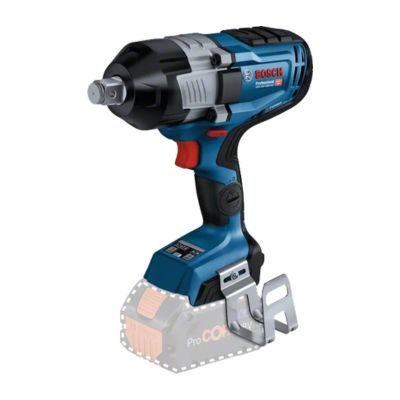
The names are similar, but these tools serve different purposes. An impact driver normally accepts 1/4-inch hex accessories and is primarily intended for screws and smaller fastening accessories. An impact wrench normally uses a square drive for sockets and is designed for larger fasteners.
An impact driver is suitable for many woodworking and construction fastening tasks, whereas an impact wrench is generally more appropriate for automotive and heavy mechanical applications.
Do not choose an impact driver simply because its advertised torque appears high enough for a job that actually requires an impact wrench. The drive interface, socket compatibility, fastening requirements and intended duty are different.
The best choice depends on the work rather than a simple performance ranking. A drill driver is more versatile for drilling because it accepts a broad range of drill bits and usually offers a conventional chuck. An impact driver is particularly efficient for repetitive screwdriving.
Maximum torque is an attractive number in product specifications, but it can be misleading when used in isolation. The most useful impact driver is the one that provides an appropriate combination of torque, speed, control and handling.
A tool with extremely high output can make it easier to overdrive fasteners. It can also make delicate work less forgiving if the electronic controls are limited.
When comparing models, consider how much of the advertised capability you will actually use. A well-controlled mid-range model may be more suitable for everyday DIY than a substantially more powerful professional tool.
Cordless tools become significantly more economical when several products share the same battery platform. Before buying, think beyond the immediate impact driver purchase.
For example, someone who already uses a DeWalt XR, Makita LXT, Milwaukee M18, Bosch Professional or Ryobi ONE+ platform may have a strong reason to remain within that ecosystem, provided the available tools meet their requirements.
Battery-platform compatibility should always be checked against the exact model because manufacturers can operate several different cordless ranges with different battery interfaces.
A bare tool can be the best option for buyers who already own compatible batteries and chargers. It avoids paying for duplicate equipment and can make expanding an existing tool collection more economical.
A complete kit can make more sense for someone entering a cordless platform for the first time. Compare the total cost of the tool, battery and charger rather than comparing the advertised tool-only price with a kit price.
Battery runtime varies significantly according to fastener size, material, tool settings, battery capacity and user technique. There is no single runtime figure that accurately represents every application.
For demanding work, having two compatible batteries can be more useful than relying on one very large battery. One battery can be in use while another is charging, provided the charging system and workload allow sufficient recovery time.
Keep batteries away from excessive heat, moisture and physical damage, and follow the manufacturer's instructions for charging, storage and transportation.
Timber fastening is one of the areas where an impact driver can provide a clear advantage. Long screws can require substantial rotational force, and the impact mechanism helps the driver continue turning when resistance rises.
However, pilot holes remain important for many timber applications. Selecting the correct pilot-hole size can reduce splitting, make fastening easier and improve the final result, particularly near timber edges or when using larger-diameter screws.
Use the lowest practical power setting for the application and stop driving once the fastener reaches the intended depth. More power is not automatically better.
Outdoor timber projects can involve a high number of fasteners, making the speed and convenience of an impact driver attractive. Decking, fencing, garden structures and timber framing can all involve repetitive screwdriving.
Choose fasteners designed for the outdoor environment and the particular timber being used. The driver should be treated as part of the fastening system rather than the factor that determines whether a screw is appropriate.
Pay attention to depth control because repeatedly overdriving screws can damage timber and compromise the appearance of finished work.
Impact drivers can be useful for some metal fastening applications when paired with suitable accessories and fasteners. However, the correct accessory and drilling method depend on the thickness and type of metal.
When drilling metal, a drill driver may be the more appropriate primary tool, particularly when controlled drilling speed is important. An impact driver should not be assumed to replace a drill press or specialised metalworking equipment.
Even the best impact driver cannot compensate for an unsuitable fastener or bit. Fastener head design, length, diameter, material, coating and intended substrate all influence performance.
Use a fastener appropriate for the material and application, and select the corresponding driver bit. A poor-quality or incorrectly sized bit can cause slipping, head damage and premature wear regardless of the impact driver's specifications.
Maximum torque is only one part of the specification. A better purchase considers torque alongside control, speed, size, battery compatibility and ergonomics.
A low bare-tool price can become considerably more expensive once a battery and charger are added. Always compare the complete setup required to start working.
Large batteries can increase runtime but also add weight. For overhead work or tight spaces, a smaller battery may provide a more comfortable experience.
Impact mechanisms expose accessories to repeated shock loading. Use bits and accessories designed for impact applications where required.
An impact driver is specialised. It does not necessarily provide the same drilling versatility, chuck capacity or low-torque control as a drill driver.
Buying into a cordless ecosystem can influence future purchases. Check whether the platform includes the tools you may realistically want over the next few years.
Brand choice can be useful when selecting a cordless impact driver because battery compatibility and the wider tool ecosystem can matter for years after the initial purchase.
DeWalt is widely associated with professional cordless tools and offers several impact-driver options across its battery ranges. Makita has a broad cordless ecosystem covering DIY, trade and professional applications. Milwaukee is particularly prominent in professional-oriented cordless systems, while Bosch Professional provides a separate professional tool ecosystem distinct from Bosch's consumer-focused ranges.
Ryobi is worth considering for buyers interested in a broad consumer and DIY-oriented battery platform. Hikoki and Metabo HPT are also established names in professional power tools. Other manufacturers may offer suitable alternatives depending on budget, availability and the required specification.
The most important point is not to select a brand simply because it is familiar. Compare the exact model, battery platform, included accessories, control features and intended workload.
When two models appear similar, compare them using a consistent checklist rather than focusing on one headline specification.
Customer reviews can provide useful information that specification sheets do not cover, but they should be interpreted carefully. Look for recurring observations rather than relying on a single highly positive or negative comment.
Useful review signals include comments about balance, trigger control, battery compatibility, chuck operation, durability, noise, ease of bit changes and performance during the type of work you intend to undertake.
Be cautious about reviews that do not identify the workload or compare the tool with an appropriate alternative. A person using an impact driver occasionally for household repairs has very different requirements from someone using one continuously on a construction site.
Before purchasing, verify the exact model number and package contents. Product names can cover several configurations, and a similar-looking listing may contain a different battery size or be supplied as a bare tool.
An impact driver can deliver substantial rotational force, so safe operation is essential. Wear appropriate eye protection to guard against flying debris and use other protective equipment appropriate to the material and working environment.
Keep hands away from rotating or impacting components, secure the workpiece where practical and ensure the correct bit is firmly seated before applying force. Do not exceed the manufacturer's stated operating limitations.
Before changing bits or accessories, remove the battery where appropriate according to the manufacturer's instructions. Inspect the tool, battery and accessories before use and stop using damaged equipment.
More torque can produce faster fastening but can also damage materials and fasteners. Use controlled settings where available and release the trigger once the desired fastening depth has been reached.
Use only compatible batteries and chargers specified for the tool system. Do not use batteries showing signs of damage, swelling, leakage or other abnormal behaviour.
Routine care can help preserve the condition of a cordless impact driver. Keep ventilation openings clear of excessive dust and follow the manufacturer's cleaning recommendations.
A simple maintenance routine can prevent small problems from becoming larger ones.
Technique can make a significant difference. Hold the driver straight in line with the fastener whenever possible. Keeping the bit aligned reduces the risk of slipping and helps transfer the tool's force efficiently.
Start slowly, particularly with delicate materials. Once the fastener is correctly engaged, increase speed as appropriate. Avoid leaning excessively into the tool because excessive pressure can make bit alignment more difficult.
For long screws, a suitable pilot hole can reduce driving resistance and improve accuracy. Always follow the fastener manufacturer's recommendations where specific installation requirements apply.
Despite its versatility, an impact driver is not ideal for every job. A drill driver is usually more suitable when you need to drill many holes or work with accessories requiring a conventional chuck.
For masonry drilling, a suitable hammer drill or rotary hammer may be more appropriate. For vehicle wheel nuts and larger mechanical fasteners, an impact wrench is normally the correct tool category.
For precision fastening in delicate materials, a conventional drill driver with a clutch can offer greater control. Selecting the correct tool for the application is more important than choosing the most powerful cordless model available.
Cordless tool manufacturers often separate their product ranges into different ecosystems aimed at different users. Professional systems may offer more advanced electronics, heavier-duty construction and a larger selection of high-performance tools, while consumer-oriented systems may focus on accessibility and value.
This does not mean that a professional tool is automatically the right choice for a homeowner. Consider usage frequency, required performance, existing batteries and the number of compatible tools you expect to purchase.
There is no universal torque figure that defines the ideal cordless impact driver. The appropriate output depends on the fastener, substrate and application.
For furniture assembly and small household projects, control may matter more than maximum torque. For timber framing, decking and construction, greater output can become more useful. For heavy mechanical fastening, an impact wrench may be the more appropriate category altogether.
The best buying decision therefore starts with identifying the largest and most demanding fastening task you regularly expect to perform, then selecting a tool with suitable headroom without unnecessarily sacrificing compactness or control.
When working inside cabinets, between framing members or beneath fixtures, overall tool length can be more important than maximum power. A compact impact driver can reach areas where a longer drill driver is awkward.
Look for a short head-to-back length, good trigger access and a compact battery option. Integrated lighting can also be valuable when the tool head blocks ambient light.
Long structural screws place greater demands on the motor and impact mechanism. In this situation, adequate torque, efficient battery use and thermal management become more important.
Choose a model designed for the workload and pair it with suitable impact-rated bits. Avoid assuming that a high torque figure alone guarantees better results, because bit quality, screw design, pilot-hole preparation and material resistance also affect fastening performance.
When driving hundreds of fasteners, ergonomics can become as important as raw performance. A lightweight, balanced tool with an effective trigger and convenient bit changes can reduce fatigue and improve productivity.
Battery strategy also matters. Having appropriately sized batteries available can keep work moving without forcing the user to carry unnecessary weight during every fastening operation.
The cheapest cordless impact driver is not necessarily the lowest-cost option over its useful life. Consider the cost of batteries, chargers, accessories and future tools within the same platform.
A more expensive model may make sense when it offers features you will actually use repeatedly. Conversely, paying a premium for professional-level output that is rarely required may not provide meaningful value for occasional DIY work.
Long-term value is therefore best judged by matching the tool to your workload rather than by comparing purchase prices alone.
A useful way to narrow a large selection is to establish your requirements before looking at individual models.
There is no single best model for every UK buyer. The right choice depends on the type of fastening, required torque, battery platform, tool size, budget and frequency of use. A compact DIY model may be ideal for household work, while a professional brushless model may be better for frequent construction use.
They can be extremely useful if you regularly drive screws or other compatible fasteners. Their compact form and impact mechanism make them particularly effective for repetitive fastening and applications involving substantial resistance.
An impact driver can drill when equipped with an appropriate hex-shank drill accessory, but it is not a complete replacement for a drill driver. A conventional drill driver generally provides greater versatility for drilling applications.
Use accessories specifically suitable for impact-driver use. Impact-rated bits are designed to withstand the repeated shock loading produced by the impact mechanism and are generally the appropriate choice for demanding impact applications.
No. High torque is useful for demanding fasteners, but excessive output can make delicate fastening more difficult and can damage materials or fasteners. Control and appropriate operating modes are equally important.
Brushless models can offer advantages in efficiency, durability and battery utilisation, particularly for frequent use. However, the value of brushless technology depends on your workload and budget.
Choose a capacity that balances runtime with weight. Larger batteries can extend operating time but increase the tool's overall weight, while compact batteries can improve manoeuvrability and comfort.
A bare tool can be a sensible option if you already own compatible batteries and a charger. If you are entering a cordless platform for the first time, compare the combined cost of the bare tool, battery and charger with complete kits.
Not completely. An impact driver excels at fastening, whereas a drill driver is generally more versatile for drilling and controlled low-torque applications. Many users benefit from having both tools available.
Most cordless impact drivers use a 1/4-inch hex quick-change interface. Always verify the specification of the exact model before purchasing accessories.
They can be used for some furniture assembly, but care is required. Lower settings and careful trigger control are important because excessive torque can damage screws, fittings and softer materials.
Yes, they can be well suited to repetitive decking screw installation when used with appropriate fasteners and impact-rated bits. The correct driving depth and suitable outdoor-rated fasteners remain important.
They can if the wrong bit, excessive speed or excessive torque is used. Correct bit selection, good alignment and controlled operation significantly reduce the risk of damaged fastener heads.
There is no universal runtime because usage varies with fastener size, material, tool settings and battery capacity. Higher-capacity batteries generally provide more stored energy, but the actual working time depends on the workload.
For repetitive screwdriving into timber, an impact driver can be particularly effective. For drilling holes and applications requiring precise clutch control, a drill driver may be more appropriate.
Prioritise suitable torque, brushless motor technology, battery-system compatibility, durability, ergonomics, electronic controls, compact dimensions and the availability of additional tools within the same platform.
Inspect the tool and accessories before each use, clean away accumulated debris after demanding jobs and follow the manufacturer's maintenance and battery-storage recommendations. Any unusual noise, vibration, overheating or visible damage should be investigated before continued use.
The best top-rated cordless impact driver is ultimately the model that matches your actual fastening requirements rather than the one with the most impressive specification sheet. Start with your application, identify the fasteners and materials involved, then compare torque, speed, impact rate, control features, dimensions and battery compatibility.
For occasional DIY, prioritise affordability, compactness and ease of control. For serious DIY and renovation work, a capable brushless platform can provide useful headroom and access to a wider selection of compatible tools. For professional workloads, durability, battery availability, ergonomics and sustained performance deserve greater emphasis.
Before purchasing in the UK, compare the complete package, including the exact model, battery configuration, charger, accessories and current retailer price. Check the manufacturer's specifications rather than relying solely on marketplace descriptions, and read verified customer feedback for practical information that cannot be determined from headline specifications alone.
A carefully chosen cordless impact driver can become a highly useful part of a broader power-tool collection, particularly when it is selected as part of a battery ecosystem that also meets your future drilling, sawing, grinding and fastening requirements.