

♥ Wishlist
Compare 51 verified C Clamps products in United Kingdom. Reviews, ratings, pros, cons and buying advice updated for October 2026.


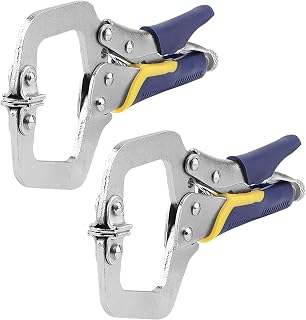


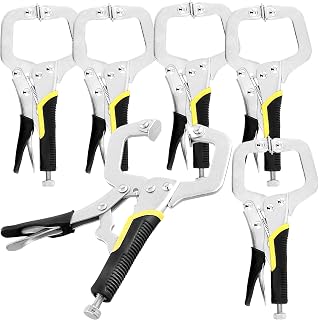

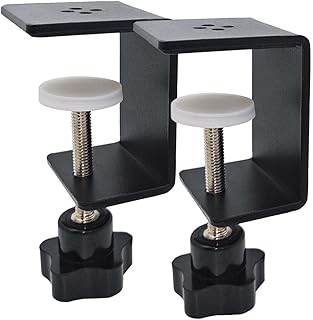


Choosing a C clamp is less about finding the largest or heaviest-looking tool and more about matching the clamp's throat depth, opening capacity, clamping force, frame construction and screw mechanism to the work you actually do. A compact clamp can be ideal for small joinery jobs, while a deeper, heavier-duty model may be much better for securing large timber, metal components or workpieces during drilling, cutting, assembly and fabrication.
For UK buyers, it is also worth considering metric measurements, corrosion resistance, handle comfort and the type of materials commonly used in British workshops and garages. A good C clamp should provide controlled pressure without excessive flexing, slipping or awkward adjustment. Brands such as Bessey, IRWIN, Stanley, Bahco and Silverline offer different approaches to clamp construction, so comparing the specifications rather than relying solely on appearance is important.
A C clamp, also called a G clamp in the UK, is a mechanical holding tool built around a C-shaped frame and a threaded screw. The workpiece is positioned between the fixed frame and the movable pressure pad, and turning the screw moves the pad towards the frame to apply pressure.
C clamps are commonly used in woodworking, metalworking, fabrication, maintenance, repair work, drilling, gluing and general workshop tasks. They are particularly useful when a component needs to remain stationary while another operation is performed.
The basic design is simple, but differences in frame thickness, screw diameter, thread quality, jaw capacity, throat depth, pad design and handle shape can make a substantial difference to usability.
In the UK, the terms C clamp and G clamp are frequently used for essentially the same style of clamp. The naming generally refers to the shape of the frame rather than a completely different mechanism.
Some manufacturers and retailers use C clamp, while British tool listings commonly use G clamp. When comparing products, concentrate on the actual specifications rather than the terminology used in the product title.
The maximum jaw opening determines how wide a workpiece the clamp can accommodate. This is one of the first specifications to check because a clamp that cannot open far enough is unsuitable regardless of how strong its frame may be.
Think about the largest realistic material you expect to secure rather than choosing solely according to the most common project. For small craft and joinery work, a compact opening may be sufficient. Larger woodworking, fabrication and repair tasks can require considerably more capacity.
Remember that advertised opening capacity is not the same as throat depth. A clamp may open widely but still have limited reach into the workpiece.
Throat depth is the distance from the inside of the C-shaped frame to the screw's central line. It determines how far into a large panel or workpiece the clamp can reach.
This specification becomes particularly important when clamping material away from its edge. For edge work, a modest throat may be adequate. For larger boards, panels, assemblies and fabrication jobs, deeper throat capacity can be much more useful.
The frame carries much of the load generated by the screw. A rigid frame helps maintain alignment as pressure increases, whereas an unsuitable or excessively flexible frame can reduce practical clamping performance.
Common frame materials include cast iron, ductile iron, steel and various manufactured metal constructions. Cast and ductile frames are widely associated with traditional heavy-duty clamps, while steel construction can provide a useful balance of strength, weight and durability depending on the design.
Clamping force describes the pressure a clamp can apply to a workpiece. More force is not automatically better. Excessive pressure can damage soft timber, compress delicate materials, deform thin metal or squeeze too much adhesive from a joint.
For general workshop use, controlled and repeatable pressure can be more useful than simply choosing the highest claimed force. When comparing products, consider the intended material and operation alongside any manufacturer-provided force rating.
The threaded screw is central to the performance of a traditional C clamp. A smooth-running screw makes adjustment easier, while a coarse or poorly finished thread can make the clamp frustrating to operate.
Look for a screw that moves consistently without excessive play. A well-designed screw should allow pressure to be increased progressively and released without unnecessary effort.
The pressure pad contacts the workpiece and transfers force from the screw. A fixed pad is simple and robust, while a swivel pad can accommodate slight changes in angle and maintain better contact on surfaces that are not perfectly parallel.
If the clamp will be used on finished timber, painted surfaces or other materials where marking matters, consider how the pad interacts with the workpiece. Protective wood, plastic, rubber or purpose-made clamp pads can also be placed between the clamp and material when appropriate.
The handle affects how easily the screw can be tightened and loosened. Traditional sliding-bar handles are simple and allow the user to apply controlled torque, while other designs may use shaped handles intended to improve grip and comfort.
A comfortable handle becomes more important when several clamps are being adjusted repeatedly during a glue-up or assembly. However, the handle should not encourage unnecessary over-tightening.
A clamp transfers force through its frame. As the screw is tightened, the frame experiences significant mechanical loading. A rigid frame helps keep the fixed jaw and pressure pad aligned and reduces unwanted movement.
For occasional light-duty work, a relatively compact clamp can be perfectly practical. For demanding fabrication or repeated workshop use, frame rigidity becomes more important because the clamp may be tightened and released many times and exposed to higher loads.
When comparing similar-looking models, pay attention to the frame's overall thickness, shape and construction rather than assuming that a larger external size automatically means greater strength.
Cast iron frames are traditionally associated with heavy-duty workshop clamps. They can provide substantial rigidity and are often selected for applications where stability matters more than minimum weight.
The disadvantage is that a heavy cast frame can be cumbersome to reposition, particularly when several clamps are being used at once.
Ductile iron is engineered to provide improved toughness compared with conventional cast iron. It can be a useful choice where a clamp needs a strong frame while also handling the stresses associated with repeated workshop use.
Steel frames can offer a practical combination of strength and relatively manageable weight. The actual performance depends on the steel grade, frame geometry, manufacturing quality and overall design, so the material name should not be treated as the only measure of quality.
There is no single ideal clamp size for every workshop. A useful selection can include several sizes so that each clamp is used within an appropriate range rather than forcing one oversized model to handle every job.
Do not select a clamp simply because its maximum opening is impressive. If the clamp is too large for a small project, it may be unnecessarily heavy and awkward to position.
Woodworkers often use C clamps to hold assemblies during glue curing, secure jigs, position components and stabilise timber while machining or drilling. The most suitable clamp depends on the dimensions and sensitivity of the material.
For furniture assembly and joinery, a clamp that provides controlled pressure can be preferable to one designed solely for maximum force. Softwoods and finished hardwood surfaces can be marked by concentrated pressure, so protective pads are worth considering.
When gluing, check that the clamp provides enough opening and throat depth to reach the intended joint. Also consider whether the frame can fit around the assembly without interfering with adjacent components.
Metalworking can place different demands on a clamp. Fabrication, drilling, cutting and welding preparation may require a rigid frame and reliable screw mechanism capable of maintaining pressure while the workpiece is manipulated.
Metal surfaces can also be hot, sharp, oily or abrasive, so the clamp should be selected for the environment in which it will be used. A clamp intended for ordinary woodworking should not automatically be assumed to be suitable for high-temperature fabrication.
For welding-related tasks, never treat an ordinary C clamp as a substitute for equipment specifically designed for the particular fabrication operation. Follow appropriate workshop safety practices and manufacturer instructions.
For general DIY, versatility is often more valuable than extreme capacity. A medium-size clamp with a durable frame and smooth screw can cover a wide range of household repairs and workshop projects.
If storage space is limited, consider a small selection of complementary sizes instead of purchasing many identical clamps. This gives greater flexibility when the workpiece dimensions change.
DIY users should also consider ease of adjustment. A technically strong clamp that is difficult to position may be less convenient for everyday work than a well-designed model with sensible proportions and an easy-to-operate screw.
Professional users generally need to look beyond individual specifications and consider repeatability, durability, ergonomics and the availability of suitable sizes. A clamp that performs adequately for an occasional project may not be the best choice for repeated daily use.
For a workshop with varied work, a range of sizes can be more useful than a large quantity of one size. Consistent construction across a product range can also make it easier to predict how a clamp will behave when moving between jobs.
Brands such as Bessey, IRWIN, Bahco and Stanley have established tool ranges that include different types of clamping equipment. Compare the individual model specifications rather than assuming that every clamp from a particular brand has identical construction or performance.
A large opening does not guarantee that the clamp is suitable for your work. Throat depth, frame rigidity and screw travel also affect whether the tool can actually reach and hold the intended position.
This is one of the easiest specifications to overlook. If the clamp needs to reach well inside a large panel, insufficient throat depth can make an otherwise impressive clamp unusable.
High clamping force can be useful for demanding applications but can damage delicate materials. The right amount of pressure depends on the workpiece and the job.
A single clamp size rarely provides the best combination of reach, opening, weight and convenience for every project. A carefully chosen range is often more practical.
The screw is used every time the clamp is adjusted. A rough-running or poorly finished thread can make even a robust frame unpleasant to use.
Metal clamp components can leave impressions on timber, painted surfaces and softer materials. Protective pads can reduce this risk where the application permits.
Large C clamps occupy significant space. Before buying several heavy models, consider where they will be stored and whether their size is justified by your typical projects.
Durability comes from the interaction of several components rather than one specification. Frame construction, thread quality, screw alignment, pressure-pad design, surface finish and manufacturing tolerances all contribute to the useful life of the tool.
A strong frame can still be inconvenient if the screw binds. Conversely, a smooth screw does not compensate for a frame that is unsuitable for the required load. A balanced design is therefore more important than focusing on one headline feature.
Humidity, condensation and damp storage can contribute to corrosion on metal tools. This is particularly relevant in garages, sheds and unheated workshops where temperature changes can cause moisture to form on metal surfaces.
Look for an appropriate protective finish and keep clamps clean and dry after use. Surface treatment does not make a tool immune to corrosion, so storage conditions and maintenance remain important.
Where a clamp develops surface rust, deal with it before corrosion affects the threaded mechanism or other functional surfaces. Avoid storing dirty or wet clamps in closed toolboxes for extended periods.
Dust, wood fibres, metal particles and dried adhesive can interfere with the screw. Wipe the threaded section clean after use and inspect it regularly.
Inspect the screw and frame threads for damage, excessive wear or contamination. If the screw becomes unusually difficult to turn, investigate the cause rather than simply applying more force.
Use an appropriate lubricant where recommended by the manufacturer. Avoid applying products indiscriminately, particularly when the clamp is used around timber, finishes, adhesives or surfaces that must remain clean.
Look for cracks, distortion or other damage, particularly on heavily used clamps. A damaged frame should not be treated as safe merely because the screw still turns.
Keep clamps in a dry location where possible and avoid throwing heavy tools together in a way that can damage threads or pressure pads.
For delicate materials, use suitable protective material between the clamp and workpiece. Never assume that maximum tightening is necessary simply because the clamp can generate substantial pressure.
A C clamp is a holding tool, not a universal replacement for a vice, fixture or specialised workholding system. Select equipment according to the task and follow the manufacturer's instructions.
Clamping pressure should be sufficient to prevent unwanted movement without unnecessarily crushing or deforming the material. This is especially important with softwood, plastics, thin sheet material and finished surfaces.
A concentrated pressure pad can create a relatively small contact area, increasing the risk of marking. A larger protective interface can distribute the load, although it should not compromise the stability of the setup.
For adhesive work, the purpose of clamping is generally to maintain proper joint alignment and contact rather than to force every possible amount of adhesive out of the joint.
When using C clamps for woodworking glue-ups, dry-fit the assembly before applying adhesive. This helps determine where each clamp will sit and reduces the time spent adjusting hardware while the adhesive is setting.
Place clamps so that pressure is distributed appropriately along the joint. If the assembly is long, several clamps may be more effective than attempting to generate excessive pressure at one location.
Use suitable protective pads where necessary, especially when the timber has a finished or easily marked surface.
Clamps can help keep a workpiece stable during drilling and cutting, but they should be positioned so they do not interfere with the tool, blade, bit, guard or workholding surface.
Before starting the operation, check the entire movement path of the tool and ensure that the clamp cannot be contacted by the cutting equipment. A securely clamped workpiece should also remain accessible for the intended operation.
F clamps generally provide greater reach and are often faster to position on long workpieces because one jaw slides along a bar. C clamps, in contrast, offer a compact and rigid frame and are particularly convenient when their fixed dimensions match the application.
The best option depends on the geometry of the job. A C clamp is not necessarily better or worse than an F clamp; it solves a somewhat different workholding problem.
Multipacks can be useful for woodworking and assembly because several clamps may be needed at the same time. However, buying a large quantity of an unsuitable size can be less useful than owning a smaller selection of appropriate capacities.
Before purchasing a set, check whether all clamps share the same dimensions. A mixed-size selection can provide greater practical coverage when the work varies considerably.
Also compare the construction of each clamp rather than assuming that a multipack contains the same heavy-duty specification as a separately sold professional model.
Customer reviews can provide useful information about day-to-day usability, but they should be interpreted carefully. Look for comments that identify the specific model and describe concrete characteristics such as screw movement, frame rigidity, jaw alignment, finish quality or ease of adjustment.
Give greater weight to consistent observations across multiple reviews than to isolated statements. Also distinguish between complaints caused by a defective individual item and comments that identify a recurring design characteristic.
Specifications should still be checked independently because customer reviews may not provide precise information about opening capacity, throat depth or construction materials.
Specifications can differ between visually similar models, so always compare the exact product variant rather than relying on the brand name alone.
The cheapest clamp is not necessarily the best value, particularly when it will be used frequently. Consider the total usefulness of the tool: adequate capacity, reliable adjustment, suitable frame construction, comfortable operation and expected durability.
At the same time, avoid paying for heavy-duty capacity that your projects will never require. A professional fabrication clamp may be unnecessary for occasional household repairs, while a lightweight DIY model may be a poor choice for demanding workshop applications.
When comparing prices, compare like for like. A single heavy-duty clamp and a multi-clamp set cannot be evaluated purely by dividing the purchase price by the number of items.
Prioritise versatility, manageable weight, straightforward adjustment and a sensible medium-size capacity. A durable general-purpose model is usually more useful than an extremely large specialist clamp.
Prioritise appropriate opening capacity, throat depth, smooth screw operation and protection against marking finished surfaces.
Prioritise frame rigidity, appropriate load capability, durable construction and suitability for the workshop environment.
Consider a selection of sizes, robust construction, repeatable adjustment and compatibility with the specific fabrication processes involved.
Weight and compact dimensions become more important. A clamp that is easy to carry and quickly position may be preferable to a substantially heavier model with capacity that is rarely required.
You may need a larger model when the existing clamp cannot reach the required clamping point, does not open sufficiently around the material, or has to be positioned at an awkward angle to make contact.
Repeatedly operating a clamp near the limits of its opening can also indicate that a larger capacity is more appropriate. Rather than forcing a small clamp into a task it was not designed for, choose a model whose dimensions provide comfortable working clearance.
An oversized clamp can be unnecessarily heavy, difficult to position and awkward in confined spaces. If most projects involve small components, a compact model may provide better control and convenience.
Large clamps can also consume considerable storage space. A balanced workshop collection normally includes sizes that correspond to the work rather than choosing every clamp solely on maximum capacity.
Yes, but care is required. Bare metal pressure pads can mark some timber surfaces, particularly when significant force is applied. Protective pads or sacrificial pieces of suitable material can help reduce the risk.
Always check that the protective material does not introduce instability or allow the clamp to slip. The objective is to protect the surface while maintaining secure contact.
A C clamp and a vice perform different roles. A vice is generally mounted to a bench and provides a dedicated workholding position, whereas a C clamp can be placed around different parts of a workpiece or assembly.
C clamps are useful when the work cannot conveniently be brought to a vice or when temporary clamping is required. A vice may be more convenient for repeated operations on smaller components.
C clamps can be useful for positioning and holding suitable components during fabrication, but suitability depends on the specific clamp, material, temperature and operation. Do not expose a clamp to conditions beyond its intended use.
Where welding is involved, follow appropriate welding safety procedures and consider whether dedicated welding clamps or fixtures are more suitable for the task.
There is no universal number. The appropriate quantity depends on the type and size of projects being completed.
A basic DIY workshop can often benefit from a small selection of complementary sizes. A woodworking workshop may need several clamps of the same capacity for glue-ups, while a fabrication environment may require a broader range of heavy-duty workholding equipment.
Before buying more clamps, consider which sizes you already own and identify the specific gap in capacity, throat depth or clamping reach.
Brand reputation can be useful as a starting point, but the individual model remains the most important consideration. Established tool manufacturers including Bessey, IRWIN, Stanley, Bahco and Silverline have product ranges covering different categories and price levels.
When comparing these brands, check the precise model specifications, intended application, construction, dimensions and current customer feedback. A premium brand's basic clamp may not necessarily be a better match for your project than a more affordable model designed specifically for the required capacity.
Rather than buying clamps randomly, build a collection around the dimensions of your typical projects. Start with a versatile size that covers most everyday work, then add smaller or larger models when a recurring need becomes apparent.
For woodworking, consider the size of common boards and assemblies. For metalworking, consider the dimensions of the components being fabricated and how much clearance is required around them.
A mixed collection can also reduce unnecessary weight. There is little benefit in using a very large clamp for a small workpiece when a compact model provides adequate reach and pressure.
British workshops can vary from heated indoor rooms to garages, sheds and other environments where moisture and temperature changes are common. If clamps will spend significant time in an unheated space, corrosion protection and sensible storage deserve particular attention.
Metric measurements are also common across UK tool specifications, although listings can sometimes include imperial equivalents. When comparing products, make sure you are comparing the same measurement and do not mistake rounded conversions for different capacities.
For online purchases, check the exact product variant, pack quantity and current retailer information before making a decision. Product specifications and availability can change, so the information shown on a current retailer listing should be checked at the time of purchase.
A star rating can provide a quick indication of customer sentiment, but it does not tell you whether a clamp is suitable for your particular application. A compact DIY clamp could receive excellent feedback from users who value its size and convenience while being completely unsuitable for heavy fabrication.
Look for evidence about the characteristics that matter to your use: smooth adjustment, frame rigidity, jaw alignment, durability, dimensions and ease of handling. Matching the review context to your intended application produces a more useful buying decision.
A higher-priced clamp can make sense when the tool will be used frequently and the benefits of better construction, smoother adjustment, ergonomics or durability justify the additional cost.
Professional users may place greater value on consistent performance and long-term reliability, while occasional DIY users may reasonably prioritise basic functionality and affordability.
Premium pricing should never be treated as proof that a particular model is automatically the best choice. Compare the specifications and intended use of each model.
An affordable clamp can be entirely appropriate when the work is occasional, the required load is modest and the product provides adequate capacity and construction for the task.
For a homeowner who needs a clamp a few times a year, paying substantially more for specialist features may provide little practical benefit. The important distinction is between low price and inadequate construction; these are not necessarily the same thing.
The best C clamp is the one whose dimensions and construction fit the work you actually intend to perform. Start with maximum opening and throat depth, then consider frame rigidity, screw quality, pressure-pad design, handle ergonomics, material and corrosion resistance.
For occasional DIY work, a versatile medium-size clamp may provide the best balance. Woodworkers should pay particular attention to reach, surface protection and controlled pressure. Metalworkers and fabricators may place greater emphasis on frame rigidity and robust construction. Professional workshops can benefit from maintaining several sizes rather than relying on one universal clamp.
Before purchasing, compare the exact model specifications, current customer feedback and current retailer information. Check whether the clamp's capacity is genuinely appropriate for your projects and whether another workholding solution would be more practical.
There is no single C clamp that is ideal for every UK buyer. The strongest buying decision comes from matching the clamp's opening, throat, frame and screw mechanism to the material, dimensions and pressure requirements of the job.
The best choice depends on the size and type of DIY work. A general-purpose model with suitable opening capacity, adequate throat depth, a rigid frame and a smooth screw mechanism is a sensible starting point for many home workshops.
They generally refer to the same basic style of threaded clamp. G clamp is particularly common terminology in the UK, while C clamp is widely used internationally.
Choose according to the maximum opening and throat depth required by your projects. If your work varies considerably, owning complementary sizes can be more useful than choosing one oversized clamp.
Cast iron is commonly used for rigid, heavy-duty clamp frames. Whether it is the best choice depends on the application, because weight, portability and the specific frame design also matter.
Steel can provide a strong and practical frame, but strength depends on the complete design, material specification and construction. Do not judge a clamp solely from the word steel in its description.
They can mark or compress wood if excessive pressure is applied or if the pressure pad concentrates force on a sensitive surface. Protective pads can help reduce marking.
Yes, when the C clamp's capacity and design suit the task. A quick clamp may be more convenient when rapid adjustment is important, while a traditional C clamp can offer a different balance of rigidity and controlled screw adjustment.
Yes. They can be useful for holding timber, securing assemblies, positioning components and maintaining pressure during glue work, provided the selected size and pressure are appropriate.
They can be useful for many metalworking and fabrication tasks, subject to the clamp's specifications and the conditions of use. High-temperature or specialised fabrication work may require dedicated equipment.
Store them somewhere dry and protected from unnecessary moisture. Keep the threaded mechanism reasonably clean and avoid storing clamps where heavy tools can damage the threads or pressure pads.
Use an appropriate protective pad or sacrificial piece between the clamp and the workpiece, and avoid applying more pressure than the job requires.
Throat depth determines how far the clamp can reach from the edge of the workpiece. A clamp with a large opening but insufficient throat depth may still be unsuitable for large panels or assemblies.
A set can be useful when several clamps are required simultaneously, particularly for woodworking. Individual purchases may be better when you need specific capacities or want to build a mixed-size collection gradually.
Check the exact model number, opening capacity, throat depth, frame construction, screw design, pressure pad, weight, pack quantity, intended application and current customer feedback. Also verify the current retailer information before ordering.
No. Price should be considered alongside construction, capacity, intended use and frequency of use. A moderately priced clamp can be a better choice when its specifications closely match the job.
There is no single specification that matters most for every buyer. Maximum opening and throat depth determine whether the clamp physically fits the job, while frame rigidity and screw construction influence how effectively and conveniently it performs.
Compare their opening, throat depth, frame material, screw mechanism, pressure-pad design, weight, intended application and current customer feedback. Select the model that offers the most appropriate combination for your work rather than relying on brand or appearance alone.