

♥ Wishlist
Compare 63 verified Crimping Tools for Reliable Cable and Terminal Connections products in United Kingdom. Reviews, ratings, pros, cons and buying advice updated for October 2026.
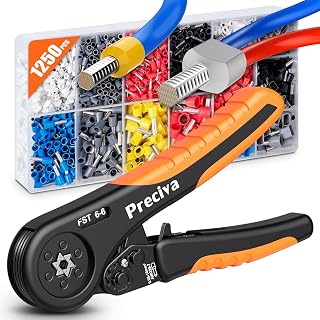


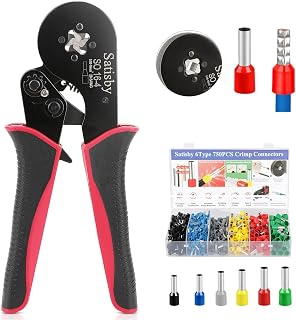
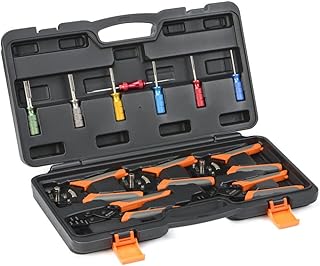

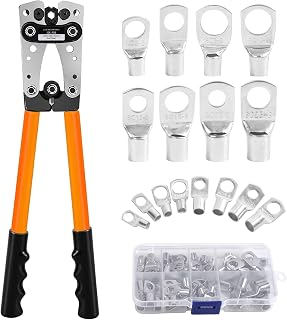


Choosing a top-rated crimping tool is less about finding the tool with the most features and more about matching the crimper to the terminals, connectors, cable sizes and type of electrical work you actually perform. A compact hand crimper may be ideal for occasional automotive wiring or DIY jobs, while a ratcheting crimper, hydraulic crimper or powered crimping tool can be more appropriate for repetitive work, heavier cables or applications where consistent crimp pressure matters.
For buyers in the United Kingdom, it is also important to check the conductor and terminal sizes expressed in the units used by the manufacturer. Cable specifications may be given in mm², AWG or both, and these measurements should not be treated as interchangeable without checking the manufacturer's stated range. The correct crimping profile must also match the connector being installed.
Brands such as Knipex, Rennsteig, IWISS, Draper, CK Tools, Bahco and Sealey offer tools covering different levels of electrical, automotive, maintenance and professional use. Brand reputation can be useful when comparing options, but the actual die profile, cable range, adjustment mechanism, construction and intended connector type should remain central to the decision.
Basic hand crimpers are generally the simplest option for occasional jobs. They can be useful for small electrical terminals, insulated connectors, wire-end ferrules and other compatible fittings. Their main advantages are low complexity, portability and the absence of batteries or hydraulic equipment.
The limitation is that inexpensive hand tools can provide less consistent results if the operator applies insufficient or excessive force. They are therefore best selected according to the exact terminal system rather than simply by overall tool size.
Ratcheting crimpers are a popular choice for electrical and automotive applications because the mechanism helps maintain the correct sequence of operation. The handles remain engaged until the crimping cycle has progressed sufficiently, reducing the possibility of partially closing the dies and releasing an inadequately formed connection.
A good ratcheting mechanism should operate smoothly and return reliably after completing a crimp. Some models include adjustable pressure or interchangeable dies, which can make one tool suitable for several connector systems.
Ferrule crimpers are designed specifically for wire-end ferrules used on stranded conductors. They are particularly relevant when terminating flexible cables in compatible screw terminals, control equipment, distribution equipment and electrical panels.
Ferrule crimpers are not automatically suitable for every type of terminal. A square, hexagonal or other crimp profile may be intended for a particular ferrule design, so buyers should check compatibility before purchasing.
Insulated terminal crimpers are designed for terminals and connectors with insulated sleeves, commonly encountered in electrical maintenance, automotive work and general wiring applications. The die typically uses designated sections for different terminal sizes.
The important consideration is not simply whether the tool says it handles insulated terminals, but whether its specified terminal and conductor range corresponds with the connectors you intend to use.
Non-insulated terminals generally require a different crimping profile from insulated terminals. Specialist tools can produce a more controlled deformation around the terminal barrel and conductor.
If you regularly work with open-barrel terminals, automotive connectors or specialist electrical contacts, a purpose-designed crimper is normally preferable to a generic multipurpose tool.
Open-barrel terminals are common in automotive and electronics applications. They require the crimper to form the terminal wings around the conductor and, where applicable, the insulation support.
This type of crimp is particularly sensitive to die geometry. A general-purpose terminal crimper should not be assumed to produce the correct result on every open-barrel connector.
Hydraulic crimpers are intended for applications where considerably greater crimping force is required. They are commonly associated with larger cable lugs and heavy-duty electrical connections.
Hydraulic models can reduce the physical effort required from the operator, but they are generally larger, heavier and more specialised than a hand crimper. Die compatibility, maximum cable capacity, hydraulic mechanism, replacement seals and available spare dies are worth considering before buying.
Battery-powered crimpers can be useful when a large number of connections need to be completed or when manual hydraulic operation would be tiring. They can provide a repeatable powered cycle and may be particularly useful for professional electrical installation and maintenance.
However, the total ownership cost can be higher because the buyer may need to account for batteries, chargers, replacement dies and servicing. Check whether the tool is supplied as a complete kit or as a bare tool before comparing prices.
The die is one of the most important parts of a crimping tool. It determines how the terminal barrel is compressed around the conductor. Two tools that look similar externally can produce very different results because their die geometry is different.
Common profiles include hexagonal, square, indent, B-crimp and specialised terminal shapes. The correct profile depends on the connector and application. A die that physically closes around a terminal is not necessarily the correct die for that terminal.
For interchangeable-die crimpers, check exactly which dies are supplied and which additional dies are compatible. A large selection of dies is only useful if the profiles correspond to the terminals you actually use.
One of the most common buying mistakes is selecting a crimper based on a vague description such as small, medium or heavy duty. Cable capacity should instead be checked against the manufacturer's stated range.
In the UK, electrical cable sizes are commonly specified in square millimetres, while some tools and connector systems also use AWG. The numerical values are not directly equivalent, so do not assume that a tool covering a particular AWG range automatically covers every nearby metric cable size.
Also distinguish between the conductor size and the overall outside diameter of the cable. The crimping specification normally concerns the conductor and terminal system, whereas the physical size of the cable can affect access and handling.
Crimping places significant mechanical stress on the dies. Hardened steel or similarly durable die construction can be an important consideration for buyers who expect frequent use. Look for clear information about die material and construction rather than relying solely on marketing terms such as professional or heavy duty.
Die alignment affects the shape and consistency of the finished crimp. The terminal should remain correctly positioned as the handles close. Excessive side-to-side movement or poor alignment can make precise work more difficult.
On ratcheting models, the ratchet should advance smoothly and release appropriately at the end of the cycle. An adjustable ratchet can be particularly useful when different terminals require different compression characteristics, provided the adjustment is clearly specified by the manufacturer.
Handle design becomes increasingly important during repetitive work. A tool that requires excessive hand force can quickly become tiring. Non-slip grips, sensible handle geometry and a suitable lever ratio can make a noticeable difference to day-to-day usability.
A useful crimper should make it reasonably easy to position the terminal and conductor correctly before completing the crimp. This is particularly important with smaller terminals where visual access can be limited.
Interchangeable dies can extend the usefulness of a crimping tool, especially for users working with multiple connector families. However, a modular design is not automatically better. If you only use one terminal type, a dedicated crimper can be simpler and quicker.
Tool construction should be considered in relation to intended workload. Forged or hardened steel components can provide the mechanical strength needed for repeated crimping, while lighter construction may be perfectly adequate for occasional DIY use.
Look at the construction of the pivot, ratchet, dies, adjustment mechanism and handle connection rather than focusing only on the overall appearance. A comfortable plastic or rubber grip does not compensate for a poorly designed mechanical system.
For professional use, also consider whether replacement dies, spare parts and maintenance information are realistically available. A tool that can be maintained or reconfigured may offer better long-term practicality than one that has to be replaced when a critical component wears.
A basic manual crimper may be sufficient when the number of connections is small and the terminals are straightforward. It can also be convenient to keep in a compact toolbox.
A ratcheting crimper is generally more attractive when repeatability and ease of use are priorities. The ratchet helps control the crimping cycle and can reduce the likelihood of releasing the handles before the intended compression has been completed.
For frequent work, the additional cost of a better-designed ratcheting tool can be easier to justify. For occasional repairs, however, there is little reason to pay for specialised features that will rarely be used.
Crimping and soldering are different connection methods and should not be treated as interchangeable techniques. A properly selected crimp terminal creates a mechanical and electrical connection through controlled deformation of the terminal around the conductor.
Crimping is particularly useful where a connector system is specifically designed for crimp termination, where repeatability matters or where a connection needs to remain mechanically secure under normal service conditions.
Whether soldering is appropriate depends on the application, connector design, equipment requirements and applicable instructions or standards. Follow the requirements of the connector and equipment manufacturer rather than assuming that adding solder automatically improves a crimped connection.
Always follow the instructions supplied with the terminal and crimping tool. The following general sequence can help explain the process, but it should not replace the manufacturer's specified procedure.
This is one of the most significant errors. A terminal can look correctly compressed while still having the wrong crimp profile. Always match the die to the connector manufacturer's requirements.
The conductor barrel and insulation support serve different purposes. A crimp intended to secure the conductor should not be substituted with an inappropriate compression of the cable insulation.
Over-stripping can leave an unnecessary length of exposed conductor. Use the stripping length specified for the terminal and ensure that the conductor is correctly positioned inside the barrel.
Nick marks or cuts caused during stripping can reduce the effective conductor cross-section. Use an appropriate stripping tool and avoid twisting or crushing the strands unnecessarily.
Forcing an oversized or undersized terminal into a die is not a substitute for using the correct tool. Check the stated operating range before starting the job.
A crimp needs the correct deformation, not simply maximum compression. Excessive force can damage a terminal or conductor and may produce a connection that does not match the intended crimp profile.
Connector systems can have very specific tooling requirements. When a manufacturer specifies a particular crimping tool, die or setting, those instructions should take priority over generic advice.
Not every premium feature provides meaningful value. For most buyers, the following characteristics are more useful than cosmetic upgrades.
A large number of included accessories can make a kit look attractive without necessarily making it the best choice. A crimping kit containing numerous dies, terminals and accessories is useful only when those components are suitable for your intended applications.
Likewise, a tool described as multi-purpose may sacrifice precision compared with a dedicated crimper. If you repeatedly use one terminal family, selecting a purpose-built tool can be more sensible than buying a general kit with many unused functions.
Automotive wiring can involve several different terminal styles, including insulated terminals, non-insulated terminals and open-barrel contacts. A single generic crimper may therefore not be suitable for every vehicle wiring task.
For automotive projects, consider access, handle size, terminal compatibility and the connector manufacturer's recommended crimp profile. A compact ratcheting tool can be advantageous in confined spaces, while interchangeable dies can be useful for users dealing with several connector systems.
For vehicle electrical repairs, do not select a tool simply because its packaging lists automotive use. Check the actual connector and terminal specification first.
Electrical installation work can involve wire-end ferrules, cable lugs and other specialised termination systems. The appropriate crimping tool depends on the conductor size and the terminal type.
For ferrules, select a ferrule-specific crimper with a profile appropriate to the ferrules being used. For larger cable lugs, a hydraulic or powered solution may be more appropriate where the required force exceeds practical hand-tool capability.
Electrical work should always be performed by a suitably competent person and in accordance with applicable UK requirements and the equipment manufacturer's instructions.
DIY buyers often benefit from keeping the tool simple. If the intended jobs involve occasional repairs to small electrical wires, a suitable hand or ratcheting crimper may provide everything required.
A complete kit can be convenient if it contains the correct terminals and dies for the jobs you expect to perform. However, avoid purchasing a large kit solely because it has the highest accessory count. Quality of the crimper and compatibility of the consumables are more important.
Professional users should place greater emphasis on repeatability, durability, ergonomics and serviceability. A tool used throughout the working day needs to remain comfortable and predictable across many cycles.
Consider the availability of replacement dies, manufacturer documentation, spare parts and compatible accessories. If the same terminal type is used repeatedly, a dedicated professional crimper may be preferable to a universal tool.
When comparing shortlisted models, use the same criteria for each one rather than relying on star ratings alone. Customer ratings can help identify common satisfaction or usability issues, but the specification needs to match your actual requirements.
A highly rated crimping tool is not necessarily the best choice for every application. A model can receive positive feedback for general DIY use while being unsuitable for a particular terminal system.
Customer feedback is most useful when it is combined with specification checking. Look for recurring comments concerning handle comfort, die alignment, ratchet operation, build quality and ease of use, then verify those observations against the manufacturer's technical information.
When comparing products on UK retail sites, check recent customer feedback and the exact product variant. Similar-looking tools can be sold in different kits with different dies or accessories.
Proper care can help maintain consistent operation. Keep the dies clean and free from debris, particularly when working in dusty workshops or environments where metal particles can accumulate.
Inspect the crimping surfaces periodically for visible damage, excessive wear or contamination. Check the pivot and moving mechanism according to the manufacturer's maintenance instructions rather than applying lubricant indiscriminately.
For hydraulic and powered tools, follow the manufacturer's service requirements carefully. Hydraulic systems and battery-powered mechanisms can require maintenance procedures that differ considerably from those used for manual hand tools.
Store crimping tools somewhere dry and protected from unnecessary moisture. Where the tool uses interchangeable dies, keeping the dies organised can reduce the risk of selecting the wrong profile during a job.
Do not store heavy objects on top of precision dies or allow the crimping jaws to become contaminated with oils, adhesives or metal debris. If a tool is supplied with a dedicated case, using it can make it easier to protect and organise the components.
Always isolate electrical circuits before carrying out work where isolation is required, and confirm that the circuit is safe before handling conductors. Wear suitable eye protection when cutting, stripping or terminating wire, particularly where there is a possibility of flying fragments.
Use the correct stripping and cutting equipment rather than improvising with the crimping jaws. Never exceed the manufacturer's specified operating capacity, and do not use a damaged tool for critical electrical connections.
For mains electrical installations and other regulated work, use an appropriately qualified or competent professional and follow the applicable UK requirements.
Before choosing between several top-rated crimping tools, answer a few practical questions. What type of terminals will you crimp? What conductor sizes will you use? How often will the tool be used? Do you need a ratchet? Will you need several die profiles? Is the work performed in an open workshop or a confined space? Are replacement dies or spare parts important?
These questions usually narrow the choice more effectively than searching for the highest-rated product alone.
Brand selection should be based on the specific tool rather than reputation alone, but several established manufacturers are worth including in a UK comparison. Knipex is well known for professional hand tools and offers specialist crimping equipment. Rennsteig is another specialist manufacturer with a broad range of crimping and termination tooling. CK Tools, Bahco, Draper and Sealey also have products covering various workshop, electrical and maintenance applications.
IWISS is another name frequently encountered when comparing crimping equipment across different terminal and cable applications. As with any brand, check the individual model's specifications, die configuration and intended application rather than assuming that every tool in the range has the same performance characteristics.
The best-value crimping tool is not necessarily the least expensive model. Value comes from choosing a tool that performs the required task correctly, remains comfortable during the expected workload and does not force you to purchase another crimper shortly afterwards.
For occasional use, a simple quality tool may represent better value than an advanced professional kit. For frequent use, investing in a durable tool with the correct die system can make more sense because the tool is likely to see substantially more cycles.
When comparing deals, compare like for like. A bare tool, complete kit and tool supplied with multiple dies should not be evaluated purely by headline price.
Visual inspection is an important first step. Check that the terminal has been compressed in the intended area, that there are no obviously damaged strands and that the conductor and insulation are positioned correctly according to the connector instructions.
A connection that looks neat is not automatically electrically or mechanically acceptable. Where the application requires formal verification, use the appropriate inspection and testing procedure rather than relying solely on appearance.
Replacement may be appropriate when the dies are visibly damaged, the ratchet no longer operates correctly, excessive mechanical play develops or the tool can no longer produce the specified crimp consistently.
Do not continue using a visibly damaged crimping tool for critical connections simply because the handles still move. Precision tooling depends on the condition and alignment of its working surfaces.
There is no single best crimping tool for every UK buyer. The right choice depends on the connector type, conductor size, crimp profile, frequency of use and required operating force. A dedicated tool can be better than a general-purpose model when the application is specialised.
Ratcheting crimpers can offer greater control over the crimping cycle and are particularly useful for repeated work. A standard hand crimper can still be suitable for occasional applications when its die profile and capacity match the terminal.
Choose the tool according to the conductor and terminal range specified by the manufacturer. Do not select a crimper solely by the physical size of the tool or by a generic small, medium or large classification.
Usually not. Different terminal systems can require different die profiles and crimping mechanisms. A modular crimper with interchangeable dies can cover multiple applications, but it still depends on having the correct die for each connector.
They can be worthwhile for frequent or professional use when the additional cost provides better construction, ergonomics, precision, durability or compatibility with the required connector system. For occasional DIY work, a simpler suitable tool may provide better value.
Knipex, Rennsteig, CK Tools, Bahco, Draper, Sealey and IWISS are among the brands worth considering when comparing crimping equipment. The individual model specification remains more important than the brand name alone.
Hydraulic crimpers are generally intended for applications requiring substantially more force, such as suitable larger cable terminals and lugs. They can be unnecessarily large and specialised for simple small-terminal DIY work.
If you regularly terminate compatible stranded conductors with wire-end ferrules, a purpose-designed ferrule crimper can provide the appropriate crimp profile. Check the ferrule and equipment manufacturer's requirements before selecting the tool.
Not automatically. Automotive and electrical applications can use different terminal designs and crimp profiles. Always verify that the crimper is specifically compatible with the terminal being installed.
There is no universal replacement interval. Replacement depends on usage, tool construction, maintenance and condition. Inspect the working surfaces and mechanism regularly and replace or service the tool when it no longer performs within the manufacturer's requirements.
A kit can be convenient when you need several compatible dies or accessories. An individual tool may be better when you already own the supporting equipment or repeatedly use one specific terminal type.
Look beyond the overall rating. Pay attention to recurring comments about die alignment, handle force, ratchet smoothness, durability, terminal compatibility and ease of positioning connectors. Then compare those observations with the manufacturer's specifications.
Before purchasing a top-rated crimping tool in the UK, confirm the application first and the brand second. The tool should be designed for the exact connector family you intend to use, with a compatible die profile and conductor range.
A useful independent buying guide should assess crimping tools according to suitability rather than simply declaring one product universally superior. The most relevant factors include application compatibility, die profile, conductor capacity, mechanical design, ease of operation, build quality, adjustability and long-term practicality.
When checking individual products, compare the manufacturer's technical specifications with the requirements of the connector system. Customer feedback can provide additional insight into everyday usability, but it should complement rather than replace specification checking.
Because product configurations, retailer pricing and availability can change, check the current product listing before purchasing. Pay particular attention to the exact model and included accessories, especially where several versions of a similar crimping tool are available.
The best top-rated crimping tool for your needs is the one that produces the correct type of crimp for your terminals, covers the required conductor sizes and remains practical for the amount of work you expect to perform. A high rating is useful evidence for comparison, but compatibility should always come first.
For occasional UK DIY work, a quality hand or ratcheting model may be sufficient. Automotive users may need specialised terminal tooling, electrical technicians may benefit from dedicated ferrule or terminal crimpers, and heavy-duty cable work can call for hydraulic or powered equipment. Compare the technical specifications, die profiles, construction, ergonomics and current package contents before making the final decision.