
♥ Wishlist
Compare 60 verified Hacksaw Hand Tool products in United Kingdom. Reviews, ratings, pros, cons and buying advice updated for October 2026.




A good hacksaw is a simple hand tool, but choosing the right one involves more than selecting the cheapest frame on the shelf. Frame construction, blade compatibility, tooth pitch, tensioning, handle design and the materials you intend to cut all affect how effectively a hacksaw performs. For UK buyers, it is also worth considering whether replacement blades are easy to source and whether the tool is intended for occasional household work, regular workshop use or demanding professional applications.
This guide is designed to help you compare top-rated hacksaw hand tools by looking beyond headline features. Instead of relying on a single specification, consider how the complete saw works as a system: a rigid frame keeps the blade aligned, an appropriate blade cuts efficiently, adequate tension reduces wandering, and a comfortable grip makes repeated cuts easier to control.
A hacksaw is a manually operated cutting tool normally fitted with a narrow, toothed metal-cutting blade held under tension in a rigid frame. It is commonly used for cutting materials such as mild steel, aluminium, copper, brass, threaded rod, bolts, conduit, plastic pipe and other workpieces that are unsuitable for ordinary wood saws.
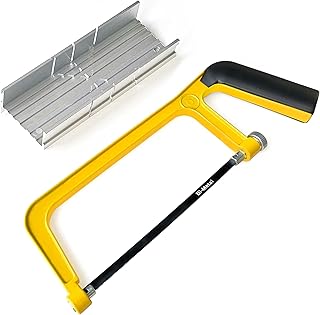
The conventional design consists of a frame, handle, blade, blade mounts and a tensioning mechanism. Some frames are fixed-length designs, while others allow different blade lengths to be fitted. Certain professional-style models use adjustable or high-tension frames that provide greater control during demanding cutting work.
Although hacksaws are often associated with metalworking, their usefulness extends to plumbing, electrical installation, automotive maintenance, fabrication, DIY repairs, gardening equipment maintenance and general workshop tasks.
The frame determines how securely the blade is held and how much control you have while cutting. A frame that flexes excessively can make it harder to maintain a straight cut, particularly when working through thicker metal. A rigid frame generally provides a more controlled cutting action and can make efficient use of the blade's teeth.
A fixed hacksaw frame is straightforward and usually designed around a particular blade length. Its simplicity can be an advantage for users who want a dependable tool without unnecessary adjustment mechanisms. Fixed frames can be particularly suitable for routine household and workshop cutting where the same blade size is used repeatedly.
An adjustable frame can accommodate different blade lengths, depending on its design. This can be useful when maintaining a mixed collection of replacement blades or when a particular application calls for a different blade size.
However, more adjustability does not automatically mean better cutting performance. Examine how the adjustment mechanism locks into position and whether it maintains the blade securely under tension.
High-tension hacksaw frames are designed to hold the blade firmly, helping reduce unwanted movement during cutting. They can be especially useful when accuracy and consistent blade tracking matter.
For occasional DIY use, a basic frame may be entirely adequate. For frequent workshop work, fabrication or repeated cutting of tougher materials, a rigid high-tension design can be worth prioritising.
Blade tooth pitch is one of the most important factors when choosing a hacksaw. Blades are commonly described by teeth per inch, or TPI. A higher TPI means more teeth are present over a given length of blade, while a lower TPI provides larger, more widely spaced teeth.
The correct choice depends on material thickness as well as material type. Using an extremely coarse blade on thin material can result in poor engagement and an unnecessarily rough cut. Conversely, using a very fine blade on a thick workpiece can make cutting slow because the smaller gullets have less capacity to clear material.
Blade selection should match the workpiece rather than being treated as an afterthought. Different blade constructions and tooth profiles are designed to balance cutting speed, durability and flexibility.
Carbon steel blades can be suitable for lighter-duty cutting applications. They may make sense for occasional users who need replacement blades for relatively straightforward jobs.
Bi-metal blades combine different metals within the blade construction to balance flexibility and tooth durability. They are widely associated with general-purpose metal cutting and can be a sensible option when a user wants a blade capable of handling varied workshop tasks.
Blades incorporating high-speed steel cutting edges are designed for demanding cutting applications where tooth hardness and wear resistance are important. Their suitability still depends on the material being cut and the blade's specific construction.
There is no single TPI that is best for every metal-cutting job. As a practical principle, aim to keep several teeth engaged with the workpiece rather than allowing only one or two teeth to contact the material at a time.
For thin sheet material, tubing and similarly thin sections, a finer tooth pitch can reduce the likelihood of aggressive tooth engagement. For thicker sections of mild steel or other suitable metals, a coarser pitch can remove material more efficiently.
When purchasing a hacksaw, consider whether replacement blades are readily available in several TPI options. A frame that accepts commonly available blades can be more useful over the long term than a tool tied to an unusual replacement format.
Handle design becomes increasingly important when making multiple cuts. A hacksaw requires repeated forward-and-back movement, so an uncomfortable grip can make otherwise straightforward work unnecessarily tiring.
Look for a handle that allows a secure grip without forcing the hand into an awkward position. A contoured handle can help with control, while a suitably shaped grip may reduce pressure points during prolonged use.
Some hacksaw designs incorporate additional gripping areas around the front of the frame. These can give the user more control when applying pressure, particularly during tougher cuts.
Many conventional hacksaws can be operated with one hand, but using two hands can provide additional stability when cutting larger or more resistant workpieces. The frame should provide enough clearance for your hands while allowing you to maintain a comfortable cutting angle.
Correct blade tension is essential for controlled hacksaw cutting. A blade that is too loose can wander, flex excessively and produce an inaccurate cut. Excessive tension, however, can place unnecessary stress on the blade and frame.
A useful hacksaw should provide a tensioning system that is straightforward to operate and allows the blade to be secured firmly. Depending on the design, tension may be adjusted using a threaded mechanism, lever or another dedicated tensioning arrangement.
When comparing models, do not judge the tensioning system solely by how sophisticated it appears. What matters is whether it allows consistent, secure blade installation and practical adjustment.
The size of the hacksaw should reflect the jobs you expect to perform.
Full-size frames are a versatile option for general workshop, maintenance and DIY applications. Their larger frame provides useful blade length and generally offers comfortable hand positioning for longer cuts.
They are often the most sensible choice for a general-purpose toolbox because they can handle a broad range of routine cutting tasks when fitted with the appropriate blade.
Compact hacksaws are useful where access is restricted or where portability is more important than maximum cutting capacity. They can be convenient for small repairs, maintenance tasks and work in confined areas.
The smaller design may reduce the available cutting stroke, so it is worth considering the size and thickness of your typical workpieces before choosing a compact model as your only hacksaw.
Junior hacksaws are compact hand tools designed for lighter cutting applications and smaller workpieces. They can be useful for tasks involving small sections of metal, plastic components and other relatively light materials.
Because junior hacksaws use a different frame format from many full-size hacksaws, check blade compatibility before purchasing replacement blades. A compact frame can be highly convenient, but it should not be expected to deliver the same cutting capacity or leverage as a full-size workshop hacksaw.
A hacksaw can be useful across a surprisingly broad range of maintenance tasks, provided the blade is appropriate for the material.
Always check the blade manufacturer's intended applications before cutting unfamiliar materials. Some specialist materials may require a dedicated cutting method rather than a conventional hacksaw blade.
A suitable hacksaw blade can be used for some stainless-steel cutting applications, but stainless steel can be more demanding than mild steel. Blade quality, tooth pitch, workpiece thickness and cutting technique all become more important.
A bi-metal blade with an appropriate tooth configuration may be preferable for demanding applications. Avoid excessive downward force. Maintaining a controlled stroke and allowing the teeth to do the cutting can help prevent premature tooth wear.
Aluminium can generally be cut with a suitable hacksaw blade, although the correct tooth configuration is important. Aluminium can produce chips that interfere with tooth clearance, so a blade intended for the application can make the process more manageable.
Secure the workpiece properly before cutting and use steady strokes rather than forcing the blade through the material.
A hacksaw can be useful for cutting many types of plastic pipe and components. The appropriate blade depends on the plastic and its thickness. A suitable fine-tooth blade can often provide better control on thinner plastic sections, while the workpiece should be securely supported to prevent vibration.
For specialist plastics, always check whether the material manufacturer recommends a particular cutting method.
Look for a frame that maintains its shape under normal cutting pressure. Excessive flex can reduce control and make straight cuts more difficult.
Check which blade lengths and mounting styles the frame accepts. A widely supported blade format can make future replacement easier.
A practical tensioning mechanism should make blade installation and adjustment straightforward without requiring excessive effort.
Consider grip shape, hand clearance and overall balance. Comfort matters particularly if you expect to make repeated cuts.
The frame is only part of the cutting system. A high-quality frame fitted with an unsuitable or worn blade will not necessarily perform well.
The depth of the frame affects the maximum dimensions of the workpiece that can be accommodated. Check the usable throat depth if you regularly cut larger sections.
Replacement availability is an important long-term consideration. A hacksaw that accepts commonly available replacement blades can be easier to maintain.
A heavier frame can feel substantial and stable, but a lightweight design may be more convenient for portable maintenance work. The best balance depends on how and where you use the tool.
Frame material influences the balance between rigidity, weight and durability.
Steel frames can provide substantial rigidity and are well suited to workshop environments where robustness is a priority.
Aluminium frames can reduce overall weight while maintaining useful structural strength, depending on the design and construction.
The material name alone should not determine your choice. Frame geometry, construction quality, tensioning design and handle integration can be equally important.
A professional user who cuts metal frequently is likely to value different characteristics from someone who needs a hacksaw for occasional household repairs.
For regular workshop use, prioritise frame rigidity, dependable tension adjustment, comfortable handling, durable blade mounts and compatibility with quality replacement blades.
For occasional DIY work, a straightforward general-purpose frame with a suitable blade may provide better value than paying for features you rarely use.
The key is to match the tool to workload rather than assuming that the most expensive or feature-heavy hacksaw is automatically the best option.
When researching hacksaws, established tool brands can provide a useful starting point because they commonly offer multiple frame and blade options. Brands such as Stanley, Bahco, Draper, Irwin, Faithfull, Milwaukee, FACOM and Silverline are names UK buyers may encounter when comparing hand tools and workshop equipment.
Brand recognition should not replace specification checking. Compare the individual model's frame design, blade compatibility, tension mechanism, included blade and intended application rather than assuming every product from a recognised brand has the same characteristics.
When two products appear similar, compare them using the same criteria rather than focusing on a single headline feature.
The cheapest hacksaw may appear attractive for occasional work, but a poorly designed frame or inconvenient blade tensioning system can make cutting frustrating. Consider durability and replacement-blade compatibility alongside the initial purchase cost.
A good frame cannot compensate for an unsuitable blade. Always consider the thickness and type of material before selecting a blade.
Blade tension should be sufficient to keep the blade stable, not simply set as high as possible. Follow the manufacturer's instructions for the particular frame.
Dull teeth make cutting slower and encourage users to apply excessive pressure. Replacing a worn blade can improve control and reduce unnecessary effort.
A small hacksaw is convenient, but its compact dimensions can limit cutting stroke and workpiece capacity. Consider a full-size frame if larger or repeated cuts are expected.
A hacksaw is a long-term tool, while blades are consumable components. Check replacement-blade availability before committing to an unusual frame or blade format.
Safe and effective hacksaw work starts with securing the material firmly. A loose workpiece can move during cutting, making the cut less accurate and increasing the risk of slipping.
Straight cutting depends largely on preparation and technique. Mark the workpiece accurately and establish the initial groove without rushing. Once the blade has established a path, maintain a consistent angle and avoid twisting the frame.
Excessive side pressure can cause the blade to wander or damage the teeth. If the cut repeatedly drifts, examine the blade condition, tension, tooth selection and workpiece support before simply increasing force.
A hacksaw is commonly used for cutting bolts, threaded rod and similar metal fasteners. Mark the required cutting position and secure the fastener firmly before beginning.
After cutting, the newly created end may have sharp edges or damaged threads. Appropriate deburring and thread-cleaning methods may be necessary depending on how the fastener will be used. When cutting a threaded fastener, planning how the threads will be protected or restored can make the finished result much better.
For metal pipe, secure the pipe so it cannot rotate unexpectedly. Begin with controlled strokes and keep the blade aligned with the intended cut line.
Thin-wall tubing requires particular care because an excessively coarse blade or aggressive pressure can produce a rough cut. Choose an appropriate tooth pitch and support the pipe as close as practical to the cutting area without interfering with the saw.
A hacksaw requires relatively little maintenance, but basic care can extend its useful life.
There is no universal number of cuts that determines blade replacement. Blade life depends on the material being cut, workpiece thickness, blade quality, cutting technique and frequency of use.
Replace the blade when cutting becomes noticeably inefficient, teeth are damaged or missing, the blade no longer tracks properly, or achieving normal cutting progress requires excessive force. Continuing to use a damaged blade can make the job slower and less controlled.
A hacksaw is a relatively simple hand tool, but cutting metal creates sharp edges, chips and potentially hot surfaces. Wear suitable eye protection when cutting materials that can generate chips or fragments.
Keep both hands positioned securely and avoid placing fingers directly in the blade's path. Secure the workpiece before cutting and make sure the cutting area is stable. After completing a cut, handle the freshly cut material carefully because edges can be extremely sharp.
Follow the manufacturer's instructions for the particular hacksaw and blade, especially regarding blade installation, tension and intended materials.
For a general-purpose UK household toolbox, versatility is usually more valuable than specialised features. A useful everyday hacksaw should accept readily available blades, provide secure tensioning and have a comfortable handle.
A general-purpose frame paired with several suitable blade pitches can cover many routine jobs, including cutting bolts, metal brackets, conduit, pipe and small sections of metal.
If your toolbox already contains power cutting equipment, a hacksaw remains useful because it is quiet, portable and practical for small cuts where setting up a power tool would be unnecessary.
Workshop users may benefit from prioritising durability, rigidity and repeatable blade installation. If the tool is used frequently, handle comfort and blade availability become increasingly important.
Consider buying several blade types rather than expecting one blade to handle every material. Keeping suitable replacement blades available also prevents having to compromise on tooth pitch when a different workpiece comes along.
A hacksaw and reciprocating saw can perform overlapping cutting tasks, but they serve very different purposes.
A hacksaw provides direct manual control and is useful for small, controlled cuts without batteries, mains electricity or a motor. It is particularly convenient for occasional work and locations where power-tool access is impractical.
A reciprocating saw can be considerably faster for suitable heavy-duty cutting applications, but it requires a power source or battery and introduces additional considerations such as blade selection, vibration and safe power-tool operation.
For a small repair, cutting one bolt or trimming a short section of pipe, a hacksaw can be the simpler solution. For repeated cuts through larger quantities of material, a powered tool may be more appropriate.
A full-size hacksaw generally offers a longer cutting stroke and greater versatility. A junior hacksaw is more compact and can be useful for smaller components and restricted spaces.
If you only want one hacksaw for a general toolbox, a full-size model is often the more versatile starting point. If portability and access are the main concerns, a junior design may complement rather than replace a conventional hacksaw.
There is no universal ideal budget. The appropriate amount depends on how frequently the tool will be used and whether you need specialised frame or blade features.
For occasional DIY use, focus on sensible construction, secure blade mounting and affordable replacement blades rather than paying for professional features you will not use.
For frequent use, it can be worthwhile to invest in a more robust frame and quality blades because cutting performance, comfort and durability become more important over time.
When comparing prices, consider the complete system rather than the frame alone. A low-cost frame that requires unusual replacement blades may not remain economical if you use the tool regularly.
Customer reviews can be useful when comparing products, but they should be interpreted carefully. Look for repeated comments about the same practical characteristics rather than placing too much weight on an isolated review.
A review from someone cutting occasional plastic pipe may not tell you much about performance during repeated steel fabrication work. Context matters.
Product specifications should answer several practical questions. First, identify the blade length and type. Next, check the frame construction and whether the frame is fixed or adjustable. Then examine the tensioning mechanism and included accessories.
Also check exactly what is included in the package. Some listings may show a hacksaw alongside several blades or accessories in product imagery, but the written package contents should be used to determine what is actually supplied.
Specifications can change between model variants, so verify the exact model designation before making a purchasing decision.
Choose a straightforward full-size frame with reliable blade mounting, a comfortable handle and a general-purpose blade. Avoid paying extra for specialist adjustment features unless you have a clear use for them.
Prioritise a frame that is easy to manoeuvre around pipework and choose blades appropriate for the particular pipe material. Compact options can be useful when access is restricted.
Prioritise rigidity, tension control and high-quality replacement blades. A selection of tooth pitches can be more useful than relying on one universal blade.
Consider access, portability and handle control. A conventional hacksaw can handle many small cutting tasks, while a compact model may be useful in tighter areas.
Look for a durable, versatile frame that accepts commonly available blades. Keeping different blade pitches on hand allows the same frame to be adapted to different materials and thicknesses.
Replacement blades are consumables, so storage deserves consideration. Keep unused blades dry and protected from unnecessary moisture or impact. Damaged teeth can reduce cutting performance before a blade is ever fitted to the frame.
If you maintain several blade pitches, storing them separately and clearly identifying their TPI can make it easier to select the correct blade for each job.
Hacksaw blades need an appropriate balance between tooth hardness and flexibility. A blade that is too brittle for the application can be vulnerable to breakage, while excessive flexibility can make maintaining a straight cut more difficult.
Bi-metal construction is one approach manufacturers use to combine useful tooth durability with blade flexibility. The exact performance still varies according to the blade design and intended application.
Many buyers focus on the material name but overlook thickness. Yet thickness has a direct influence on the appropriate tooth pitch and cutting behaviour.
For repeated work involving both thin and thick sections, purchasing a frame that accepts multiple blade options provides greater flexibility. This is one reason an adjustable, commonly compatible hacksaw can be a useful addition to a workshop.
Blade binding can occur when the cut closes around the blade, the workpiece is poorly supported or excessive pressure is applied. Correct blade selection and secure workpiece support can help reduce the problem.
Maintain a steady cutting stroke and avoid twisting the frame. If the blade repeatedly binds, stop and assess the workpiece position and cutting approach instead of simply applying more force.
Even a high-quality hacksaw can perform poorly if the workpiece moves during cutting. Support should keep the material stable while leaving enough clearance for the blade to move freely.
For long sections, support the material so its weight does not cause excessive movement or distortion around the cutting point. A stable setup improves both accuracy and user control.
A hacksaw is versatile, but it is not suitable for every cutting application. Very thick materials, large quantities of repetitive cuts, specialist alloys or applications requiring tight production tolerances may call for a different tool.
Depending on the job, alternatives can include a metal-cutting bandsaw, reciprocating saw, angle grinder, pipe cutter or another specialist cutting tool. The appropriate alternative depends on the material, required accuracy, work environment and safety requirements.
When comparing highly rated options, look for a consistent combination of useful characteristics rather than one standout specification. A strong candidate should have a suitably rigid frame, secure blade retention, practical tension adjustment and a comfortable grip.
It should also fit the type of blades you intend to use. A highly regarded frame is less useful if replacement blades are difficult to obtain or if the available blade selection does not match your typical applications.
Current customer feedback can provide additional context, but always cross-check reviews against the manufacturer's specifications and the exact model number.
For UK buyers in 2026, product availability, specification and pricing can change, so check the current product listing before purchasing. The same brand may offer several visually similar hacksaws with different frame designs, blade lengths or included accessories.
Pay attention to the exact model rather than relying on photographs alone. Confirm the stated specifications, package contents, blade compatibility and current customer feedback for the particular product you are considering.
A full-size general-purpose hacksaw with a rigid frame, secure tensioning mechanism, comfortable handle and widely available replacement blades is a sensible choice for many DIY users. The best model depends on the materials and thicknesses you expect to cut.
The appropriate blade depends on the steel type and thickness. Bi-metal blades are commonly considered for demanding general-purpose metal cutting, while tooth pitch should be selected according to the workpiece thickness.
A 24 TPI blade can be useful for certain metal-cutting applications, particularly where a medium-to-fine tooth pitch is appropriate. It is not automatically the best choice for every metal or thickness.
Not necessarily. Higher TPI provides more teeth per inch and can be appropriate for thinner materials, while lower TPI can be more effective on thicker sections. Match the tooth pitch to the workpiece.
They can be a useful choice for users who want a combination of tooth durability and blade flexibility. Whether they are worth the additional cost depends on how frequently you use the hacksaw and what materials you cut.
The blade should be securely tensioned according to the frame manufacturer's instructions. It should not feel loose during cutting, but excessive tension should also be avoided.
Possible causes include excessive tension, twisting the blade during cutting, unsuitable blade selection, excessive side pressure, poor workpiece support or a damaged blade. Check the frame and blade manufacturer's guidance before continuing.
A crooked cut can result from poor initial marking, insufficient blade tension, a worn blade, excessive pressure, incorrect blade selection or twisting the frame during the cutting stroke. Establishing a controlled starting groove can help improve accuracy.
A general-purpose blade can handle a useful range of tasks, but no single blade is ideal for every material and thickness. Users who cut different materials regularly may benefit from keeping several blade types and TPI options available.
Neither is universally better. A full-size hacksaw generally provides greater versatility and cutting stroke, while a mini or compact hacksaw can be easier to use in confined spaces.
Blade life varies considerably according to material, thickness, blade quality, cutting technique and frequency of use. Replace the blade when it becomes inefficient, damaged or excessively worn rather than relying on a fixed number of cuts.
Yes. Hacksaws are commonly used to cut bolts and threaded rod. Secure the fastener properly and take care around the sharp edge and any thread damage created by the cut.
A suitable hacksaw blade can be used for copper pipe. Secure the pipe and select an appropriate tooth pitch for its diameter and wall thickness.
A suitable quality blade can be used for some stainless-steel applications. Stainless steel can be more demanding than mild steel, so blade selection and controlled cutting technique are particularly important.
Many conventional hacksaw frames are designed around common blade formats, but compatibility varies. Check the exact frame specification before purchasing replacement blades.
Many conventional hacksaw blades are installed with the teeth pointing in the direction of the cutting stroke, but always follow the instructions supplied with the particular frame and blade.
Check blade length, mounting compatibility, tooth pitch, blade construction and intended material. Make sure the replacement blade is designed for the exact hacksaw frame.
A useful independent buying guide should distinguish between the quality of the frame, the suitability of the supplied blade and the needs of the person using the tool. A hacksaw that works well for occasional DIY should not automatically be presented as the best option for professional metalworking.
When comparing products, consider construction, blade compatibility, tensioning, ergonomics, intended workload and replacement-blade availability together. Product specifications and current customer feedback should then be checked before making a final purchasing decision.
Because prices, stock status, product bundles and specifications can change, verify the latest information for the exact model before buying. The most suitable hacksaw is ultimately the one whose frame, blade system and handling characteristics match the materials and cutting tasks you actually perform.