

♥ Wishlist
Compare 20 verified Cordless Screwdrivers products in United Kingdom. Reviews, ratings, pros, cons and buying advice updated for October 2026.
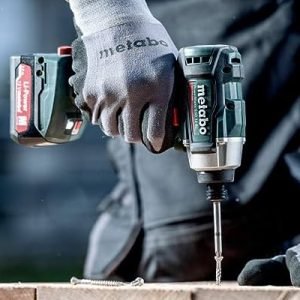
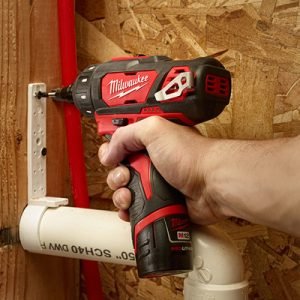


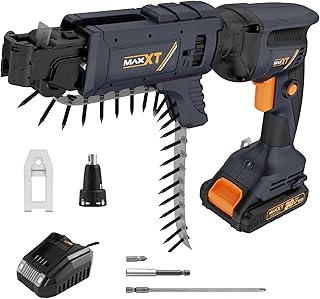


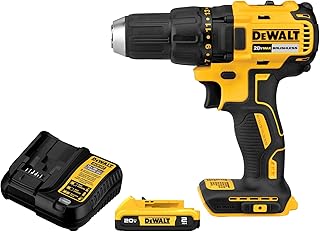


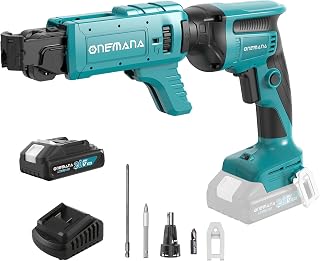


Choosing a cordless screwdriver is less about finding the tool with the longest specification list and more about matching the tool to the work you actually expect it to perform. A compact screwdriver for assembling furniture has very different requirements from a higher-powered cordless drill-driver used for repeated woodworking, maintenance or general DIY. The best choice should balance torque, speed control, battery system, ergonomics, chuck or bit compatibility, charging arrangements and overall build quality.
For UK buyers, it is also worth considering the manufacturer's wider battery platform. A cordless screwdriver can become considerably more useful when its battery is compatible with other tools from the same range. Conversely, buying into a battery ecosystem for a single occasional task may add unnecessary cost if additional cordless tools are unlikely to be needed.
When comparing top-rated cordless screwdrivers, look beyond star ratings alone. Customer feedback can help identify recurring strengths and weaknesses, but specifications should be checked alongside reviews. Pay particular attention to comments about battery life, chuck performance, torque control, balance, trigger sensitivity, charging time and long-term reliability rather than relying solely on the headline rating.
The phrase "cordless screwdriver" covers several different types of tools. Understanding the distinction can prevent a common buying mistake: purchasing a lightweight electric screwdriver when a drill-driver is needed, or choosing a large drill-driver when a small precision tool would be more convenient.
Compact electric screwdrivers are designed primarily for driving screws rather than drilling demanding holes. They are particularly useful for flat-pack furniture, household repairs, cabinet hardware, electrical enclosures and other light-duty applications.
Their small size can be a major advantage when working inside cupboards, drawers and other restricted spaces. A compact body also tends to be easier to carry and store. However, buyers should not expect every small screwdriver to replace a full-size drill-driver.
A cordless drill-driver is often the most versatile choice for general DIY. In addition to driving screws, it can drill holes using suitable drill bits. Adjustable clutch settings help control screw-driving force, while variable speed allows greater control over different materials and fasteners.
Models from established ranges such as Bosch, Makita, DeWalt, Milwaukee, Ryobi and Einhell can be worth comparing when versatility is a priority. The appropriate model depends on the intended workload, battery platform and budget rather than the brand name alone.
An impact driver is a different category from a conventional cordless screwdriver or drill-driver. It uses an impact mechanism to deliver rotational force and is particularly useful for driving longer screws and fasteners where higher driving force is required.
Impact drivers can be extremely effective for suitable applications, but they are not automatically the best choice for every DIY task. Their additional power can make delicate screw-driving less forgiving, particularly when working with soft materials or small fasteners. Users who mainly assemble furniture or install cabinet fittings may prefer the finer control of a conventional screwdriver.
Precision electric screwdrivers are intended for small fasteners and delicate work. They can be useful for electronics, small appliances, toys, computer-related tasks and other applications where a conventional drill-driver is unnecessarily large or powerful.
For precision work, speed control, bit quality, low-speed behaviour and handling can matter more than maximum torque. A tool that allows gradual control is generally more useful than one selected purely because it has a higher headline power figure.
Torque describes the turning force available from the tool. Higher torque can be useful for larger screws, tougher materials and demanding applications, but maximum torque should not be treated as a universal measure of quality.
A screwdriver with sensible torque adjustment can be more useful than an unnecessarily powerful model for everyday DIY. Excessive torque can strip screw heads, damage fixings or drive screws too deeply into softer materials. Look for a practical combination of torque capability and controllability.
Variable speed control allows the user to regulate how quickly the bit rotates. Lower speeds can provide better control when starting a screw, while higher speeds can make repetitive fastening faster when the application permits it.
A smooth trigger is particularly useful because abrupt acceleration can cause the bit to slip from the screw head. This is one of the small details that can have a significant effect on day-to-day usability.
The clutch limits the amount of driving force applied before the tool stops driving. This is especially valuable when working with different screw sizes and materials.
For furniture assembly, cabinetry and general woodworking, a well-designed clutch can help prevent overdriving. Buyers should compare not only the number of clutch positions but also how easily the settings can be selected and whether the adjustment feels predictable during use.
Battery voltage can provide a broad indication of the tool's intended class, but it should not be used in isolation to predict performance. Different manufacturers and tool platforms use different battery designs, motor technologies and electronic controls.
For light household tasks, a compact lower-voltage screwdriver may be entirely adequate. Heavier DIY applications may justify a more substantial drill-driver platform. The correct decision depends on the workload rather than simply choosing the highest voltage available.
Battery capacity is commonly expressed in ampere-hours. In general terms, a larger-capacity battery can provide greater energy storage, although actual runtime depends on the tool, workload, battery technology and operating conditions.
A high-capacity battery can increase weight and size. For overhead work or prolonged handheld use, a smaller battery may produce a more comfortable tool even if it requires more frequent charging or swapping.
Modern cordless tools commonly use lithium-ion battery technology. For buyers building a collection of cordless tools, battery-platform compatibility deserves particular attention.
Battery systems from Bosch, Makita, DeWalt, Milwaukee, Ryobi, Einhell and other manufacturers may cover multiple tool categories. Before purchasing a bare tool, confirm exactly which battery and charger are included and which batteries are compatible. A lower-priced tool body can become less economical if a compatible battery and charger have to be purchased separately.
Charging arrangements vary between cordless screwdriver ranges. Some products are supplied with a dedicated charger, while others may use a USB-based charging arrangement or a manufacturer's standard battery charger.
Consider where the tool will be stored and how frequently it will be used. For occasional household jobs, simple charging can be more convenient than managing a large battery ecosystem. For frequent DIY work, interchangeable batteries and faster charging may provide greater practicality.
A keyless chuck allows drill and driver bits to be changed without a separate chuck key. This is convenient for general DIY because changing between bits can be done quickly.
When comparing drill-drivers, check the chuck size and the types of accessories you intend to use. A chuck that accepts a broad selection of commonly available accessories can make the tool more versatile.
Many compact screwdrivers and impact drivers use a hexagonal bit interface. This can be particularly convenient when the tool is primarily being used for fastening.
Hex bits are available in a wide variety of profiles and lengths, including Phillips, Pozidriv, Torx, slotted and hex formats. UK households should pay particular attention to Pozidriv and Phillips compatibility because the wrong bit profile can cause poor engagement and increase the risk of damaging the screw head.
A good screwdriver can still perform poorly when paired with an unsuitable or worn bit. The bit should fit the fastener correctly, remain properly seated and be appropriate for the torque being applied.
For repetitive work, consider the quality and availability of replacement bits as part of the overall purchase decision. A comprehensive accessory kit can be convenient, but the number of included pieces should not be confused with the quality of those accessories.
Comfort becomes increasingly important when a cordless screwdriver is used for extended periods. A tool that looks excellent on paper may be frustrating if the handle is uncomfortable or the balance causes excessive wrist fatigue.
Weight should be considered together with balance. A slightly heavier tool may feel comfortable if its centre of gravity is well positioned, while a lighter tool can still feel awkward if the weight is concentrated far from the grip.
For overhead tasks, cabinet installation and repetitive fastening, compact dimensions can be especially valuable. For heavier drilling, a more substantial design may provide the stability needed for controlled operation.
Look for a handle that allows the trigger and direction controls to be reached naturally. Rubberised grip areas can improve handling, although the precise feel varies between models.
If possible, compare the shape of the handle rather than judging comfort solely from photographs. People with smaller or larger hands can have very different experiences with the same tool.
An integrated LED can make it easier to see a screw head in cupboards, corners and other poorly illuminated areas. It is a convenience feature rather than a substitute for proper task lighting.
Check the position of the LED when comparing models. A light positioned close to the bit can illuminate the working area effectively, whereas poorly positioned lighting can sometimes create shadows.
A belt clip can be useful for tradespeople and DIY users who frequently move around a work area. Bit storage can also be convenient when changing between fasteners.
These features should be considered according to your working habits. There is little benefit in paying extra for accessories that will never be used.
Motor design is another important comparison point. Brushed and brushless motors can both be found across cordless power-tool ranges, but they serve different priorities.
Brushed motors use physical brushes and a commutator as part of their operating design. They remain common in entry-level and value-oriented cordless tools.
A brushed screwdriver can be perfectly suitable for occasional household work. For buyers who use a tool infrequently, the practical advantage may be its lower purchase cost rather than the motor technology itself.
Brushless motors eliminate the conventional mechanical brushes and use electronic control. They are widely used in higher-end cordless power tools.
Potential advantages can include efficient motor operation, reduced brush wear and suitability for demanding cordless platforms. However, brushless technology alone does not guarantee that one model is better for every buyer. Ergonomics, electronics, battery design, torque control and overall construction remain important.
For assembling wardrobes, shelving, desks and other flat-pack furniture, compact size and controlled torque are often more useful than maximum power. A screwdriver with adjustable torque and a comfortable grip can help reduce the risk of damaging chipboard or stripping small fasteners.
Users who assemble furniture regularly may appreciate a tool with good low-speed control and a compact head. A drill-driver is also useful when furniture requires pilot holes, but maximum torque is rarely the primary requirement for ordinary assembly.
General household maintenance can require both screw driving and drilling. A versatile cordless drill-driver may therefore be a better long-term purchase than a screwdriver intended only for fastening.
When drilling masonry, however, buyers should distinguish between a standard drill-driver and a model with hammer functionality. The wall material and required fixing system should determine the tool and accessory selection.
Woodworking frequently benefits from controlled torque, variable speed and the ability to use different drill and driver accessories. Pilot drilling is often important when working with timber, particularly near edges or when using larger screws.
For repeated woodworking projects, battery availability and compatibility with other tools may be as important as the screwdriver itself.
Renovation projects can involve a wide mixture of fastening and drilling tasks. A robust cordless drill-driver may therefore offer greater flexibility than a compact screwdriver.
If renovation work includes extensive screw driving, an impact driver can complement a drill-driver. The two tools perform different roles: the drill-driver provides drilling and controlled fastening, while an impact driver is particularly suited to higher-demand driving tasks.
For cabinet hardware, electrical enclosures and similar jobs, precision and controllability are often more important than maximum torque. Compact dimensions can also make it easier to reach screws in confined spaces.
A tool with multiple torque settings can be advantageous where fasteners must be tightened consistently without damaging the surrounding material.
Outdoor DIY can involve heavier timber, fencing components, decking and general maintenance. These tasks may require more torque and battery capacity than occasional indoor assembly.
For demanding outdoor work, compare the complete cordless system rather than selecting a screwdriver based only on its body. Battery capacity, spare-battery availability, charger compatibility and accessory options can all influence how practical the tool becomes.
Battery runtime is affected by much more than the capacity printed on the battery. Driving short screws into soft timber consumes substantially different amounts of energy from drilling large holes or driving long structural fasteners.
Instead of asking only how many screws a battery can drive, consider your normal work pattern. Occasional household users may be perfectly comfortable with a smaller battery, while people completing larger projects may prefer a second battery so one can be used while the other is charging.
A spare battery can be useful for intensive work, especially when the tool belongs to a broader cordless platform. It can also make the investment in that platform more useful because the same battery may be shared with compatible tools.
For infrequent DIY, however, purchasing several batteries immediately may not be necessary. Compare the cost of the tool, battery and charger as a complete system before deciding.
Brand ecosystems can be one of the most important long-term purchasing decisions in cordless power tools. Bosch, Makita, DeWalt, Milwaukee, Ryobi and Einhell each offer ranges covering multiple categories, although compatibility is generally restricted to the relevant battery platform rather than being universal across all tools from a brand.
The best ecosystem is not necessarily the one with the most tools. Consider which additional tools you are realistically likely to purchase. If you may eventually need a cordless circular saw, reciprocating saw, multi-tool, sander or garden tool, battery compatibility can become a major factor.
More power is not automatically better. Excessive force can damage delicate materials and fasteners. A tool with good torque adjustment and smooth control can be more useful for everyday work.
Some cordless tools are sold as bare units, meaning the battery and charger may need to be purchased separately. Always establish exactly what is included before comparing apparent prices.
A large drill-driver can be unnecessarily cumbersome for small household jobs. If most tasks involve assembling furniture and tightening fittings, a compact screwdriver may be easier to handle.
The opposite mistake can be equally frustrating. If you regularly drill timber, masonry or larger holes, a small electric screwdriver may quickly reach its practical limits.
Using the wrong bit profile can lead to poor engagement and damage. UK DIY projects frequently encounter Pozidriv, Phillips, Torx, slotted and hex fasteners, so a useful bit selection can be important.
Brand reputation can be a useful starting point, but cordless tools within the same brand can target very different users. Compare the exact model's specifications, included equipment, dimensions, battery compatibility and intended application.
Ratings provide useful context but should not replace technical comparison. Read reviews for recurring patterns rather than isolated comments. Pay attention to feedback concerning battery behaviour, chuck quality, trigger control, clutch consistency, durability and ease of use.
Customer reviews are most useful when they are treated as evidence about real-world usability rather than as a simple popularity contest. Look for repeated observations from different buyers.
When two products appear similarly rated, create a direct comparison based on the factors that matter for your work. Start with the tool type, then examine torque, speed, clutch adjustment, battery system, included accessories, dimensions and weight.
If both tools appear suitable, consider the wider ecosystem. A slightly less expensive tool may not be the better value if it uses a battery system that you do not otherwise need. Conversely, a higher-priced kit can make sense if its battery can power several tools you expect to buy later.
Basic maintenance can help keep a cordless screwdriver performing consistently. Follow the manufacturer's instructions for the specific tool and battery rather than applying assumptions from another model.
Remove dust and debris after use, particularly around ventilation openings, the chuck and moving components. Wood dust and construction debris can accumulate during demanding projects.
Use the manufacturer's recommended charger and follow its storage and handling instructions. Avoid exposing batteries to unsuitable temperatures, moisture or physical damage.
Replace worn, damaged or visibly deformed driver bits. A worn bit can make screw driving less effective and increase the likelihood of slipping from the fastener.
For drill-drivers, ensure the chuck securely grips the selected bit. If a bit repeatedly slips despite being correctly installed, investigate the chuck, bit and operating conditions rather than continuing to apply additional force.
Using a compact screwdriver for work beyond its intended capability can place unnecessary stress on the motor, gearbox and battery. Select the correct tool category for the job instead of forcing a small tool to perform heavy-duty work.
Read the manufacturer's operating instructions before using a new cordless screwdriver. Use the correct bit or accessory for the application and wear appropriate eye protection when drilling or working with materials that may produce debris.
Secure the workpiece where appropriate and keep hands away from the rotating bit. Do not attempt to hold a small component directly beside the fastening point while operating the tool.
Before drilling into walls, identify potential electrical cables, pipes and other concealed services. A cordless screwdriver does not make drilling into an unknown wall safe. Use appropriate detection methods and follow relevant guidance for the building and task.
When working with timber, masonry, metal or other materials, use accessories designed for that material. Never assume that a driver bit or general-purpose drill bit is suitable for every surface.
A more expensive cordless screwdriver can offer advantages such as improved ergonomics, stronger construction, advanced electronic controls, brushless motor technology, larger battery platforms or more extensive accessories. However, value depends on how much of that capability you will actually use.
For occasional household work, a well-specified entry-level or mid-range tool may provide everything necessary. For frequent DIY, renovation or professional use, investing in a more capable platform can become more sensible because durability, battery interchangeability and handling matter over many projects.
The best value is therefore not necessarily the lowest purchase price. Consider the complete ownership picture, including batteries, chargers, replacement bits and any additional tools you are likely to buy.
If you regularly need to drill holes as well as drive screws, a cordless drill-driver is usually the more versatile category to investigate. It can provide adjustable clutch settings for fastening while also accommodating drill bits for suitable materials.
A drill-driver may be preferable for homeowners who want one general-purpose cordless tool rather than maintaining separate tools for drilling and screw driving. If heavy-duty fastening is also required, however, a drill-driver and impact driver can complement one another rather than being interchangeable.
An impact driver is worth considering when long screws, substantial timber fasteners or other demanding driving tasks form a significant part of your work. Its impact mechanism is designed to deliver high rotational force in a compact package.
It is not necessarily the ideal replacement for a conventional screwdriver. For delicate screws, furniture assembly and applications requiring careful torque control, a standard drill-driver or electric screwdriver may offer better control.
Price comparisons should be made between equivalent configurations. A bare tool, a single-battery kit and a larger kit containing multiple batteries and accessories are not directly equivalent purchases.
When checking today's prices at trusted UK retailers, compare the complete package rather than the headline figure. Consider whether the product includes the battery, charger, carrying case, driver bits and other accessories you would otherwise need to buy.
Also check the exact model number. Manufacturers sometimes sell visually similar tools with different batteries, chargers, accessories or specifications. Model-number verification is one of the simplest ways to avoid comparing two packages that are not actually equivalent.
For beginners, simplicity and control are often more valuable than maximum performance. A tool with a comfortable grip, straightforward controls, adjustable torque, variable speed and a clear battery indicator can make common DIY jobs easier to learn.
Beginners should also consider whether a drill-driver offers better long-term usefulness. If the first few projects involve assembling furniture but future projects may include shelves, brackets, timber and wall fixings, a versatile drill-driver could prevent the need to purchase another tool soon afterwards.
Experienced users may place greater emphasis on battery platform compatibility, charging speed, brushless motors, torque delivery, electronic controls, ergonomics and durability. The importance of each factor depends heavily on workload.
For repeated projects, small usability differences can become significant. A well-balanced tool, easily accessible controls and quick bit changes can save more time over many jobs than a marginal increase in maximum torque.
If you expect to buy several cordless tools over time, choose the battery platform deliberately. Starting with one screwdriver and later discovering that your preferred saw or garden tool uses a different battery system can result in unnecessary duplication.
A sensible progression might begin with a general-purpose drill-driver, followed by tools that address specific tasks. Depending on your projects, those could include an impact driver, multi-tool, sander, circular saw or garden equipment.
Before committing to an ecosystem, review the current range of compatible tools and batteries rather than focusing only on the first product. The wider platform can have a greater effect on long-term value than a small difference between two screwdriver models.
Battery compatibility is not universal. Even within a single manufacturer's product portfolio, different battery families may use different physical interfaces or voltage classes.
Before purchasing a bare cordless screwdriver, identify the exact battery family used by the tool. If you already own compatible batteries, verify that the screwdriver belongs to the same platform. Do not assume that batteries sharing a manufacturer's name will necessarily fit every cordless tool made by that company.
There is no single brand that is automatically best for every UK buyer. Established names such as Bosch, Makita, DeWalt, Milwaukee, Ryobi, Einhell and other recognised manufacturers cover different price points and intended applications.
Bosch can be worth considering for household and DIY applications, while Makita and DeWalt offer extensive cordless ranges for users seeking broader tool ecosystems. Milwaukee is frequently associated with demanding cordless equipment, while Ryobi can appeal to homeowners interested in a broad range of compatible household and garden tools. Einhell is another brand worth comparing for general DIY and home-improvement requirements.
The important point is to compare the specific model rather than assuming that every product from a premium or established manufacturer will outperform every competing tool. Motor design, battery platform, ergonomics, specifications and intended use still need to be assessed.
The best cordless screwdriver for home use depends on the jobs you expect to perform. A compact electric screwdriver can be sufficient for furniture assembly and small repairs, while a cordless drill-driver is generally more versatile when drilling is also required. Compare torque control, battery arrangements, ergonomics and accessories rather than selecting a model based solely on its rating.
Many cordless screwdrivers are suitable for everyday DIY, but capability varies substantially between tool categories. Compact screwdrivers are suited to lighter fastening work, while drill-drivers and impact drivers are designed for progressively more demanding applications.
No. Voltage should be considered alongside motor design, battery capacity, torque control, tool size and intended application. A compact lower-voltage screwdriver may be more convenient for furniture assembly, whereas a larger cordless platform may be more appropriate for demanding DIY.
A brushless model can be attractive for users who want modern motor technology and expect frequent use, but brushless construction is not the only factor that determines whether a tool is suitable. Compare the complete specification and intended application.
Not necessarily. An impact driver is particularly useful for demanding screw-driving and fastening applications. For delicate fastening, furniture assembly and general household work, a conventional electric screwdriver or drill-driver may provide better control.
The appropriate battery capacity depends on workload and comfort. Larger batteries can provide greater energy storage but usually add weight. Occasional users may prefer a compact battery, while intensive users may value longer runtime or the ability to swap between multiple batteries.
Yes, provided the tool offers suitable torque control. Flat-pack materials can be damaged by excessive force, so adjustable torque and careful trigger control are more important than simply choosing the most powerful model.
Some cordless screwdrivers are designed primarily for fastening and are not intended to replace a drill. A cordless drill-driver is the better category to investigate if drilling is an important part of your requirements.
A drill-driver combines screw driving with drilling capability. This makes it a practical general-purpose option for homeowners and DIY users who want one cordless tool capable of handling a wider variety of tasks.
Clutch settings are important when controlled screw driving is required. They allow the user to adjust the driving force and can help reduce the risk of overdriving or damaging fasteners and materials.
If you do not already own compatible batteries, a kit containing the required battery and charger is often the simplest way to start. If you already have compatible batteries, a bare tool may be a more practical configuration. Always verify exact compatibility before purchasing.
UK buyers can compare established manufacturers including Bosch, Makita, DeWalt, Milwaukee, Ryobi and Einhell. The most suitable brand depends on your preferred price range, intended workload, existing batteries and plans for future cordless tools.
Look beyond the overall rating and search for recurring comments about battery life, charging, torque control, comfort, chuck or bit retention, trigger behaviour and durability. Reviews become more useful when the reviewer's application resembles your own.
Some are, but a high customer rating alone does not establish professional suitability. Professional users should consider the tool's intended duty level, battery ecosystem, ergonomics, specifications, accessory availability and manufacturer support arrangements.
Routine care should follow the manufacturer's instructions. In general, keep the tool clean, inspect bits and accessories, look after batteries correctly and avoid operating the screwdriver beyond its intended capacity.
The strongest cordless screwdriver choice is the one that fits the work rather than the one with the most impressive headline specification. Start by identifying whether you need a dedicated screwdriver, a drill-driver, an impact driver or a precision tool. Then compare torque control, speed, battery capacity, charging arrangements, ergonomics and accessory compatibility.
For occasional UK household jobs, compactness and ease of use can be decisive. For broader DIY, a cordless drill-driver may provide substantially more versatility. For demanding fastening, an impact driver may be the more appropriate specialist tool. For anyone building a collection of cordless equipment, the battery platform deserves careful consideration before committing to a particular model.
When comparing the top-rated options in 2026, check the exact model number, current specification, included battery and charger configuration, customer feedback and current UK pricing before making a purchase. Ratings and prices can change, so treat them as part of the buying process rather than permanent characteristics of a product.
A careful comparison should ultimately answer three questions: does the tool have enough capability for your typical jobs, does it offer enough control for the materials and fasteners you use, and does its battery system make sense for your future needs? If the answer to all three is yes, you are much more likely to end up with a cordless screwdriver that remains useful long after the first project is complete.